
Loading the latest stories…
SUBcast-on
Meg Swansen’s new cap pattern gives you two options for a two-color cast-on. One is easy peasy, while the second is just a bit spicy!
Kate Larson4 min read
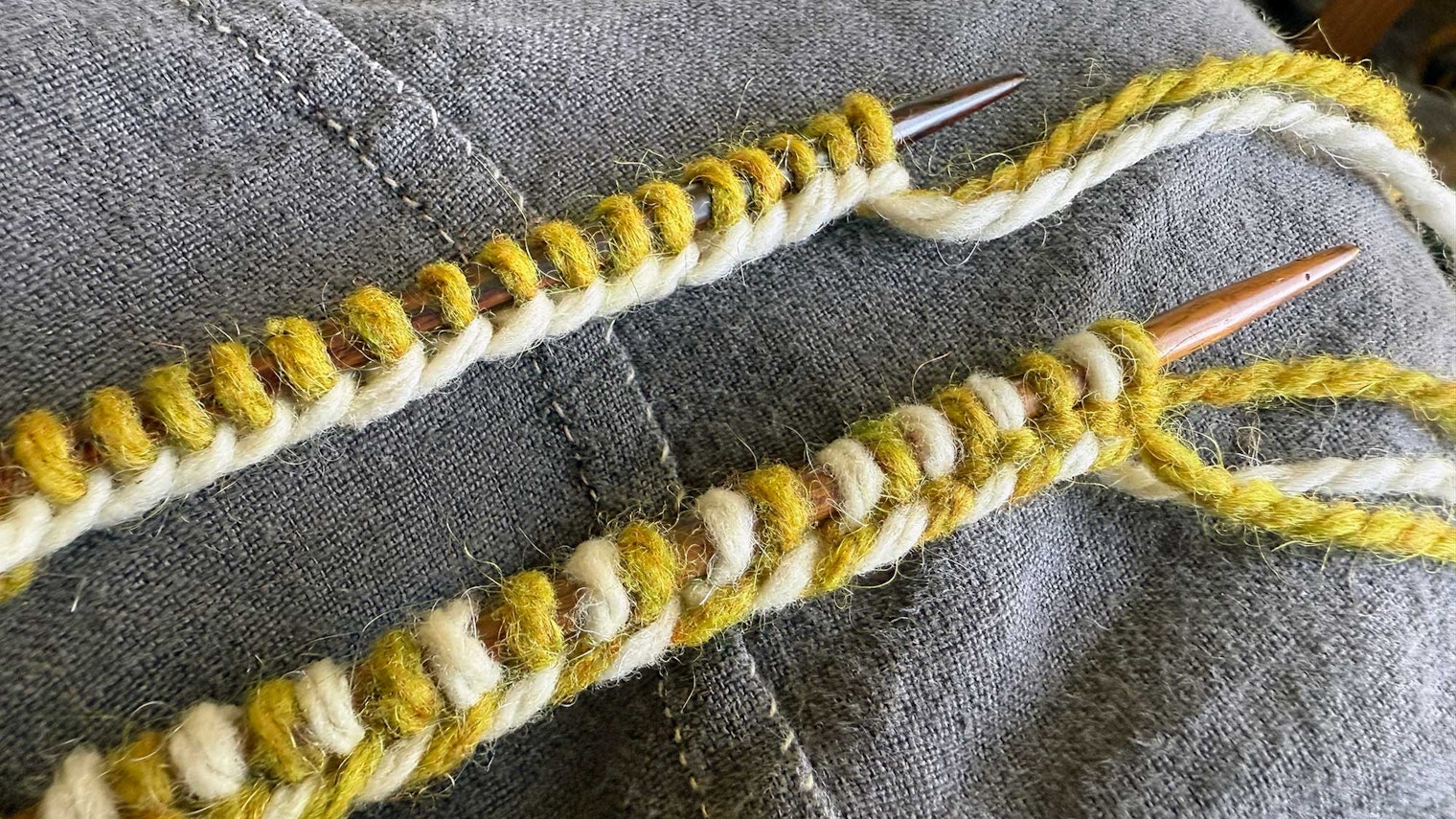
Sometimes a plain, solid-colored cast-on will just not do. Whether you are working on a basic beanie that could use a dash of color in the cast-on edge or an intricate color motif that needs some alternating color in the cast-on to break up the solid edge, we've got a couple of cast-ons for you to try!
In the new Fall issue of Farm & Fiber Knits, knitting mentor Meg Swansen shares two ways to tackle Swedish two-end knitting. She designed two gorgeous cap patterns so we could practice making beautiful texture and color designs.
 Meg Swansen designed two different caps that use the Swedish two-end knitting technique. Photo by Gale Zucker
For the cast-on edge of Meg’s two-color cap, there are two technique options—one is easy, while the other is a bit more challenging. I’ll show you how to do both two-color cast-ons here. If you learn best from text and still images, read on. If you prefer learning from a video, you can hop over to our YouTube channel for the easy two-color cast-on, and then watch the video for the spicy three-strand alternating cast-on.
If we take a close look at Meg’s cap, you’ll see that the two colors alternate in each stitch of the cast-on edge—pretty cool.
 Meg used an alternating color cast-on to create a great edge. Photo by Gale Zucker
While these two methods have very different results, they are related.
If you look again at the image at the top of the page, you'll see that the top cast-on with a white edge under yellow stitches is worked with two yarns. The alternating color cast-on below it is worked with three yarns. While the number of elements is different, and the yarns are manipulated differently, these two methods form the same kind of foundation row. See which you like best!
More from Farm & Fiber Knits
From the Library





Comments
No comments yet — be the first to share your thoughts.
Sign in to join the conversation — commenting is for signed-in members.