
Introduction
One of the great joys and missions of Farm & Fiber Knits is to elevate and showcase yarn makers and yarn sellers worldwide. We want to help you discover new special skeins, must-have blends, and exclusive colorways that you won’t find anywhere else, so we’ve gathered this resource page of featured shops for you to explore. You can even visit some of these yarn sources and maybe meet an animal friend or two—take a look at our custom map for the locations that may be open to visits.
Are you looking to buy yarn from a small farm, but aren’t sure where to begin? Get advice from a shepherd to get you started in our article How to Source Yarn Directly from a Farm.
As we continue to feature amazing shops, please feel free to email us with your incredible yarn finds and shop recommendations. We’d love to hear from you!
-Kate Larson, editor of Farm & Fiber Knits
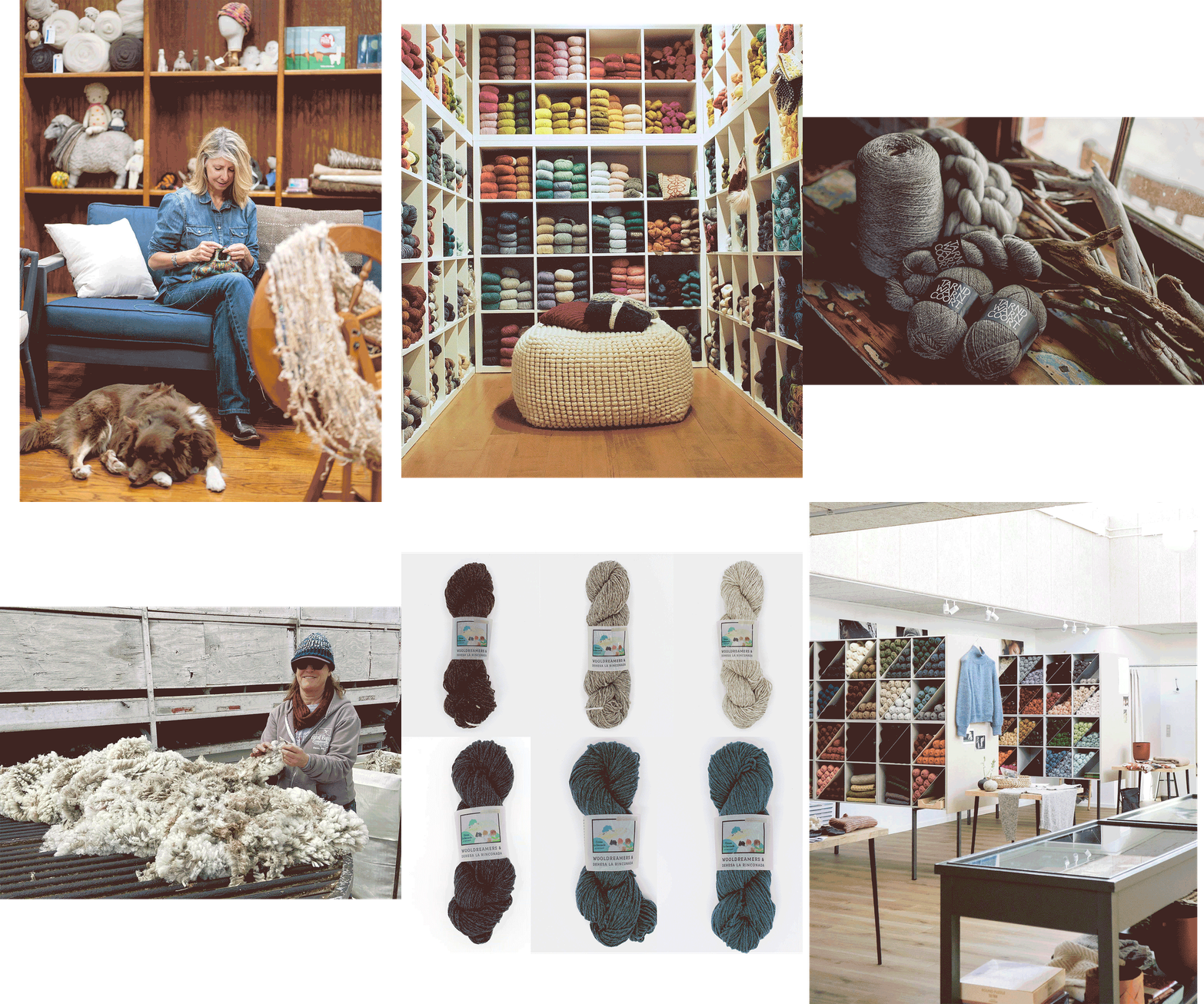
Featured Shops A to Z
Ready to discover some yarn, fiber, or other farm-fresh goodies? We’ve linked to our articles about each shop and yarn maker so you can find your perfect fiber match and learn more about these special businesses.
- A Simpler Time Alpacas & Mill | Article
- Ancient Arts Yarns | Article
- Baa Ram Ewe | Article
- Bartlettyarns | Article
- Blue Heron Knittery | Article
- Brown Sheep Company | Article
- Cactus Hill Farm | Article
- Clementine | Farm & Fiber Knits 2024
- Cowgirl Yarn | Article
- Degen | Article
- Ewetopia | Article
- Feederbrook Farms | A Twist on Color Video
- Fleece and Harmony | Article
- Fox Fibre | Article
- Green Mountain Spinnery | Article
- Handspun Hope | Farm & Fiber Knits 2025
- Heritage Spinning and Weaving | Article
- Icelandic Knitter | Article
- Indie Untangled | Article
- Isager Yarns | Article
- Jamieson’s of Shetland | Article
- Kelbourne Woolens | Farm & Fiber Knits 2025
- Knudsen Knits | Article
- Lanaknits Hemp | Article
- Lani’s Lana | Article
- Lazy Meadows Alpacas & Fiber Mill | Article
- Long Island Yarn & Farm | Article
- Megs & Co | Article
- Mitchell Wool Co | Article
- Morehouse Farm | Article
- Mountain Meadow Wool | Farm & Fiber Knits Spring 2026
- North Bay Fiber | Article
- Painted Sky Alpaca Farm & Fiber Mill | Article
- Peace Fleece | Farm & Fiber Knits 2025
- Prado de Lana | Article
- Ranching Tradition Fiber | Article
- Rows of PurL | Article
- Schoolhouse Press | Podcast Episode
- Six Paca Farm | Article
- Tahoma Vista Fiber Mill and La Vida Alpaca | Article
- Tarndwarncoort Homestead | Article
- The Rogue Skein | Article
- Three Points Fiber Mill and Alpaca Farm | Article
- Treenway Silks | Farm & Fiber Knits 2025
- Upland Fiber Co. | Article
- Wing & A Prayer Farm | Article
- Wool & Palette | Article
- Wooldreamers | Article
- Yarn Bar | Article
Map It!
Browse the map below to find the shops and yarn makers near you that we’ve featured on Farm & Fiber Knits. However, before you visit, please check their website for the most up-to-date information on whether they welcome visitors, if appointments are required, and other relevant details.
Along with the featured yarn shops and makers (yellow markers), we've also added local retailers (blue markers) that sell Farm & Fiber Knits magazine issues. Enjoy!
More Resources
How to Source Yarn Directly from a Farm
Why might you want to buy yarn from the farmer who produced it? Maybe you discovered an intriguing yarn at a fiber festival or perhaps you’d simply like to support growers in your region by buying locally. Here are some tips from a shepherd.
By Robin Lynde
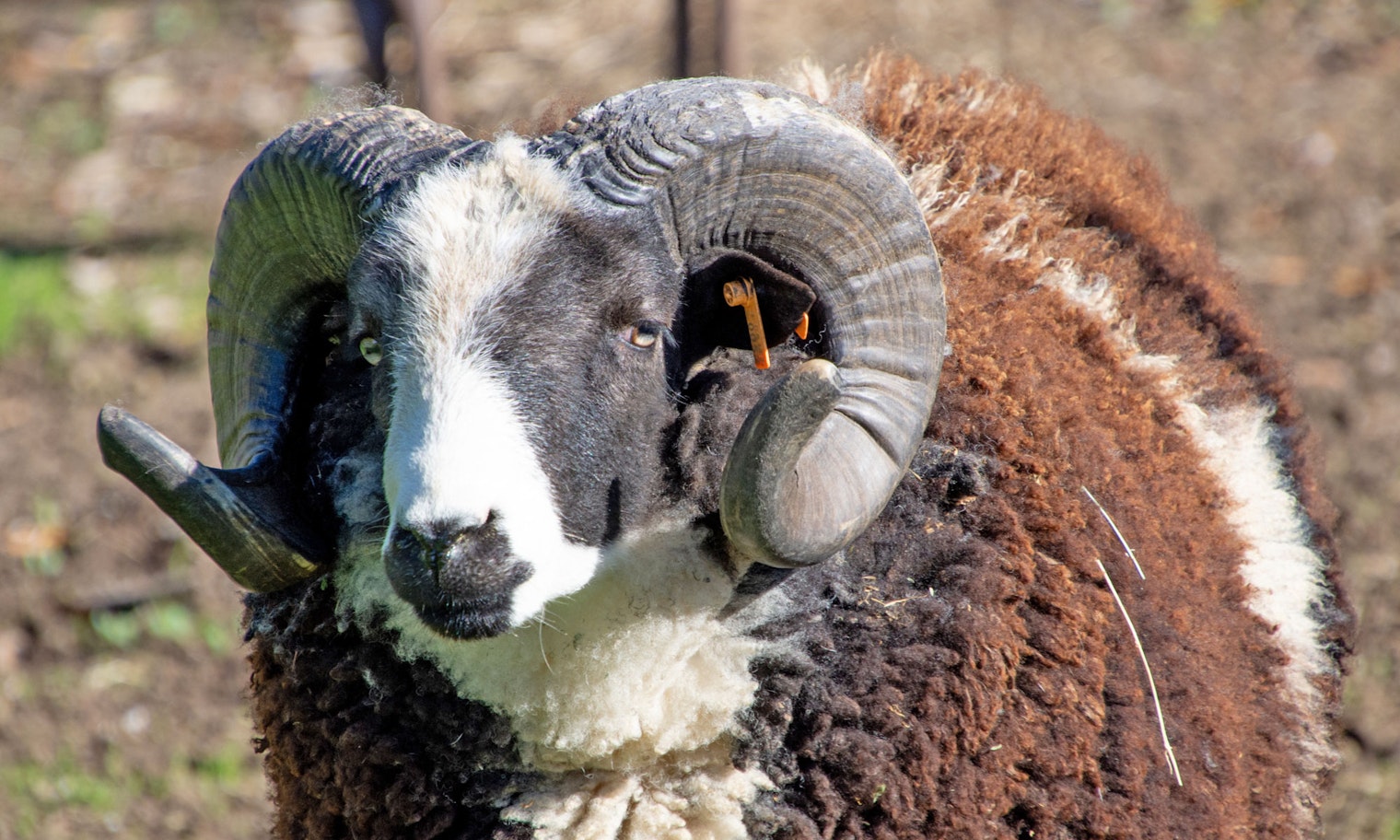
I have a flock of more than 70 Jacob sheep (a small, multihorned, spotted breed), and each year I proudly sell a batch of natural-color yarn to eager weavers and knitters. I also process and sell yarn spun from a neighbor’s flock of white-faced sheep of Targhee, Rambouillet, and Polypay breeding. And when I’m not caring for my sheep or getting fleeces to a mill for spinning, I enjoy weaving and knitting with these yarns.
My farming and fiber experiences combine to give me a broad perspective on the ins and outs of buying yarn directly from the producer that you may find helpful. Let’s begin with how wool is grown.
Growing and Selling Wool
While I don’t know what goes on behind the scenes at large yarn retailers, I assume that it’s vastly different from what happens at my farm. I have my hands on every aspect of every fleece from the moment the lambs are born, to shearing day, to skirting and sorting wool, to delivering wool to a local mill, to finding customers for the resulting yarn.
You could say the process of growing wool begins anew each year, the day after shearing. All year long, I monitor sheep health and nutrition (to prevent the weak sections in fleeces known as wool breaks), and I manage pasture and feeding practices (to minimize vegetable matter in the fleece).
Or maybe it starts before that, when I make sure the pregnant ewes have adequate nutrition so that the lambs are born with their full genetic potential for growing good wool (see Resources).
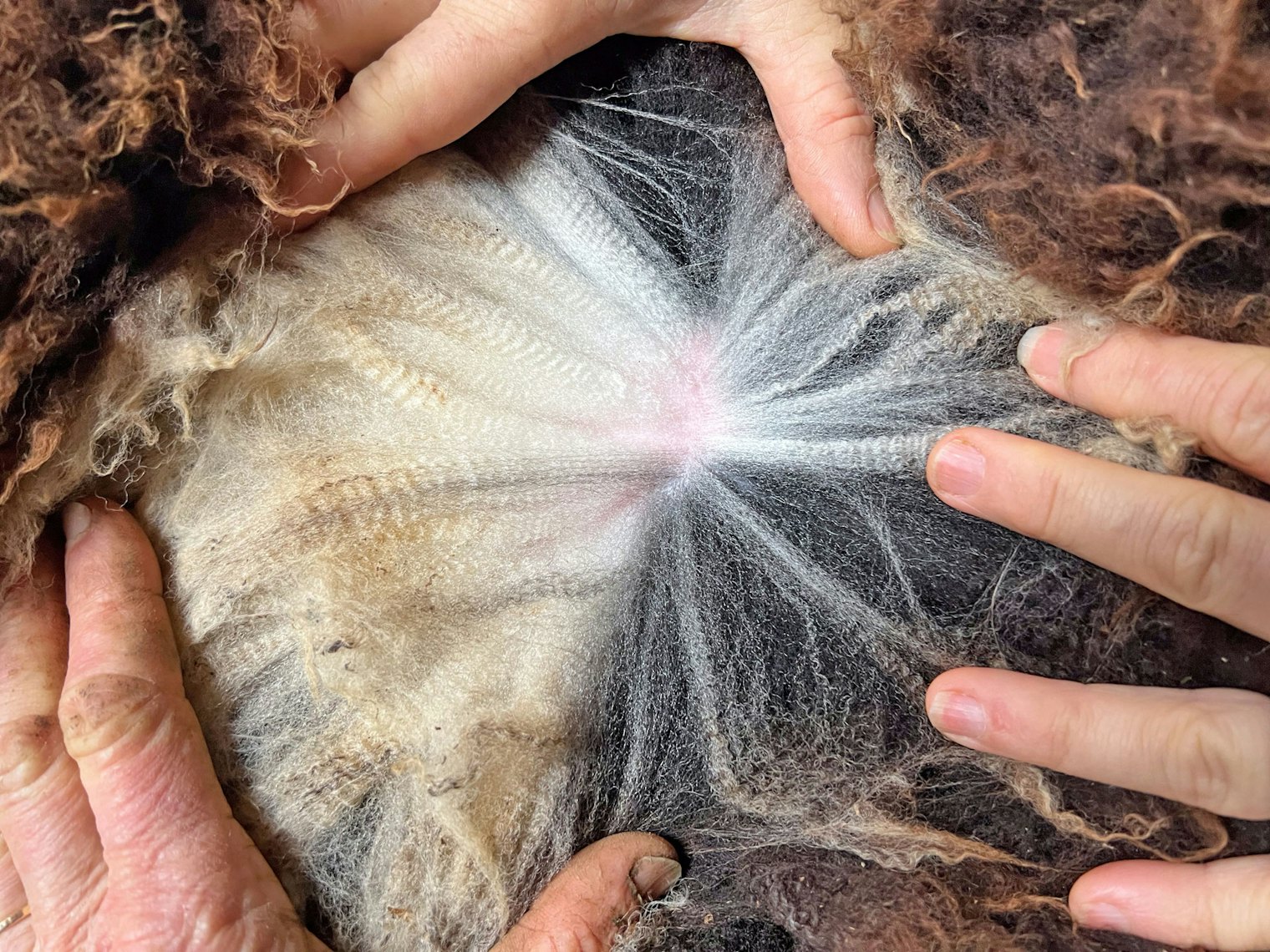
Get a closer look! Click on any image below to view it in full-screen mode and learn more about the fleeces.
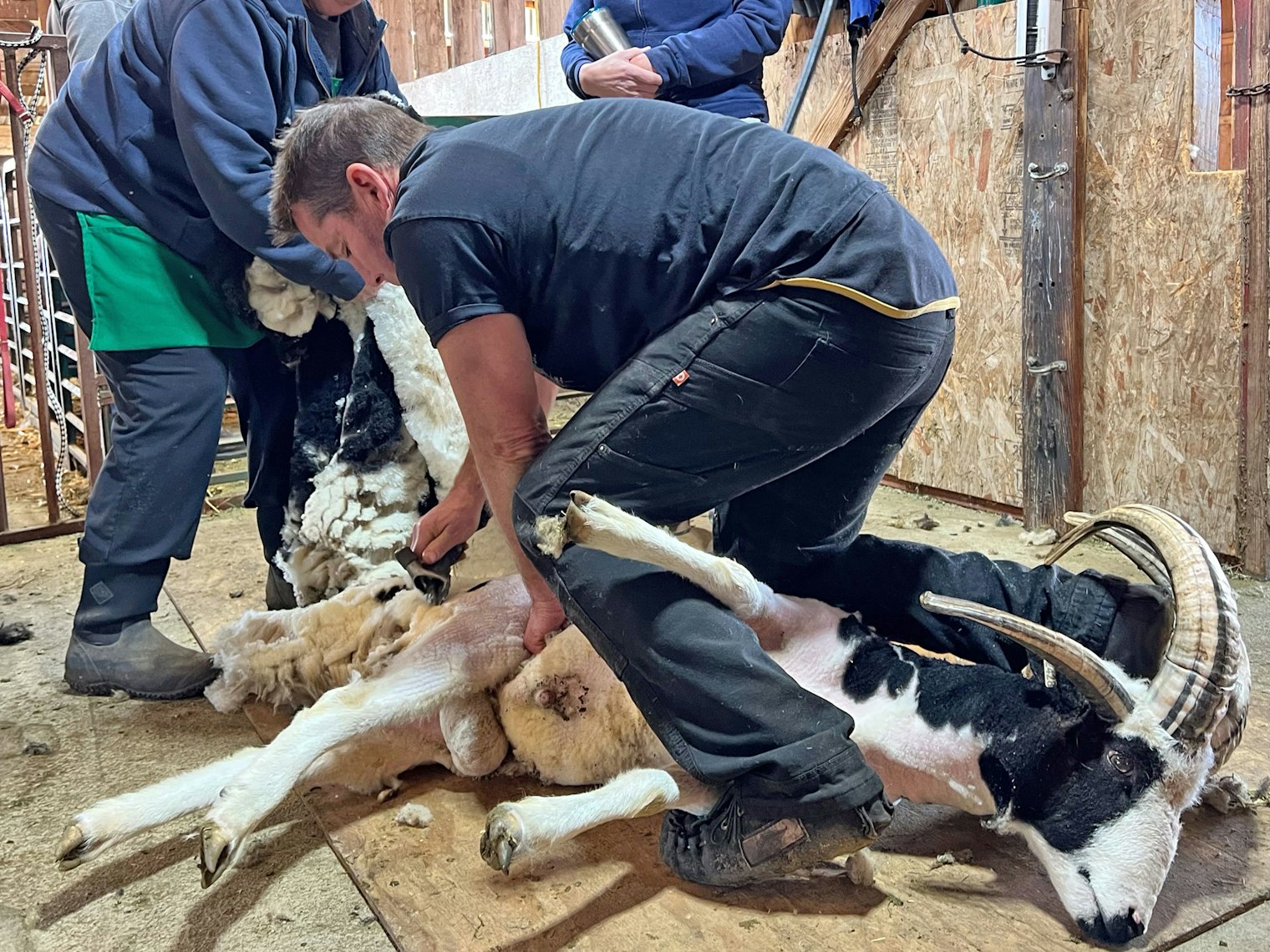
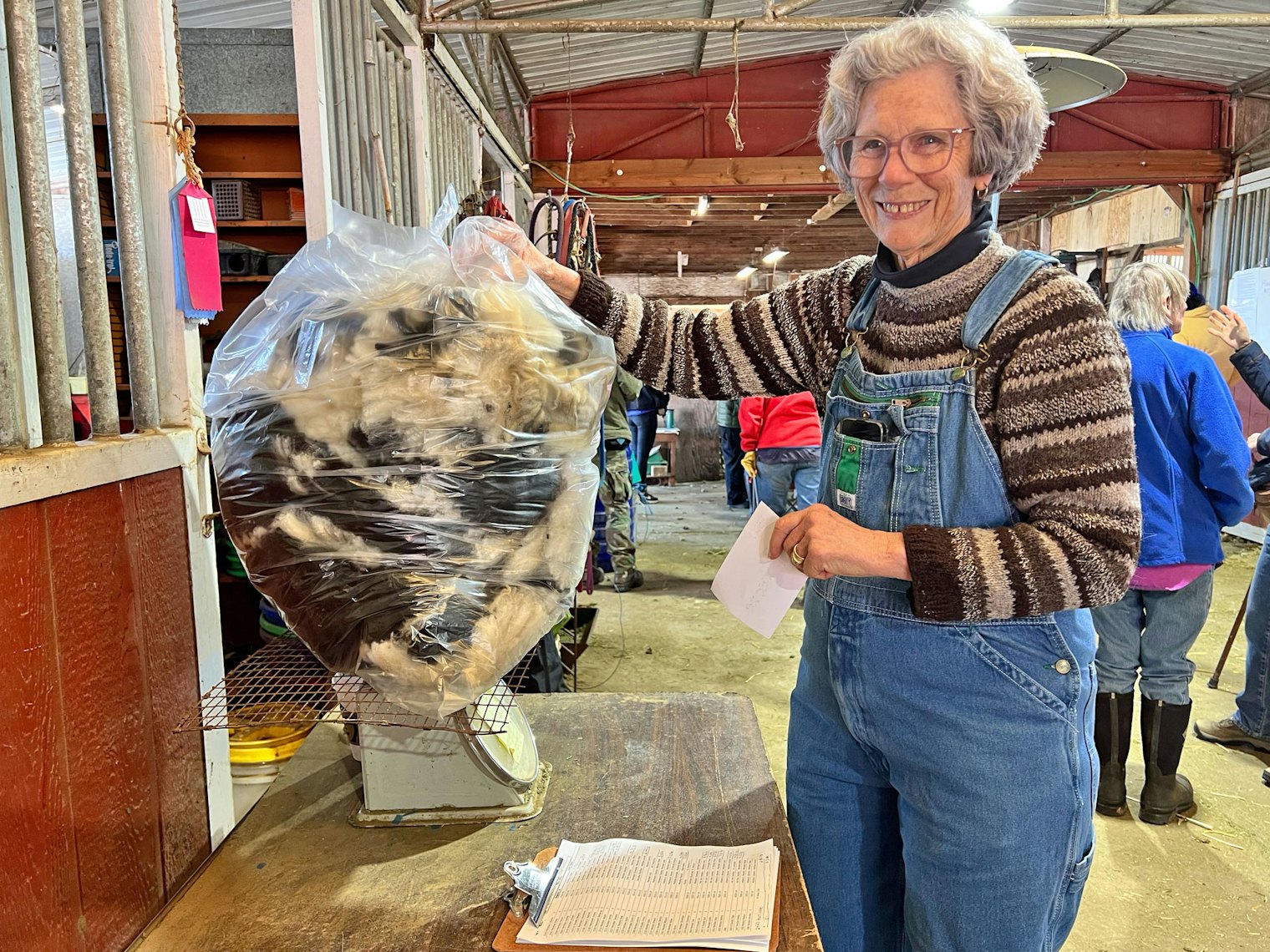
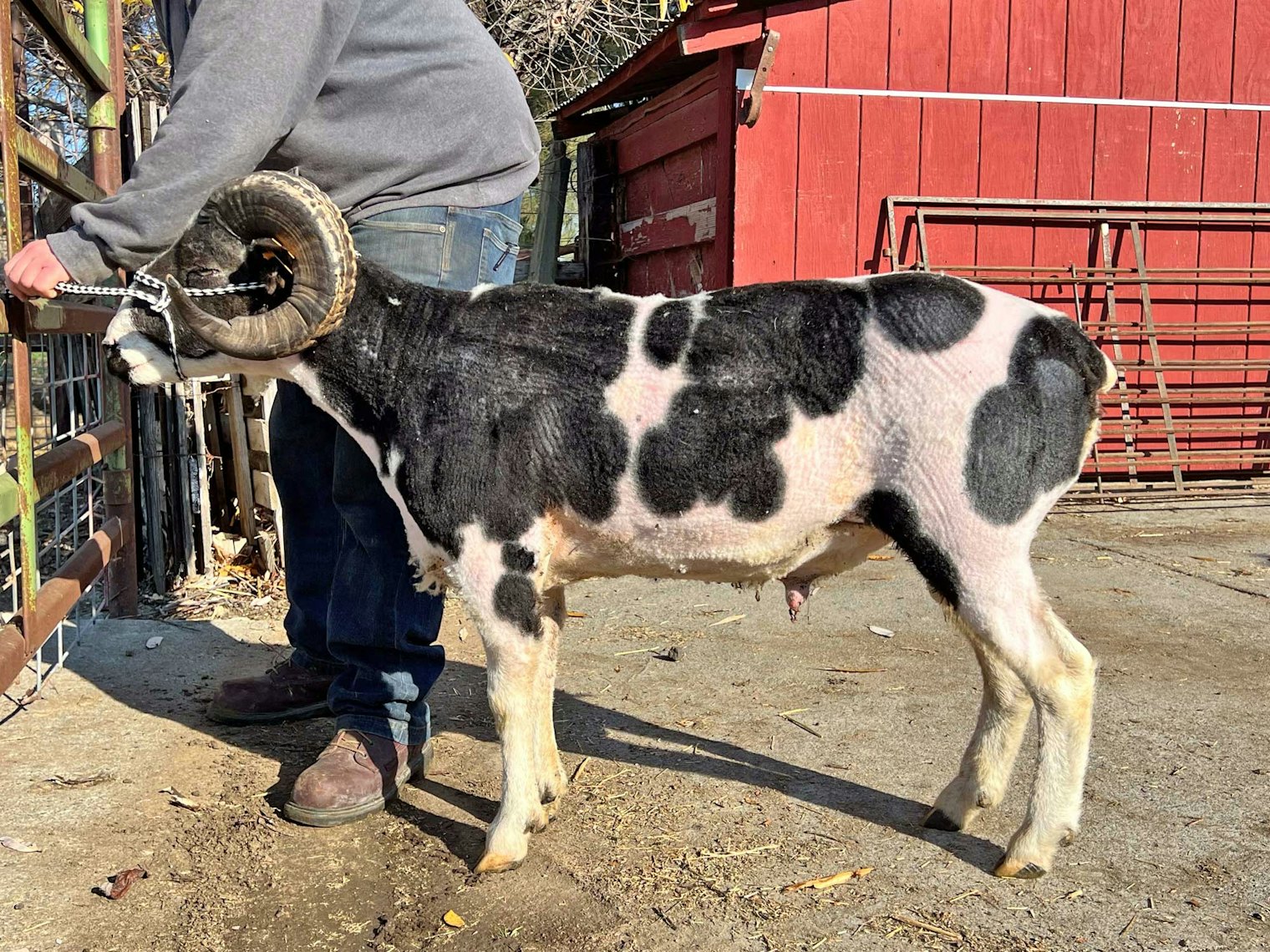
We shear our flock once a year in January or February, about a month before lambing. Sheep are held off feed and water for 12 hours before shearing for the comfort of both the sheep and the shearer. Shearing is skilled physical work—our shearer can shear a sheep in two minutes.
Members of our Meridian Jacobs Farm Club come to help with shearing day tasks, and local fiber guild members are invited to come and watch.
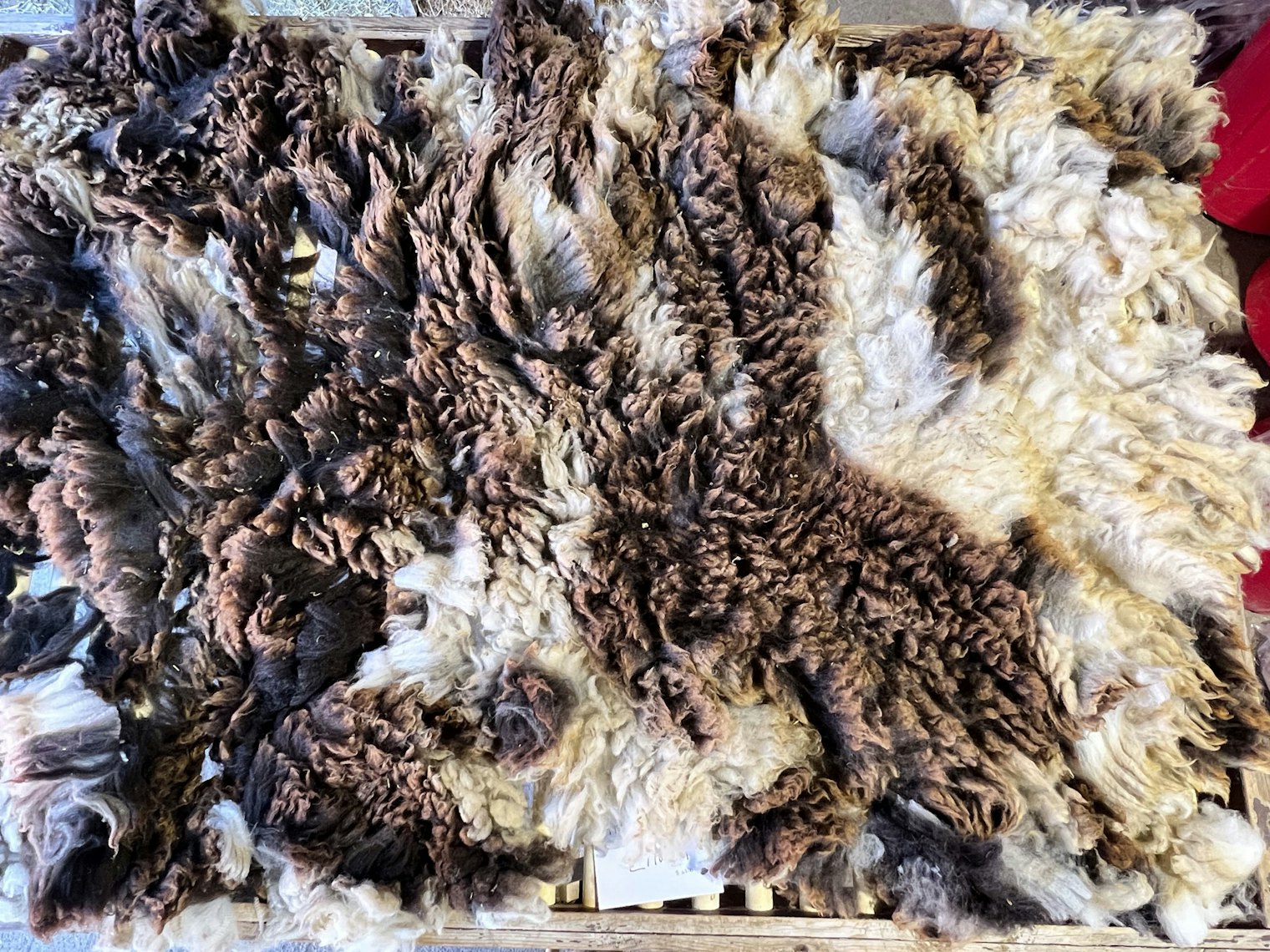
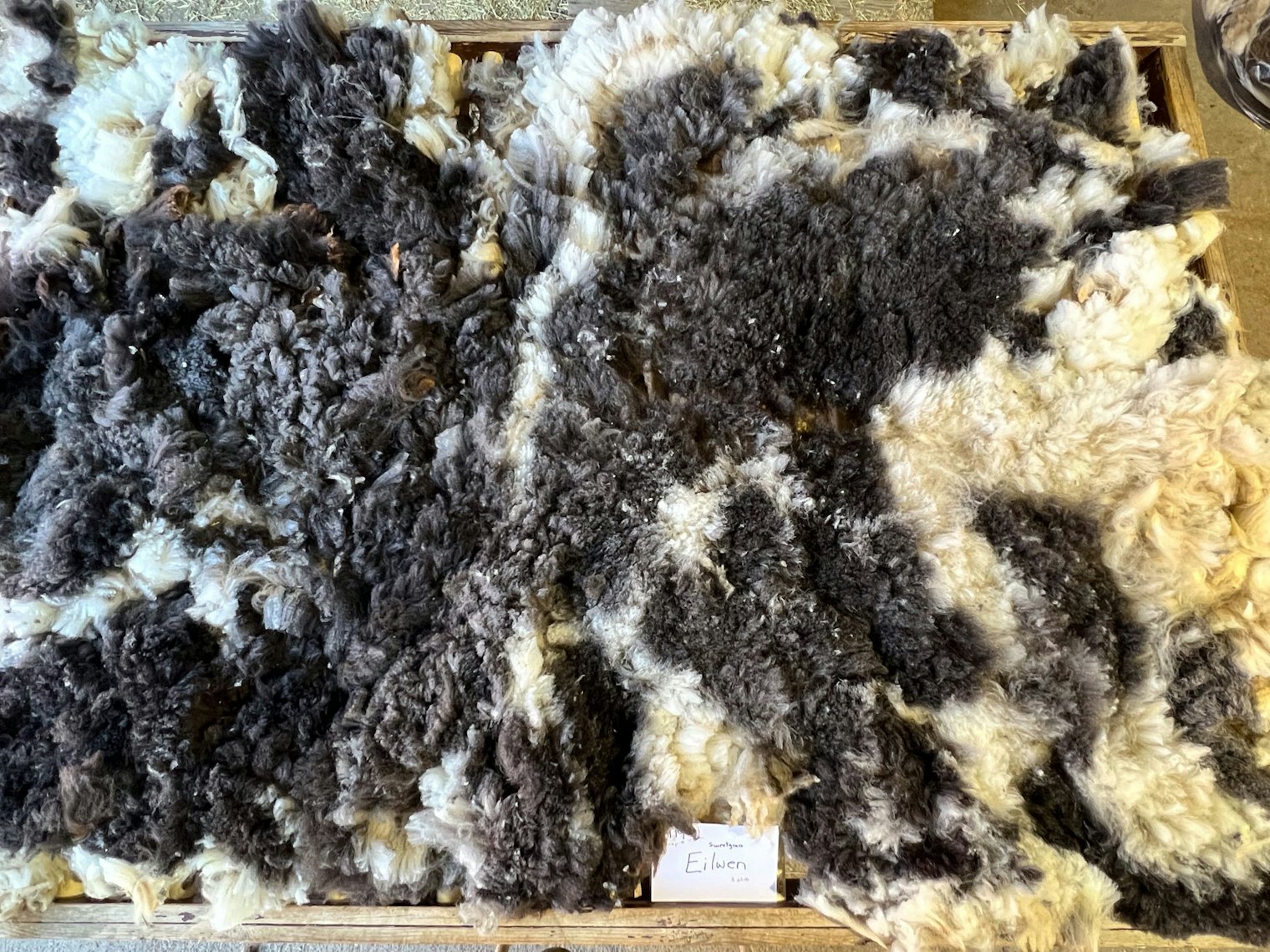
Fleeces weigh anywhere from 3 to 6 pounds and are available immediately for sale. After shearing, we lay each fleece out on a table for skirting (removing less desirable wool from around the edges). Some buyers sort their new fleece into colors and separate britch wool (a coarse wool from the back legs) before taking their fleece home. I skirt and sort all remaining fleeces and deliver them to a local mill for scouring, carding, and spinning.
I sell to customers in person at the farm, online, and at Lambtown (our local California fiber festival). Our naturally colored yarn may sell out by the following summer. If it does, there won’t be more until we grow, shear, and process the next batch of fleeces.
Finding a Farmer
If you’re intrigued by small-batch yarn, how do you find farmers who sell yarn?
Most farmers who are direct marketing their yarn are happy to answer questions, and many have samples of finished goods. You may be able to meet them and their sheep at county and state fairs, as well as during sheep or fiber festivals. Some may also sell at farmers markets or may open their farms to visitors.
An obvious way in today’s world is to search online—but not all small farms have websites, and those with websites may not show up within the first few search pages. You can find a directory of heritage sheep breeders as well as info about a breed’s fleece characteristics and its best uses at livestockconservancy.org. Another source is Fibershed, an international network of farmers, mill operators, and textile producers. It has an affiliate directory that lists local chapters, which can provide information about wool growers.
Get a closer look! Click on any image below to view it in full-screen mode.
Buying Small-Batch Wool
Do You Know Where Your Wool Comes From?
How can you know where the wool in your yarn was grown and processed, and why is it important? Several programs let you trace the sources of the skeins you knit.
By Sandi Rosner
Over the past 10 years, there has been a growing awareness of the impact of clothing production on the planet. Concerned consumers are demanding that fashion brands disclose details about their supply chain, from working conditions in sewing factories and fabric mills to the source of the raw fibers and other materials in their products.
It’s no surprise that these concerns have spread to handknitting yarns. The label on a skein of yarn indicates the country of origin (as required by law), but that is usually the country where the yarn was spun and not necessarily where the fiber was grown or processed. How can you learn more about where the wool in your yarn comes from?
Let’s look at the current options for tracing the source of wool in the handknitting-yarn supply chain.
How Is Wool Traced?
Tracing synthetic fibers is relatively simple. A unique chemical identifier can be added to the manufacturing process, then verified through testing at every stage in the yarn- or garment-production process.
Tracing wool is a different story. There is no practical way to embed a unique marker in the fleece on the sheep. Markers applied to the surface of the fiber are likely to be lost during scouring, carding, spinning, and dyeing.
Wool traceability is dependent on certification and third-party verification of every step in the supply chain—from the rancher, to the scouring mill, to the spinning mill, to the dyehouse. There are two certifications you’re most likely to see mentioned in connection with handknitting yarn: Responsible Wool Standard (RWS) and NATIVA. You may also see yarn labeled with the Wooltrace or American Wool Assurance certificates. These smaller programs are just beginning to show up in handknitting yarn.
 Look for the RWS or NATIVA logo on the skeins of yarn you purchase.
Responsible Wool Standard
Responsible Wool Standard is a program developed by Textile Exchange, a global nonprofit working to ensure that the materials used to produce textiles and fashion are produced in a way that supports the planet, its ecosystems, and its communities. Textile Exchange also offers Responsible Mohair Standard and Responsible Alpaca Standard certifications following the same principles.
The RWS sets criteria for animal welfare, land management, and worker health and safety. A third-party certification body inspects the ranch, mill, or factory for compliance with these criteria and conducts annual recertification audits. The certification body also issues “transaction certificates” every time products are shipped from one step in the supply chain to another, verifying the chain of custody.
For a skein of yarn to bear the RWS seal, each stage in the supply chain must be certified, including the
Can You Trust the Wool You’re With? RWS Certification Offers Assurances
For knitters who fret about soil degradation or want guarantees that the wool yarn they’re sniffing comes from non-mulesed sheep, there’s a certification for that.
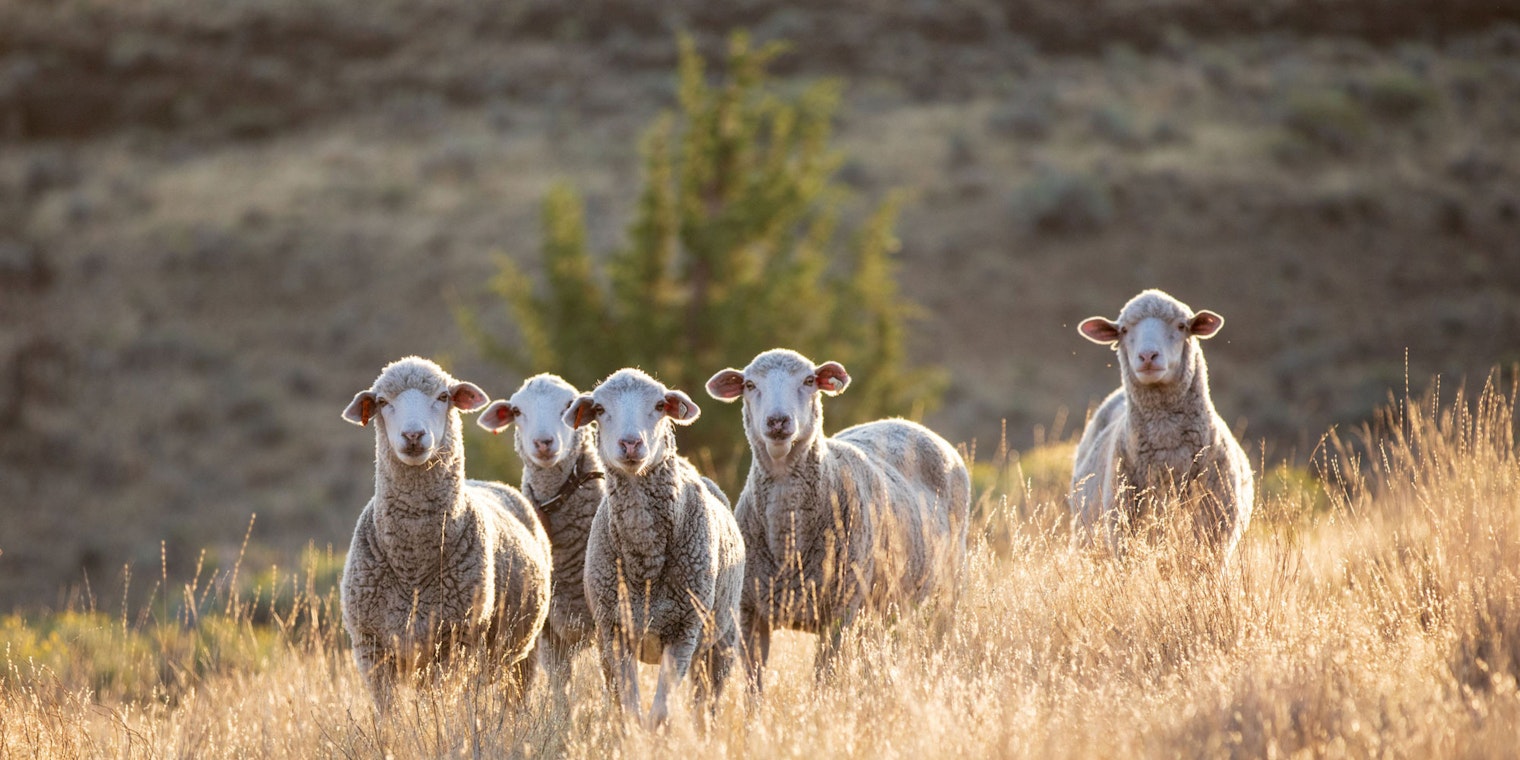
Developed in response to public outcry surrounding graphic videos of animal cruelty captured by PETA in South America, the Texas-based Textile Exchange created the Responsible Wool Standard (RWS) to nudge ranchers worldwide toward more humane, better-for-the-environment practices and give brands a semaphore for mindful sourcing.
Developed over the course of years with the help of animal welfare organizations, farmers, brands and suppliers, the Responsible Wool Standard (RWS) is a rigorous global certification that requires growers to adhere to 270 criteria regarding animal welfare, land health and social responsibility while also mandating documentation and annual third-party, in-person audits.
“It’s not subject to greenwashing,” Mary Jeanne Packer of Battenkill Fibers said of her decision to develop a sock yarn sourced from RWS-certified American fiber. “There are a lot of other branding systems that are subjective. RWS is verifiable.”
 Theos Swallow Fork Ranch in Meeker, Colorado, is one of the family ranches that have become RWS-certified and joined Shaniko Wool Company. Photo courtesy of Shaniko Wool Company
This article is for Farm & Fiber Knits subscribers. or .
A Knitter’s Guide to Crossbred Wool Yarns
What should you do with your intriguing new skeins of farm-grown yarn? After developing a line of yarns from her own flock, the author and shepherd has some good advice.
By Sarah Pope
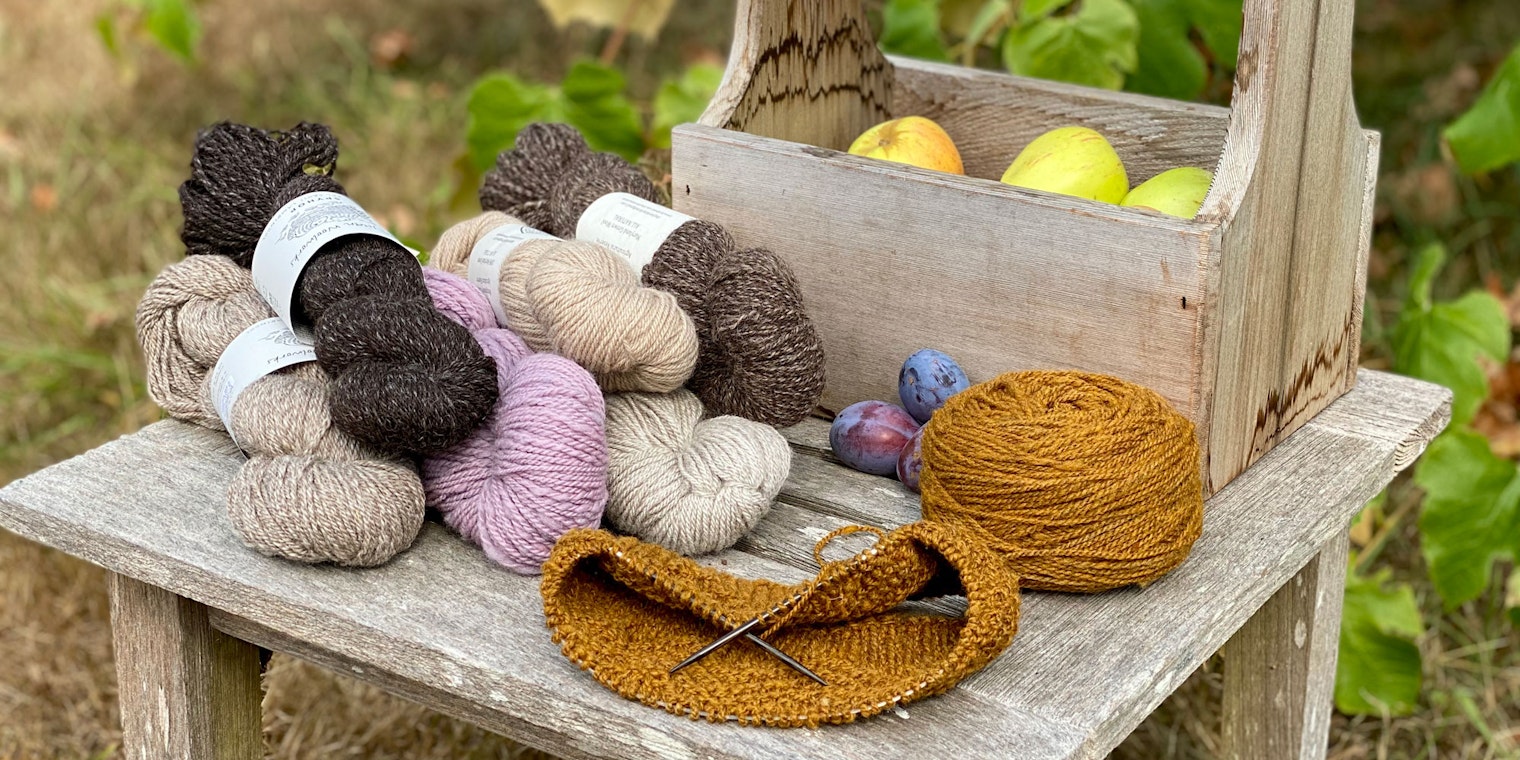
The experience of raising my own sheep and designing unique yarns is deeply fulfilling, but sharing those yarns with other knitters and seeing what they make is even better. It’s probably obvious that when you buy local wool at a farmer’s market or fiber festival, you’re directly supporting a shepherd and a flock. You’re also helping to keep a local economy of shearers and small fiber mills in business. And you may even be sustaining the long arc of a project to develop new fibers especially suited to your region.
4 Approaches to a Small-Batch Yarn
Based on my own experience as a shepherd and knitter, here are some factors to consider when choosing and using farm-grown yarns.
What the Shepherd Knows
Chat with the wool grower about their breeds and reasons for selecting those sheep. Ask what they think the yarn does well. Do a little breed research from a field guide such as Deb Robson and Carol Ekarius’s The Fleece and Fiber Sourcebook.
What Your Skin Feels
Hold the yarn against your wrist or neck to feel for prickle—keeping in mind that your skin is more sensitive on a hot day, and what feels scratchy in August may not bother you at all in December. Remember that you can always knit an inner cuff or band in a softer yarn you know you can tolerate.
What You Can See
Consider the weight, structure, color, and texture of the yarn. A chocolaty black color usually signifies a lamb fleece and will be softer than fiber from mature animals. A marled yarn will obscure stitch work with its busy visual effect and is probably best as stockinette. A round, worsted-spun 3-ply will show stitch definition and cabled textures well; a 2-ply is a good choice for lace or open work. A yarn with a bit of thick-and-thin texture may look perfectly rustic as simple, homey garter stitch.
What You Can Make
You’re most likely to encounter 100-gram skeins of DK or worsted weight, perhaps 200–250 yards—enough for a cowl or a hat or a pair of mittens. You could find a pattern, or you might just choose a stitch pattern you like and cast on a corresponding multiple number close to 100 (for a hat) or 120 (for a cowl) and see what unfolds. If you love your taster skein and think you want a sweater’s worth, contact the shepherd or wool company right away. The sheep are always growing more fiber, but each year’s clip is a little different and you probably won’t get an exact match if you mix mill lots.
Whatever garment you make will hold the memory of a place, the heritage of a sheep, and the tangible care of the many hands it took to bring the wool from lamb to skein.
Sarah Pope stewards a 30-acre sheep farm with her family on San Juan Island, Washington, and occasionally designs knitwear. Her wool company, San Juan Woolworks, buys fleeces from farming neighbors to encourage wool production in the community and produces knitting yarns with the help of two women-owned mills in her fibershed.