
Yarn with Character: Swatching Ewetopia’s Milled DKs
Each skein from Ewetopia carries a story—of Midwest wool, small-batch milling, and careful dyeing—and on the needles, those stories unfurl in texture, color, and gentle movement.
By Shaina Scott
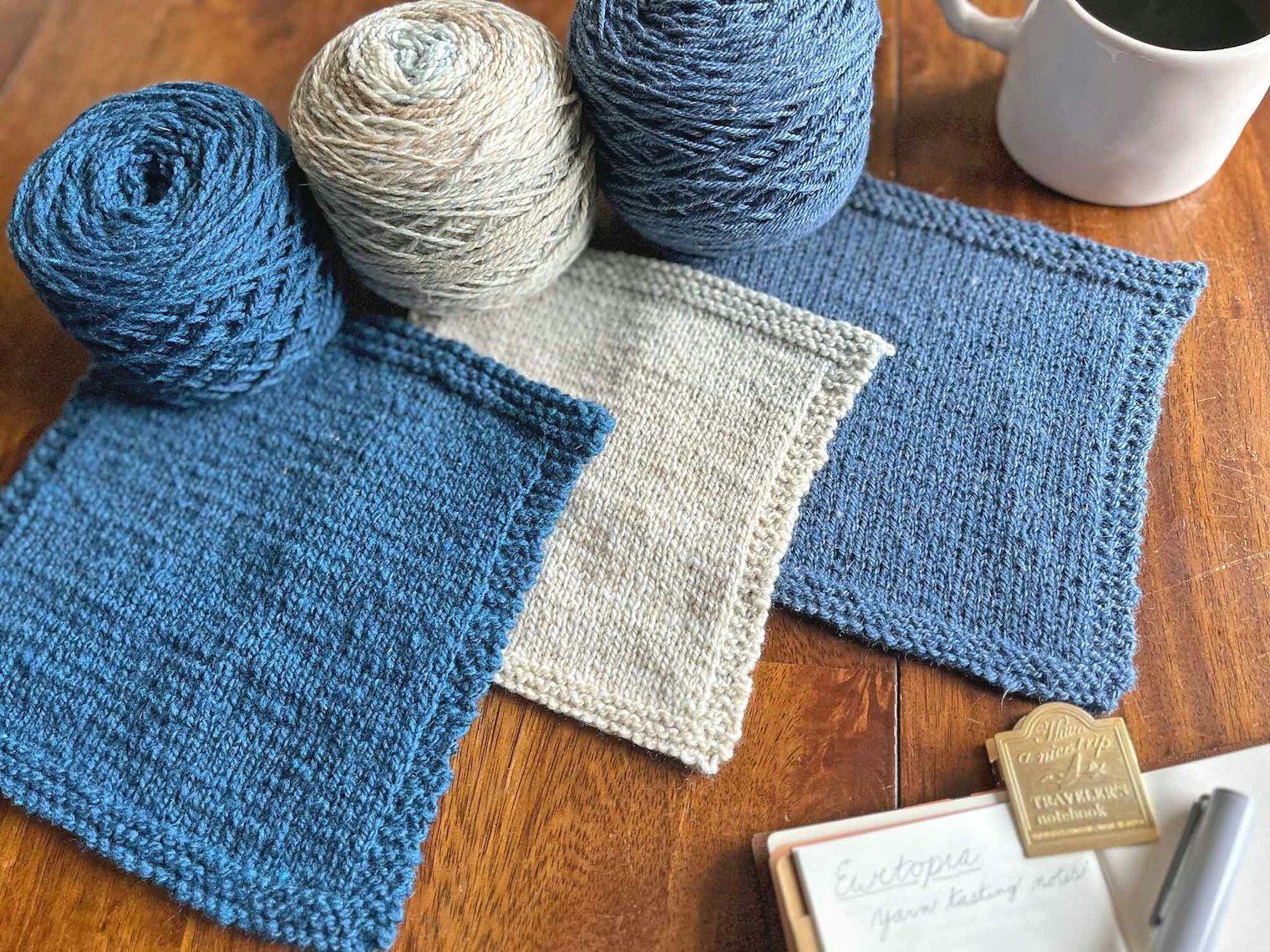
There is a particular kind of morning that feels made for swatching . . . a warm mug of black coffee, a small stack of skeins waiting patiently, the light just beginning to soften across the table. For this yarn tasting, I settled in with three of Ewetopia’s mill-produced yarns: Sustainawool DK in Heart of the Ocean, Ridge Sport in Denim Heather, and Helix DK in January.
 Shown left to right: Ridge Sport, Helix, and Sustainawool.
Ewetopia, a Wisconsin-based fiber shop, has grown beyond hand-dyeing into milling their own yarns, working with Midwest wool and small-scale machinery to produce fiber-forward bases that retain character. These are not anonymous skeins; they carry the imprint of process, of fleece, twist, and dye layered with intention.
I cast on each yarn in turn, knitting simple stockinette swatches edged in garter stitch. No complicated stitch patterns, just space to see, to feel, to notice.
Sustainawool DK – Heart of the Ocean

Sustainawool is dyed in the fleece and processed by Ewetopia in small batches, and that depth of dyeing shows immediately. Heart of the Ocean is an inky indigo that shifts between deep navy and dark teal depending on the light. It’s the kind of color that feels almost bottomless.
While winding, the yarn felt bouncy and softly puffy, a balanced two-ply with a touch of fulling that gives it structure. On the needles, its personality became clearer. It is slightly thick and thin, with the occasional tiny nep that gives it the charm of a refined handspun. There’s a gentle grip to it, just enough texture to remind you that you’re working with real wool, not something overly processed.

It’s not slippery knitting; it invites a steady pace. After about an hour at my usual speed, I found myself slowing down, not because the yarn was difficult, but because it seemed to prefer intention. The finished fabric feels substantial for a DK, almost edging into light worsted territory. In plain stockinette, the subtle irregularity becomes the feature: organic, elevated, quietly beautiful.
This is the kind of yarn that would make a sweater you reach for year after year.
Helix DK – January

If Sustainawool feels grounded and structural, Helix DK feels airy and fluid.
Spun from two differently colored plies, Helix creates a gentle barber-pole effect that gives the fabric movement without bold striping. The colorway January is a warm, shifting neutral: tans and creams marled with soft grey and the faintest dusty blue. The blue appears only in one ply, so it reads as a whisper rather than a statement.
Winding it, I immediately noticed how consistent and soft it felt compared to Sustainawool. On the needles, it was almost cloud-like, smooth, drapey, and remarkably gentle for a non-superwash wool. I knit nearly the entire swatch before realizing the color had shifted; the transition from warm tan into cool grey-blue was that gradual.

The finished fabric feels light and wearable, with excellent drape. This is a yarn that would shine in scarves, cowls, or garments meant to move softly with the body. It has an ease to it, understated, but deeply satisfying.
Ridge Sport – Denim Heather

Ridge Sport sits comfortably between the two DK bases in both feel and structure. The Denim Heather colorway carries that familiar washed-denim tone: easy, versatile, classic.
In the skein, it felt firm and tidy, more tightly spun than Sustainawool. There is a bit more visible vegetable matter here—a gentle reminder that this is small-batch wool, minimally processed and close to its source.

On the needles, though, Ridge Sport softened beautifully. The fabric has bounce and a pleasing squish I didn’t fully expect. Its tighter spin gives it durability and crisp stitch definition, but it still drapes nicely once knit. It would be a natural choice for garments, colorwork, or projects that benefit from structure and longevity.
It’s the steady, dependable one, the skein you trust.
Bonus Skeins
Ewetopia also tucked in a skein of Folk, woolen spun at Crescent Woolen Mill in Two Rivers, Wisconsin, along with a Ridge Fingering mini. The Folk base bridges loft and consistency, round and plump with excellent stitch definition, while the Ridge Fingering carries the same small-batch character as the sport weight but into a lighter gauge, ideal for accessories.
 Shaina swatches the Folk skein.
Together, these additional skeins broaden the picture. Ewetopia’s milling work isn’t about uniform perfection; it’s about preserving the integrity of the wool while shaping it into usable, thoughtful yarns.
Swatching these yarns side by side felt less like testing and more like getting to know them. Sustainawool’s depth and texture. Helix’s softness and subtle movement. Ridge Sport’s balance and structure.
Each has its own voice, but all share a common thread: Midwest wool, processed with intention, spun to retain personality rather than polish it away.
And that is, perhaps, the greatest joy of small-batch milling: yarn that still feels connected to the fiber it began as, inviting you to slow down, knit a little longer, and pay attention.
Learn more at ewetopiafibershop.com.
Rooted in Wool: Reimagining Morocco’s Fiber Future
In Morocco’s High Atlas Mountains, a solar-powered wool mill is transforming how yarn is made, linking artisan livelihoods, clean water, and the future of the land itself.
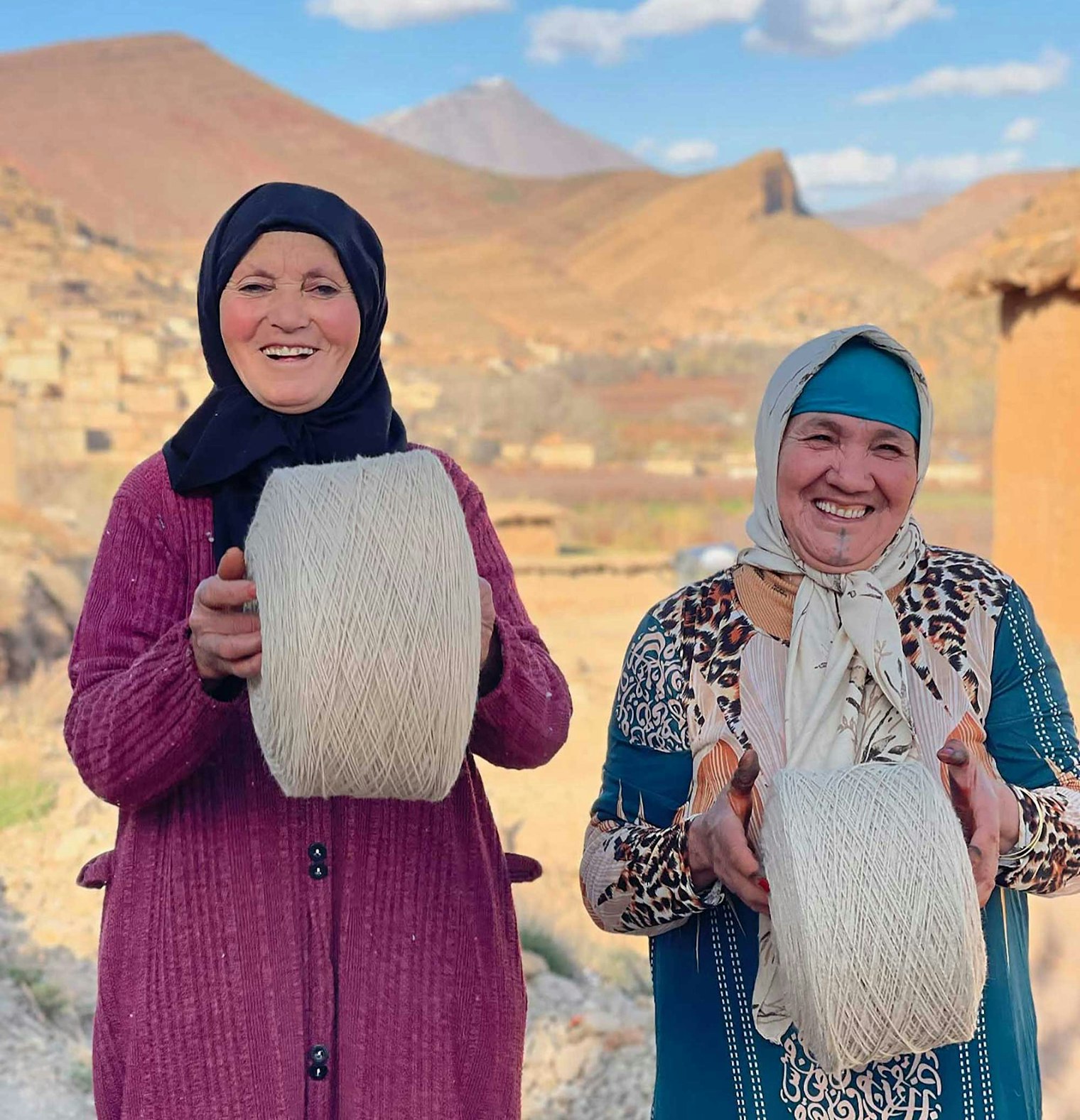
In the High Atlas Mountains of Morocco, a new kind of wool mill is quietly taking shape, one built not only to spin yarn, but to recalibrate an entire ecosystem. The project grew out of Anou, a cooperative founded in 2012 to connect rural Moroccan artisans directly with global markets. Cofounder Dan Driscoll began Anou’s digital platform to help makers in Morocco bypass exploitative middlemen. That work has evolved into something more ambitious: a vertically integrated wool operation designed to serve artisans first—and the land alongside them.
 Left: The Anou Co-Op’s yarn shop in Fez displays yarns fresh from the Atlas Mill. Right: A trial batch of premium Tamazirt wool yarn. The mill is gradually expanding the variety of wool it processes to accommodate regional artisans.
Wool as a Measure of the Land
Driscoll, the visionary behind the Atlas Wool Supply Company, did not come from a textile design background. Trained in environmental science and originally arriving in Morocco as a Peace Corps volunteer, he sees wool not simply as fiber but as a proxy for environmental health. “Wool reflects everything,” he says. “How sheep are raised. How land is managed. How water is used. How chemicals are handled. If you follow the wool, you see the system.”
Morocco is the sixth-largest wool producer in the world, Driscoll explains, yet exports none of it as finished yarn. Instead, most wool is sold raw or processed through systems that prioritize speed and cost over quality and sustainability. Local artisans struggle to access consistent, high-quality yarn at home. The contradictions were impossible to ignore.
 A custom-ordered rug, crafted by the Nahda Co-Op from soft and bulky 2-ply, zero-wash yarn, is inspected at the Anou headquarters in Fez. Managing the quality and sustainability of materials for rug weaving was the impetus for starting the Atlas Wool Supply mill.
The Dye Crisis That Changed Everything
The turning point came in 2016 while Anou was fulfilling custom handwoven rug orders requiring an increasingly varied range of yarn colors. Traditional dye houses produced the precise colors Anou rug weavers needed, but something was wrong. Artisans using the newly dyed yarns complained of persistent “colds.” When yarn was brought to Anou’s headquarters for testing, the issue appeared linked to harsh chemical mordants and fixatives embedded in the fiber. The cooperative shut down temporarily as they determined how to bring dyeing in-house and control the process.
What followed was months of experimentation. Dyeing proved both magical and mathematical: weight-of-fiber ratios, precise temperatures, predictable outcomes. But the inconsistencies ran deeper than color. Wool purchased from markets often contained synthetics. Acrylics and other polymers disrupted dye formulas and compromised quality. The conclusion was inescapable: to control dye, they had to control yarn. To control yarn, they had to build a mill.
 The Atlas Wool mill built at about 6,000 feet in the High Atlas mountains. The company used traditional architecture and construction methods when building the mill and operate it completely with solar power.
Building a Mill in Sheep Country
In 2021, the Atlas Wool Supply Company finally broke ground outside Aït Bouguemez in the high Atlas Mountains in a region defined by grazing land and agriculture. The location was deliberate—close to shepherds, close to fiber, embedded in the landscape that sustains both. Financing came not from foundations but from private impact investors—individuals drawn to materials, cooperatives, and regenerative systems. Atlas Wool’s mission was clear: provide Anou cooperative artisans with weaving yarn at cost, use larger-scale production to fund environmental improvements, and export high-quality Moroccan yarn globally.
 Left: Atlas Wool Supply Co Director Brahim El Mansouri, along with community members, completed the mounting work and metal framing installation for the solar farm. Right: The team celebrates installation of the 100th and final solar panel. A rainbow appeared on both occasions.
Given difficulties connecting to the electrical grid, the team accelerated plans to take the mill entirely off grid. Over the next year, they constructed a solar power system capable of running a small factory in extreme mountain conditions—an environment marked by rapid temperature shifts and fluctuating humidity. The mill turned on for the first time in April 2024.
Spinning yarn in the Atlas Mountains proved anything but “plug-and-play,” Driscoll remembers. Each season altered fiber behavior. Humidity changed tensile strength. Temperature shifts disrupted twist consistency. It took a full year of production to stabilize the process. By mid-2025, the mill was supplying custom-order yarn to Anou artisans.
 At left: Atlas Wool Supply Co. director Brahim El Mansouri teaches his daughters the process of yarn manufacturing. Right: The Anou shop in the Fez medina.
The Chemistry of Scale
As they evaluated the environmental challenges, they realized that washing and processing the wool was a key factor in reaching production scale. At first, the simplest solution seemed obvious: import a well-known industrial wool scour. But the detergent alone would have consumed nearly 60 percent of the target yarn price—untenable for a mill committed to selling yarn to artisans at cost. Worse, it meant shipping mostly water across the Atlantic and relying on a formulation whose full contents were unclear.
Environmental marketing around detergents is notoriously vague. Claims of “biodegradable” can mask ingredients that persist in fragile ecosystems. In Aït Bouguemez, where drought has strained an already delicate water table, dumping industrial chemicals into the watershed was not an option. The solution was to develop their own wool scour so they could control the ingredients and adjust the formula as needed.
Working with a chemist, they dissected what “biodegradable” truly means—genuinely capable of breaking down without bioaccumulation. The initial commercial formula failed that test. From there, they developed nearly one hundred formulations tailored specifically to wool. The machines became the arbiters of truth. If fibers gummed up rollers and disrupted spinning, the scour had failed. If production ran clean, the scour was successful. The result was a biodegradable wool scour designed for local ecological constraints and fiber performance.
 Atlas commits to hiring only women from the valley, who quickly master wool, yarn, and soap processing and manufacturing—gaining skills to utilize resources in their home valley and transform its future.
Rethinking the Wash
In conventional Moroccan rug finishing, completed rugs are aggressively washed—often using up to 100 liters of water per square meter, along with bleach and sulfate-heavy compounds to soften and brighten the wool. The Atlas Wool mill took another approach: gentler scouring, careful fiber sorting, minimal chemical intervention. The result? Rugs that emerged softer than their chemically stripped counterparts—without post-weaving washing, and without the huge water footprint. Softness came from preservation rather than force. By avoiding harsh bleaching, the wool’s natural structure remained intact. For a country where rug-washing runoff has degraded waterways, the implications are profound.
Beyond Wool: Soap as Strategy
The detergent experiments sparked a broader idea. If the team could reformulate wool scour, why not dish soap, laundry detergent, or hand wash? Many cleaning products globally lack ingredient transparency. Creating genuinely biodegradable alternatives could both reduce local environmental harm and generate revenue for Atlas Wool’s land regeneration goals. Today, cafés and riads throughout Morocco have begun using the mill’s soaps. Soap might be someone’s entry point into a much larger conversation about sheep breeds, drought, and watershed stewardship. This business model intertwines fiber and chemistry: revenue from specialty yarns and soaps can help fund regenerative grazing practices and ecological restoration.
 Sheep graze in the land around the mill. Part of Atlas Wool’s commitment to sustainability involves working with local shepherds, stewards of their land as well as their flocks.
Regional Wool, Regional Identity
Most of the mill’s wool currently comes from within a 100-kilometer radius, primarily from the Timahdite breed—a mountain sheep closely tied to Amazigh land and culture. The team plans to expand into other regional breeds and to tailor yarn lines not just to weaving, but to knitting and more industrial uses. The mill currently spins a wide range of yarns—from super bulky rug yarns to fine lace weights, which are rare in Morocco. Driscoll believes that Atlas Wool Supply will “be able to produce amazing yarns for much different purposes than just the strict traditional uses within Morocco.”
A Long Horizon
Atlas Wool’s vision blends ethics and pragmatism. “If we can’t win the moral argument,” Driscoll says, “we build a business strong enough that the right way becomes the necessary way.” By positioning the mill as a central hub for sustainable, quality Moroccan wool—while ensuring artisans access yarn at cost—the operation creates leverage. Anyone seeking authentic Moroccan wool at scale will eventually seek out the mill’s offerings. It is an ambitious strategy, rooted in the belief that scale and craft need not be opposites.
From the first spark of the idea in 2017 to operational production in 2024–2025, the journey has been dynamic. The early tone of revolution has matured into something steadier. There is confidence now in the data: softer rugs, cleaner runoff, stable yarn, and expanded artisan access. Whether global markets will fully recognize the value of regenerative fiber remains uncertain. But in the High Atlas, wool is no longer just a material. It is infrastructure. It is environmental policy. It is economic strategy. And, perhaps most importantly, it is a way of rooting craft back to the land that sustains it.
Further Reading
To learn more about the Atlas Wool Supply Company, visit atlaswoolsupply.co.
And find out more about The Anou cooperative, connecting rural Moroccan artisans directly with global markets.
Made in Nebraska: The Yarn That Built a Mill
When four truckloads of used spinning machinery arrived in rural Nebraska, few could have predicted they would launch one of America’s most beloved yarn companies.
It is hard to imagine that any knitter in the United States isn’t familiar with Brown Sheep Company. If you’ve been part of the felting craze, you’ve surely used it! But how much do you know about Brown Sheep Company itself? Crafted in Mitchell, Nebraska, using American wool, Brown Sheep yarn reflects a century-long family commitment to the land, sustainability, and ethical production, connecting knitters to a rich tradition. And no, there isn’t a “brown” sheep—it’s the family name!
From Sheep Farm to Spinning Mill
The Brown Sheep story began over a century ago when E.W. Brown purchased farmland in the North Platte River valley, close to the Wyoming border. For generations, the family raised sheep and farmed the challenging Nebraska soil. By the late 1970s, however, American farmers confronted an economic crisis more severe than any since the Great Depression. Harlan Brown, grandson of E.W. Brown, was at a crossroads.
Perhaps the inspiration to produce his own wool took shape when Harlan’s college-bound daughter Peggy Jo had to leave her new spinning wheel at home. Looking for a way forward, Harlan found used spinning equipment being sold off from shuttered textile mills in the Southeastern US, and in January 1980, four truckloads of machinery arrived in Nebraska—without manuals. Drawing on ingenuity and resourcefulness honed through years of farming and ranching, Harlan figured out how to assemble and operate the equipment. By July 4th, this sheep farmer had spun his first yarn. Potential customers were skeptical, however, and Harlan was told everything from plain “no” to “you must have stolen that yarn.”
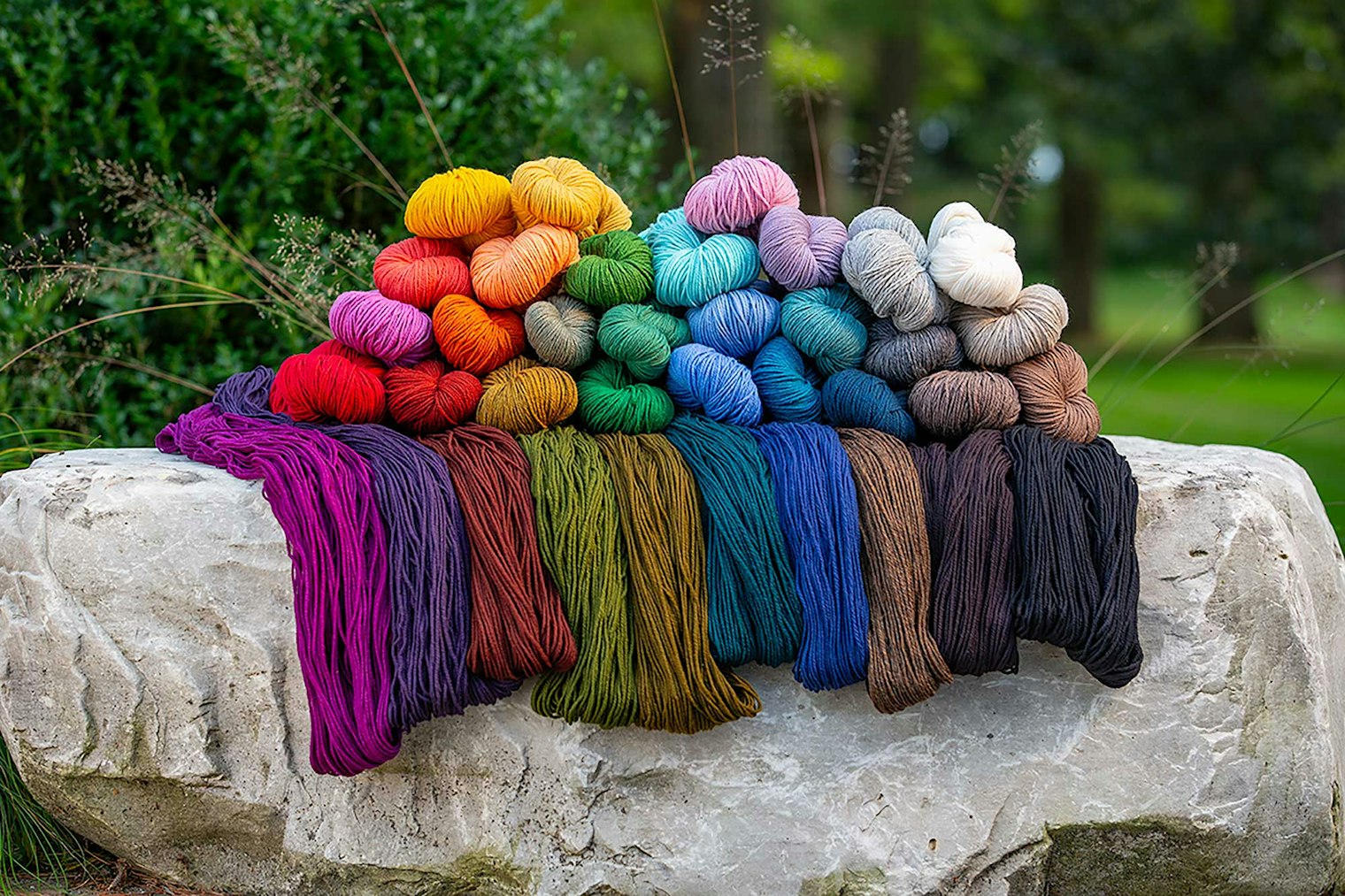
 Preparing the yarn for the dye vat.
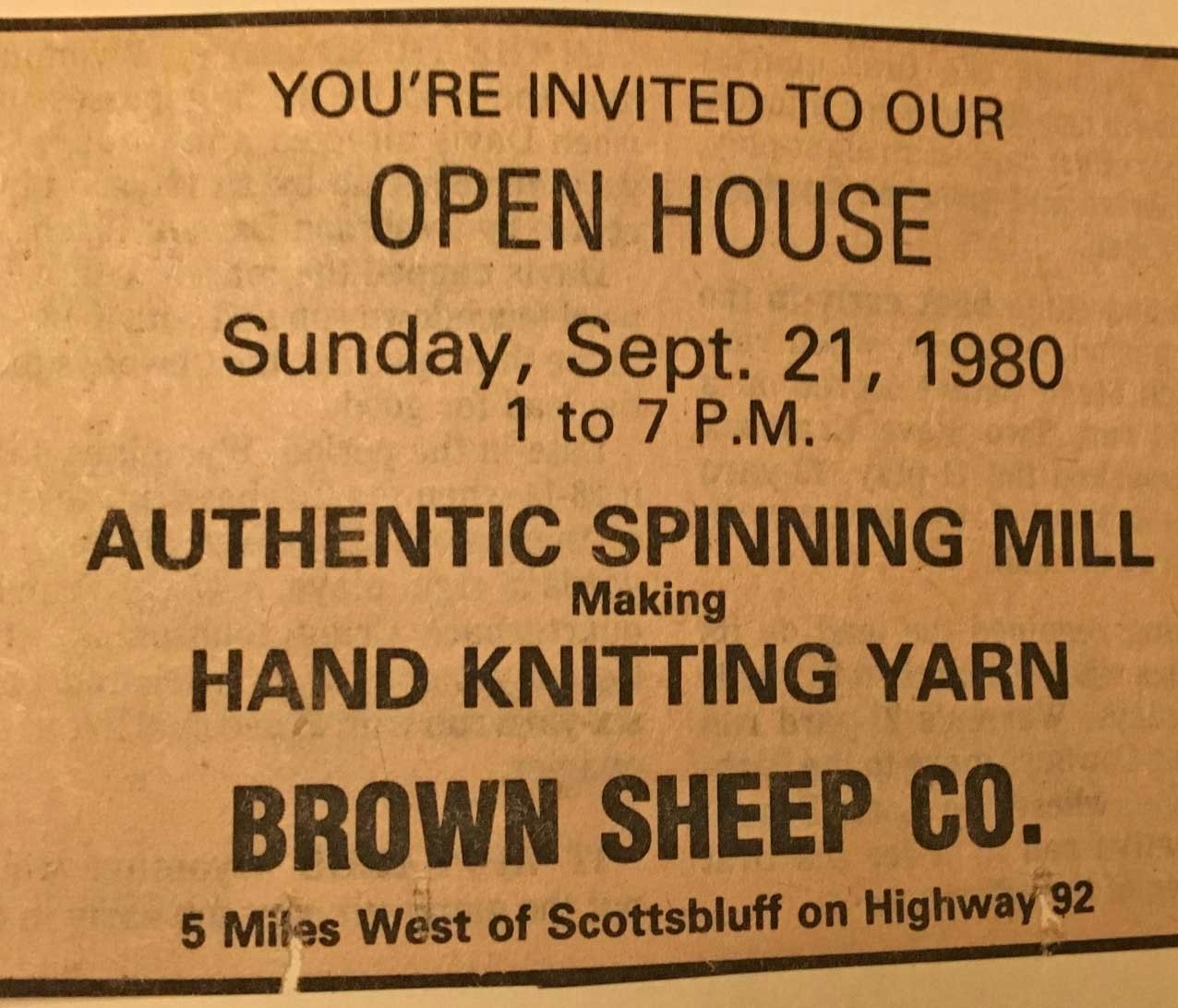
Around that time, Harlan placed an ad in the 1980 issue of Spin Off magazine that read:
Sheep Company Starts Mill
The Brown Sheep Co. of Mitchell, Nebraska, has started a spinning mill. They have wools in gray, black and white and knitting and weaving yarns for sale. For more information write: The Brown Sheep Co., Rt. 1, Mitchell, NE 69357. Send $1 for samples.
Harlan’s first successful sales outing came at a Diné/Navajo trading post, where he displayed the yarn in the trunk of his old Buick. The weavers snapped it up, and a leap of faith became a thriving enterprise. Brown Sheep Company soon began supplying yarn to Navajo weavers in the Southwest and, eventually, to yarn shops nationwide. The relationship with the Diné continues; today 85% of all contemporary Navajo rugs are woven with Brown Sheep Lamb’s Pride and Top of the Lamb, and Brown Sheep is active with the Adopt a Native Elder Program.
Get a closer look! Click on any image to open it in full-screen mode.
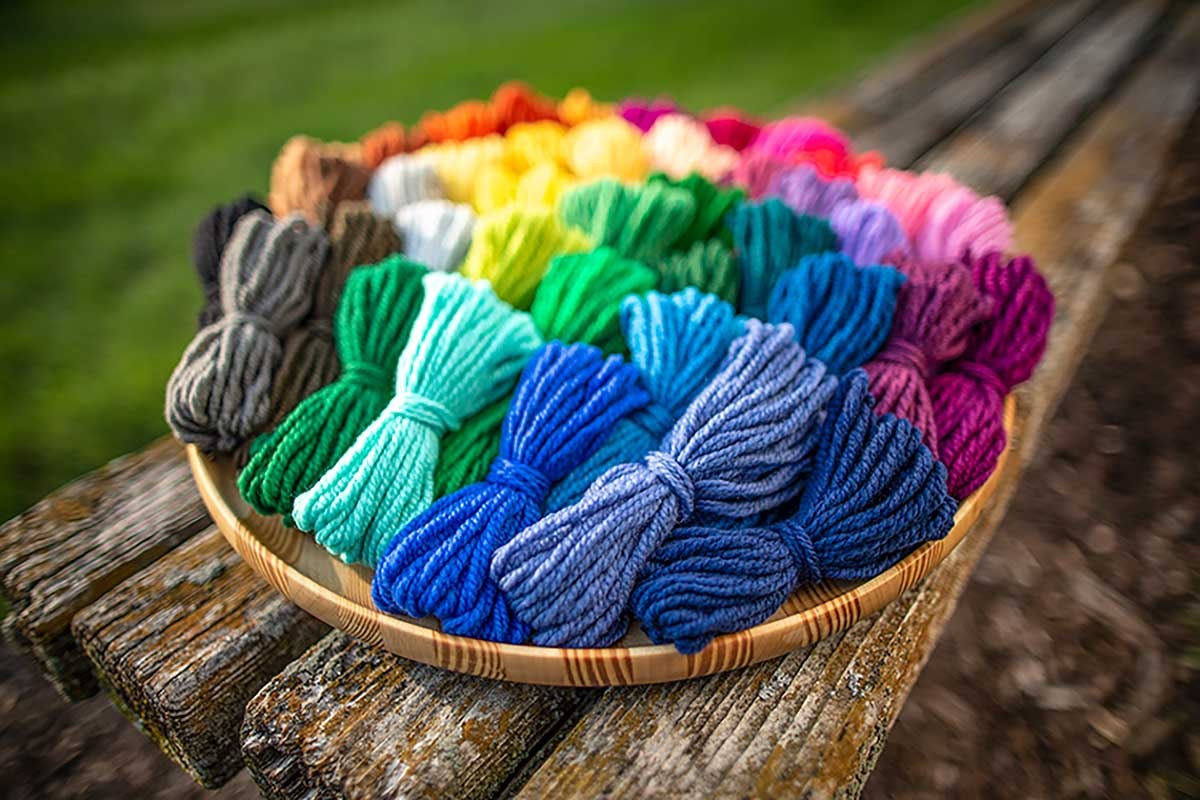
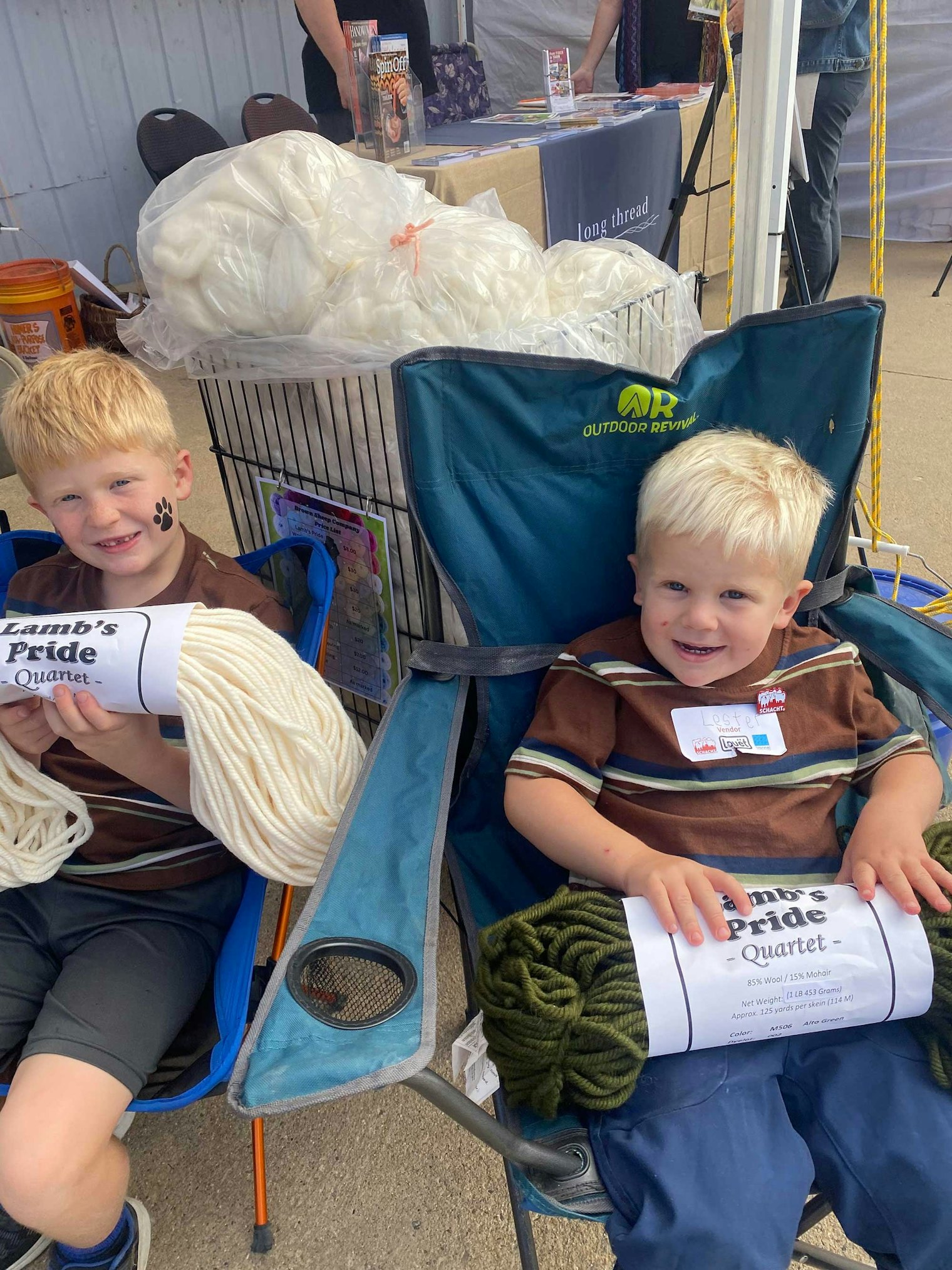
Yarn Barn of Kansas owner Susan Bateman remembers Harlan’s visit to the store in Lawrence, Kansas, on that same road trip. She placed an order of Brown Sheep yarn, and the shop has carried it ever since for knitting, weaving, and other fiber arts. “We especially love the fact that they are just a state away, that all their wool is raised in the U.S., and that it is dyed on-site,” says Susan. “They make it easy to use their yarns for your project.”
A Family Legacy
By the late 1990s, Harlan’s daughter, Peggy Jo Wells, and her husband, Robert, had left successful careers to join the family business. They systematically modernized the operation, replacing most of the original used machinery with state-of-the-art textile equipment. With a background in scientific research, Robert developed an innovative, environmentally friendly water recycling system for the mill’s dyeing operations, reducing water consumption in an arid region where every drop counts.
In 2015, the third generation joined the business when Peggy Jo and Robert’s son Andrew Wells came aboard. On a weekend break from college, when Andrew was giving tours of the mill, he met a young woman who was visiting with her mother. “I just came to the mill for a tour,” laughs Brittany Wells, now Andrew’s wife. “I never thought anything more would come of it than just learning about the yarn, but here I am ten years later.” Andrew now personally selects wool for Brown Sheep’s signature yarns. A talented weaver and designer, Brittany brings creative vision to the company. Their young sons are the fourth generation connected to this family enterprise, having already served as models.
 Brittany and Andrew Wells, with their two young sons, are following in the family tradition of manufacturing quality wool yarns.
The Philosophy Behind the Fiber
While many yarn manufacturers chase ultrafine luxury fibers, Andrew Wells focuses on choosing soft wool in appropriate grades for the yarn’s intended purposes. The company sources most of its wool from Colorado and Wyoming, supporting American sheep farmers and ensuring the quality and traceability of their raw materials.
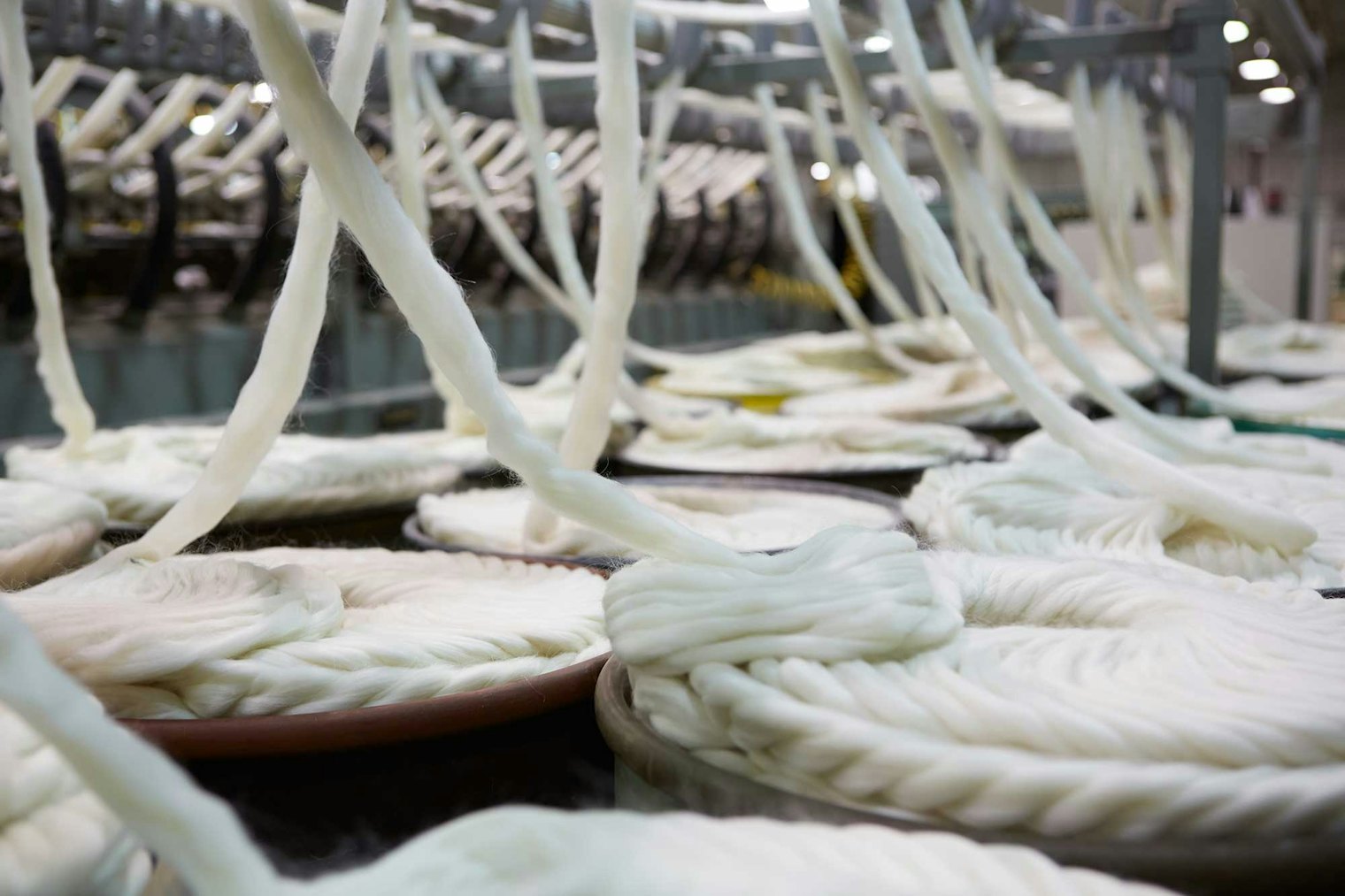
Processing is handled in-house as much as possible, from spinning through dyeing and packaging. This vertical integration allows for close quality control and long-term consistency. The company even stores a sample length of each dye lot for years, just to make sure that each skein of Lamb’s Pride or Nature Spun will match the same colorway that you bought years ago.
 Brown Sheep Company dyes an extensive range of colorways, using a process that filters the dyebaths and conserves hot water.
The Yarn Lines That Built a Reputation
Of Brown Sheep Company’s 12 yarn lines, none is more recognizable than Lamb’s Pride. This distinctive single-ply blend of 85% wool and 15% mohair has been the core of their operation. There are over 90,000 Lamb’s Pride projects on Ravelry! Many knitters recall learning to knit with it. When I teach, I keep a stash of Lamb’s Pride Bulky on hand for class demonstrations; the wool-mohair blend shows stitches clearly and holds up well to ripping and re-knitting. Nature Spun, the other mainstay, is made from carefully selected soft fibers sourced from the Front Range of Colorado and Wyoming.
Harborside Aran, the company’s newest yarn, was developed by Peggy as a tribute to the traditional yarns of the British Isles. Peggy noted that finding the right twist for the 4-ply Columbia/Rambouillet was tricky, but she succeeded. I designed the Chore Jacket in the premier issue of Farm & Fiber Knits with Harborside Aran. It gave the textured bands great stitch definition, and the stockinette was smooth and springy. It also held up well to being ripped out and reknit. (My design process is never smooth sailing!)
 Mary Lou designed the Chore Jacket using Brown Sheep’s Harborside Aran. Photo by Gale Zucker
I think Prairie Spun DK is my favorite Brown Sheep yarn. It’s a 100% wool yarn, with tight plies that help stitches and texture pop, but is soft and light. I swatched quite a few stitch patterns with it when designing the Blazing Star Mitts, and each looked better than the last. I’m dreaming about a sweater in Prairie Spun, as it would be a perfect weight, have a lovely drape, and wear well. It deserves a bigger fan club!
Beyond its knitting yarns, Brown Sheep Company also produces roving for spinning and felting, needlepoint yarn under its Waverly Wool line (450 colors!), and yarn on cones intended for weavers. The Cotton Fleece and Cotton Fine lines blend cotton with wool to create light, elastic yarns for summer garments and weaving.
 Brown Sheep’s dyed wool roving is perfect for felting and spinning.
Why Brown Sheep Company Matters
In an era of fast fashion and disposable goods, Brown Sheep Company stands apart for its commitment to local wool, local labor, and local craftsmanship, giving knitters the knowledge of where their yarn comes from and whose hands made it. As Andrew Wells explains, “We aim to make a superior product without spending a fortune, providing a quality yarn that is reasonably priced.” Although there is a great deal of yarn sold online, Andrew says he believes that the local yarn shop is the heart and soul of the industry, as wool needs to be handled to be appreciated. “Buying yarn is an experience, not just a transaction.”
Learn more about the Brown Sheep Company
Visit the Brown Sheep website to learn more, including where to purchase their yarn.
Listen to the Long Thread Podcast
Hear Andrew and Brittany talk about the process of making high-quality wool yarns, the impact that Brown Sheep Company has in the American craft landscape, and what makes them more excited than ever to carry on the family tradition in the Long Thread Podcast.
Subscribers! Get the Pattern Now
Mary Lou Egan designed the new Blazing Star Mitts using Brown Sheep Prairie Spun DK. Get it now in the Farm & Fiber Knits Library.
 Mary Lou Egan designed the Blazing Star Mitts using Brown Sheep‘s Prairie Spun DK. Photo by Gale Zucker
Avondale Sheep: A Breed-Specific Yarn Rooted in the Snoqualmie Valley
According to these mill owners, breed-specific yarns ask us to pay attention—to staple length and sheen, to regional abundance, and to the quiet decisions that shape a yarn long before it reaches a knitter’s hands.
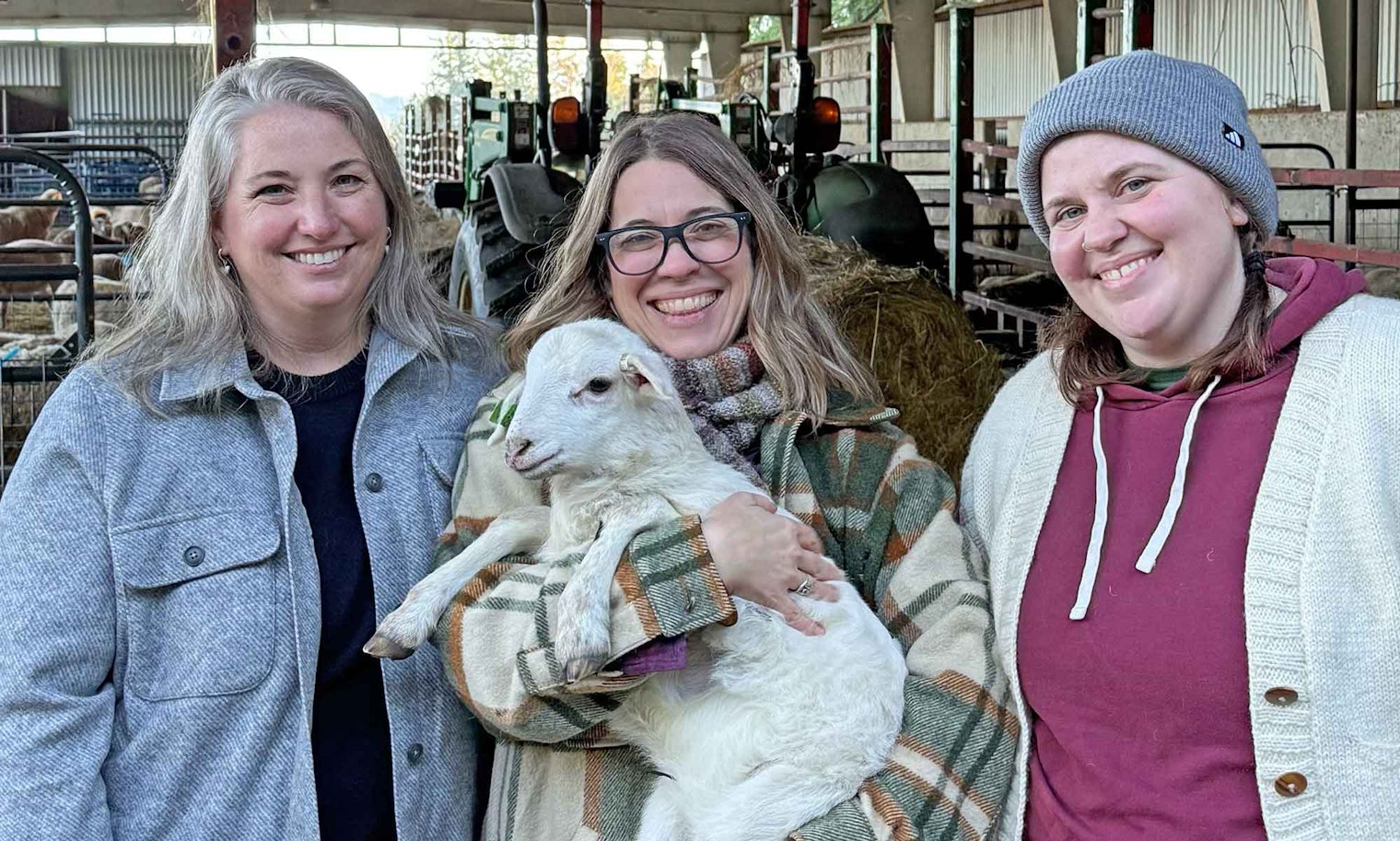
Editor‘s note: In a recent article, Jessica Schwab, co-owner of Skagit Woolen Works, gave us a detailed insider‘s look at how their mill turns fiber from San Juan Woolworks‘s annual shearing into a yarn that knitters can’t stop talking about—their Zephyr line. Now, Jessica and her business partner, Anna, have found that American Wool Month, hosted by Strikke Yarn & Supply, has given them the perfect excuse to go deeper. Rather than simply celebrating domestic wool, they set out to create a one-of-a-kind farm yarn that tells the story of a local flock, a historic farm, and a shared set of values. Here‘s Jess:
To create a custom, one-of-a-kind yarn that celebrates the wool of our region and highlights a unique flock is a particularly special project for us. This is an endeavor that honors the land, the shepherds, and the millers (that’s us) to showcase our collective values of promoting regional small-batch yarn, in partnership with the farm and a local yarn store.
This project was born of a desire to create an approachable, small-batch farm yarn exclusively for Strikke Yarn & Supply’s annual American Wool Month, an event that celebrates all things domestic wool every February.
Click on the images below to open in full-screen mode and to learn more.
Strikke Yarn and Their Mission
According to owner Lindsay Christiansen, “Strikke Yarn & Supply opened in the fall of 2023 in Bothell, WA. We began American Wool Month in February 2024 to support local farms and mills—in general, to educate customers on where their wool comes from, starting with the farm to the sheep, through production, and into the hands of makers. After meeting with Skagit Woolen Works, and others in the industry, this celebration of our farms and sheep has grown into a fundamental piece of our shop, adding to the carefully selected yarns from companies we’ve gotten to know and admire.”
We’ve been partnering with Strikke for two years in a row, offering lectures and classes during American Wool Month to provide customers with a deeper understanding of the challenges facing domestic wool production and processing. This year, we wanted to go one step further and offer a truly unique collaboration with a local farm.
 The Avondale flock in the field at their new home at Carnation Farms. Photo by Alex Hagiepetros
Last fall, I had the opportunity to attend shearing day at Carnation Farms, an historic farm in the Snoqualmie Valley, not far from Strikke. We’ve been processing the fiber from their mixed flock of Romney, Finn, and Romney/Finn crosses for a few years now, and early last year they acquired a flock of around 30 ewes from nearby Aspen Hollow Farm after their shepherd unexpectedly passed away.
 Shearing day at Carnation Farms last fall included the Avondales and their mixed flock of Romneys and Finns.
The History of Avondales
Carnation’s livestock manager Alex Hagiepetros says of these sheep: “Colloquially known as the ‘Avondales,’ these sheep were named after the road where Jeff Rogers, their shepherd and the creator of this breed, lived. The sheep were primarily bred for meat, with good usable fiber being a strong secondary goal. Much like several classic British breeds, a lot of care has been put into the development of this breed (selected over more than 20 generations) to create a sheep uniquely suited to the Snoqualmie Valley, one that thrives in this particular environment.” The Avondale flock is a mix of BFL, Clun Forest, and Suffolk, and you can see some of those characteristics in the fleeces, although they really are their own unique sheep at this point.
Bluefaced Leicester, or BFL, is commonly used in this region to improve the fiber quality. They’re known for their size and sweet curly locks with lovely sheen. Clun Forest are a little less common, and are in fact on the Livestock Conservancy’s Heritage Breed Conservation List. Considered a ‘triple-purpose’ breed good for dairy, meat, and fleece, they provide a medium, dense fleece with a downy, bouncy quality. Finally, Suffolk is a predominant meat breed in our area, but for fiber lovers, Suffolk can also be a sought-after fleece for its resistance to felting/shrinking, and bouncy, soft yarn. The majority of the fleeces showcase sheen and a slight curl from their BFL lineage, and the sheep themselves take after their Clun Forest and Suffolk heritage in look.
 A freshly shorn fleece from shearing day, displaying the beautiful qualities of this breed.
The Making of Beautiful Yarn
We brought the fleeces from the fall shearing back to our mill and divided them into two categories: one for yarn and one for roving. Our spinning frames need a consistent staple length, ideally in the 4–5" range, so we kept the longer-staple fleeces for yarn, and made roving out of the slightly shorter batch. We then blended a portion of the fleece with brown Romney, as that fiber is regionally abundant and provided similar qualities to the fleeces, giving us two beautiful natural colors.
 A mixture of clean locks on the infeed of our largest, century-old carder, 'Rosie'. This process blends and aligns the fibers into roving.
After dividing the fleeces, we scoured them and opted to send the clean locks directly to our big carder to begin the blending. While we often use our picker to pre-blend and open up the locks, some of the fleeces in this batch were from lambs (super soft!) and we didn’t want to overhandle those tender little fleeces. This way, the infeed on our carder could gently tease open the locks. Further blending for the yarn happens at the pindrafter, as multiple passes are made to create an even roving for spinning.
We spun this into a worsted-weight two-ply yarn, keeping the spin soft and lofty. The hand is wonderful; it feels plump and next-to-skin soft, ideal for the Meadow Thistle cowl pattern designed specifically for this yarn by Rachel Kieselburg. Our yarn is considered semi-woolen, as we have worsted spinners, and spin from roving rather worsted-prep (combed) roving which would be a true worsted-spun yarn. This way the yarn has strength but maintains a bit of loft.
 The final roving has been pindrafted multiple times to ensure an even spin; these coils are ready to head to the spinning frames.
The yarn is available exclusively through Strikke Yarn & Supply as a kit, along with the roving blend we made for handspinners as well. We included some spinning notes so that the yarn can be recreated for the design, or spun to the spinners’ preference. While our machines can’t do a true woolen spin, we think this roving would be a perfect candidate for it, trapping air for a warm, cozy yarn.
 Two natural colors of the 2-ply worsted-weight yarn, plus roving hanks for handspinning.
This project has been very near and dear to my heart; having started the mill just four years ago, it really feels like we’ve begun to find our niche for the region, and hopefully be of service to the farmers and the customers using our products. The support for small-batch, domestically produced yarn means so much right now, and we’re eager to continue our goal of open dialogue about the challenges facing the industry, with an eye toward a very hopeful future.
Resources
For more information about American Wool Month, visit strikkeyarns.com.
Read about the history and current work of Carnation Farms, visit carnationfarms.org.
Learn more about Skagit Woolen Works.
Wool Mill Magic: Breed-Specific Yarn in the Pacific Northwest
What does it take to turn a farm’s annual shearing into a yarn that knitters can’t stop talking about? A mill owner is here to share the process—from sheep to skein.
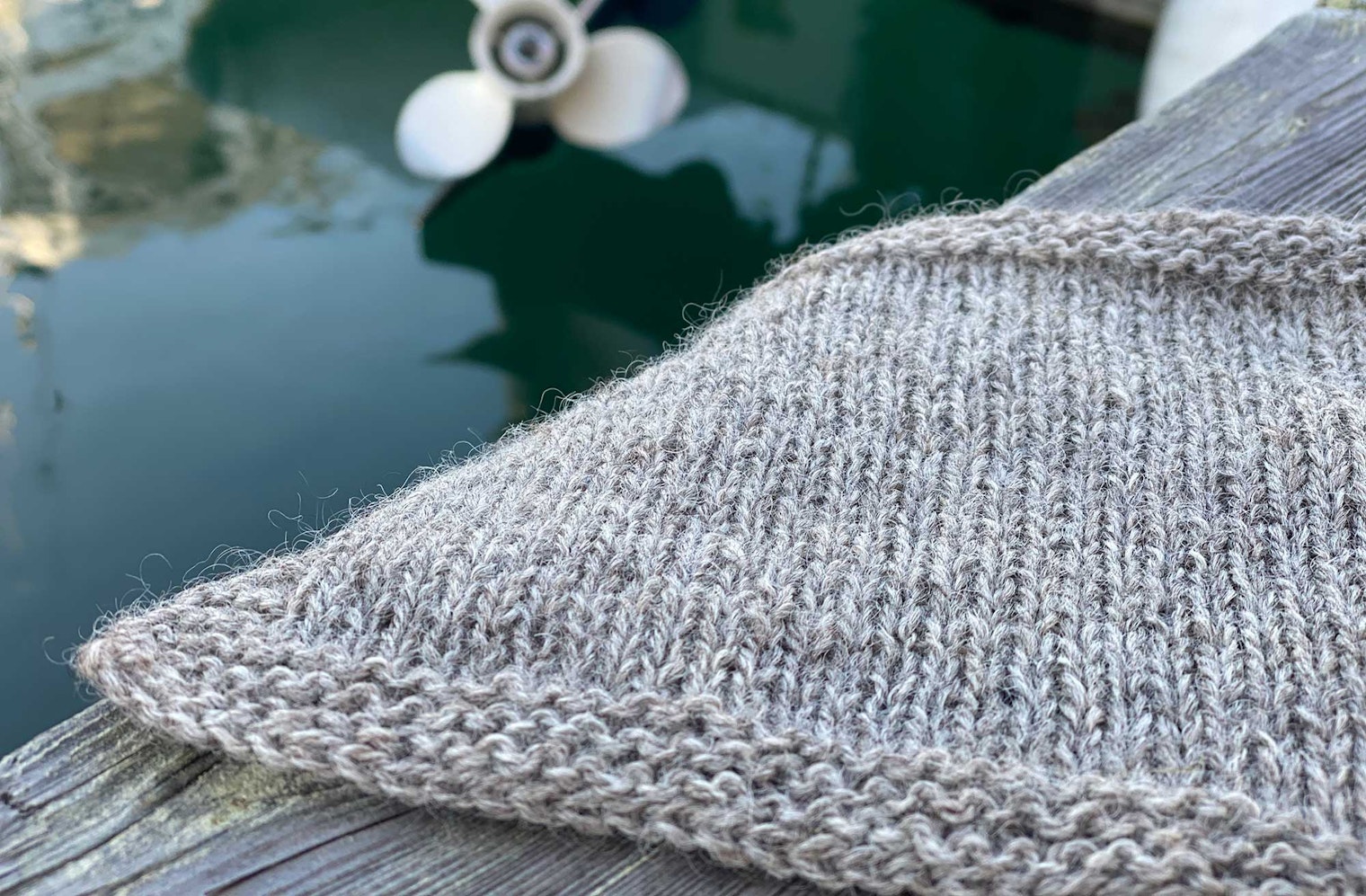
Skagit Woolen Works is a woman-owned processing mill located in the Puget Sound region of the United States. As co-owners, my partner, Anna, and I look at several factors when milling breed-specific yarns, among them the properties of the fleece and what makes these fibers special (and craft-worthy). Here, we take a behind-the-scenes look at milling a new yarn for Sarah Pope and Adam Greene of San Juan Woolworks, located on San Juan Island, Washington.
Sarah and Adam raise a mixed-breed flock that produces fiber for an array of yarn lines for eager knitters. You may remember reading about some of Sarah’s decisions behind growing her flock, and her advice on how to approach crafting with small batch, breed-specific yarns.
 Sarah with a group of North Country Cheviot sheep. Photo by Adam Greene
During the month of October, we milled one of Sarah and Adam’s newer yarns, Zephyr. The main fleeces for this yarn are Bluefaced Leicester crosses, which contribute the fiber length and luster, combined with fiber from other local farms. Sarah sources this other fiber to ensure a more sizable batch as well as make use of smaller amounts that might not otherwise be millable on their own. This supports other farms that are making an effort to produce quality fiber but don’t have the means to develop an entire retail line of products.
 Affectionately referred to as Puffy Pillow, one of the first fleeces milled by Jess and Anna became pillows for Sarah and her family. Photo by Sarah Pope
Those of us at the mill fondly remember Puffy Pillow (pictured above) for contributing one of the first fleeces we experimented with when we opened the mill in 2022. A less-than-ideal fleece became—you guessed it—pillows for Sarah’s family. Puffy and others in this batch of yarn are true "island mutts," combining longwool heritage, a bit of East Friesian for that puffy factor, and Romney adding gorgeous color. The color on this fleece is a cool steely gray, with soft sheen and wavy locks.
Click on any image to view it in full-screen mode and to learn more.
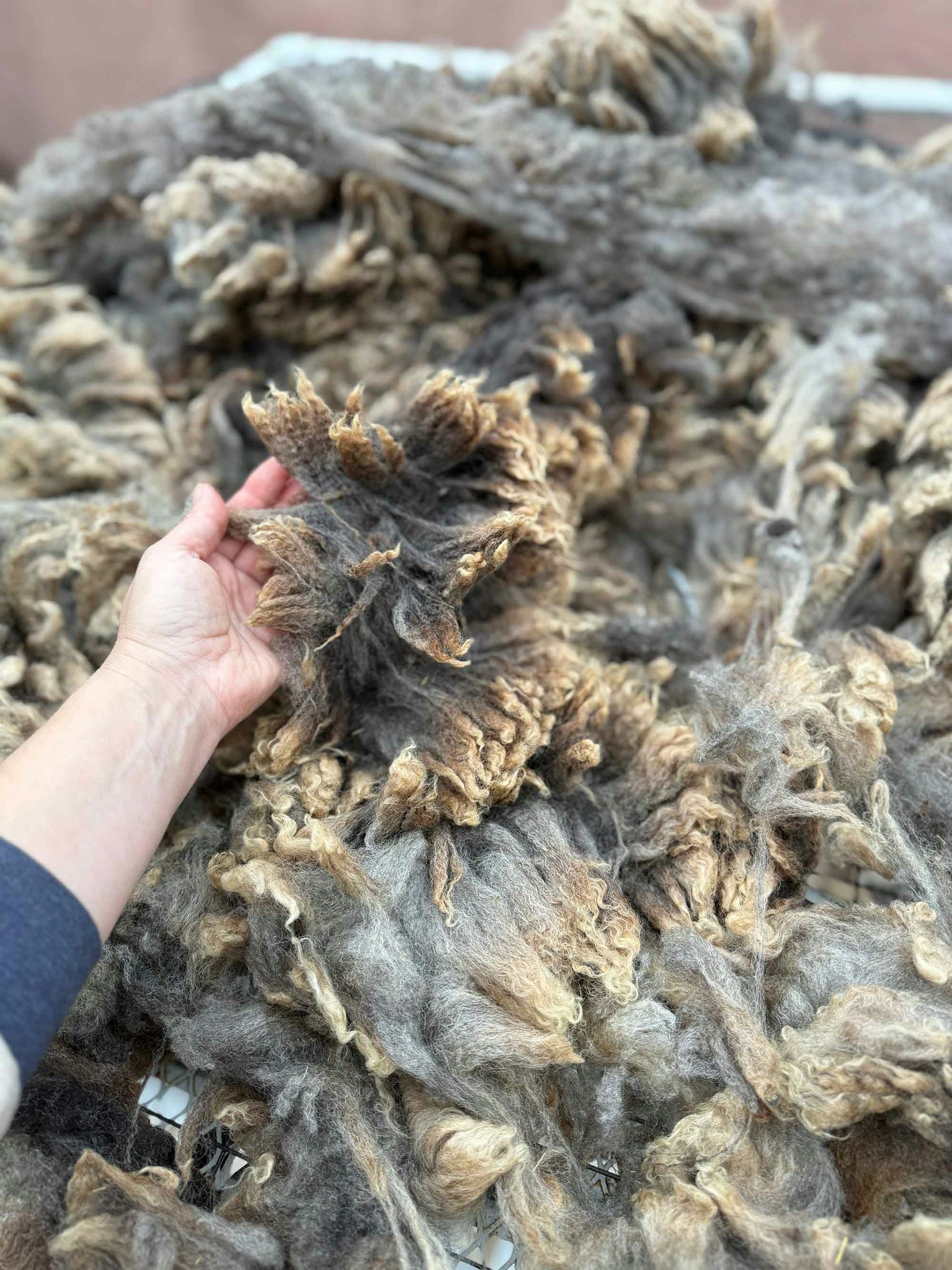
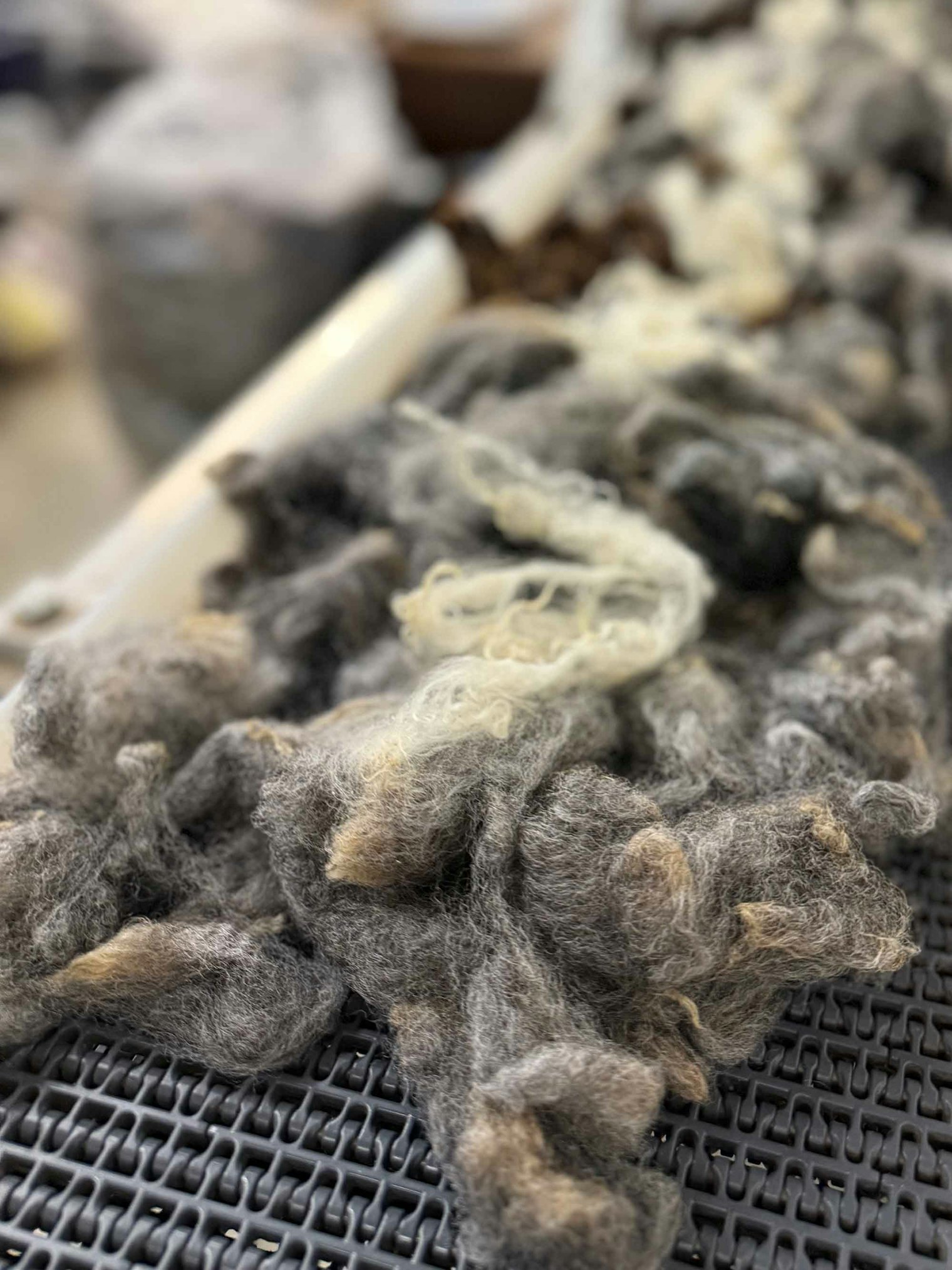
We thoroughly check each fleece for consistency in staple length, which is crucial for producing a well-spun yarn on our machinery. Sarah and her crew are expert skirters, which means we receive exceptionally clean fleeces—a good way to make your miller happy. Once we’ve evaluated the fleeces, we work closely with Sarah to blend based on color and overall hand of the fleece, or the feel and quality of the wool. An ideal fleece for Sarah’s Zephyr yarn has staple length on the longer side (5-6"), with some longwool-type luster and a medium-soft hand.
Since we batch by staple length and not just color, each batch of Zephyr might have a slightly different hue. This makes each run truly small batch, so it’s always a good idea to purchase enough for your intended project.
Sarah’s fleeces wash up very well, being overall lower in lanolin and free of dirt. Once clean, we pre-blend the fleeces and tease them open on our picker for a consistent roving.
Here you can see what makes Zephyr special: we blend in 10% by weight of fine kid mohair from another Washington farm, resulting in a luscious hand and subtle halo in the finished yarn. This two-ply yarn is a gauge-shifter extraordinaire—think lace or gauzy stockinette with drape for days.
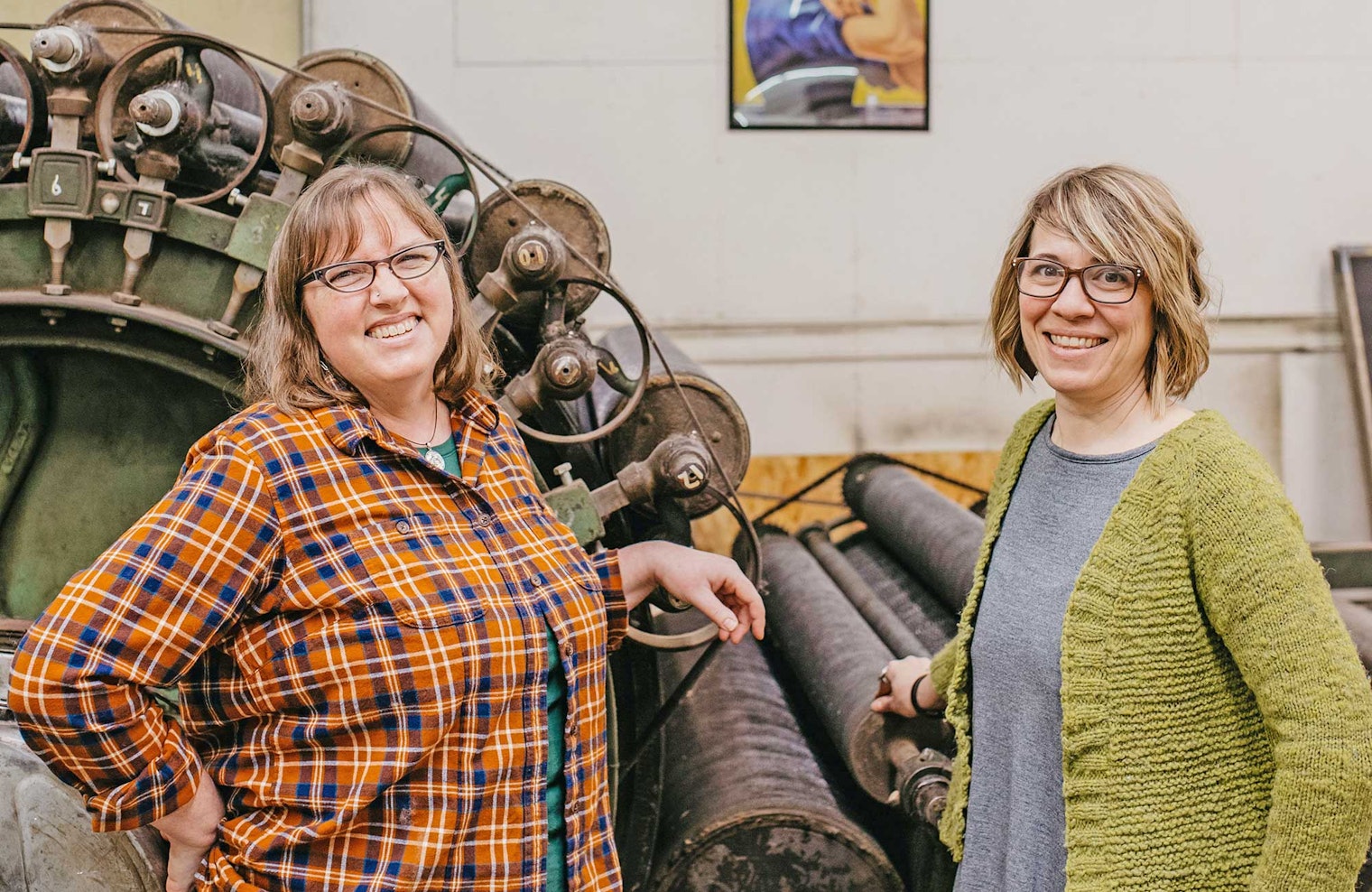
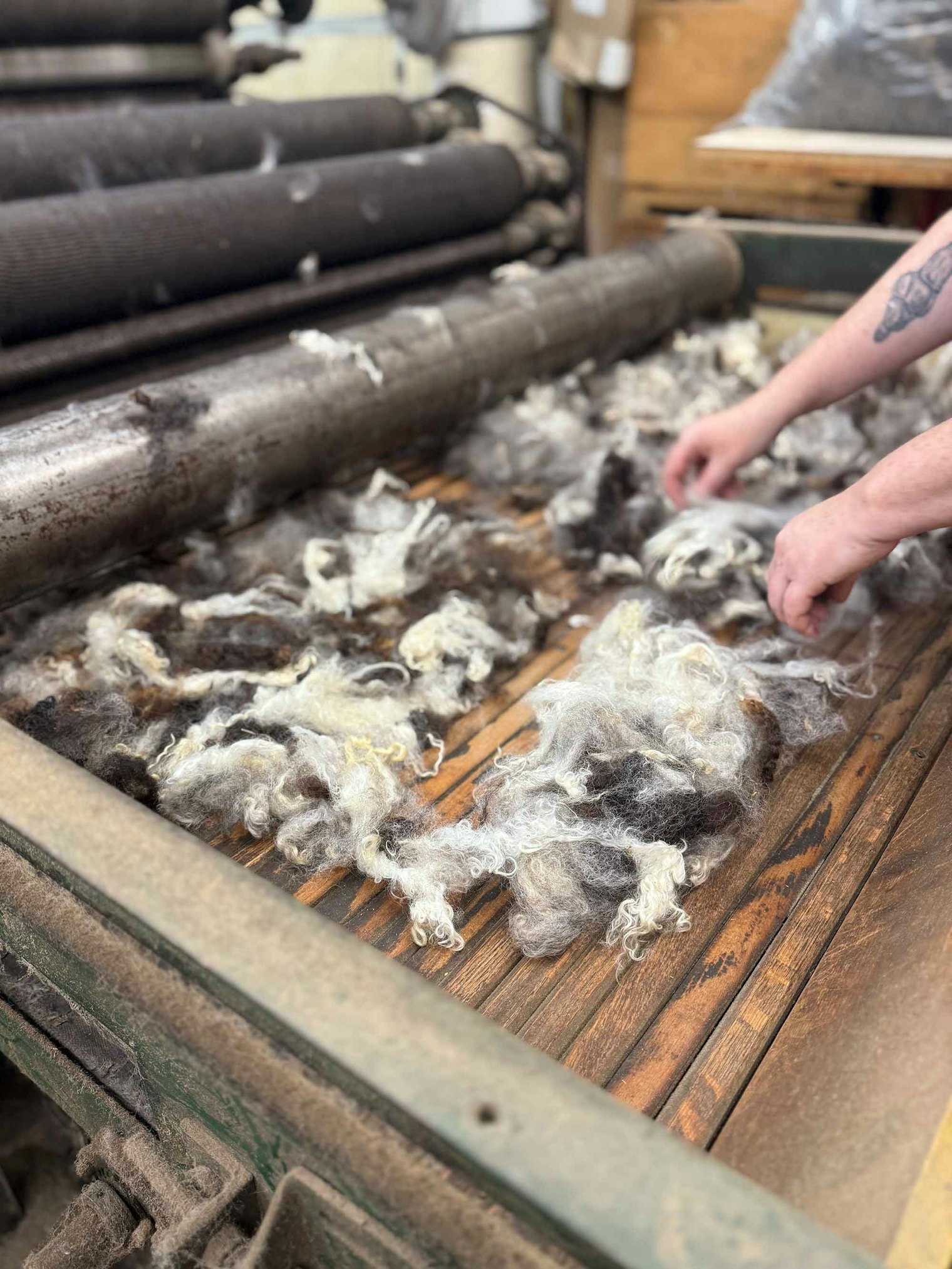
The picked fibers are then loaded onto our century-old carder named Rosie, which works great with this blend. Rosie is best suited for medium-fine to coarser wools; anything super fine (think 22 micron or lower) could become neppy, making for an inconsistent yarn. Our mill is well suited for the fibers grown in this region; the Pacific Northwest has few finewool breeds due to our climate, and we can happily process the wide array of sheep and camelids in this region (over two dozen breeds and counting). Particular favorites for our machinery are these Island Crosses, Romney, Coopworth, East Friesian, Jacob, and Finn.
The amount of mohair in this blend is just right; too much mohair and the resulting yarn could be ropy and too slippery for our machinery. The 10% mohair gives Sarah what she’s looking for in the yarn, plus ensures an easy-breezy spin for our machines.
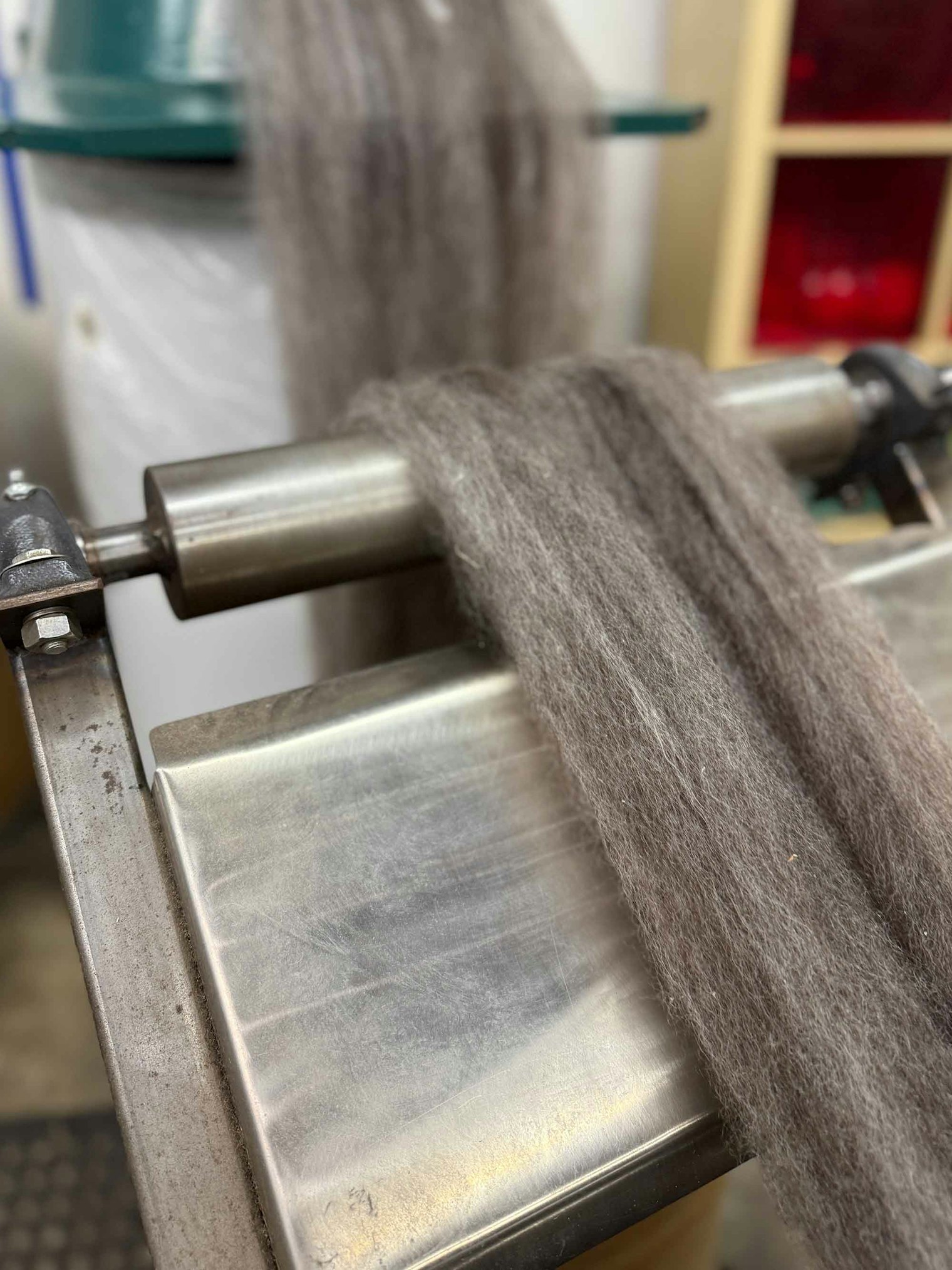
Once carded into roving, the fibers are sent through our pindrafter multiple times. If you’re a handspinner, you know that proper (and easy) drafting is a crucial part of making a consistent yarn. It’s true here at the mill as well. Every pass through the pindrafter evens out the coils of fiber that will go to the spinners. Consistent roving equals consistent yarn, making your gauge more regular as you’re knitting with it.
 The roving travels through the pindrafter several times in preparation for the spinners.
At this point in the process, we’ve been working on the fibers for about a week. This was a good-sized batch resulting in about 80 skeins of yarn, so the steps—from washing and drying, to picking, carding, and pindrafting—all take a fair bit of time. Next, we check to see if we did a good job with the prep, which is always a fun—and sometimes nail-biting—moment!
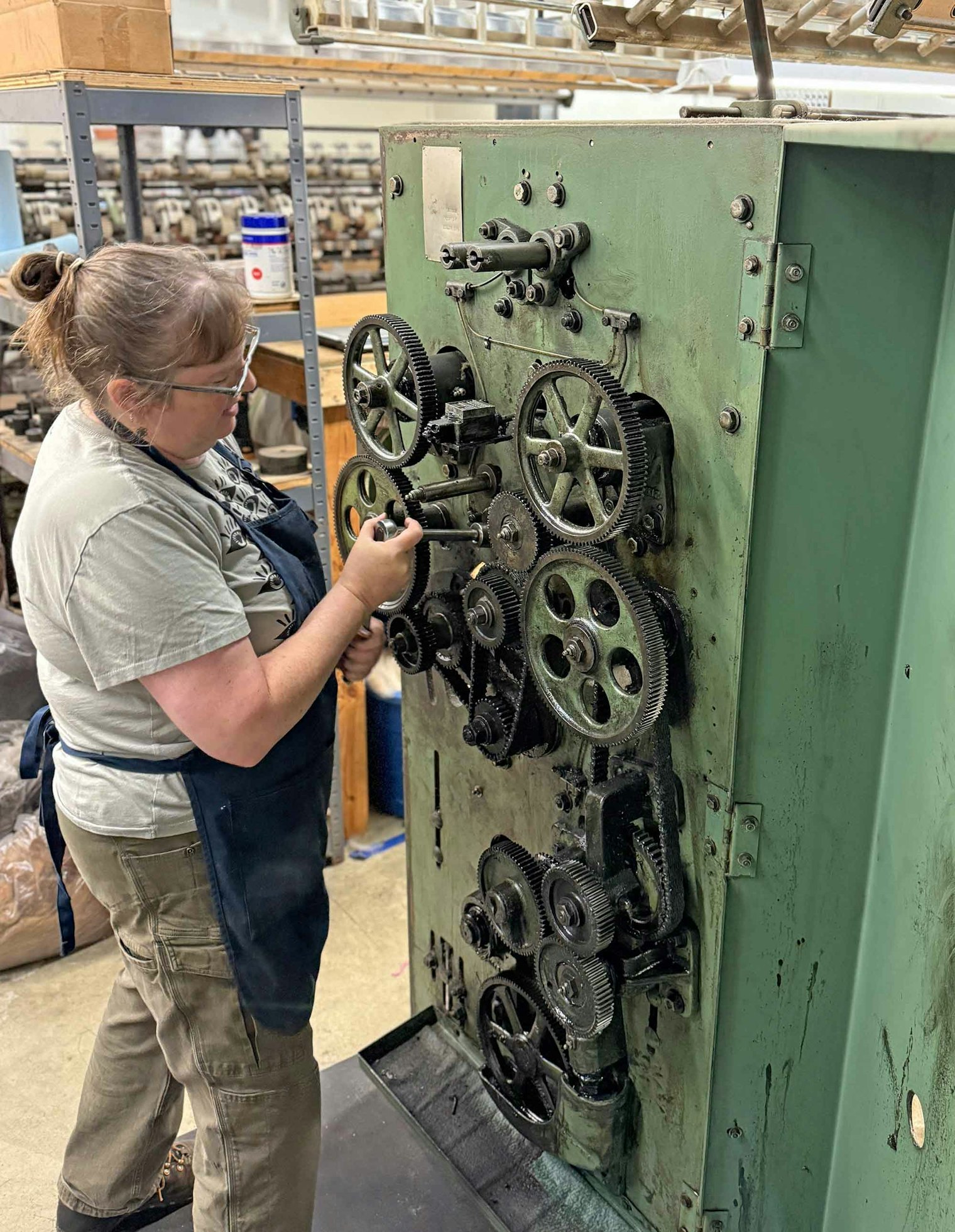
Anna sets gears on the spinners to apply the intended amount of twist. This is based off of previous batches, then sampled repeatedly to match what this batch needs. We hope for an exact match, but since each batch of yarn contains different fleeces, the way those fibers take the spin varies. Even if we had the exact same sheep year after year, many factors influence the final quality of the fleece, and it’s our job to make sure we bring the best out of each one.
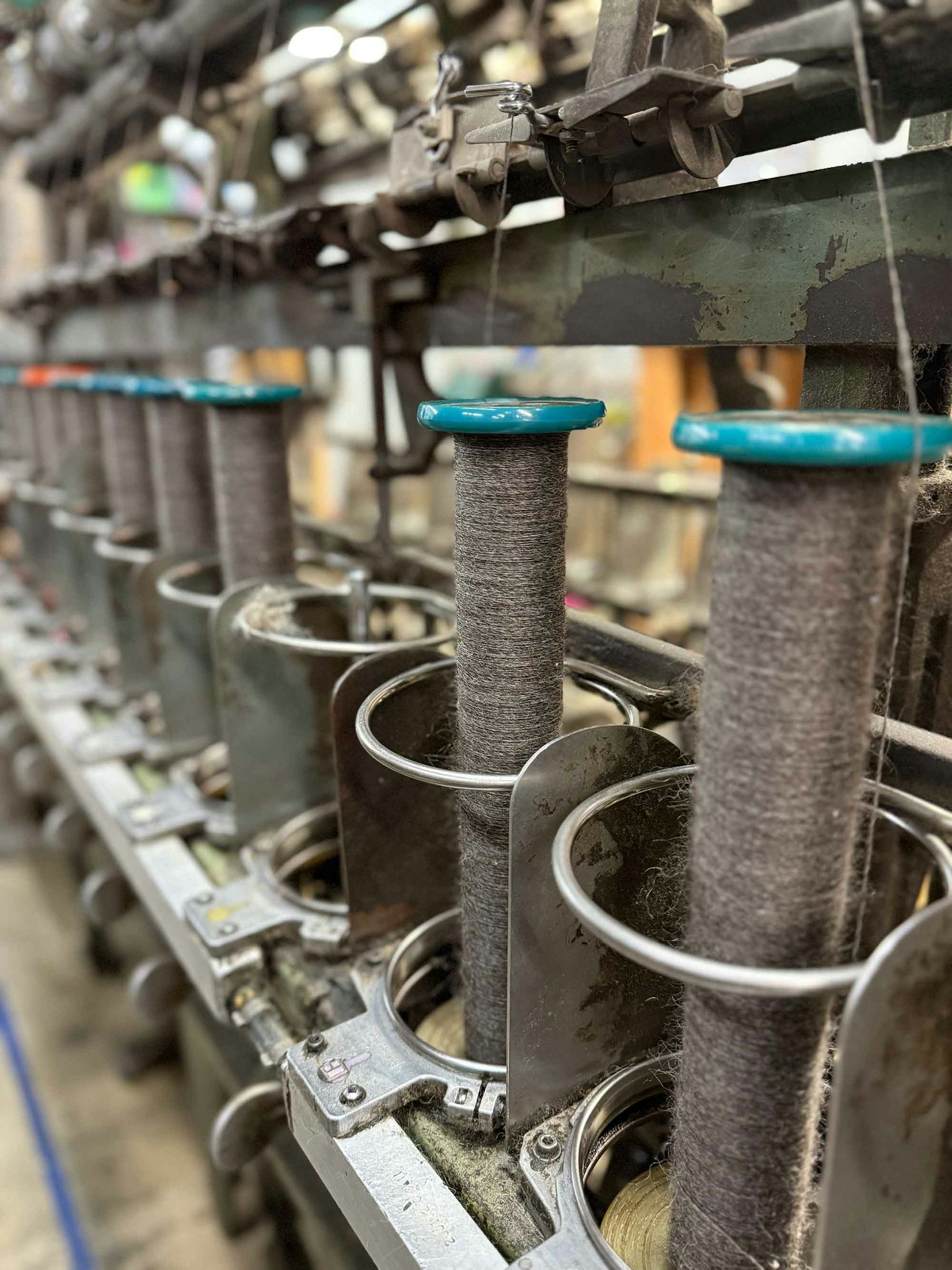
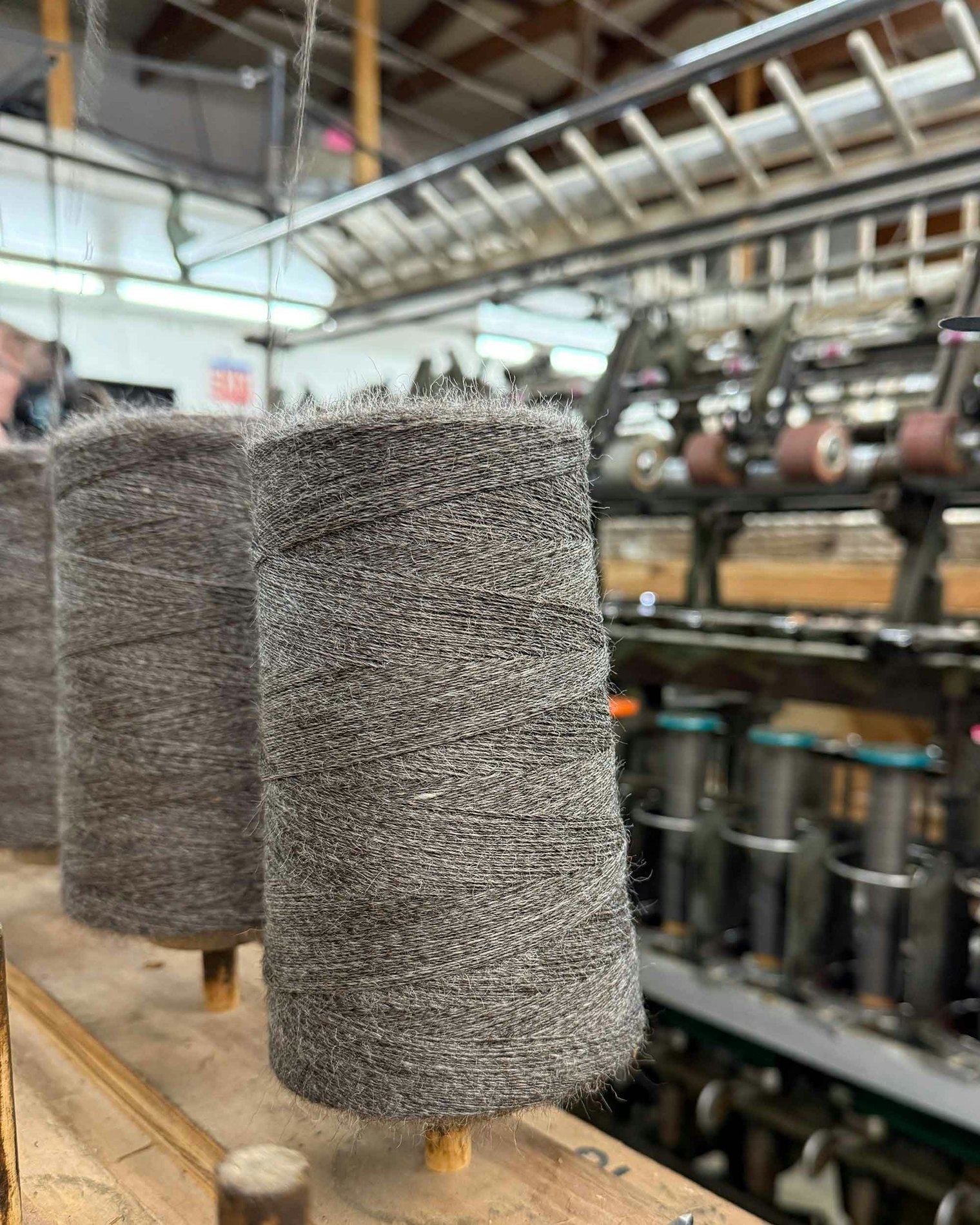
Success! We’ve got a nice single, ready to be plied, then skeined and twisted. This yarn is considered a low-ply yarn; this keeps the resulting fabric lofty and airy, and most importantly, soft. Too much twist with these fibers could mean a more ropy texture. Sarah’s hard work has paid off, and we’ve done our best by these beautiful fleeces, all with the goal of supporting a small, local family farm to provide the best product for their eager crafters.
 The finished skeins of Zephyr, which Sarah describes as “an airy sport/heavy laceweight that loves to do loose-gauge stockinette or big, rustic lace.”
Resources
Read Sarah’s articles here:
 Sarah’s Zephyr Vest and Woolgrowers Hat and Cowl; photos by Gale Zucker
Find Sarah’s patterns in the Farm & Fiber Knits Library:
No Fleece Left Behind: Meet a Zero-Waste Woolen Mill
Discover how two passionate makers transformed a century-old carding machine into Skagit Woolen Works, a thriving, zero-waste wool mill that’s revitalizing fiber traditions in the Pacific Northwest.
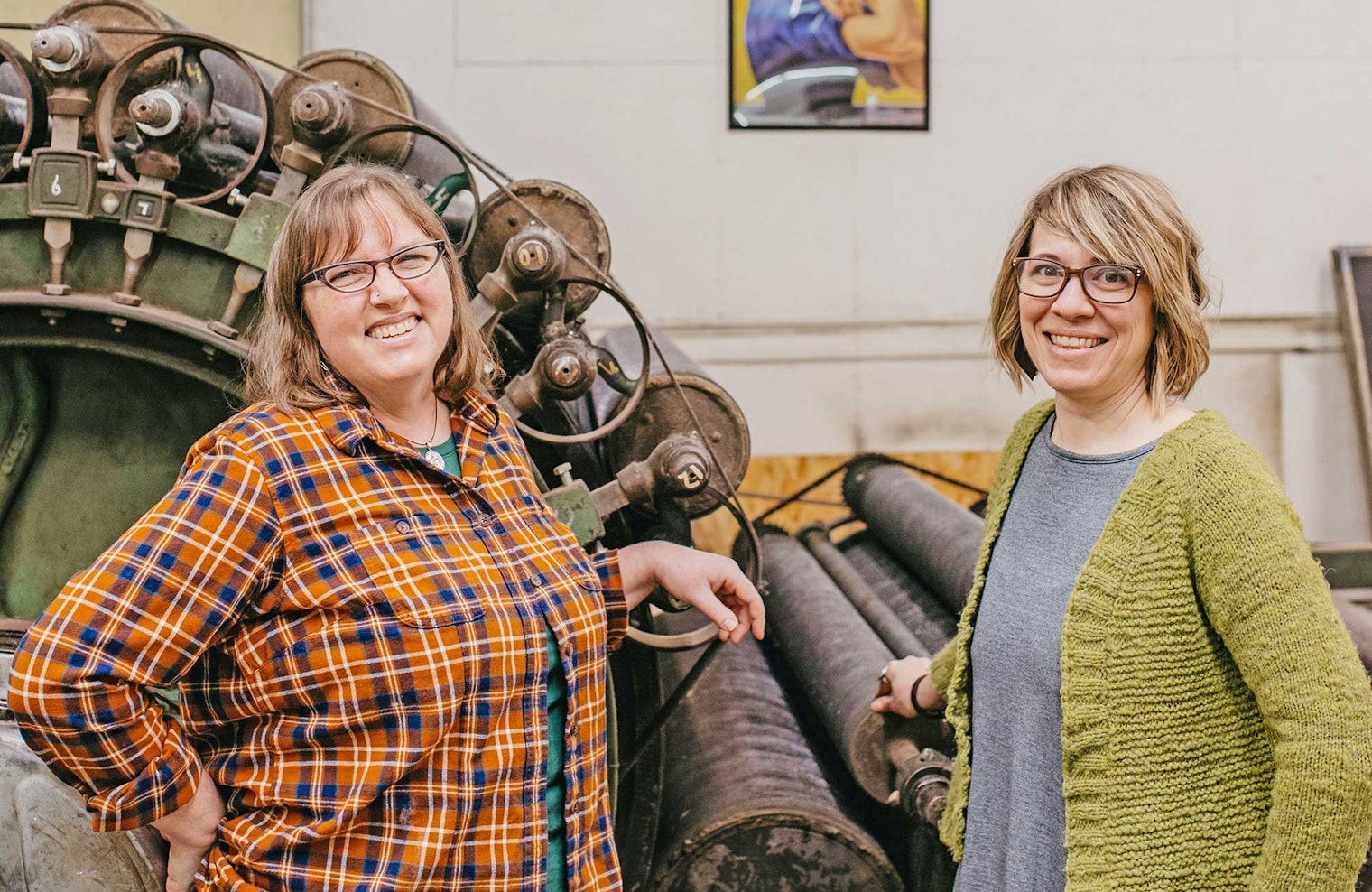
With a passion for supporting local shepherds and fiber farms, Jessica Schwab and Anna Hosick-Kalahan, owners of Skagit Woolen Works in Mount Vernon, Washington, turned their love of natural fibers into a full-service wool mill that supports small farms and promotes zero-waste production. Their work at the mill emphasizes creativity, sustainability, and community, transforming every fleece into products like yarn, roving, felt, and wool pellets while fostering appreciation for regional wool. Let’s find out more about how they got started, how they’re working to create "wool ambassadors," and about the hands-on work they find to be very rewarding.
—Editors
Farm & Fiber Knits: Not many knitters find themselves growing a woolen mill from the ground up—how did Skagit Woolen Works come to be?
Jess: Our journey to starting the mill began with our love of crafts and natural materials. We saw a need for more of the materials we love to use; seeking out locally sourced and produced materials was a challenge, and we knew there were shepherds clamoring for mill services. The lack of infrastructure is a huge part of that puzzle, and when the opportunity to purchase our first piece of machinery came up—a century-old industrial carder lovingly named Rosie—we knew it could be the start of something big for us and our fiber community. We translated our love of natural fibers—both in craft and lifestyle—into a rapidly growing, full-service mill with a focus on processing for small fiber-producing farms in our region, the Pacific Northwest.
Anna: So much of our experience with handcrafting informs our business work, in terms of concepts and structural understanding of the hands-on parts but also in terms of our deep passion to grow and nurture the crafting communities that we come out of.
Get a closer look! Click any image in the gallery below to open it in full-screen mode.
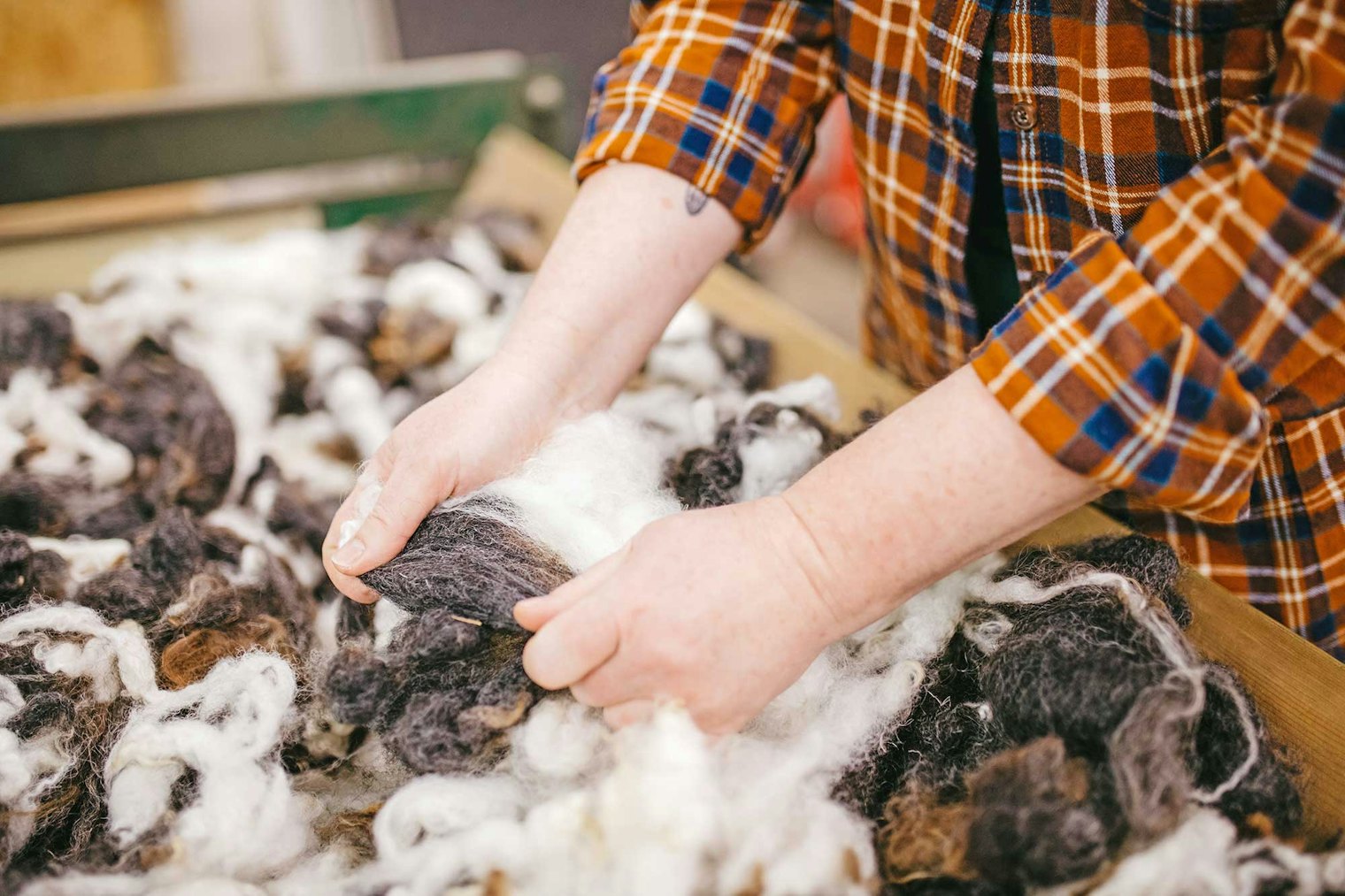
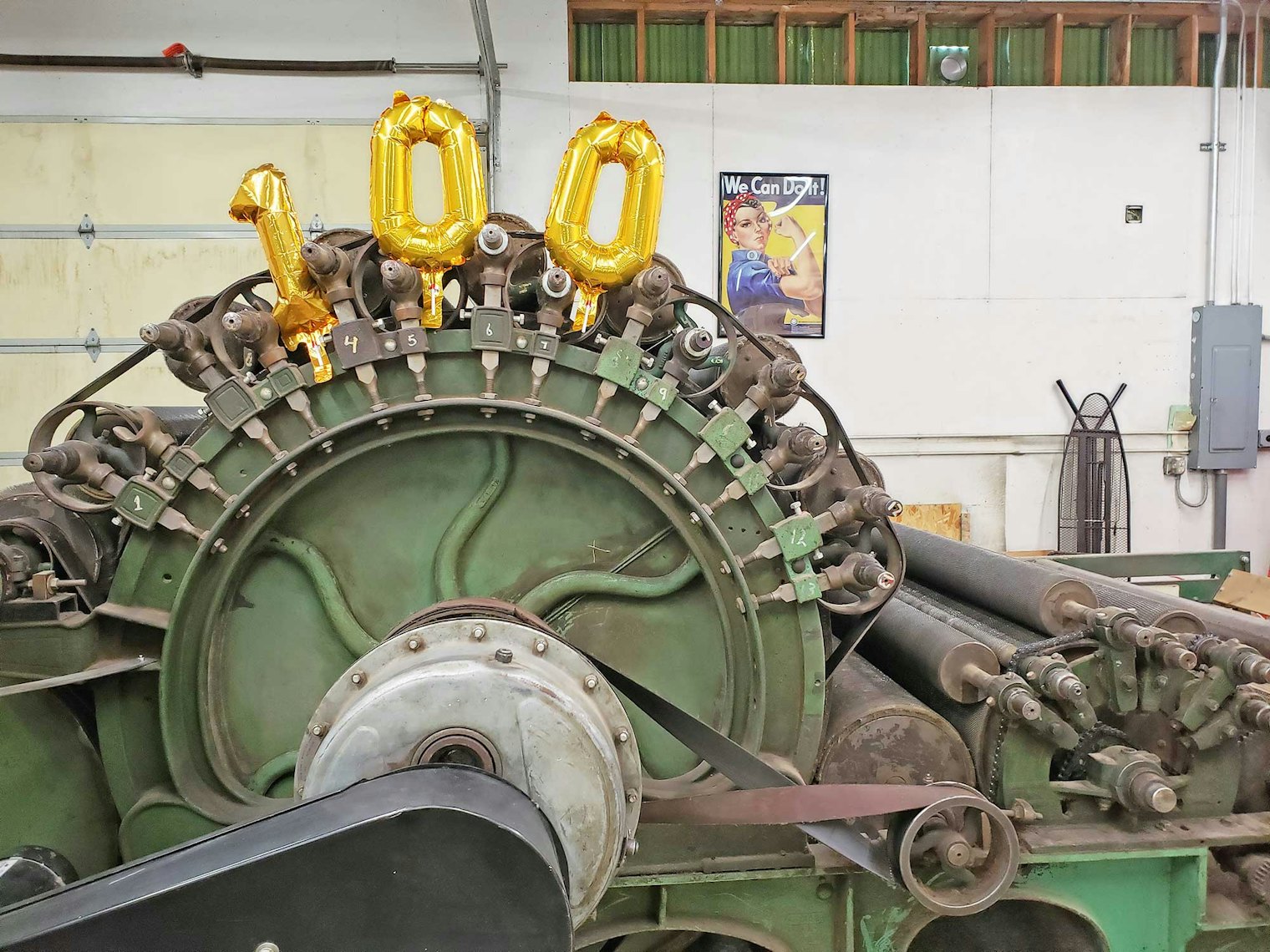
FFK: I imagine some parts of the process are more fun than others—what do you love?
Jess: I love coming up with creative uses for our regional wool. We started out by aiming to make use of 100% of the fleece that came through our mill, whether or not it was textile quality. That’s led to some creative solutions to the abundance of wool in the region. I also love twisting and labeling our roving and yarn. There’s something satisfying about looking at the final product and thinking about all the hands that touched that fiber along the way, from the loving care of the shepherds, the shearers, and throughout the processing at our mill.
Anna: I love the opportunities to continue learning and experiencing new things. Each individual project gives me new opportunities to pick up new insight into our process and materials. The business has also opened wonderful paths for me to learn about entirely new and exciting avenues related to our industry, such as machine maintenance and operations and the history that’s tied up with textile production in our region and beyond.
 Anna works on some of the equipment. Photo by Jessica Schwab
FFK: It seems like you really enjoy both the hands-on daily work at fleece level as well as the big-picture impacts on the fiber community?
Jess and Anna: We’re both really passionate about the collaborative process in our work and love that so much of it is done by hand. When we give presentations on regional wool processing, our goal is to create “wool ambassadors.” Our crafting community is amazingly supportive of our work, and we owe them a lot for the support they continually show for our products. We hope we can instill a joy in seeking out natural wool products beyond crafts. Additionally, as many big cool machines as we have, our work is still very hands-on—every fleece, every hank or skein we twist, every lock we tease open—our hands are still our best tools, making it very labor intensive but also highly rewarding.
 Island Twist, from the Winter 2025 Collection. Jess and Anna say, "We hand-selected Romney fleeces for color and softness from the Puget Sound region and blended them with long, crimpy, super-soft alpaca for a sumptous hand and wonderful drape with next-to-skin softness." Photo by Jessica Schwab
FFK: Are you continuing to grow the mill to include additional products and options?
Jess and Anna: We’re a zero-waste mill, which means that everything we receive (even the really dirty stuff!) can be transformed into a value-added product either for our retail customers or the producers we service. We have an immense array of sheep breeds and alpaca herds throughout our region, and getting to know each farm, each fleece is a rewarding challenge. Finding the best use of that abundant resource—be it yarn, roving, quilt batts, stuffing, felt, or wool pellets—is our ultimate goal. We can elevate even the humblest of fleeces by just spending time with the wool and letting its properties guide its best use.
In 2023, our friends and mill mentors at Abundant Earth Fiber needed to find a new home for their spinning equipment. We’d been learning from them and working with them from the beginning, and their guidance and trust gave us the confidence to pursue our dream of making our own yarn. The universe gave us the perfect opportunity to grow our business, carry on the work that Abundant Earth has been doing for over a decade, and be an even greater benefit to our fiber community. Adding spinning to our already full line-up of services has proved somewhat humbling but also highly gratifying when we have those ‘aha!’ moments and transform the wool into something we’re proud to offer our customers.
Visit Skagit Woolen’s website at skagitwoolen.com or Instagram and Facebook @SkagitWoolenWorks to learn more about what they’re up to at the mill.
Anna Hosick-Kalahan is the co-owner and mill manager of Skagit Woolen Works in Mount Vernon, Washington. She has a great finesse with the myriad machines at the mill and loves problem solving. Anna has been crafting and practicing the fiber arts for decades, mainly knitting, spinning on her growing spinning wheel collection, and weaving.
Binge-Worthy Episodes for Knitters
Too Hot to be Outside? Head to the farm and meet some makers (from your couch).
By Debbie Blair
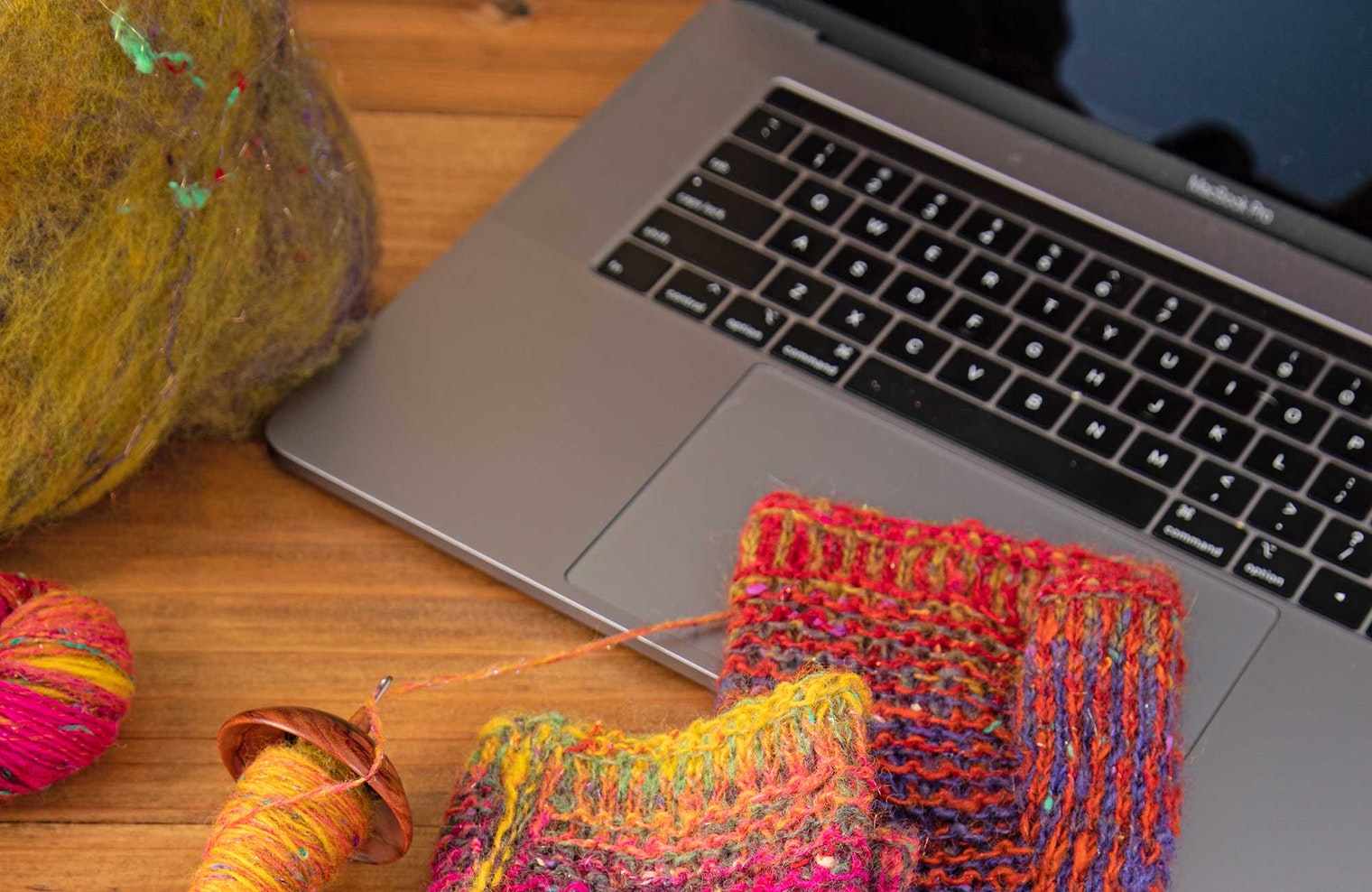
Whether it's the heat, weather, cold, or wind, it's nice to have an indoor activity to look forward to, especially when there's knitting (and cute sheep) involved. Sure, I like to pick up my knitting needles or paintbrush or sit down at the spinning wheel when I’m looking for indoor activities. But, let’s face it, there are times when we just feel like reclining with remote in hand and binge-watching a favorite series. My recent watch: A Twist on Color.
How is Yarn Made?
I’m always fascinated to read about—or especially watch—the process of going from shearing the sheep to having finished yarn in hand. Episode 1 introduces us to farmer Lisa Westra, who raises Bluefaced Leicester in northern Maryland. Watch as she leads us through the 13 steps—13!—of making her farm yarn at Feederbrook Farm, from dyeing the combed top from her flock that’s right outside the door, to spinning and plying, to making the skeins.
 Yarn being spun at Feederbrook Farm. Photo by Pamela Schultz
In Episode 2, Lisa talks us through how she prepares her booth at a busy fiber festival, where knitters line up to purchase her signature line of barber pole yarn, Entropy. Lisa also explains how her colorways are random, yet repeatable, originally developed with her handspun and duplicated in the mill.
How Can I Choose Colors with Confidence?
Yarn store owner Jenny Monteleone collaborates with Lisa, creating designs with Feederbrook Farm’s beautiful self-striping, color-shifting yarn. Jenny helps customers at Lisa’s fiber-fest booths confidently select colors for their project. In Episode 3, Jenny breaks down self-striping yarn and why people may be a little afraid of it when they start working with it. I learned how the “color runs” in a skein—the length of one color before it changes to another—affect the finished project. Is the color run random or repetitive and organized? My takeaway from Jenny: if you have a busy yarn, pick a simpler pattern. She shows several finished examples of longer color runs vs. shorter and how stripes might become narrower with a particular project, depending on whether you’re knitting small mittens or large blankets.
 Jenny Monteleone gives tips on working with color-shifting yarns. Photo by Matt Graves
In Episode 4, Jenny conveys how she has learned how crucial it is to do swatching—and why to save your swatches. If you’ve fallen in love with a yarn and want to work with it again, you’ve already done the work and can refer back to your swatch. Huh. I’ve never really thought of that. Afraid of color-shifting yarns turning into a muddy colorway? Make lots of swatches! Jenny shares several tips for swatching, gleaned from her years as a yarn-store owner and knitting teacher, which are great for those of us who may at times default to shortcuts when it comes to swatching.
With each episode, there are additional resources, so you’ll find yourself going down a rabbit hole with so much extra content.
A Mighty Flock
Now that I’ve made it all the way through A Twist on Color, I plan to sit down next weekend and revisit The Yarn Chronicles. My favorite part of Episode 1 is watching all of the footage of shepherdess Tammy White of Wing & A Prayer Farm in Vermont roaming her property with her sheep in tow. Throughout the episode, Tammy describes how she started with a few small Shetland sheep and has grown her mixed flock to between 75 and 100, how she turned her hobby farm into a production farm, and how buying yarn from small farms such as hers helps support other small businesses as well.
Watch the full episode of The Yarn Chronicles, Episode 1 here!
A Shearer and a Designer Weigh In
In Episode 2, professional shearer Siri Swanson sits down to discuss how she got into shearing, what it takes to travel and handle a flock, and why this hard job is taxing on the shearer’s body so that it’s easier on the sheep. I love watching what shearing day is like at Wing & A Prayer Farm and I learn so much from watching how volunteers sort the fleece for making yarn.
 Siri Swanson shears a sheep. Image from The Yarn Chronicles
Episode 3 sits down with the owners of Battenkill Fibers Mary Jeanne Packer and Angela Bennett, who give us a behind-the-scenes tour of the workings of their mill. And we hear from Norah Gaughan and other knitwear designers in Episode 4, who share how they select yarns to work with and how those yarns connect them to the animals and farms.
 Norah Gaughan helps skirt a fleece at Wing & A Prayer Farm. Image from The Yarn Chronicles
This summer, I hope you will find some time to relax with a cold drink in hand and one of these series queued up on your laptop.
Cheers!
–Debbie
Subscribers to Farm & Fiber Knits can stream full episodes of A Twist on Color and The Yarn Chronicles on the Farm & Fiber Knits website.
Cashmere from the Silk Road
Get an insider’s look at how June Cashmere began, and learn how it continues to connect you to local communities in Kyrgyzstan.
By Karin Strom
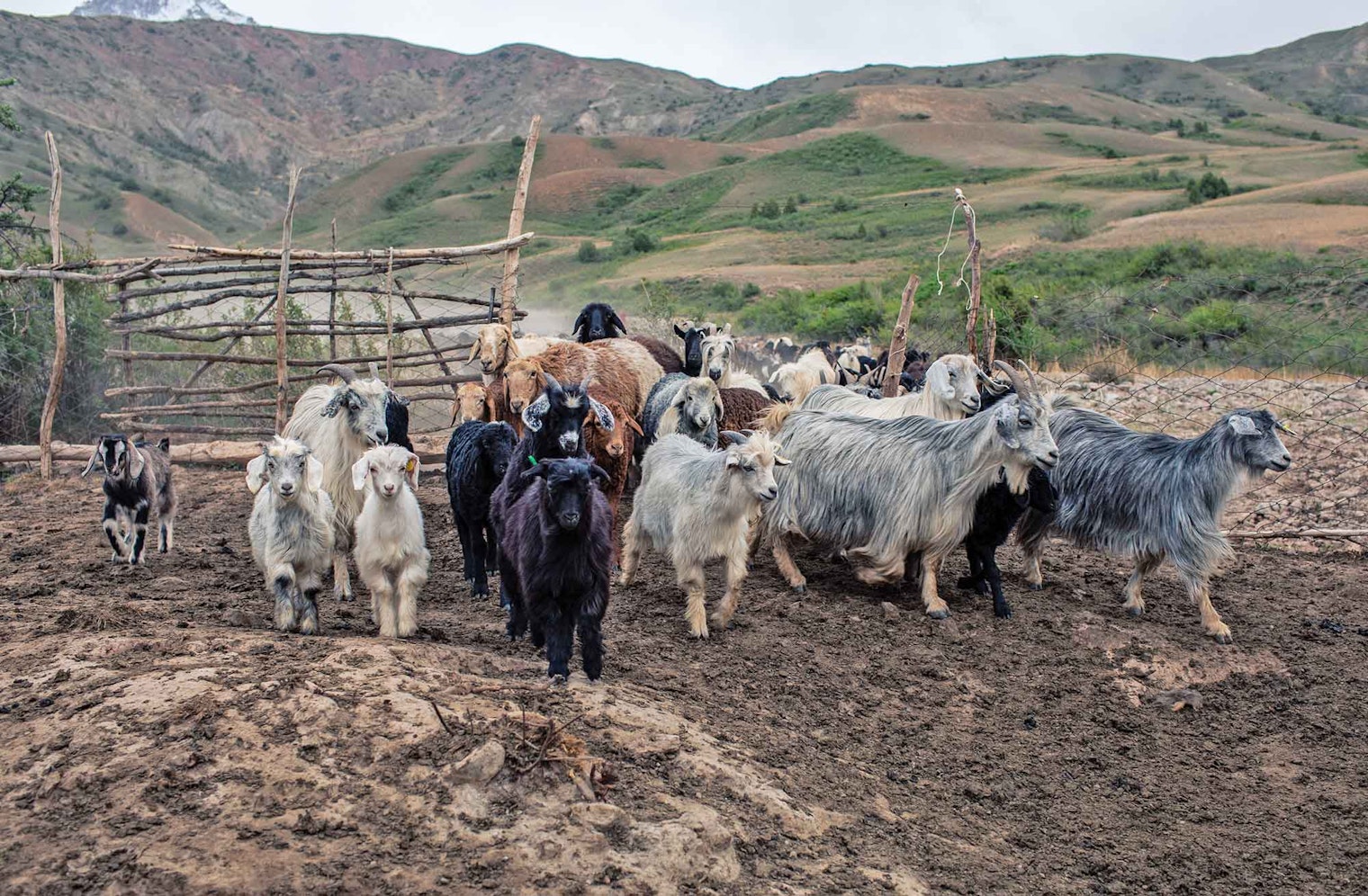
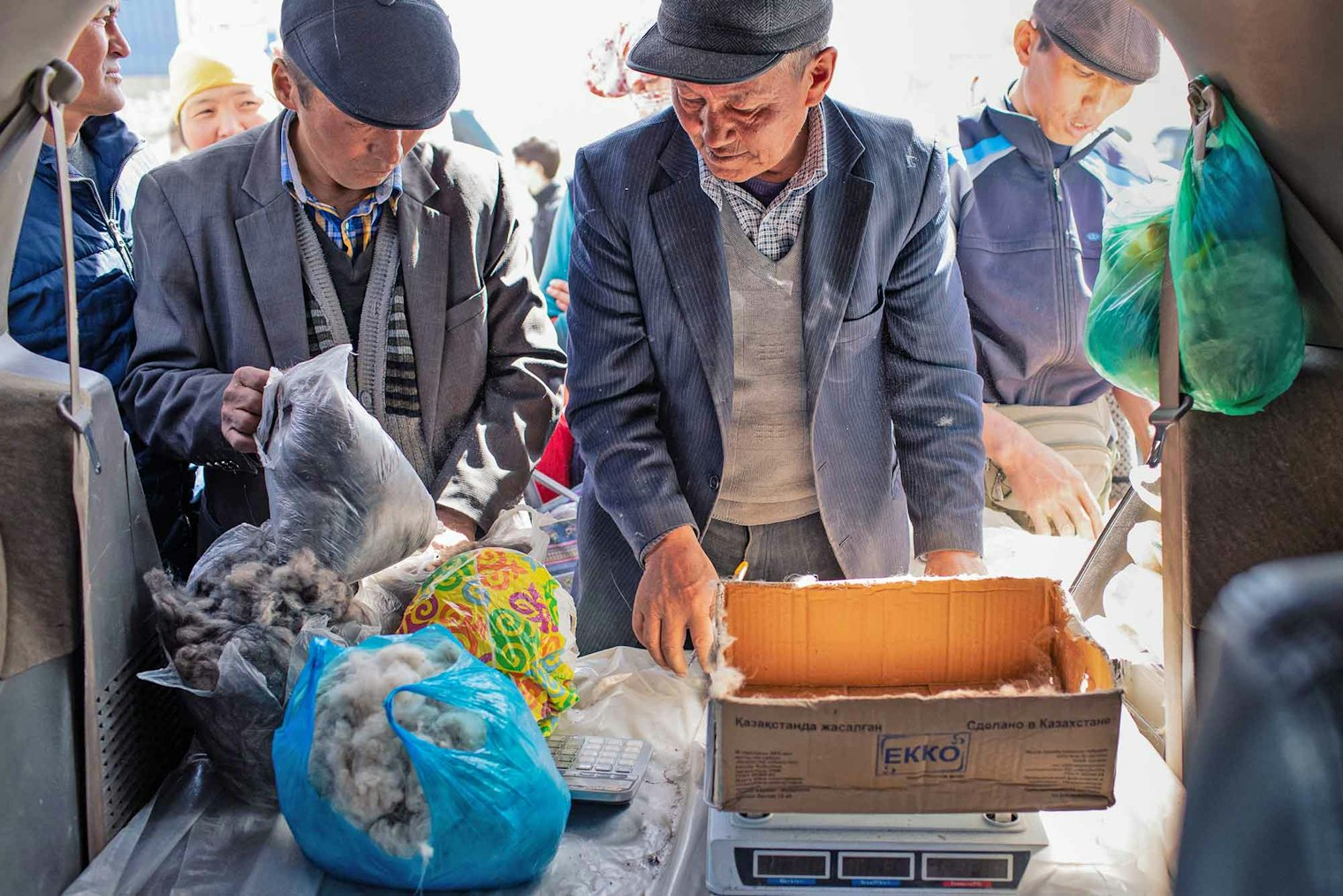
A recent Facebook update reminded me that I was in Kyrgyzstan in May of 2017. It seems like a lifetime ago in so many ways. How did I find myself in this faraway land-locked Central Asian country? I was working as a consultant to yarn companies when I met Sy Belohlavek at a trade show in Columbus, Ohio. An Ohio native, Sy had been living in Kyrgyzstan since 2010, working with the nomadic cashmere-goat herders there to help revitalize the country’s fiber industry by helping set up training programs for improving fiber quality, collecting, and grading of the fiber, creating new outlets for it, and paying the herders fair market value.
When I met him, Sy was exploring the concept of creating a company offering 100% Kyrgyz cashmere yarn to the handknitting audience. He was well-aware of the unique qualities of Kyrgyz cashmere fiber, but not as versed on the handknitting yarn market. That’s where I came in. Having worked in the yarn business in the US for many years, I was able to advise him on the ins and outs and help him develop a business plan, color palette, and pattern program. When presented with the idea of visiting Kyrgyzstan, I jumped at the opportunity. After all, how better to learn about a product than by going to the source?
 The author “shopping” for temre—handwoven yurt ties.
Silk Road Trip
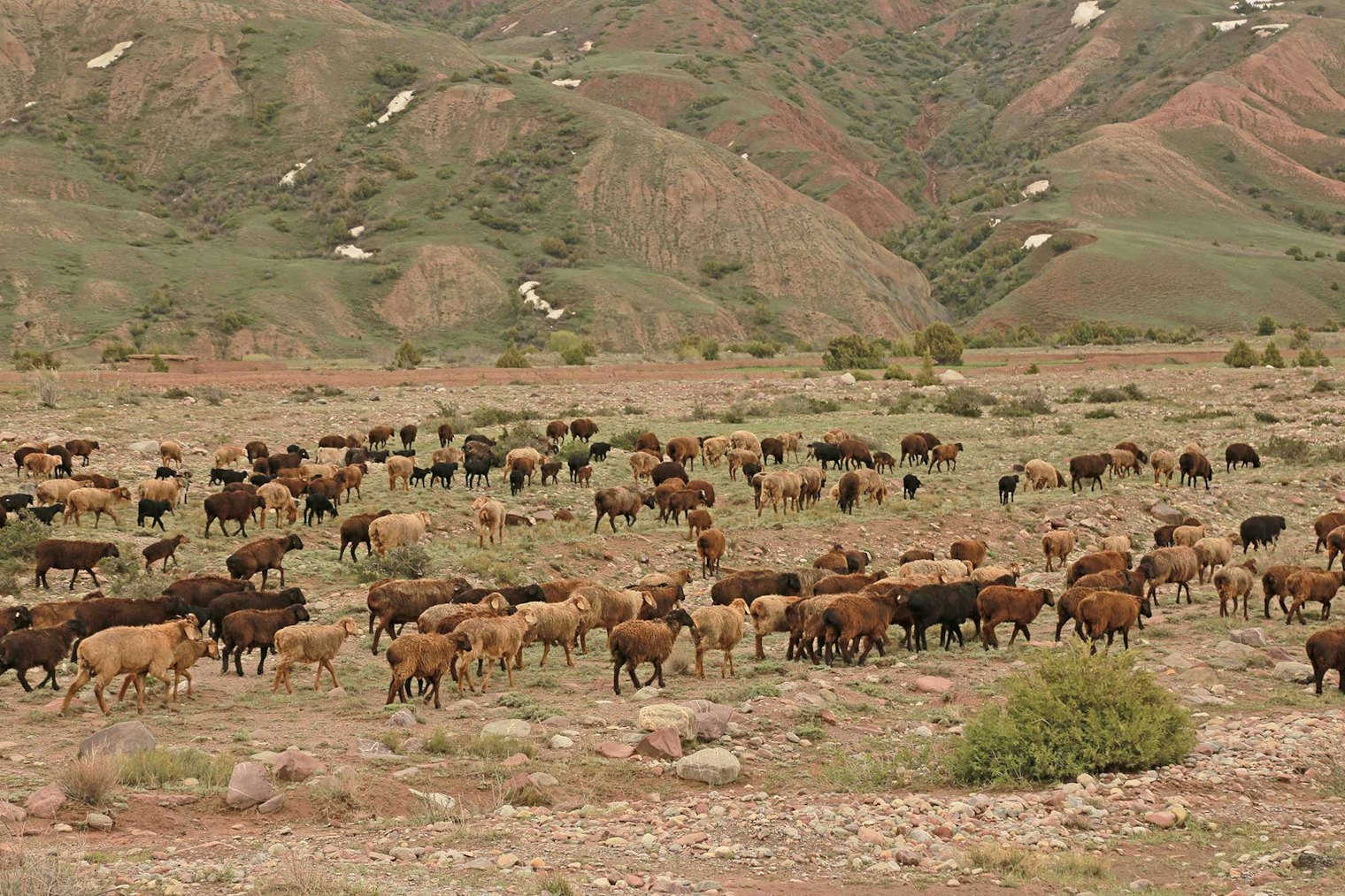
I boarded a plane from JFK Airport to Istanbul, enjoying an extended layover and delicious Turkish food. Next was a flight to the Kyrgyz capital city, Bishkek, where I met my host. We then flew to Osh, where Sy and his family were living at the time. Kyrgyzstan is a stunningly beautiful and diverse country. During my whirlwind week there, we travelled up into the mountains to visit remote villages where Sy’s team collects fiber. There we encountered some of the most hospitable people I’ve ever met.
Get a closer look! Click any image in the gallery below to open it in full-screen mode.
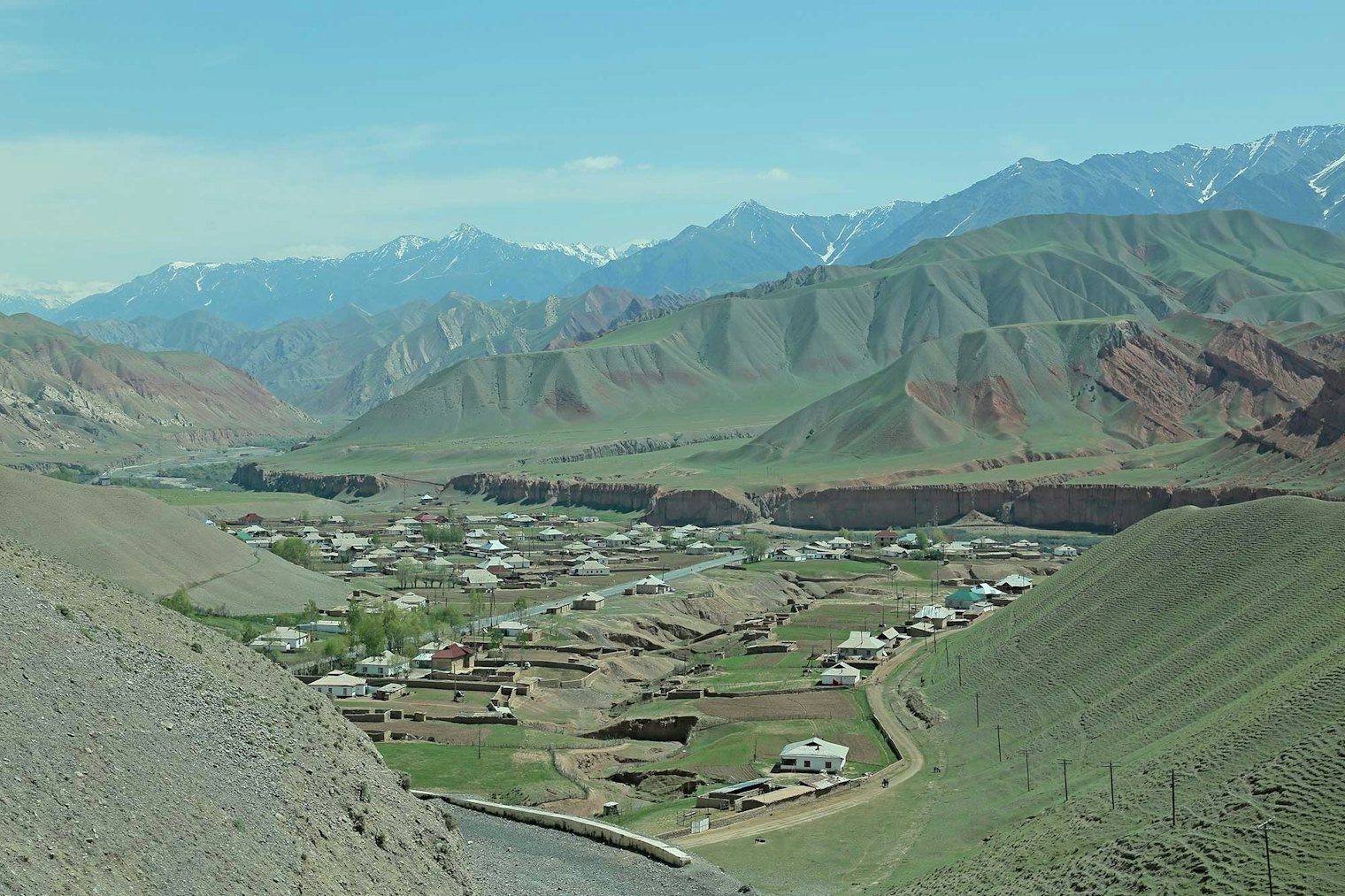
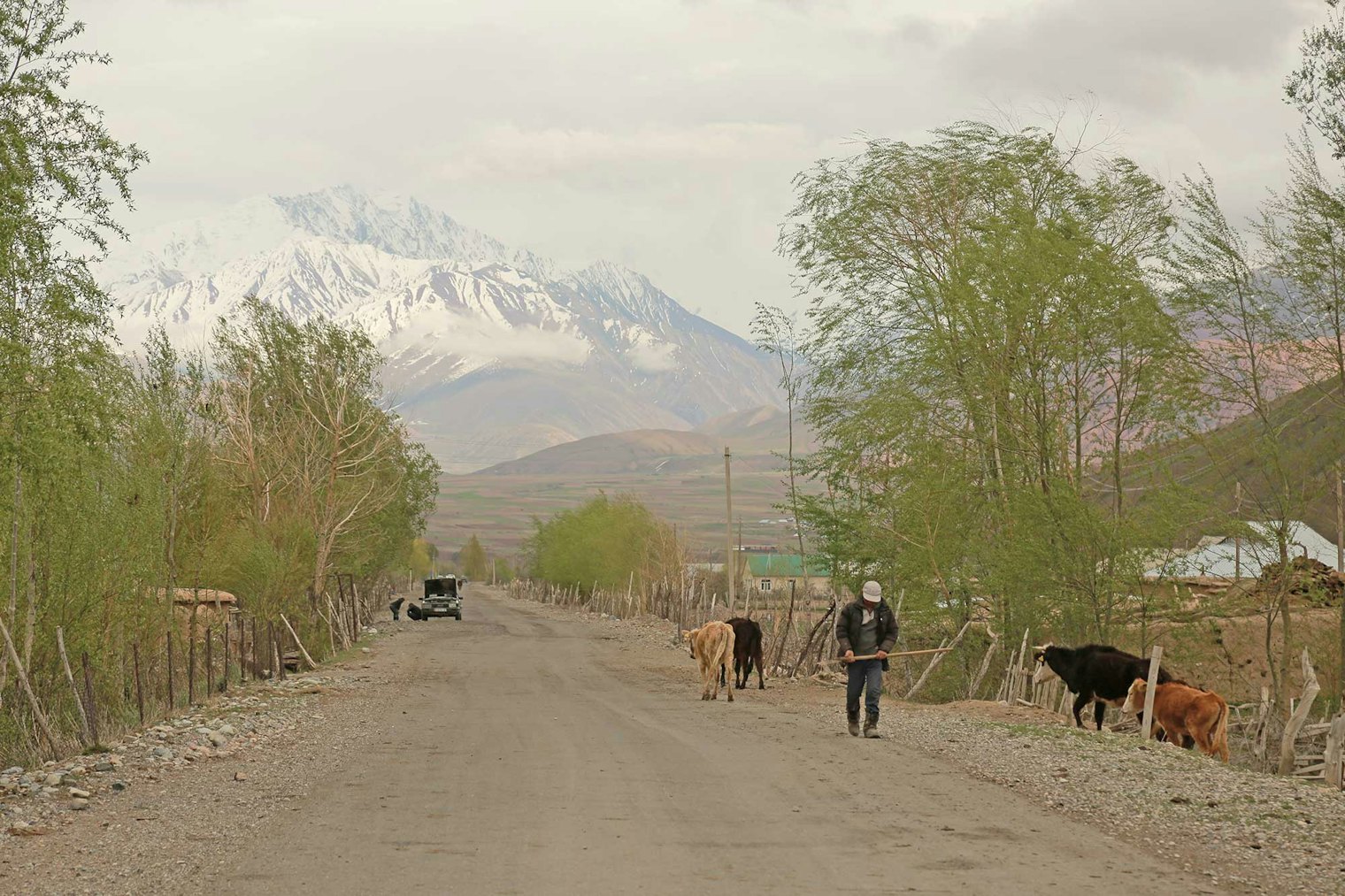
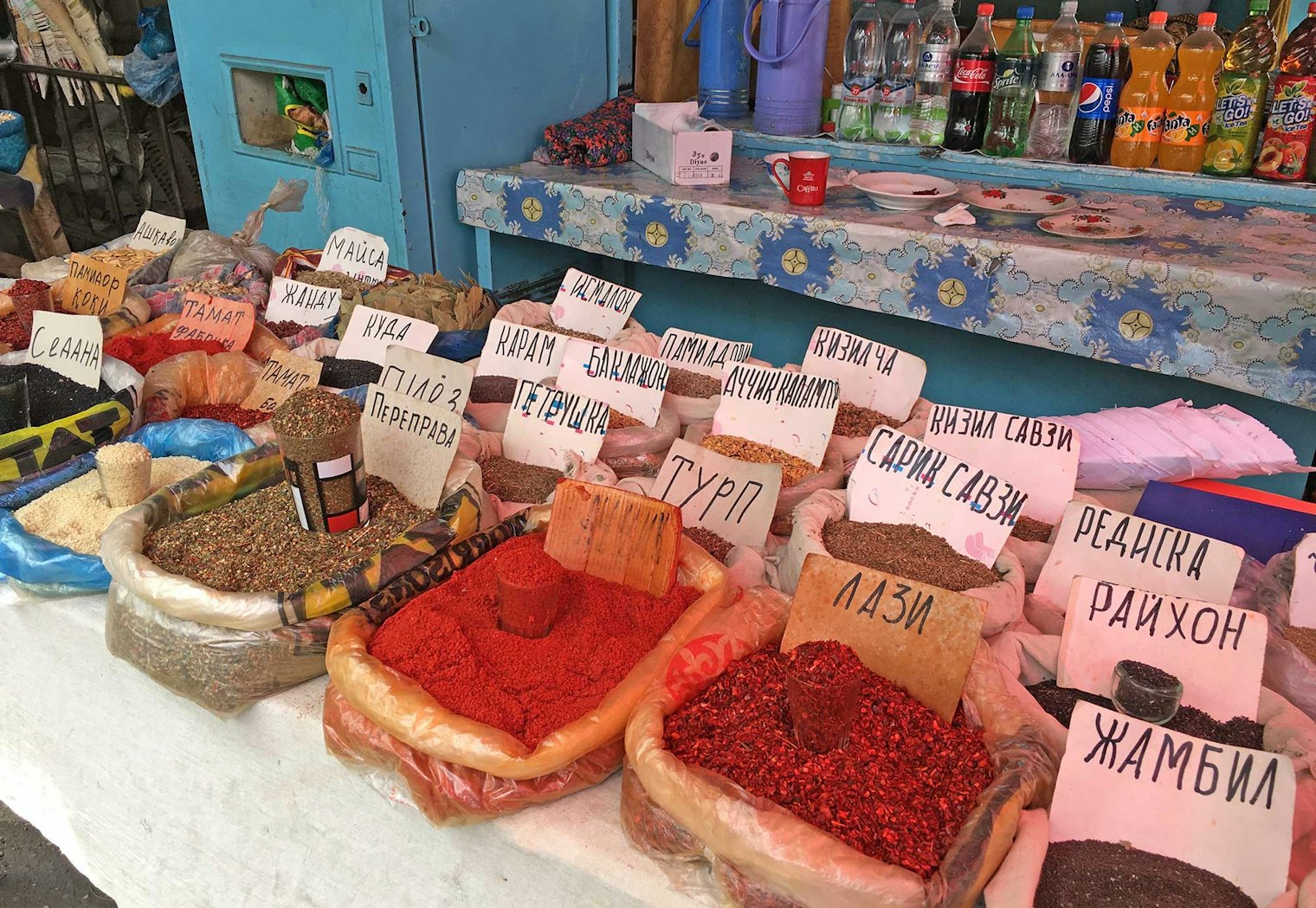
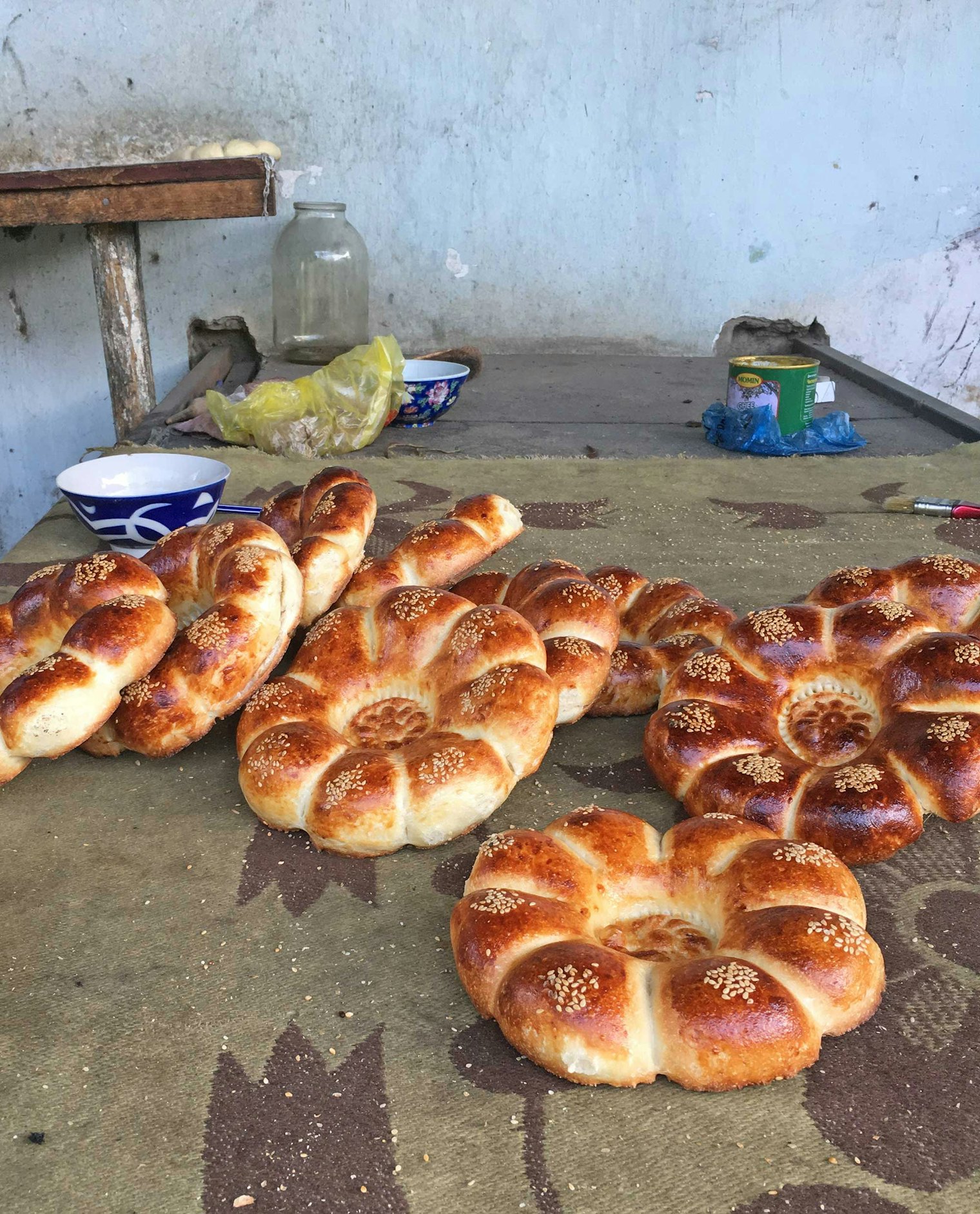
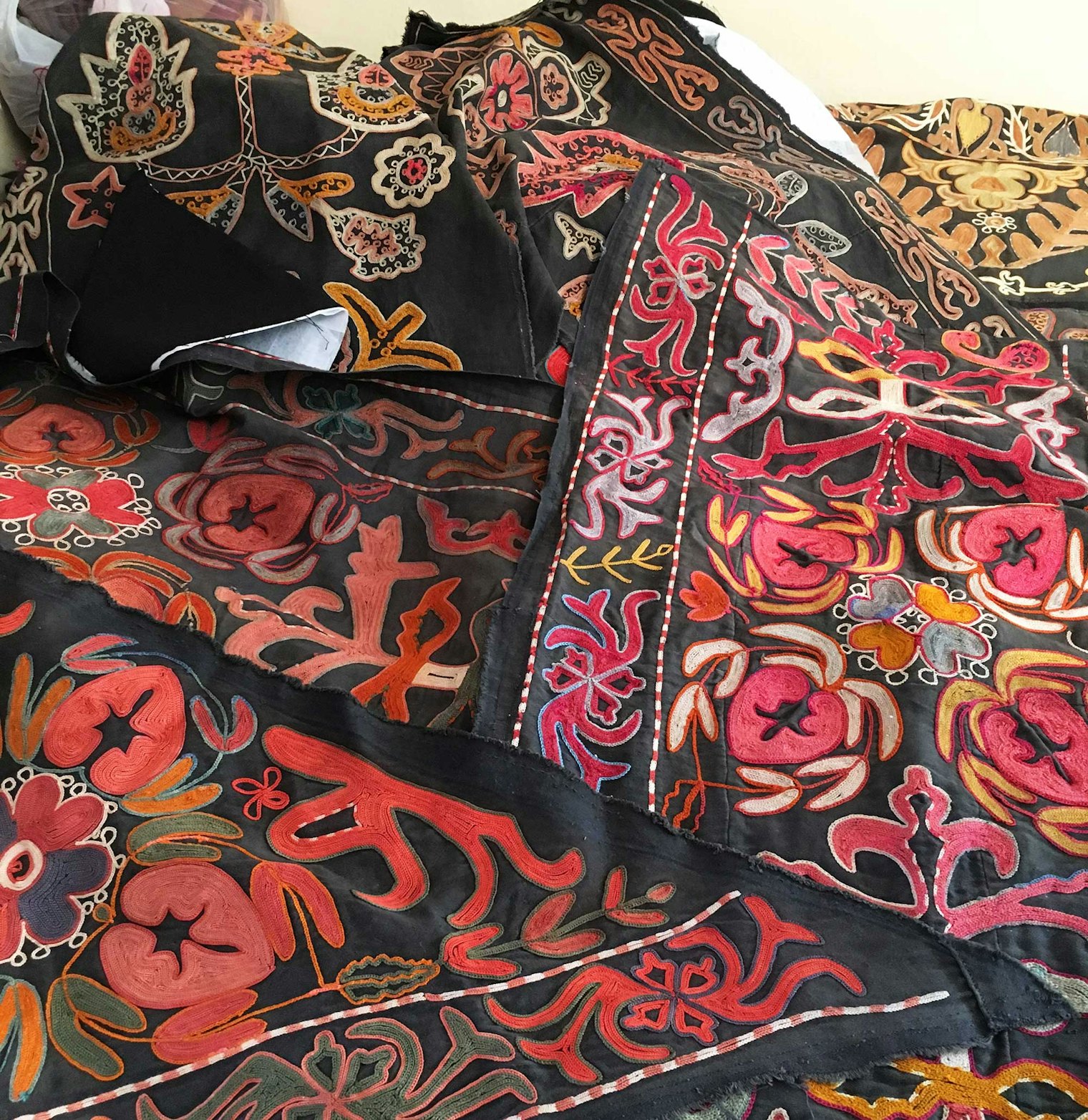
Sy warned me that it’s rude to refuse any food or drink that is offered, so we had our share of delicious tea, fresh bread, and sweets wherever we went. We traveled a section of the Silk Road, visiting felting, dyeing, and weaving workshops. I slept in yurts and hostels, bought vintage Kyrgyz textiles, and even appeared on Kyrgyz television!
Click any image in the gallery below to open it in full-screen mode.
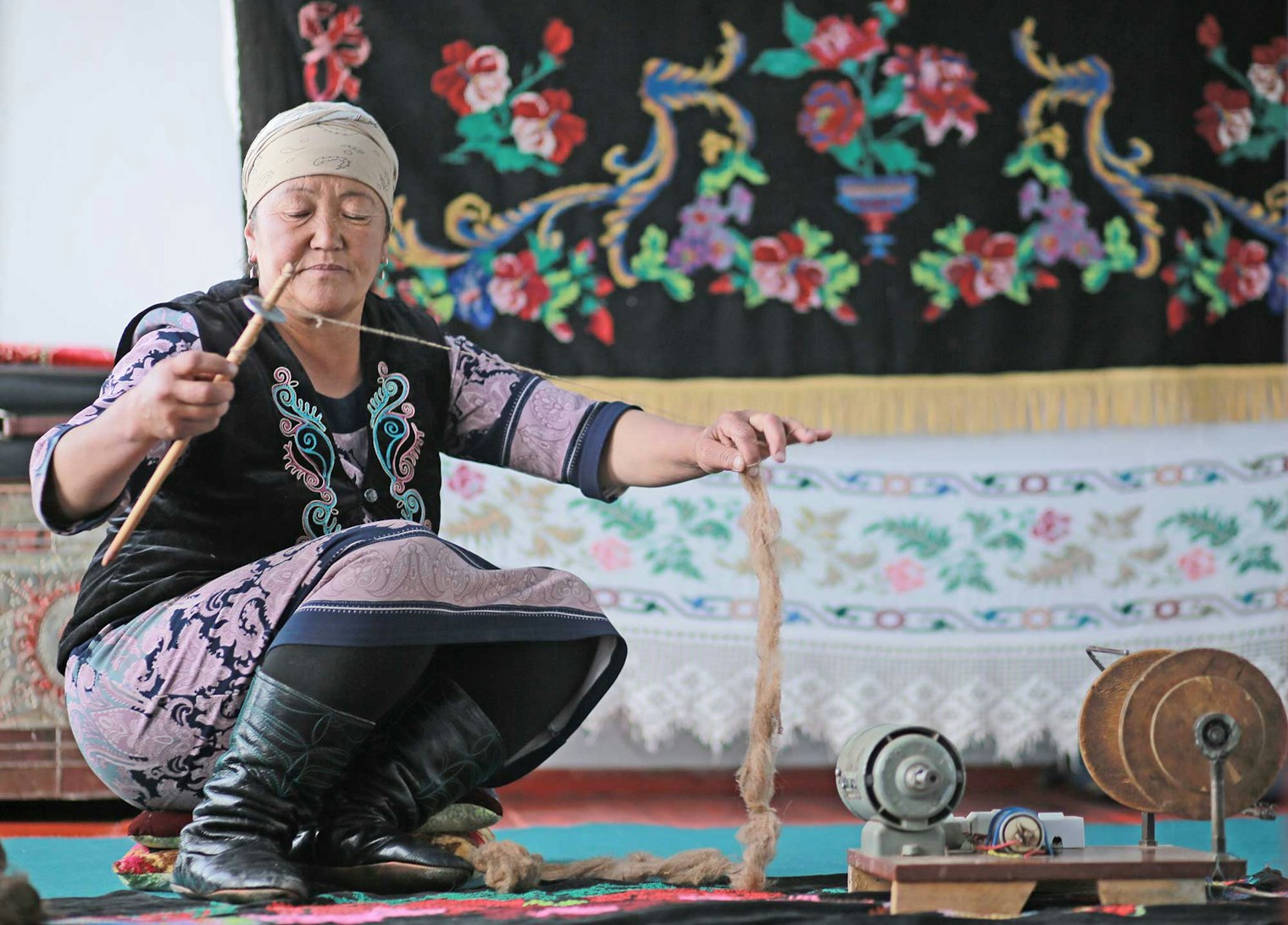
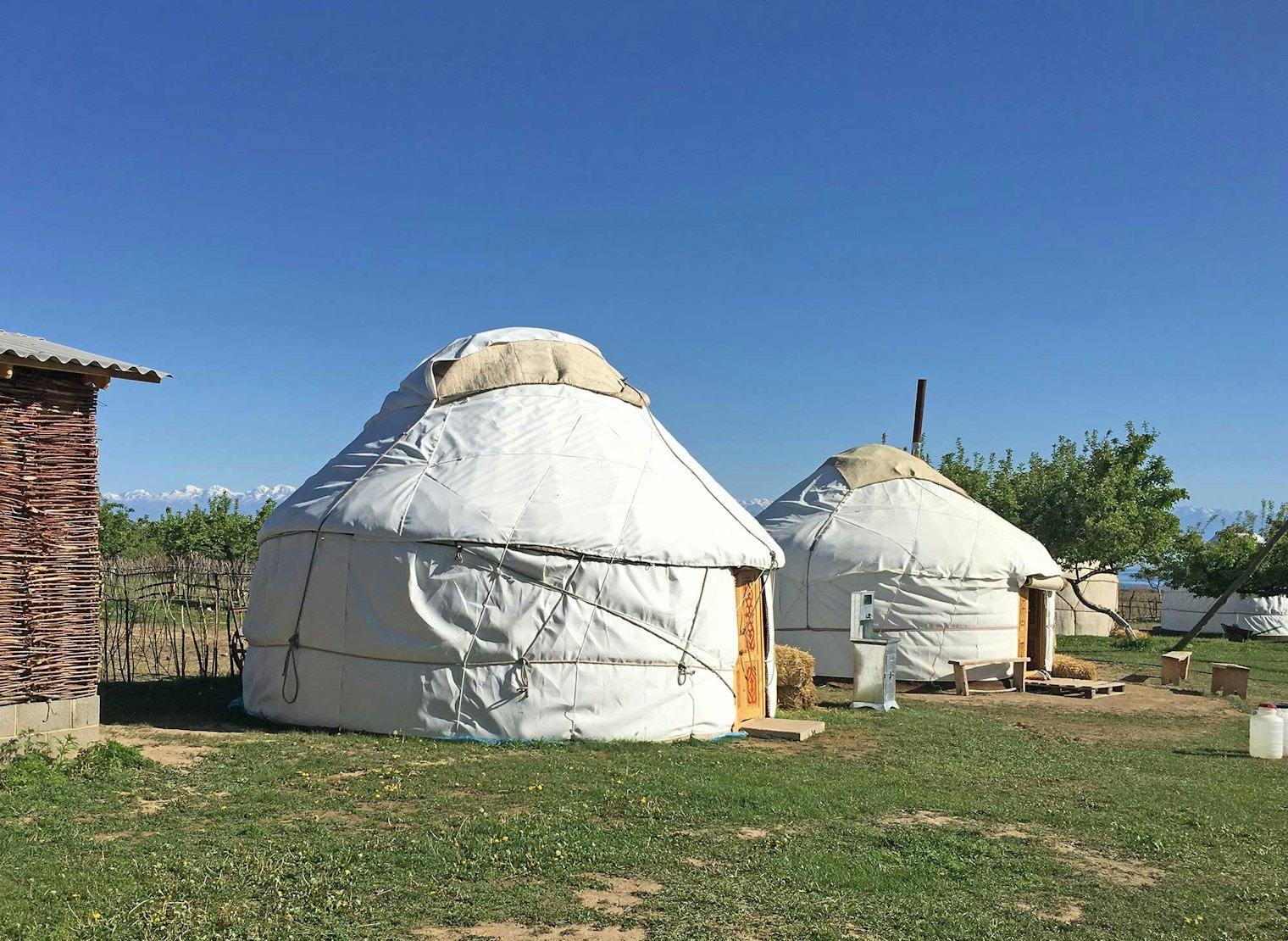
At the time I went to Kyrgyzstan, Sy was launching the company June Cashmere. (June is the Kyrgyz word for animal fiber.) There was virtually no infrastructure in Kyrgyzstan for processing fiber, as it had mostly been outsourced after the fall of the USSR. (When I was there, the cities still retained a distinctly post-Soviet feel.) Sy was sending raw cashmere fiber to Belgium for scouring and on to Great Britain for dehairing, carding, spinning, and dyeing. His dream was to establish a facility in Bishkek to bring the first stages of the processing into Kyrgyzstan, both to streamline the process and to create more jobs.
Curious to find out how June Cashmere has evolved since my visit there in 2017, I recently reached out to both Sy and Amy Swanson, the Director of June Cashmere in the US since 2020 when she invested in the yarn production aspect of the business. “This freed up Sy’s resources for building a dehairing facility in Kyrgyzstan—an important step in expanding the in-country economic development work,” Amy told me. “This investment ensured that June Cashmere yarn could continue.” (Dehairing separates the course guard hairs from the fine, downy undercoat fibers that become the cashmere yarn.)
Click any image in the gallery below to open it in full-screen mode.
Patience and Passion
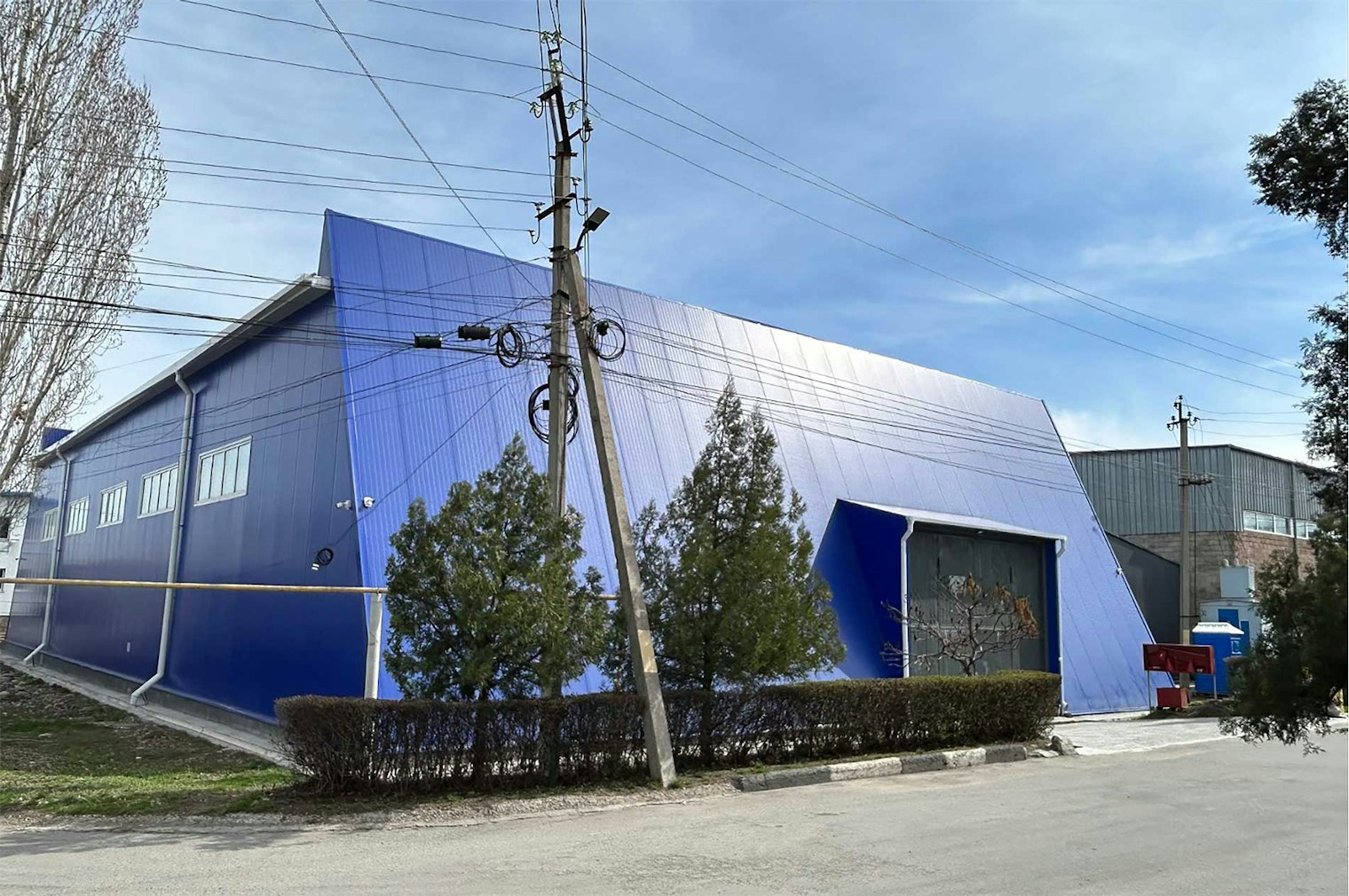
Today that facility is located within a free economic zone on the outskirts of Bishkek, a strategic location thanks to tax exemptions and benefits, as well as being the most efficient location for centralizing transport logistics. “Now the purchasing, sorting, scouring, and dehairing are all done in Kyrgyzstan,” Sy explains. He no longer personally visits all the villages to purchase and sort fiber but relies on a team of trained Kyrgyz experts. “I miss being out with everyone, but our team (some of whom have been collecting fiber every spring since 2013) do a great job. I still get out several times a year to visit, which is wonderful.”
The scouring is outsourced to the one facility in Kyrgyzstan that has scouring equipment—a holdover from the Soviet times. “Then our facility does the dehairing. We bale the fiber and prepare it for shipping to the mills who complete the processes.” Amy adds, “I am in awe of the quality of the cashmere yarns that Sy has developed. Milling in Great Britain means that the best qualities of the fibers are brought to life in a yarn made to last. Because we are creating heritage-quality yarns, that is of paramount importance.”
The timing of building the facility and bringing in equipment presented many challenges, including Covid. “The price of steel soared during that time, making the machinery more expensive, and the cost of shipping containers jumped up, adding a lot of transport expense on top of production delays. Then once the machines arrived, the only technician who could set them up was unable to come for ten months until his country’s travel restrictions were relaxed. Plus, the global cashmere industry went through supply and demand issues as the natural rhythm was disrupted by the pandemic shutdowns.”
Click any image in the gallery below to open it in full-screen mode.
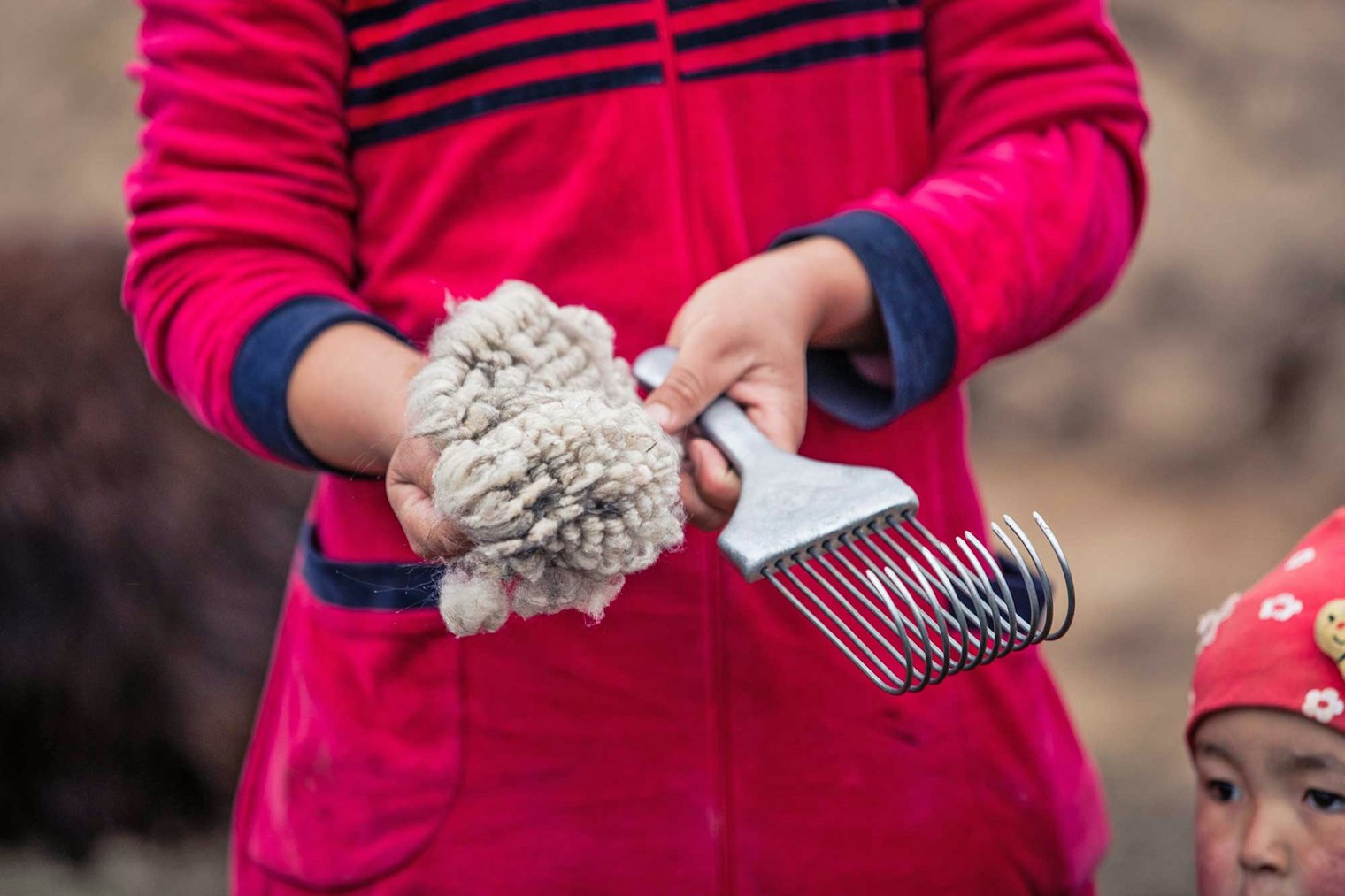
His passion for helping the people of his adopted country has gotten Sy through the worst of times. “I have always been compelled by the vision of being able to build a value chain that is able to take the raw fibers to the end markets in a way that harnesses the full intrinsic value locked within them and channels it back into the communities in Kyrgyzstan. At the same time, we hope through our brand to highlight the Kyrgyz people and their dynamic culture and tradition that enable these amazing natural fibers to be produced.”
Closer to Home
“The yarn company June Cashmere exists to support economic development in Kyrgyzstan and to ensure that shepherds are fairly compensated for their cashmere fiber,” Amy Swanson adds. “That core mission is deeply important to me and is what made me want to work with Sy. At the same time, I’ve come to realize how essential it is to care for and connect with our customers, mostly in the US—fostering a sense of community, understanding the skills they want to build, and creating patterns and learning opportunities around those interests. My focus on the latter is what allows us to grow. Growth is what will support the work in Kyrgyzstan.”
Today most June Cashmere yarn is sold direct-to-consumer through both virtual and in-person shows, like Maryland Sheep and Wool and the Estes Park Wool Market. Amy has found this to be the best way to keep the price affordable and get it into the hands of knitters and weavers who are passionate about where their fibers come from. “We tested the waters in 2024 with a few shows and now in 2025, we are traveling all over the country to bring awareness to our beautiful yarns,” she says. “Frankly, all the shows have been successful for us, and each has its own unique personality. The remainder of this year you’ll find us at Flock in Seattle, DFW Fiber Fest in Dallas, A Woolen Affair just before Rhinebeck in New York, SAFF in North Carolina, and SOCAL Fiber Fair outside of Los Angeles. We loved being at Flock last year and we’re excited to vend there again this year, as well as experience the rest of these festivals for the first time.”
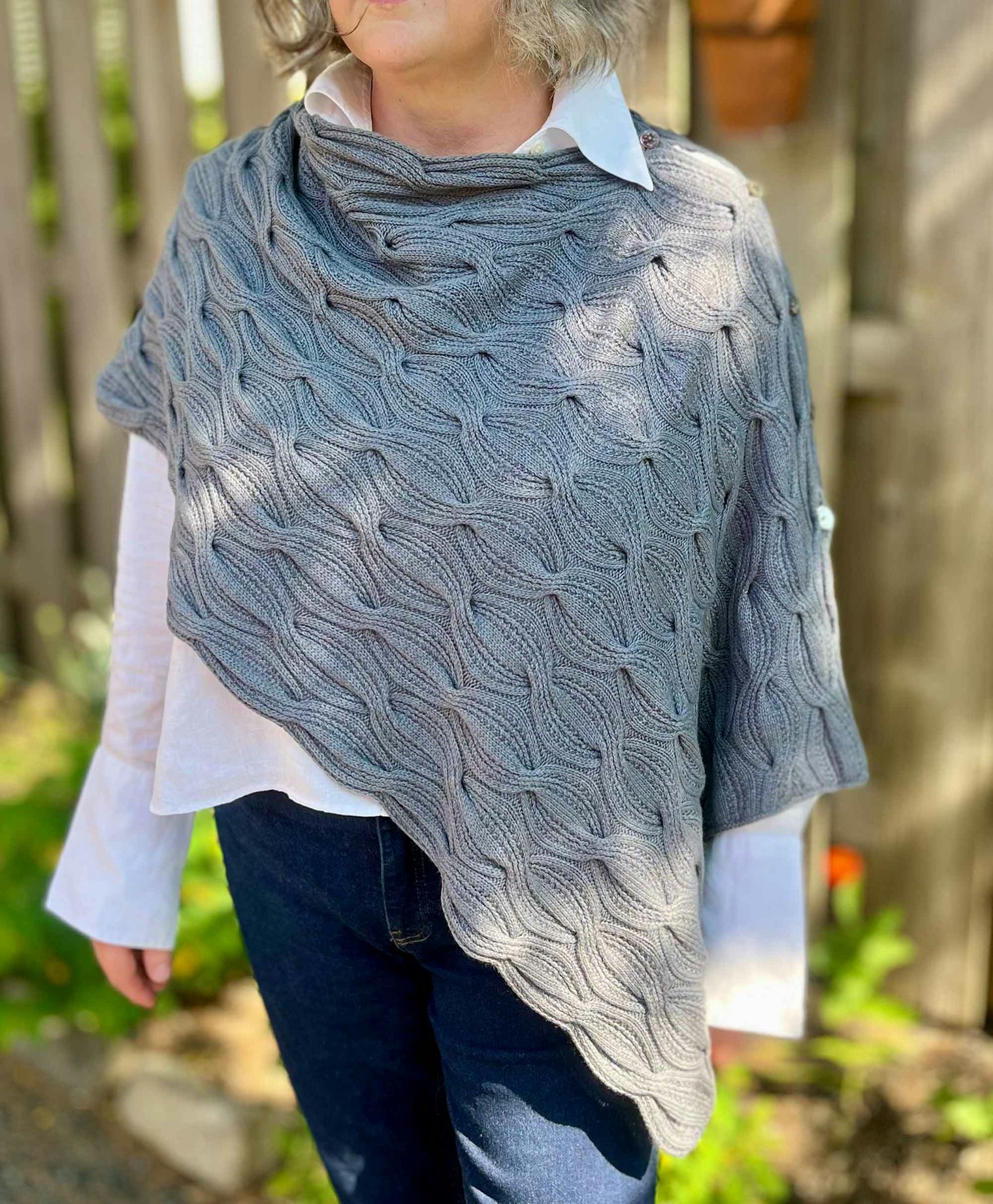
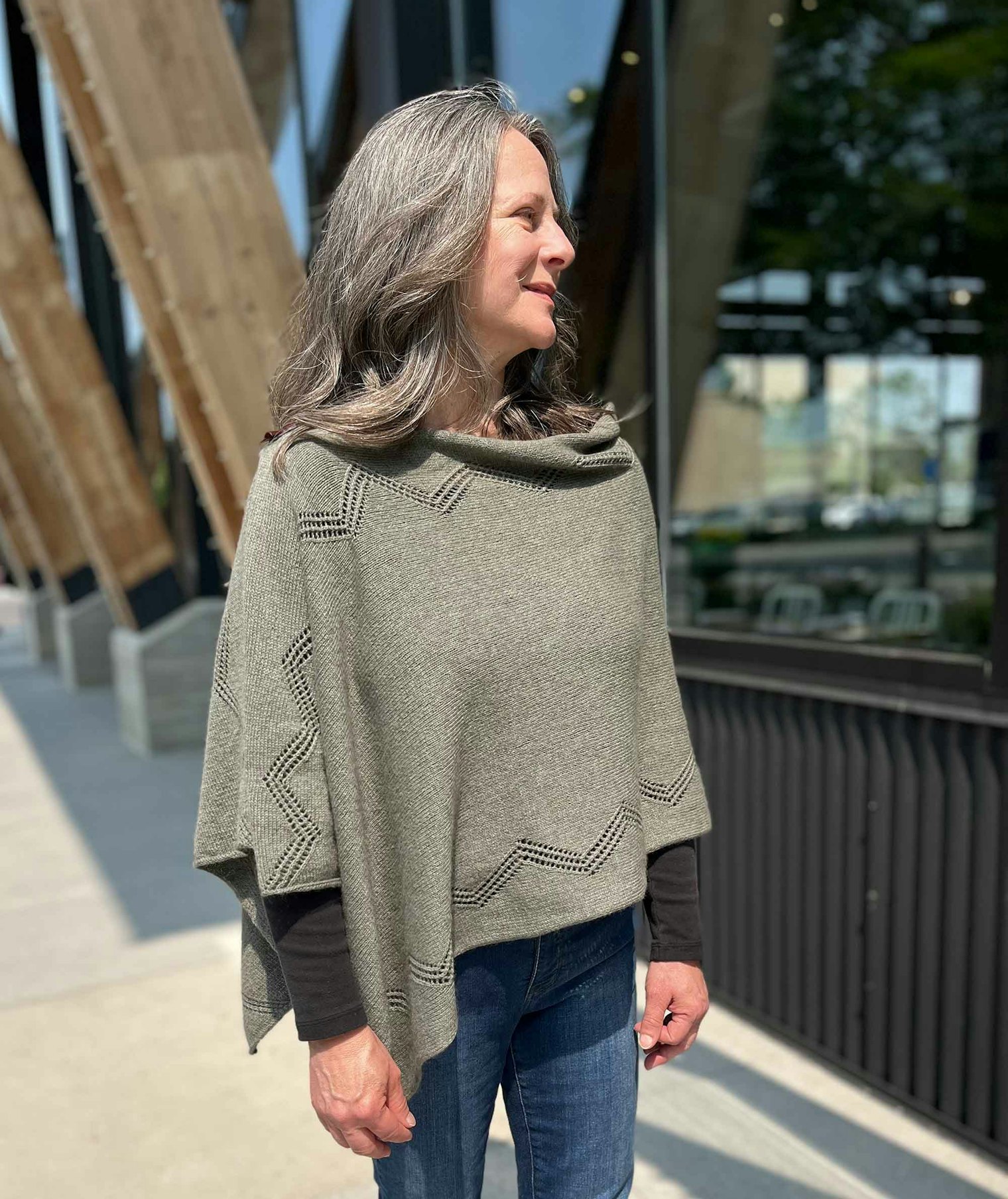
Amy emphasized that “Knitters and makers want to see how the yarn performs, what it can create.” I was happy to hear that Norah Gaughan’s Sand Waves Poncho, commissioned back when I was working with June Cashmere, is still a showstopper. “When I place garments such as that one on a mannequin at the front of our booth, I’m continuously told by customers that the poncho pulled them into the booth from across the room. That gives me the opportunity to share that the poncho arrived to us from the designer in 2017, and I still wear it, and take it to all the shows where it’s handled and tried on. The poncho looks like it did the day it arrived. No pills and still draping beautifully.” I’m happy to have been part of the development of that yarn, and to know the backstory firsthand!
Click any image in the gallery below to open it in full-screen mode.
Hump Day
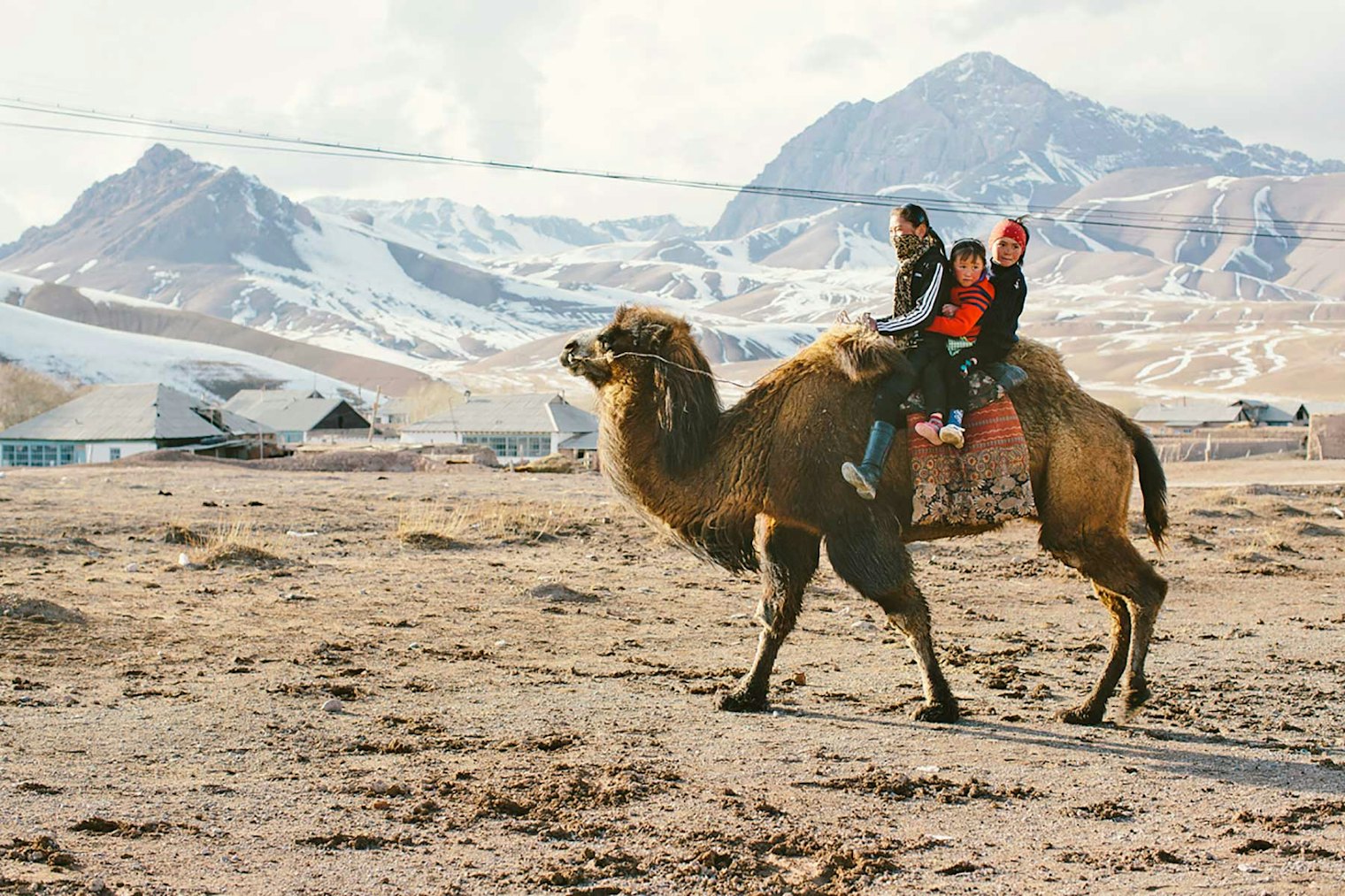
June Cashmere’s latest yarn offering isn’t cashmere, it’s camel. “Thanks to the new dehairing facility in Kyrgyzstan, Sy can expand the fibers they work with beyond cashmere,” says Amy Swanson. “The camel hair is sourced from Bactrian camels from neighboring Central Asian desert countries. After sorting and scouring, the fiber is dehaired at the facility and then sent to the mill in Great Britain for processing into yarn.” Amy confesses that it’s stressful to create a new yarn as you have no idea if your investment will be a win or a financial loss.
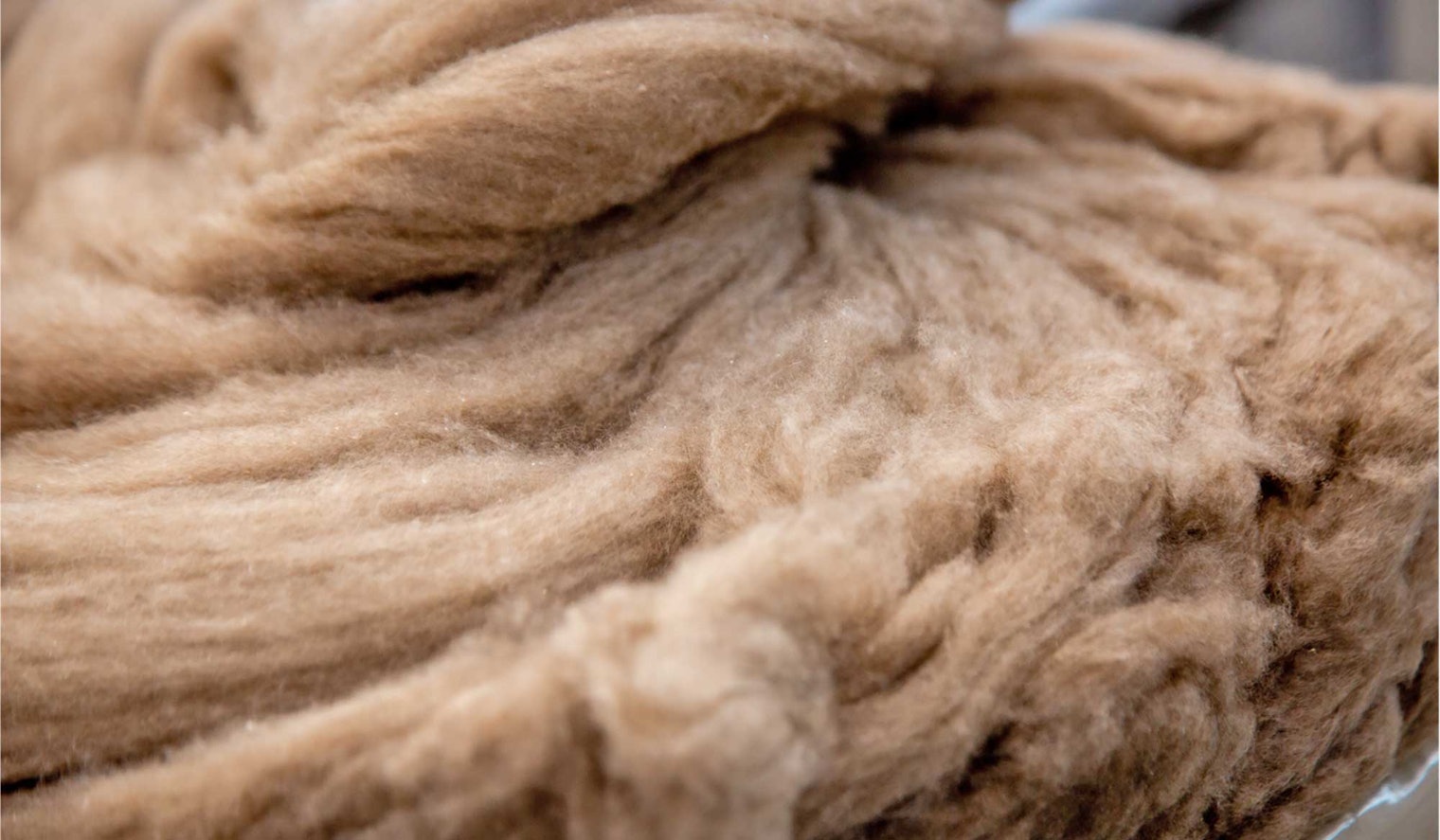
“Camel is ‘the other luxury fiber.’ It has many of the same properties as cashmere. It’s a hollow fiber, making it lightweight like cashmere. It’s warm and yet regulates with your body temperature. It’s a fine, smooth fiber, making it soft like cashmere,” she continues. “Camel was an intriguing product to try because it offers makers a luxury fiber that is less expensive than cashmere. Honestly, because of how much I respect our cashmere yarn, I tested our camel yarn with a very critical eye. As I swatched and blocked our new DK weight camel and the two-ply, I went from being somewhat determined not to like it to really, really admiring what it can do—and loving it. The camel yarn holds structure beautifully, like our cashmere. It is soft like the cashmere with just a wee bit of halo and tooth.”
Click any image in the gallery below to open it in full-screen mode.
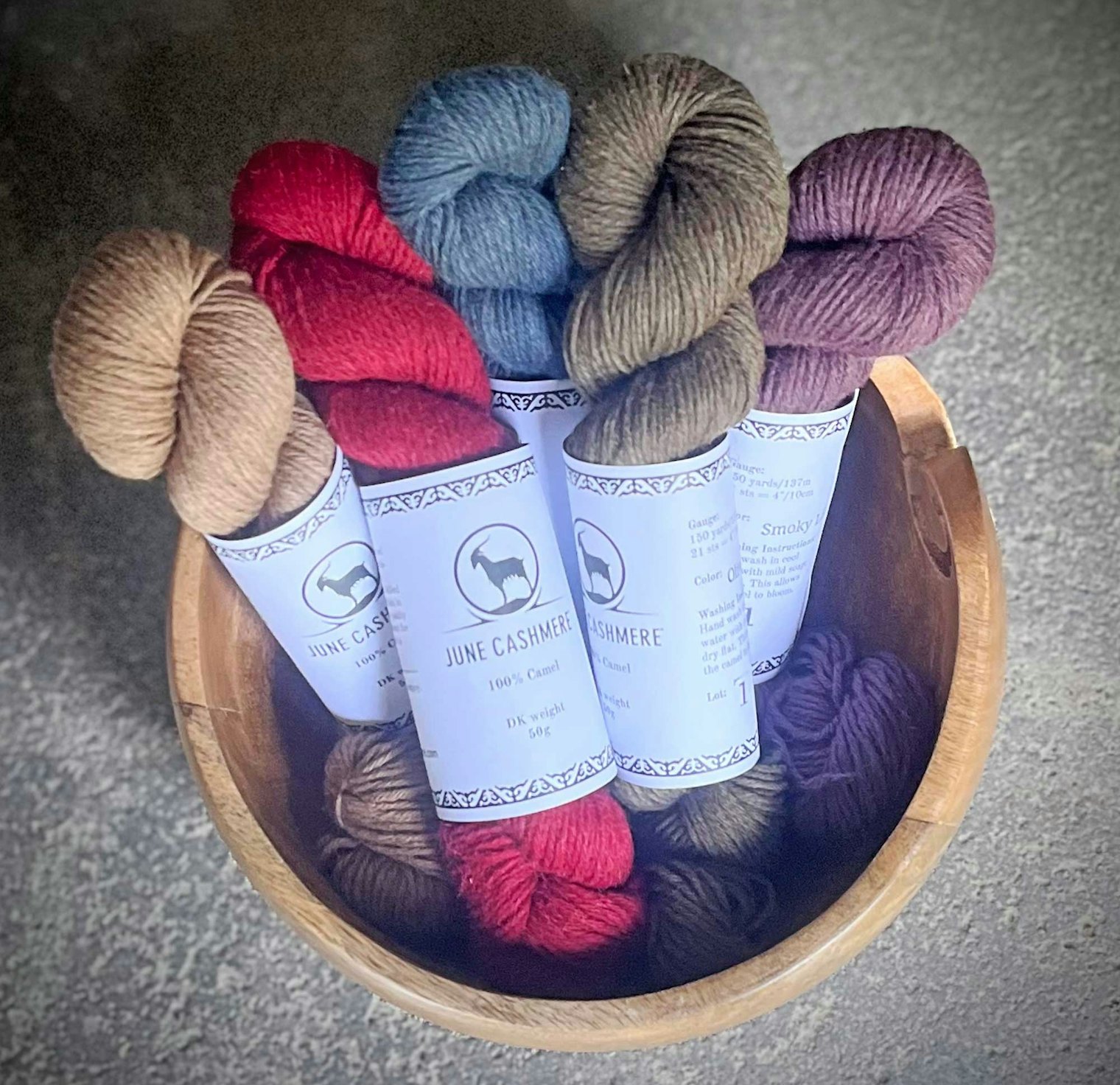
She’s working on garment designs for both weights and has added a weekly YouTube program called “Hump Day,” which includes short videos released every Wednesday that talk about the camel yarn, company insights, cashmere—anything related to knitting and making. “My goal is to teach something that can help a knitter. We want makers interested in our yarn and the work in Kyrgyzstan to sign up for our email newsletter and subscribe to our YouTube channel. It’s exciting that through continued contact with makers, we have an exceptional customer return rate. It’s affirmation that consumers love our cashmere—and now camel—yarns.”
Sign up for the June Cashmere newsletter at junecashmere.com.
Subscribe to June Cashmere’s YouTube channel at youtube.com/@junecashmere.