
Introduction: A Visit to the Farm
There’s nothing we love more than celebrating and elevating the farms that raise fiber animals and create unique yarns, and sharing how they are making an impact locally and globally. As you scroll through the dozens of articles, you’ll be able to visit them virtually through their stories, but many also welcome visitors to meet the animals behind the fiber.
We hope you’ll explore far afield with us, and meet the farms and farmers we’ve showcased through Farm & Fiber Knits.
As we continue to feature amazing farms and farmers, please feel free to email us with your farm finds and recommendations. We’d love to hear from you!
-Kate Larson, editor of Farm & Fiber Knits
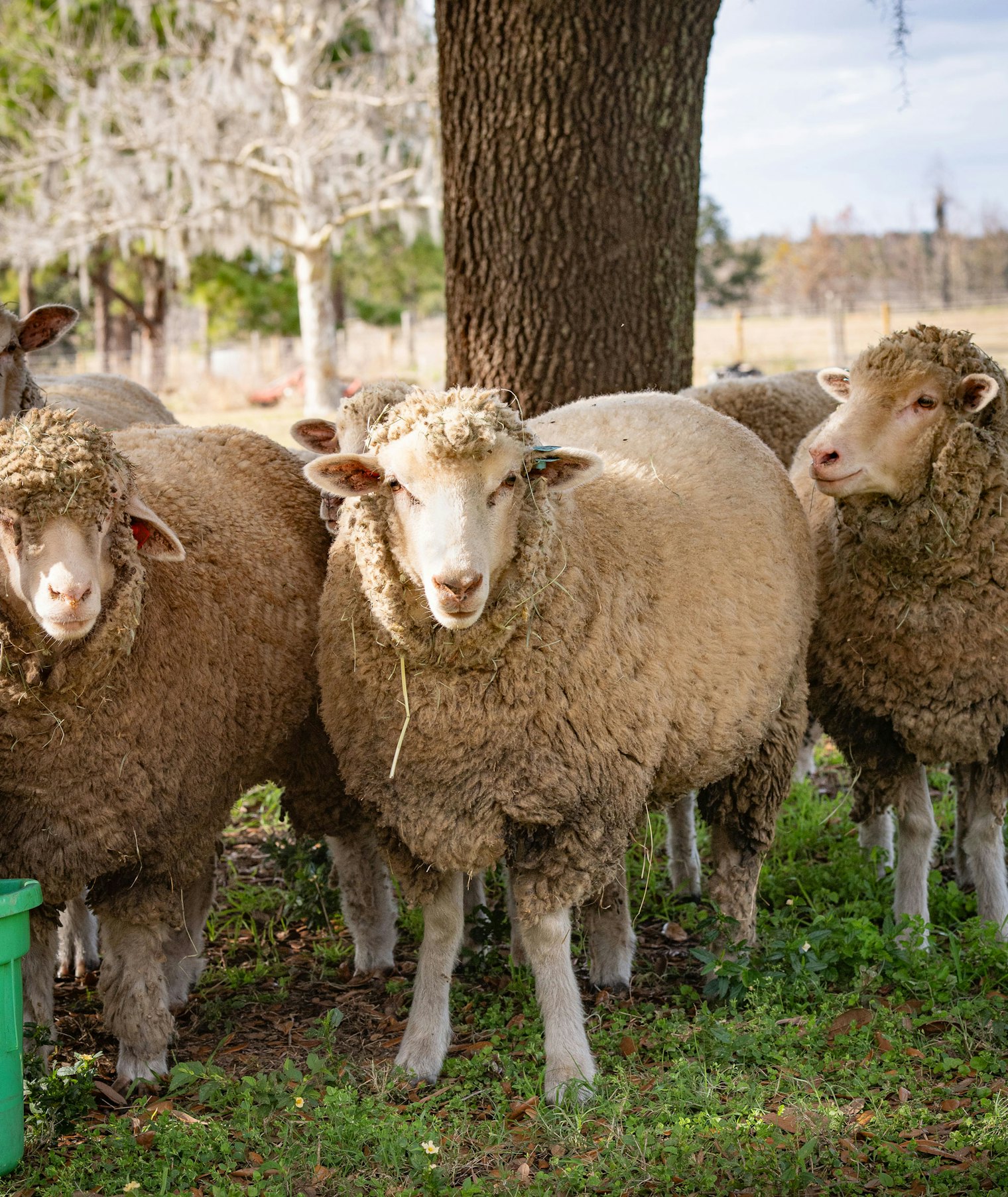
Visit Florino Farms in the new Summer 2026 issue. Photo by Gale Zucker
Finding Sheep in the Sunshine State
Travel with us to the heart of Florida to meet the cast of characters at our farm photo shoot.
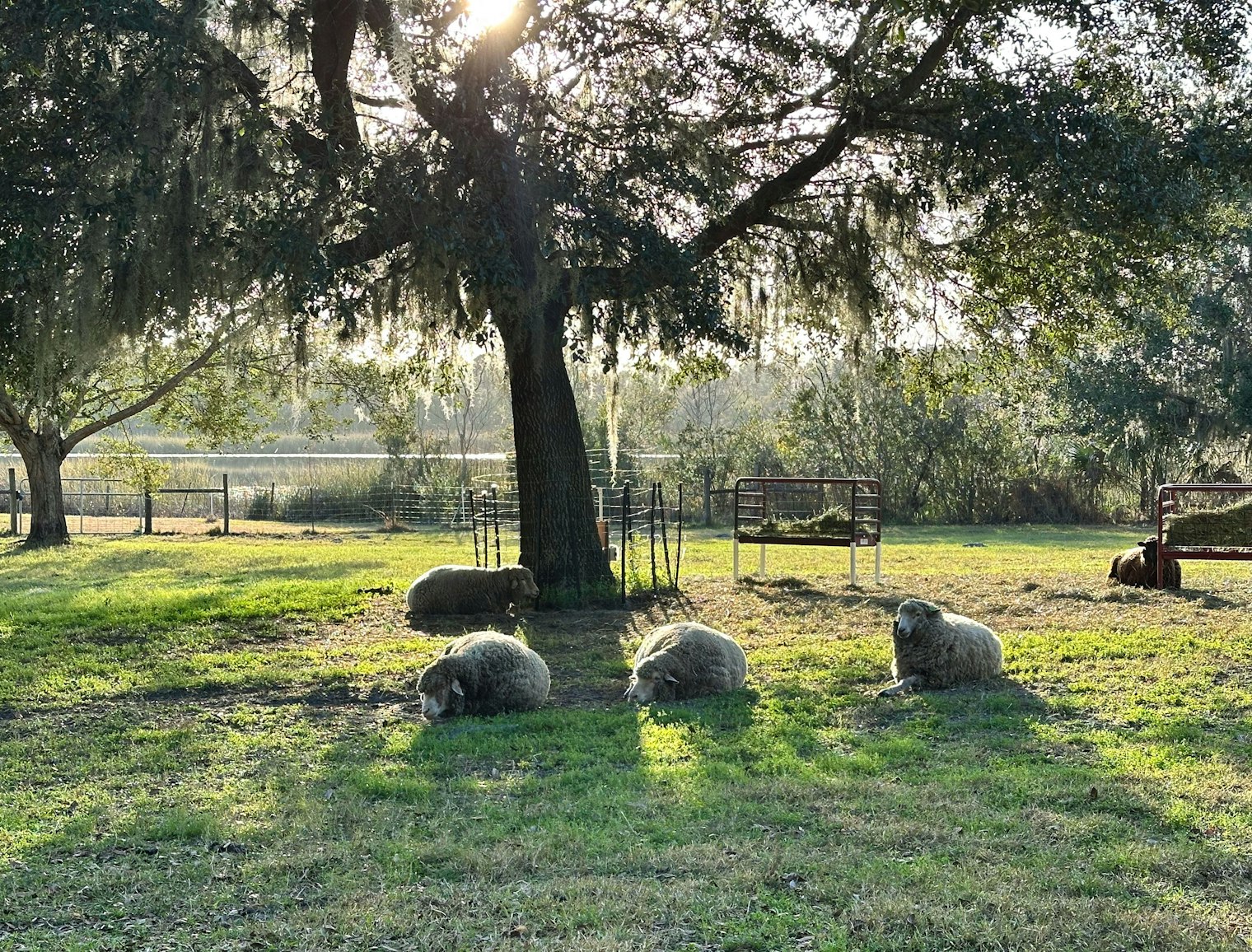
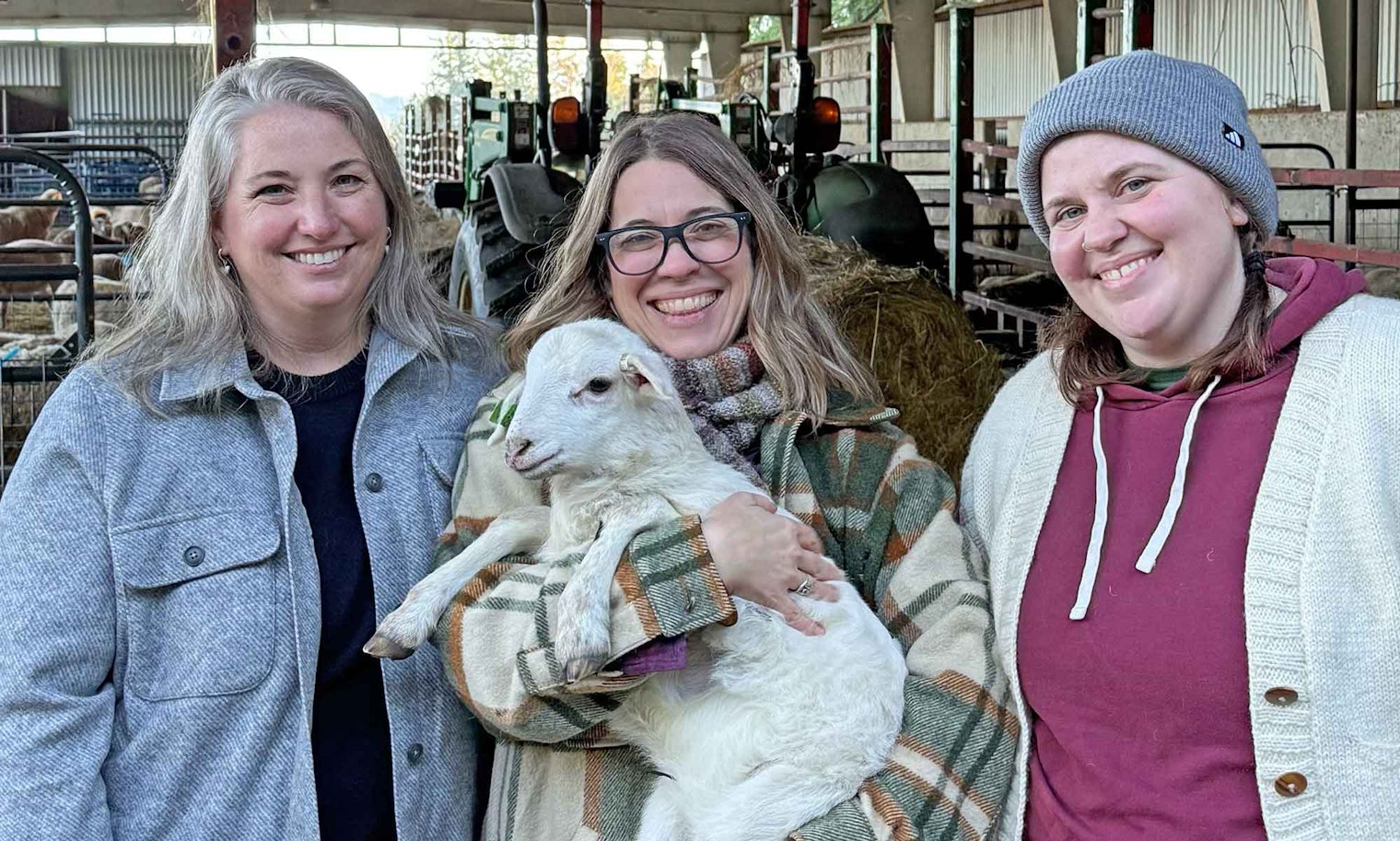
When you think of farming in Florida, citrus groves and other produce often come to mind. In fact, I bet wool-breed sheep might be one of the last things you’d expect to find, but our team found a small farm in the heart of Florida that’s working to change that. It was their passion and mission that inspired us to join them in the pasture for the recent Summer 2026 issue of Farm & Fiber Knits.
Here’s a little about the farm, what it was like to be on location, and who we met along the way.
Turn to page 61 in the new issue, and you’ll read all about Jim and Imke Casey and their mission for Florino Farms. These quotes from their website summarize their work and set the stage:
“At Florino Farms, our practices align closely with our mission to educate the public about organic wool production, sustainable farming, and the environmental benefits of ethical practices. We raise our Florino sheep with care, ensuring humane treatment and sustainable grazing methods that protect the land.
“Every day brings a rhythm of caring for our animals, tending to the land, and savoring the simple, rewarding moments of life on the farm.”
 Imke and Jim enjoy their back porch with their two dogs. Photo by Gale Zucker
Arriving at the Farm
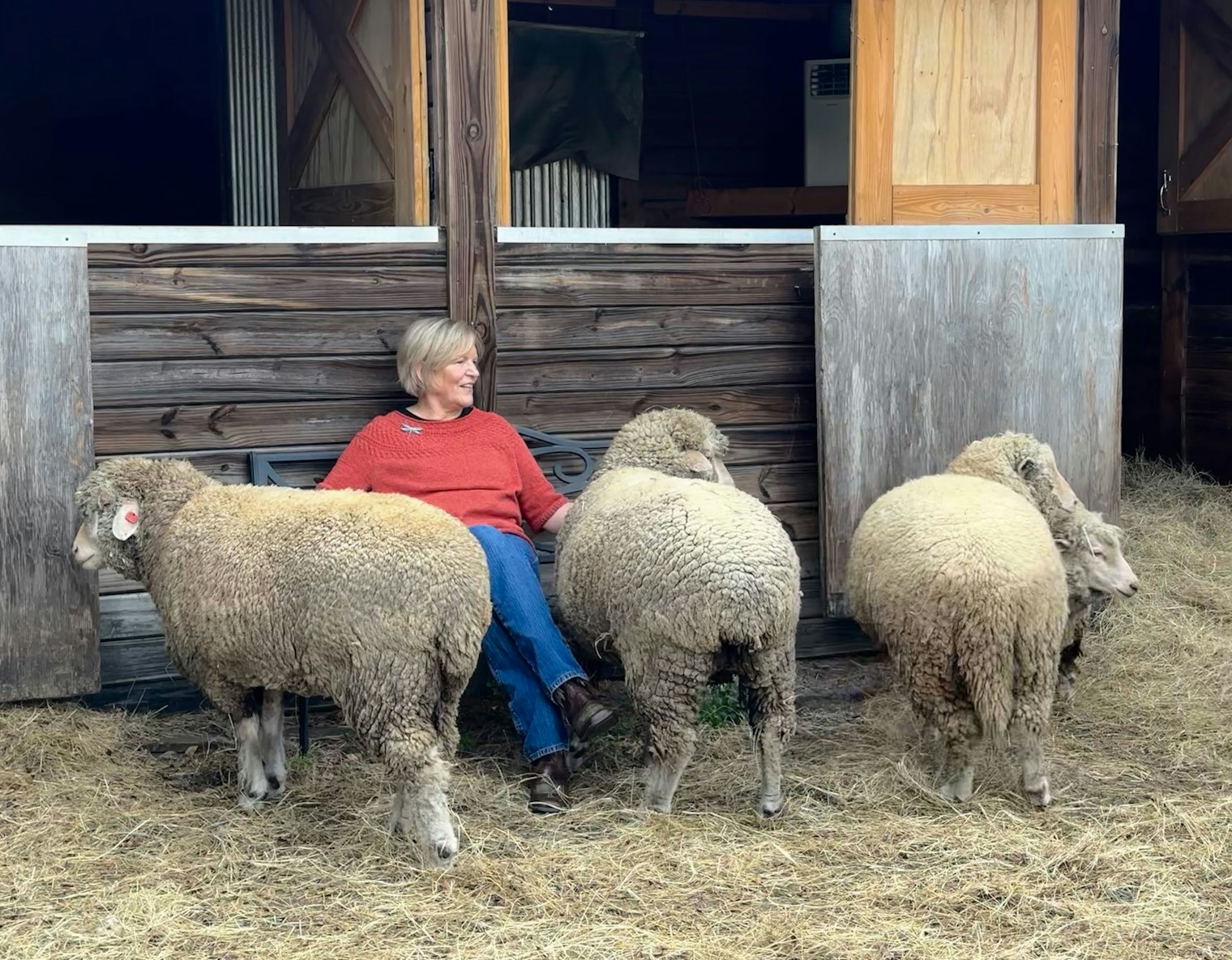
As we drove up to their sun-dappled farm, Imke and Jim came out to greet us with a hearty hello. They were the most gracious hosts, welcoming us to their home and farm with open arms. They are the sort of people you instantly like. Whether walking around the farm or enjoying their company at a meal, we found it a gift to hear their stories and share in their passion and love for Florino Farms.
Most of the events and education the Caseys do is out in the community and at local markets, so imagine the surprise to their herd when a troupe of strangers showed up at their farm for two days this past January.
The flock watched from afar as we toured the farm. The ewes were shy at first, but they came running at the sound of their favorite treats and greeted us cautiously (while mainly focusing on enjoying their treats).
 Several ewes watch us from a distance as we tour the farm.
Meeting the Sheep
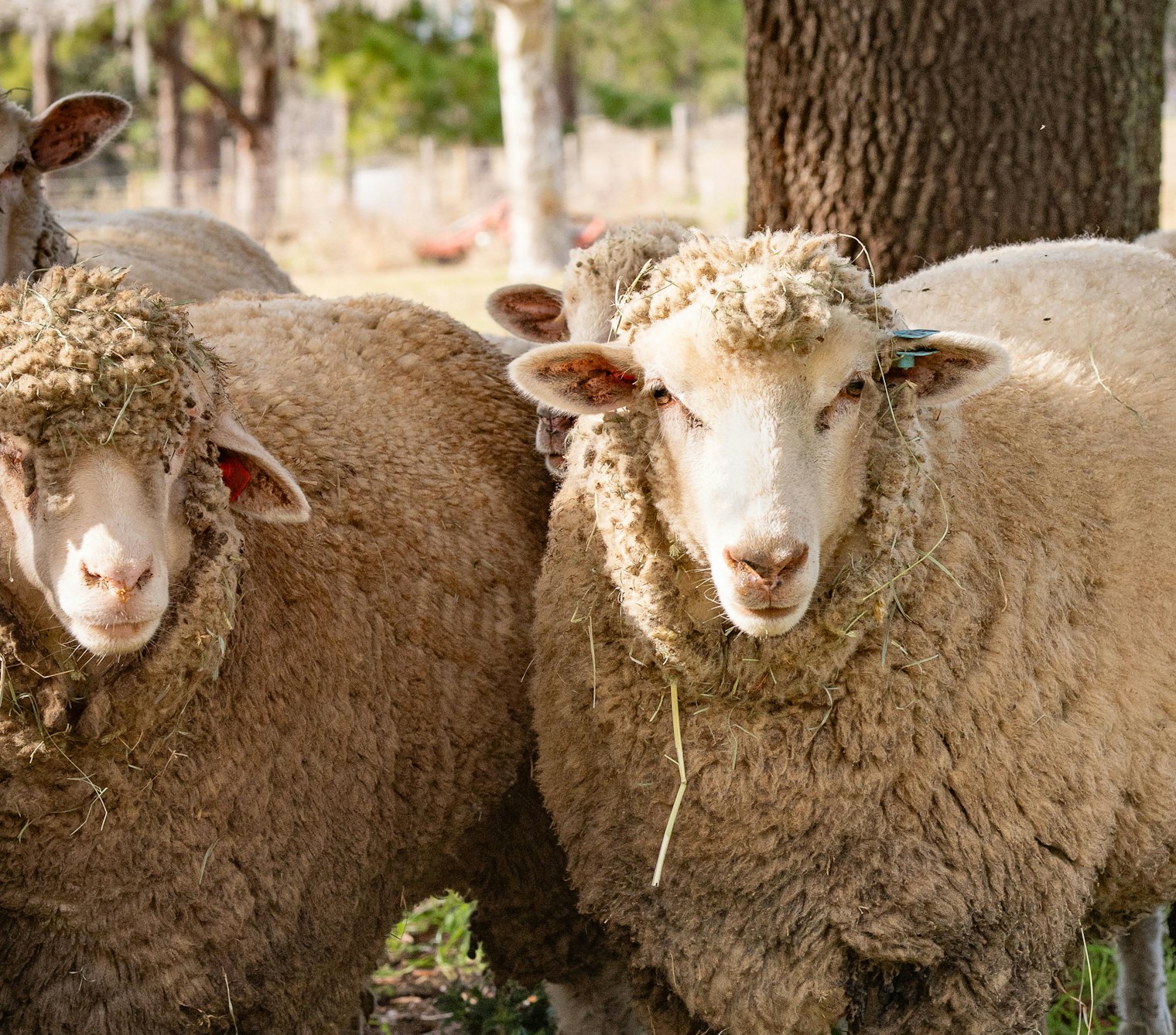
One of the first sheep we heard about was Pepper. She’s a first-generation Florino ewe, and the only one born so far with a richly colored cinnamon-chocolate fleece. Now she’s a gorgeous cinnamon color, and you can spot her in the first photo below, in the back of the group. The dark brown yarn in the yarn wall shown below is from an early shearing, and you can see just how dark she was.
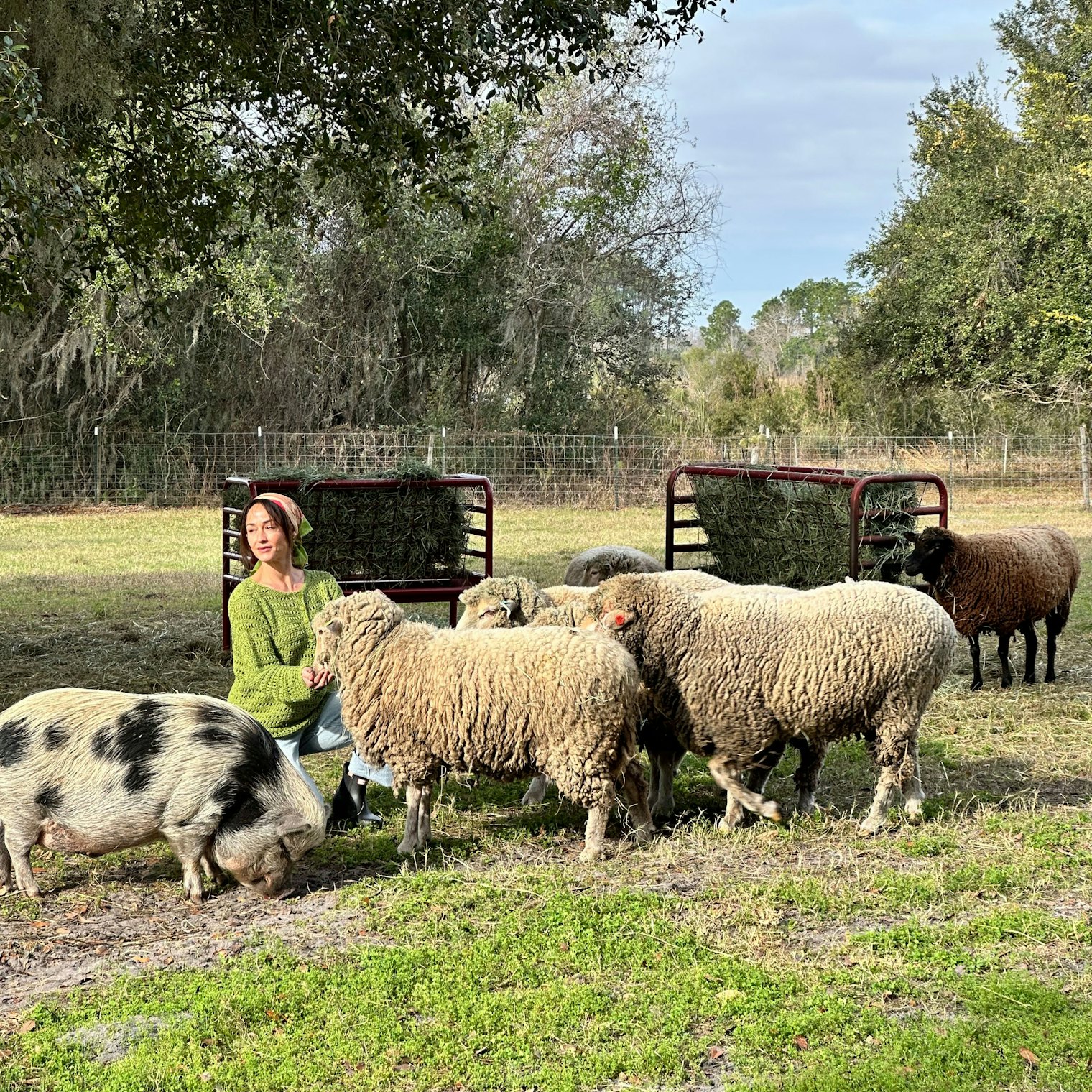
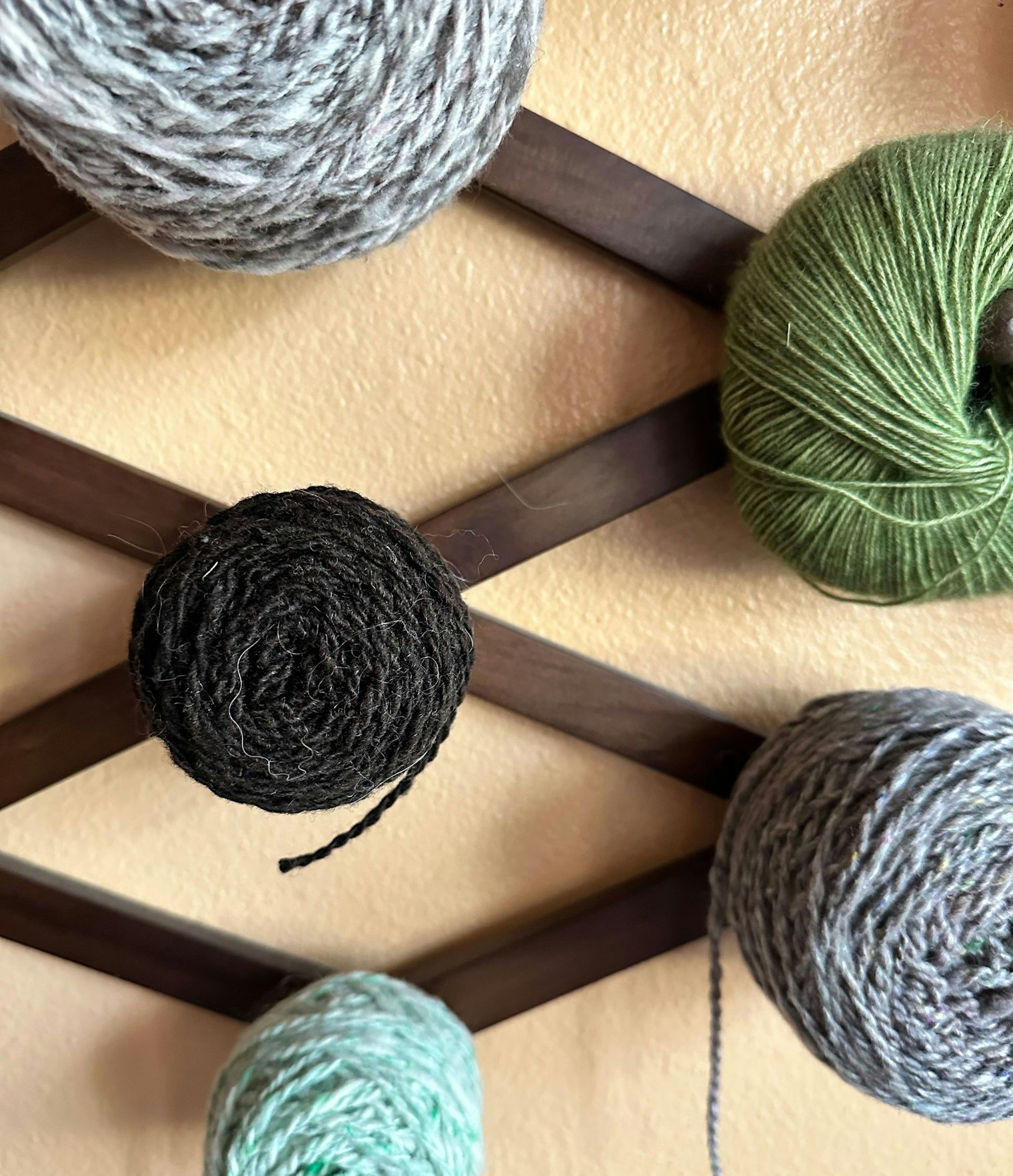
You’ll see Pepper and the other Florino ewes in the photos here and throughout the issue (look for green and blue ear tags). They were a little more wary of the farm’s visitors, but after the first morning we spent on the farm, they seemed to settle in to having us around, chewing their cud in the shade by early afternoon.
You’ll also see many gentle and friendly Merinos (look for the red ear tags). They were always happy to love and be close to Imke, but they warmed to us quickly, especially when we had their favorite treats in hand.
The Cast of Other Characters
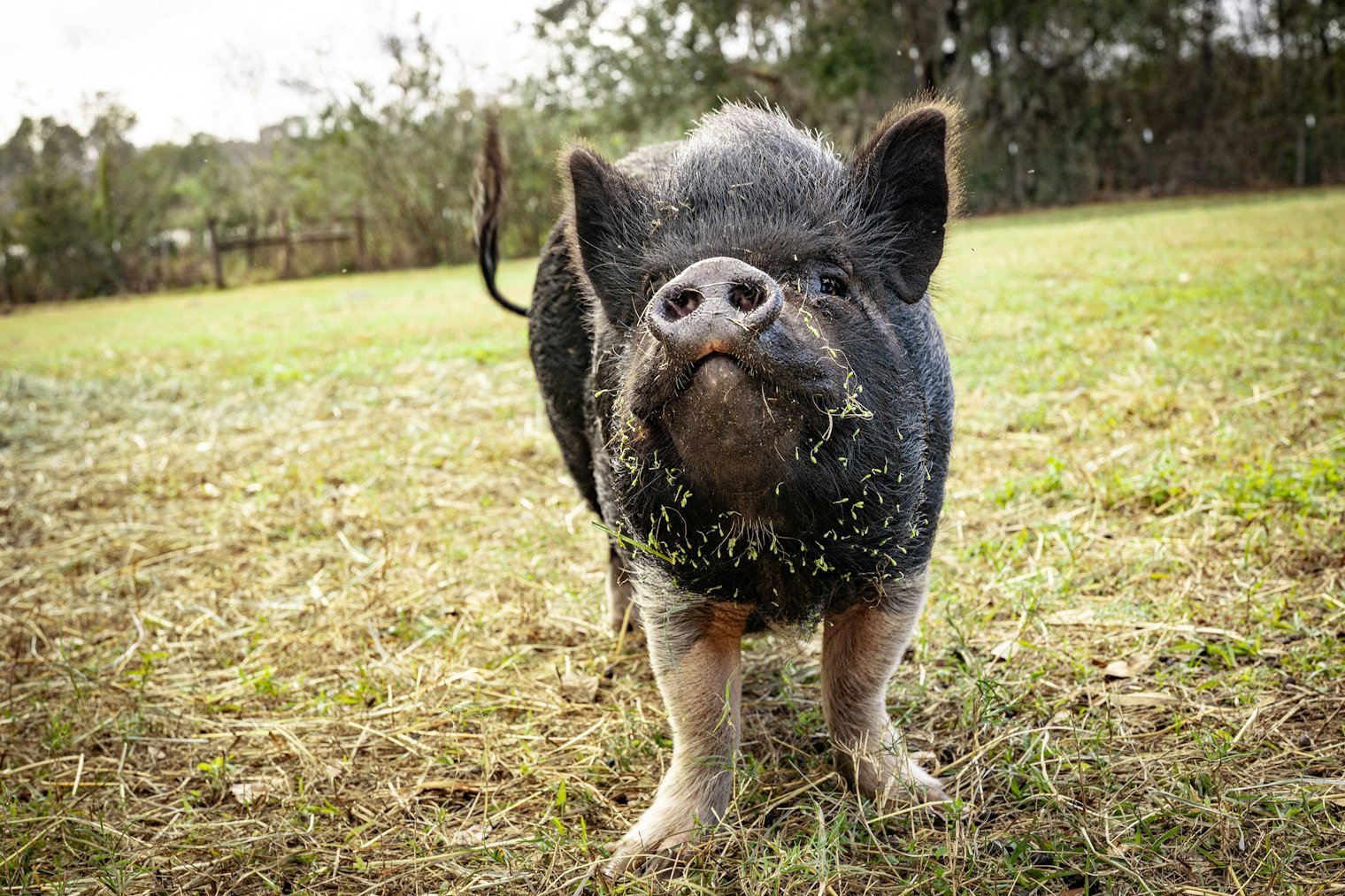
Their three farm dogs were instant companions. I bet you’ll also spot their two potbellied pigs in the issue, Howie (black-and-white) and Lizzie (all black). Howie was super friendly and instantly interested in the farm’s visitors, following us around the entire time we were there.
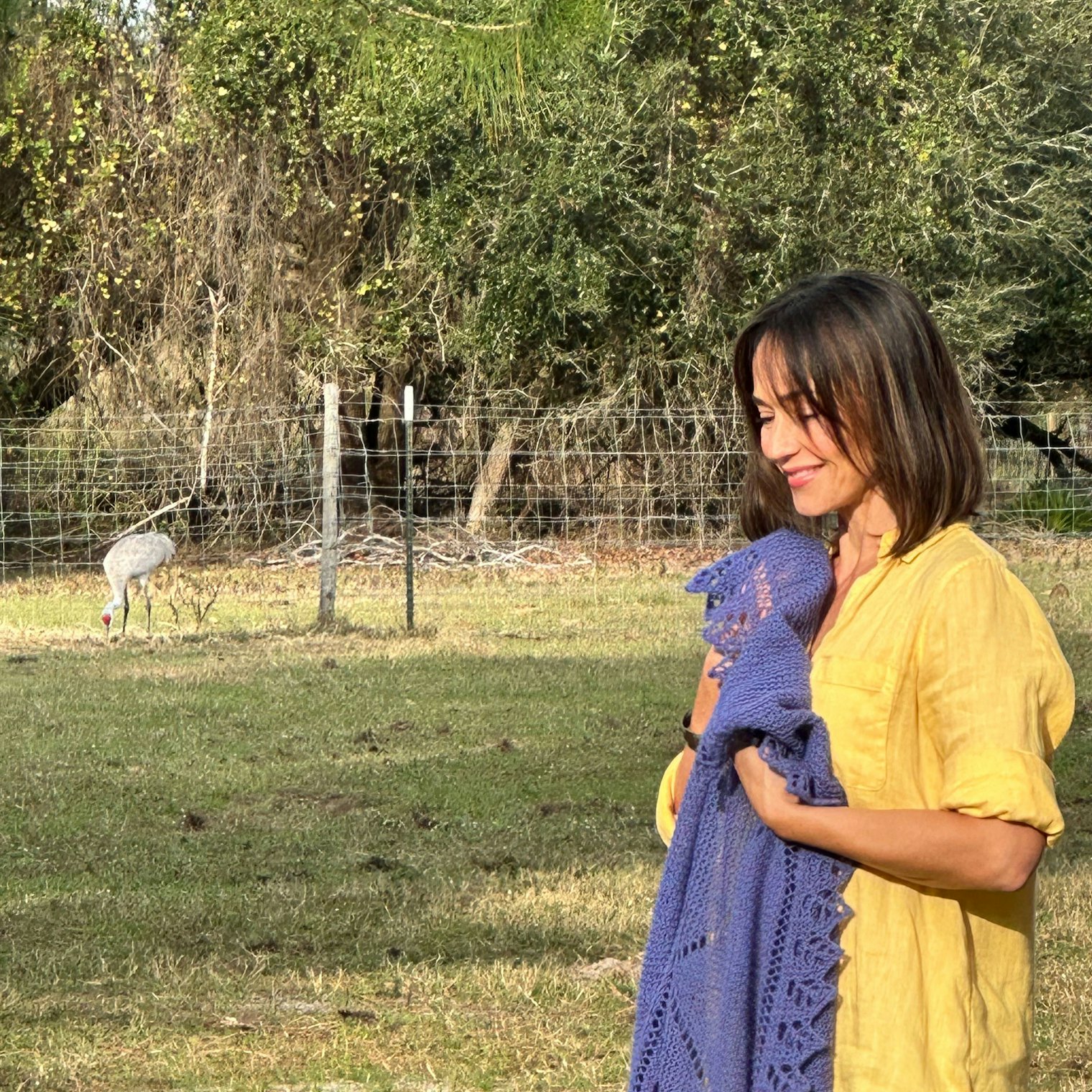
A few local sandhill cranes even joined the shoot from the back fields, serenading us through the morning.
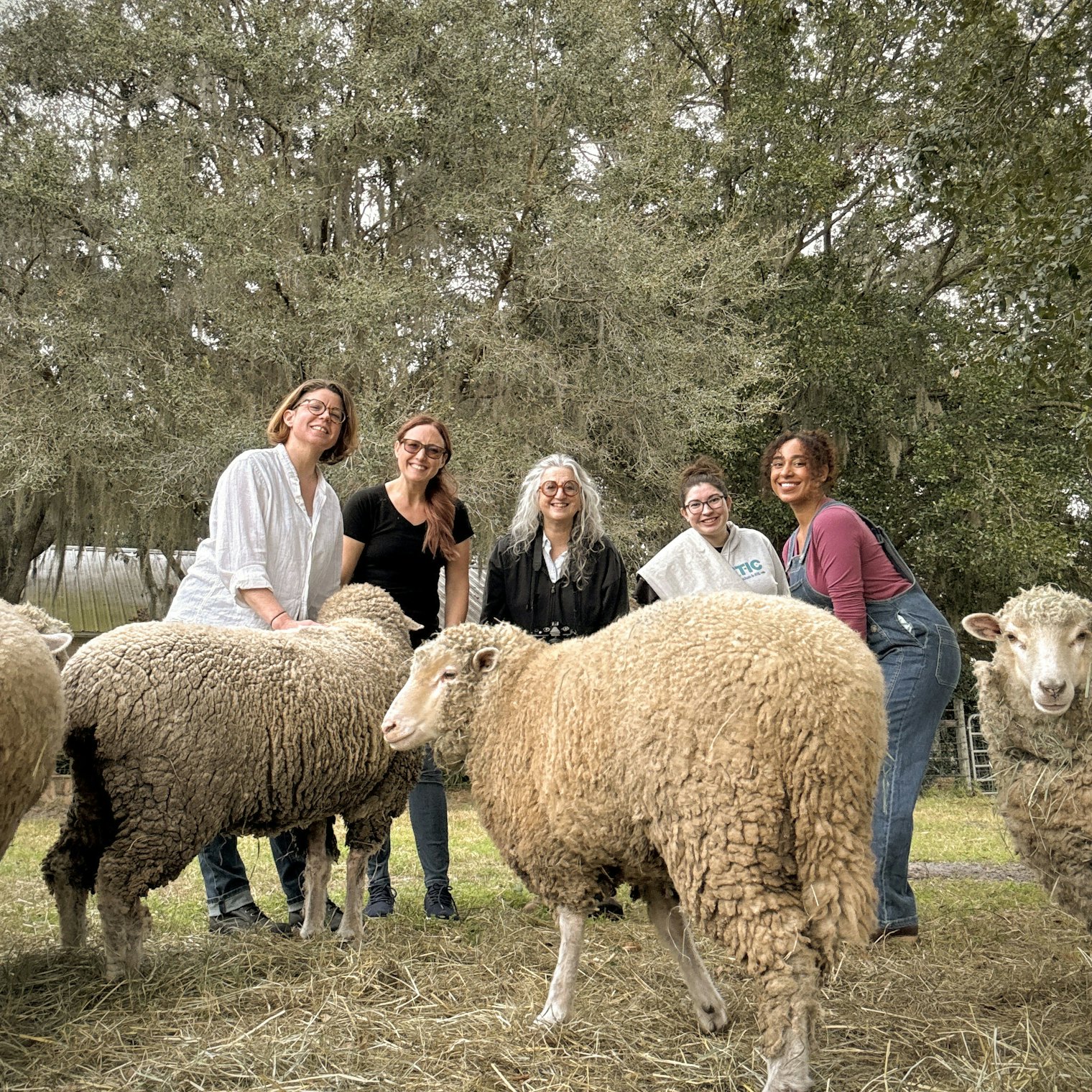
Between the happy and content flock, and the abundant native wildlife on and around the farm, it’s clear that Jim and Imke have rehabilitated the land and created a little slice of paradise.
What’s special about Summer 2026 and each issue of Farm & Fiber Knits is the chance to share the stories of passionate farmers around the world. This all leads to the skeins we love, and the luscious fiber we can’t wait to knit with.
-Tiffany
The Ultimate Fiber Lover’s Field Trip
For most knitters, yarn is found at the shop. For this group of fiber adventurers, yarn began right at the farm.
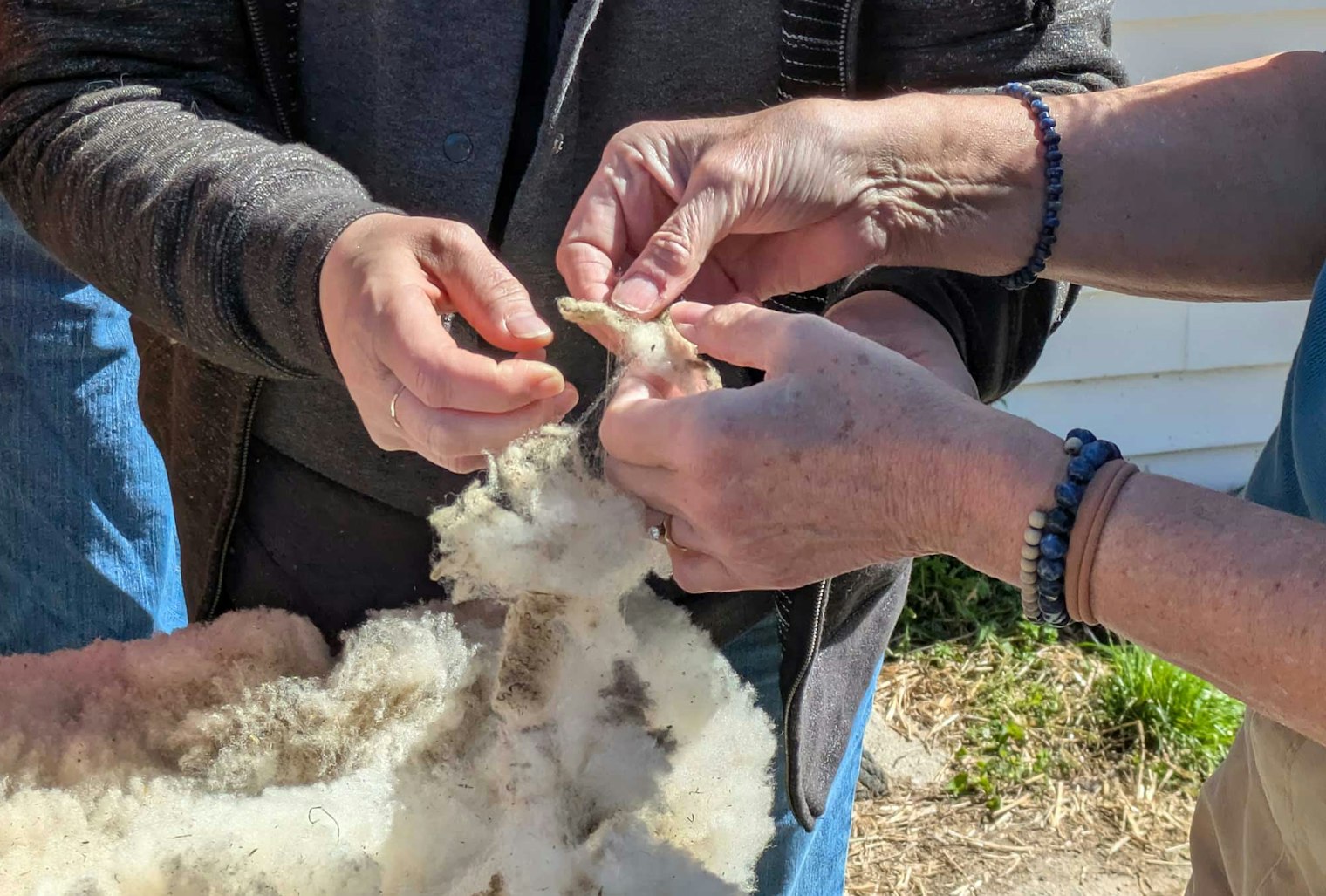
Over these last two weeks, knitters from around the US gathered for a special farm-to-yarn getaway. This first-of-its-kind retreat from Farm & Fiber Knits offered the chance to follow the yarn from the sheep in the field, to the shearer, to the mill, and to the finished skein. Here’s a behind-the-scenes peek at the adventure as it unfolded.
The adventure began with a visit to Sunny Fields Farm, where Siri Swanson of Yankee Rock Farm/Yankee Clippers demonstrated the art of shearing. Guests then rolled up their sleeves to try skirting fleeces themselves, preparing the wool for its next step at the mill they would visit the following day.
Get a closer look! Click any image in the gallery below to open it in full-screen mode.
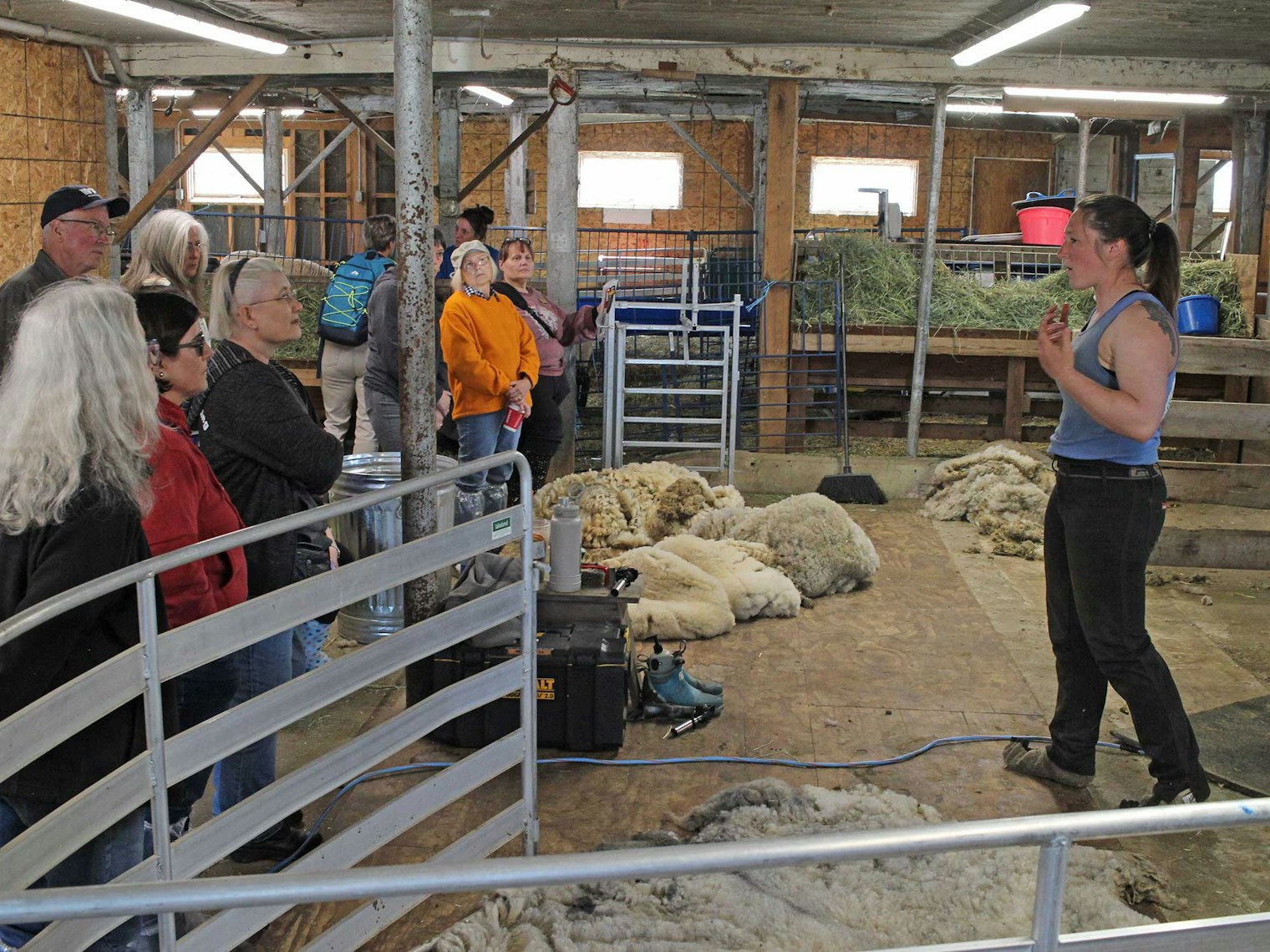
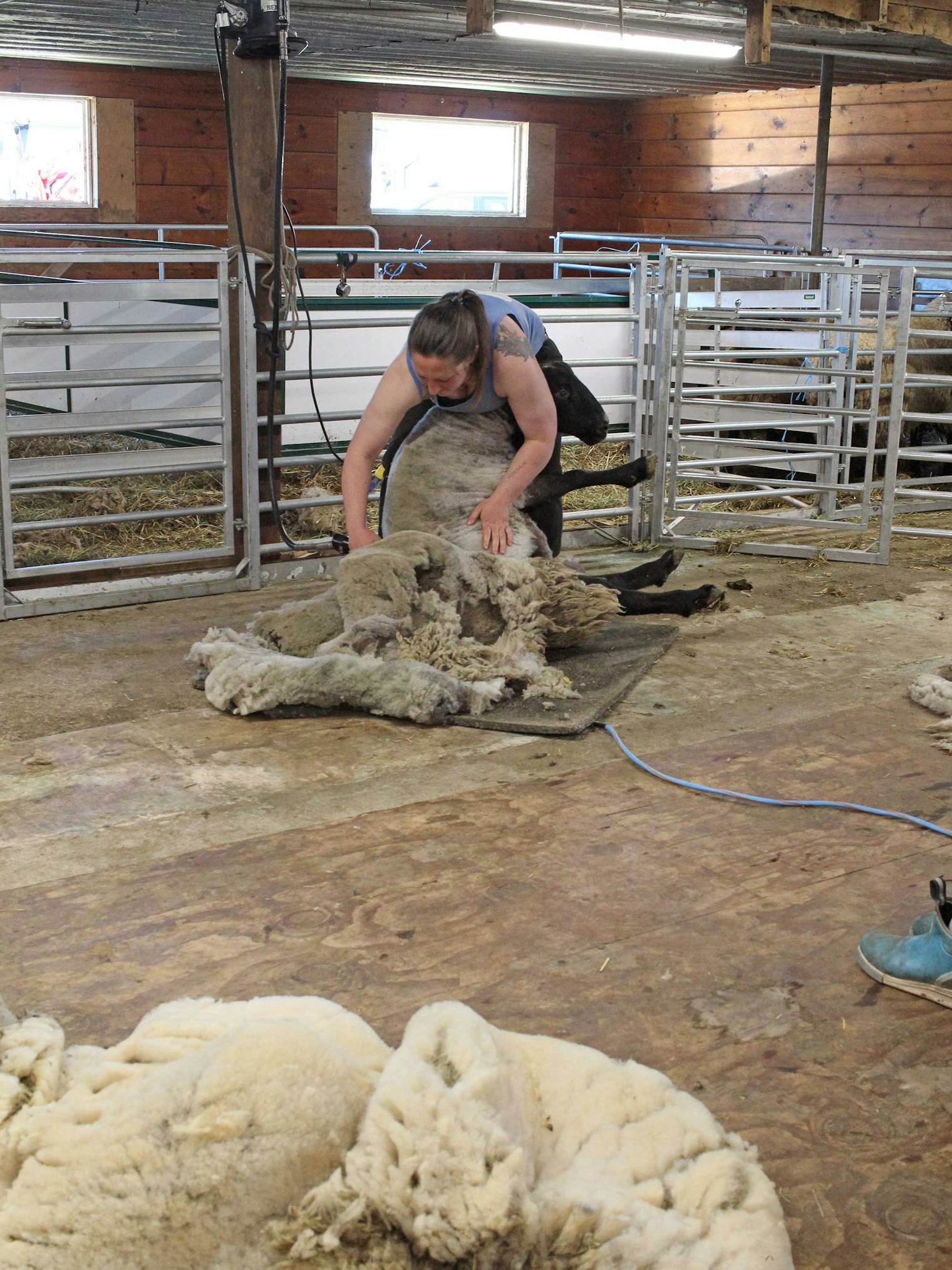
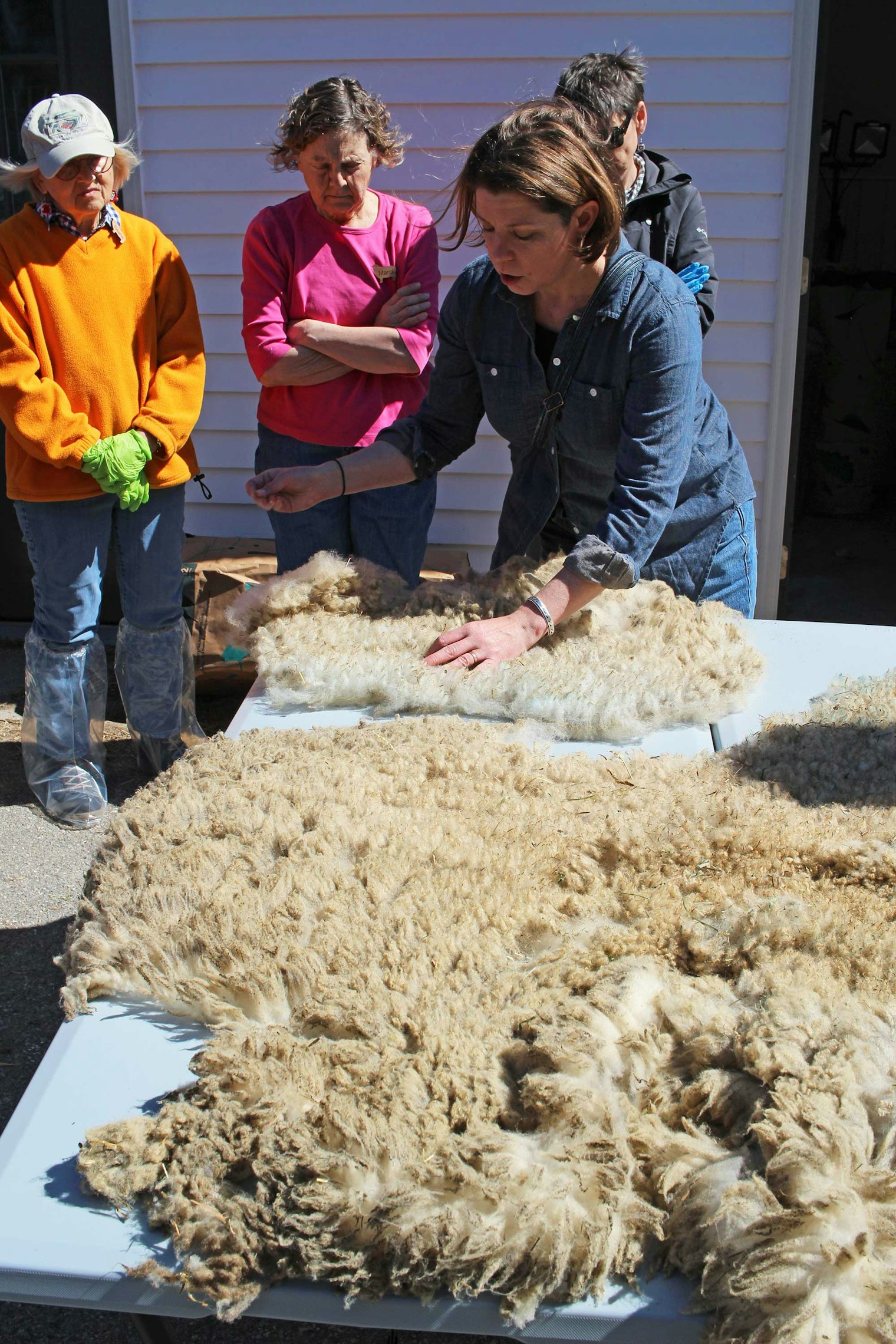
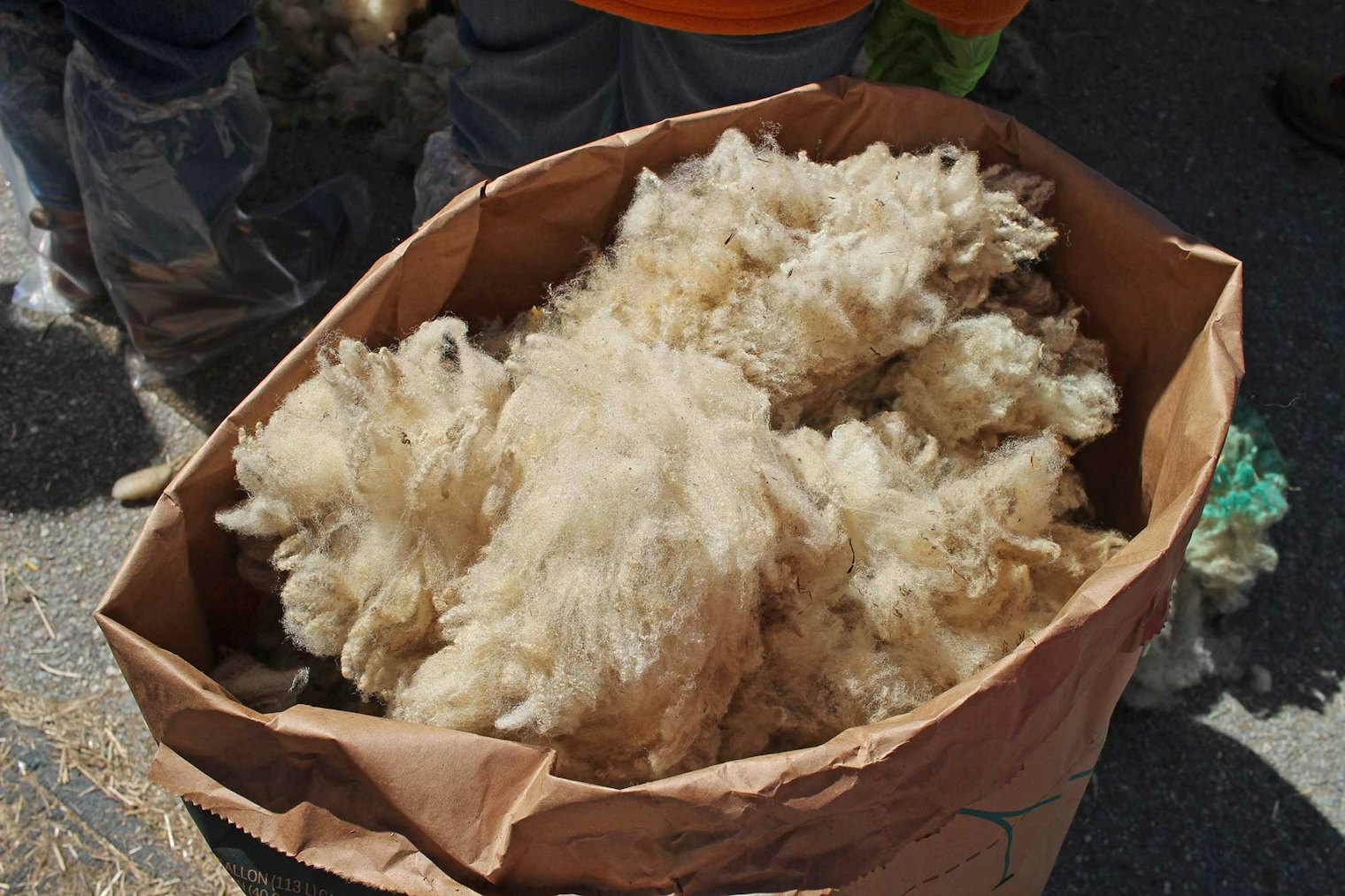
That afternoon, small groups toured Whispering Winds Alpaca Farm, where Pat Delaney introduced the group to her charming herd of alpacas, who enjoyed being the center of attention. The day wrapped up with a stop at Harrisville Designs with a tour of their iconic mill.
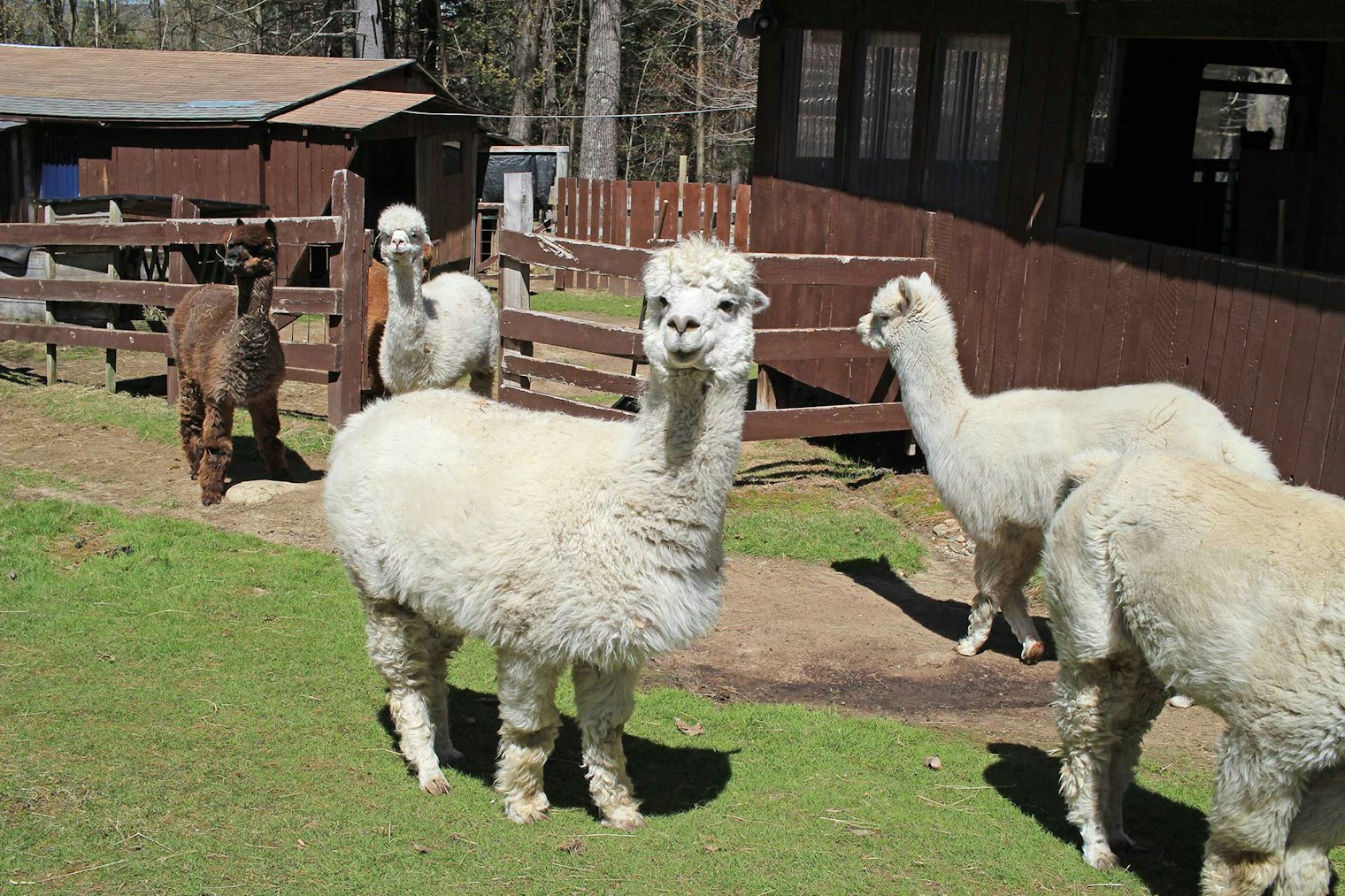
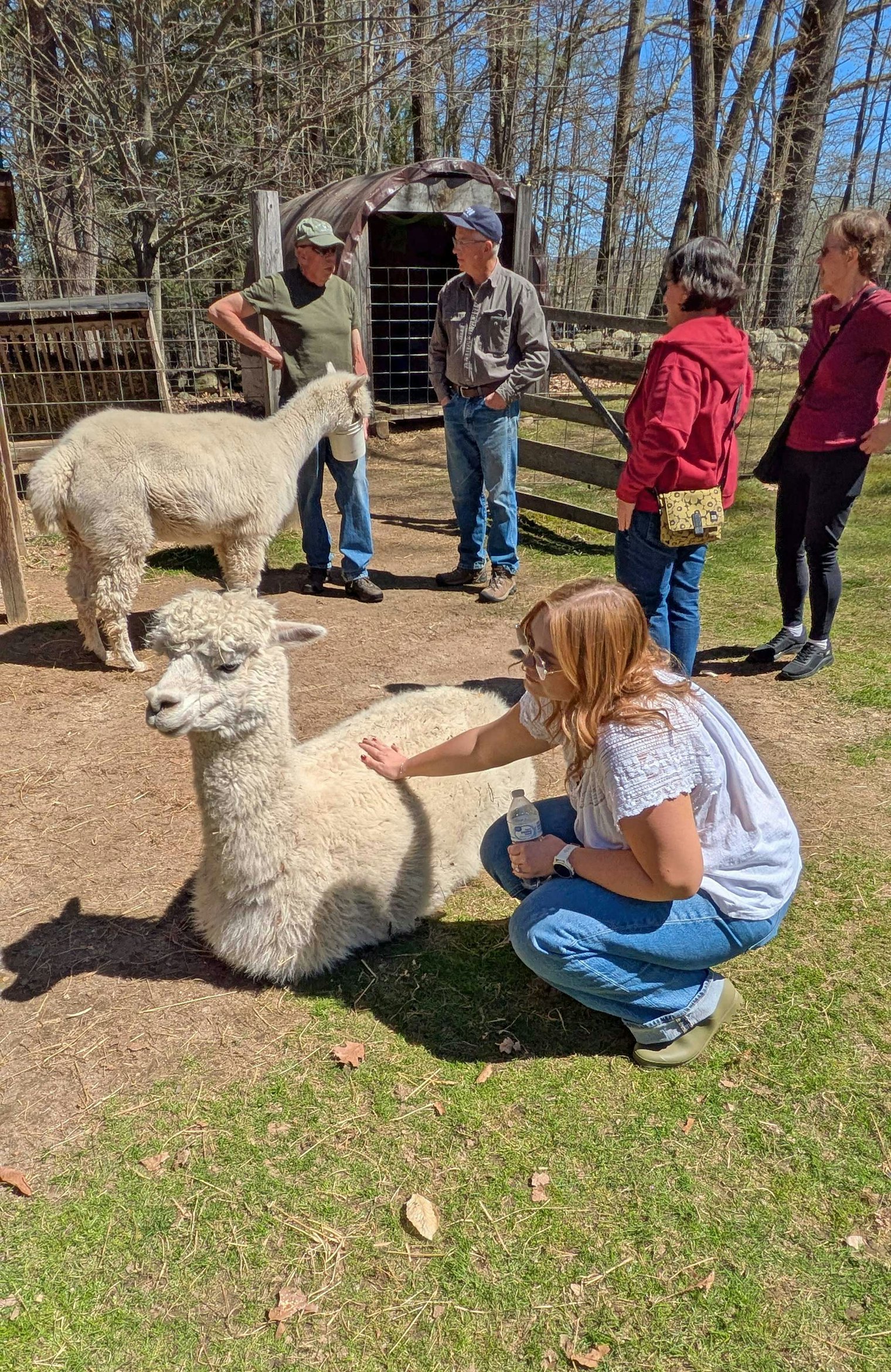
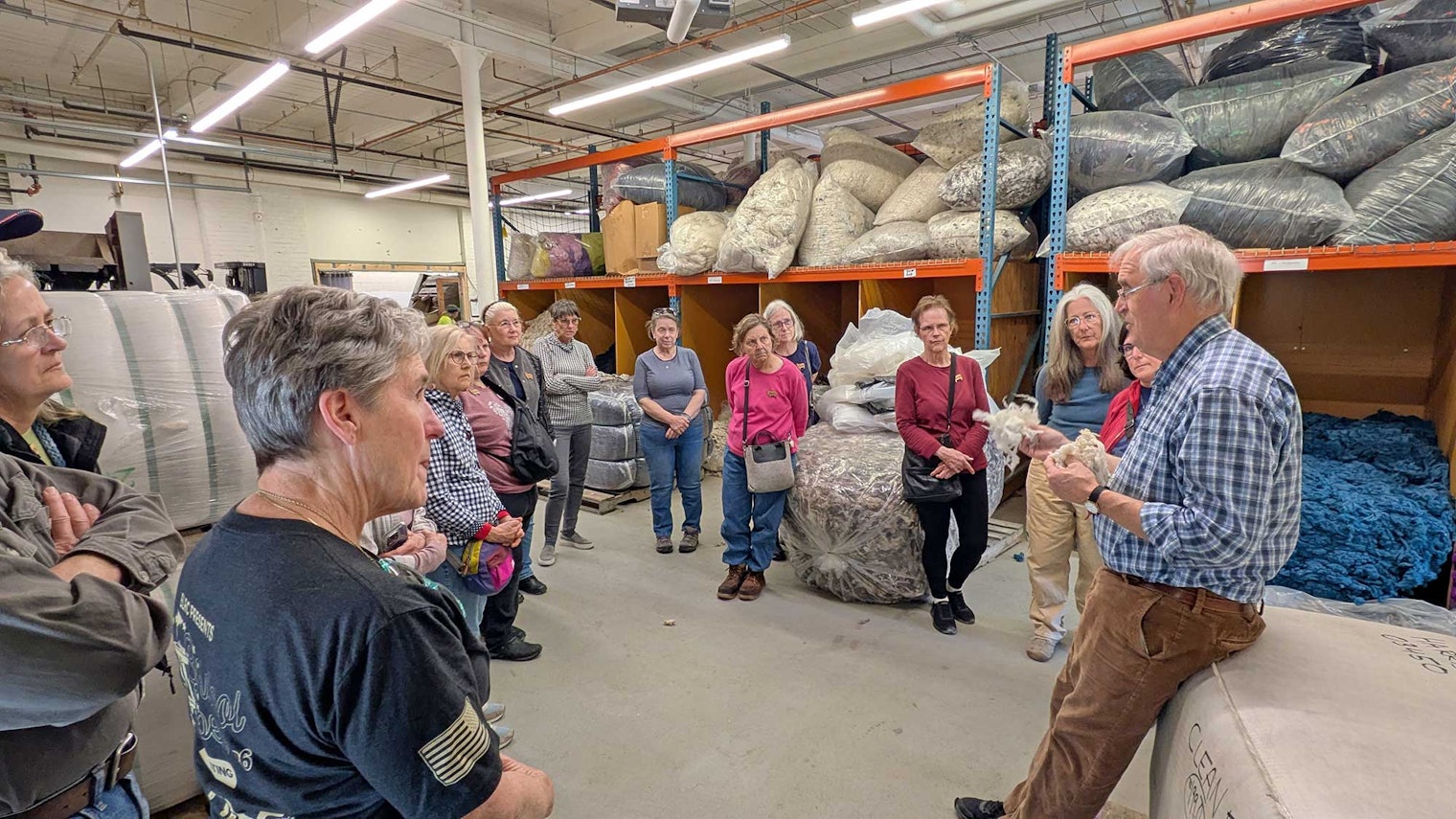
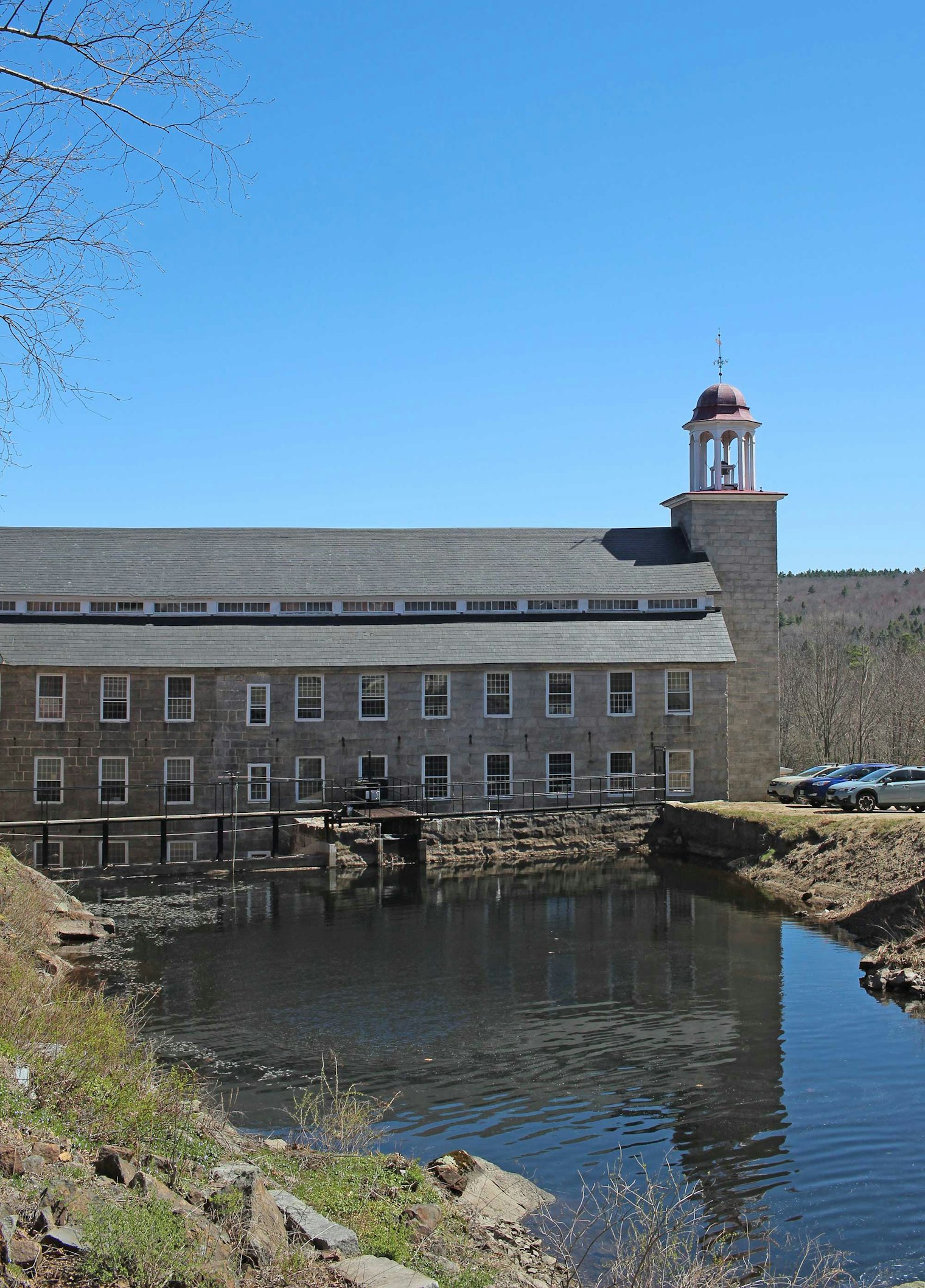
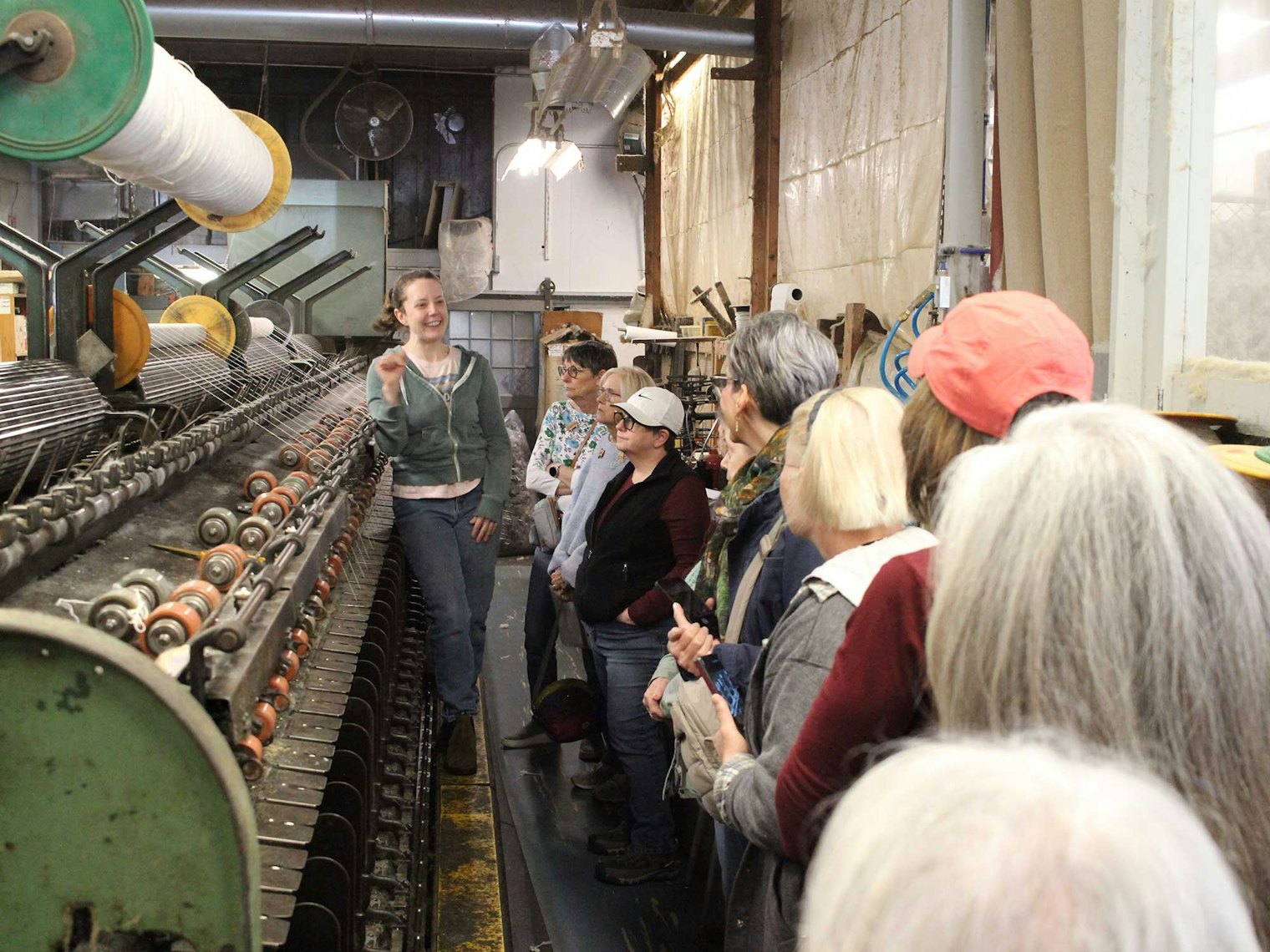
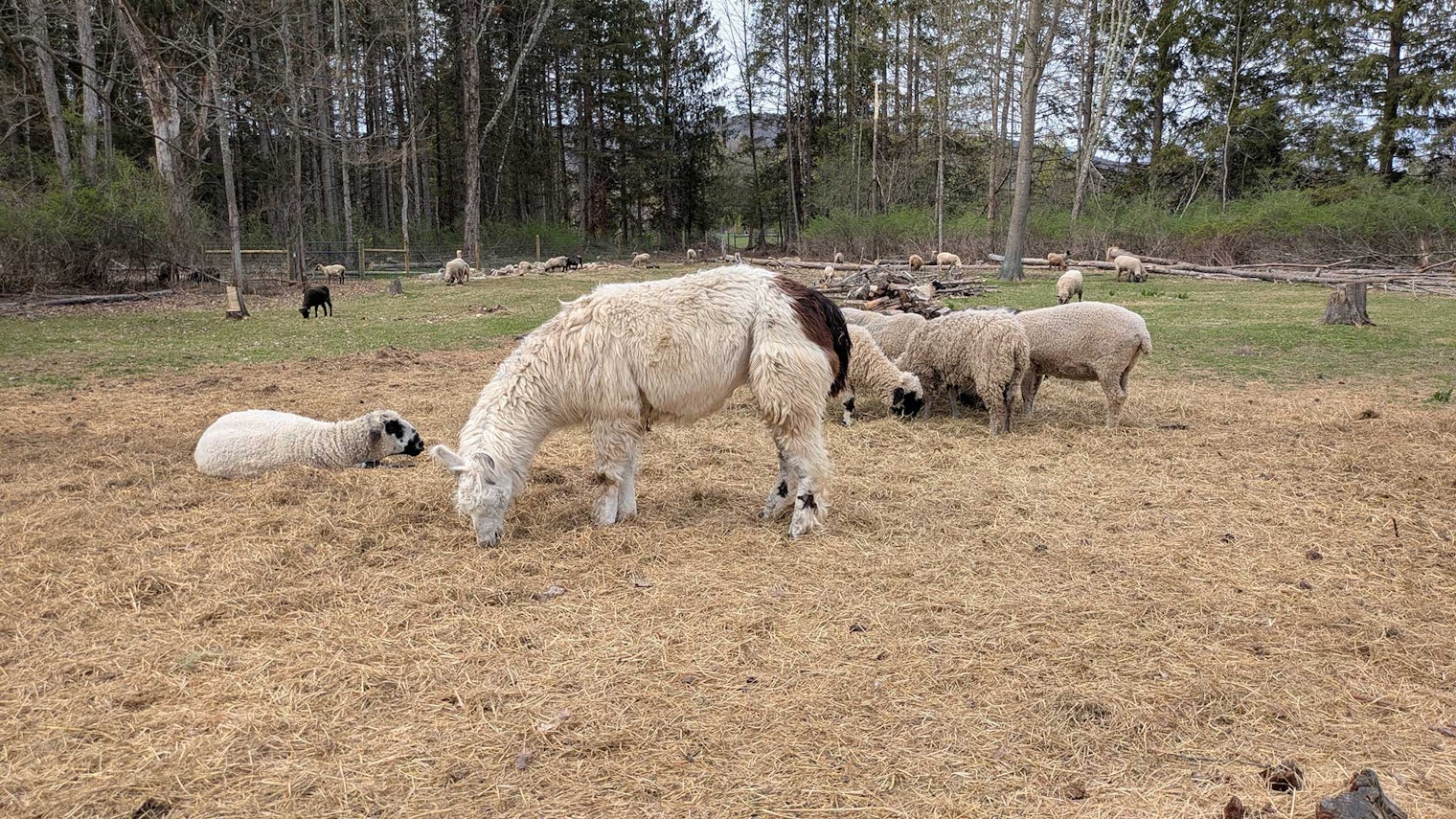
On Tuesday, the group visited Green Mountain Spinnery for an up-close look at small-scale yarn production and brought the wool that was shorn and skirted the day before for spinning. This wool will be turned into yarn and sent to the participants following the retreat! The afternoon continued at Wing & A Prayer Farm, home to a diverse flock of sheep breeds, along with a visit to the farm’s apothecary. Homemade pies and a host with a million-dollar smile awaited them.
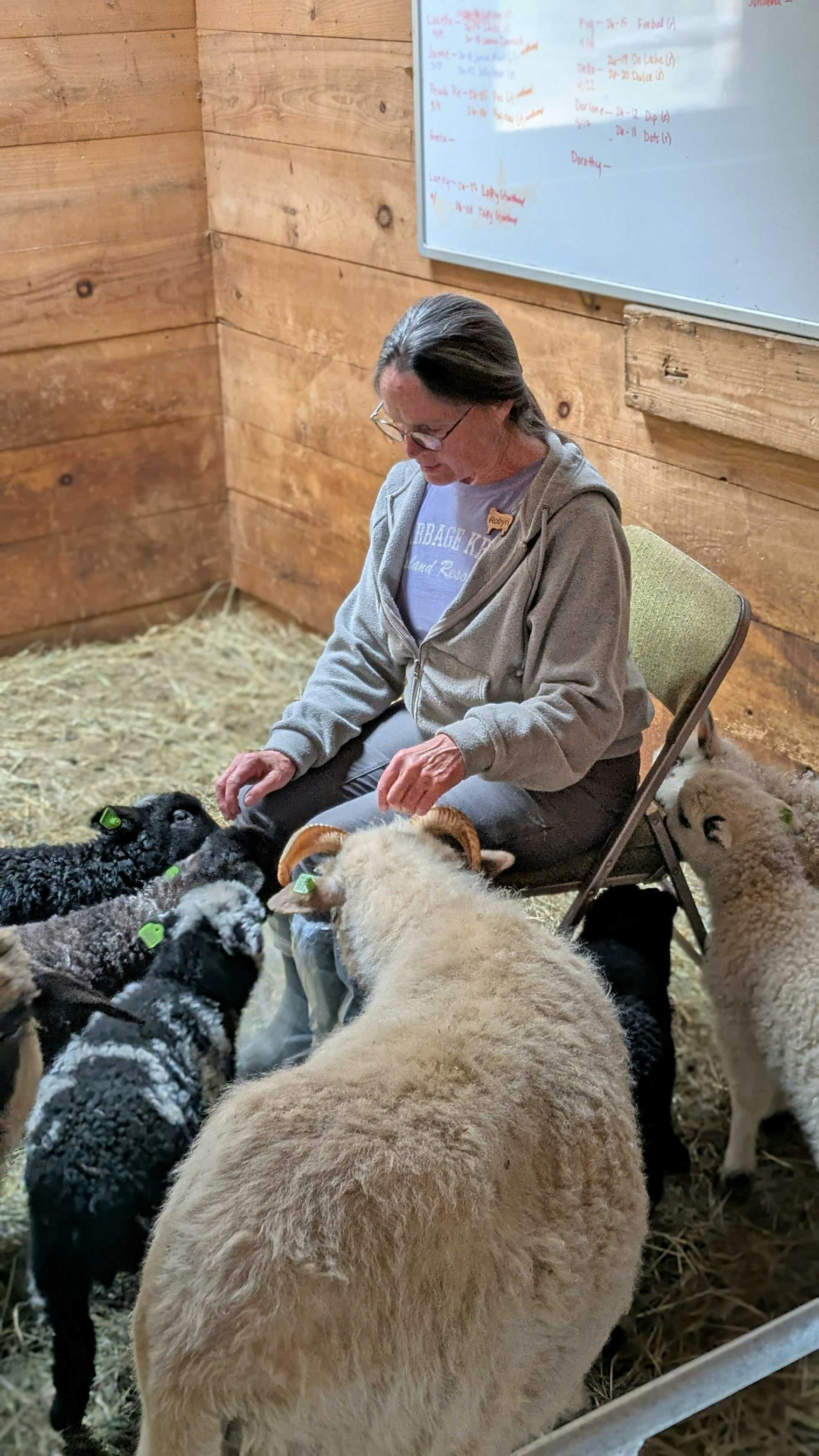
Wednesday brought time to learn and connect with knitting. Classes included Mosaic Knitting & the Grid Gambit led by Samantha Guerin and A Shepherd’s Yarn Tasting with Kate Larson. There was also plenty of time to unwind—whether strolling through the village, biking nearby trails, playing pickleball, or simply relaxing with knitting in hand.
A special thank you to all of the locales that hosted us this week!
Looking ahead, the Fall Farm & Fiber Knits Retreat will take place September 28–October 2, 2026 in La Conner, Washington. This four-day Pacific Northwest experience offers another chance to follow fiber from pasture to needle, meet rare fiber animals, and learn directly from the people who raise and create these remarkable materials. While the fall retreat is currently sold out, you can still join the waitlist for a chance to attend if a spot opens up.
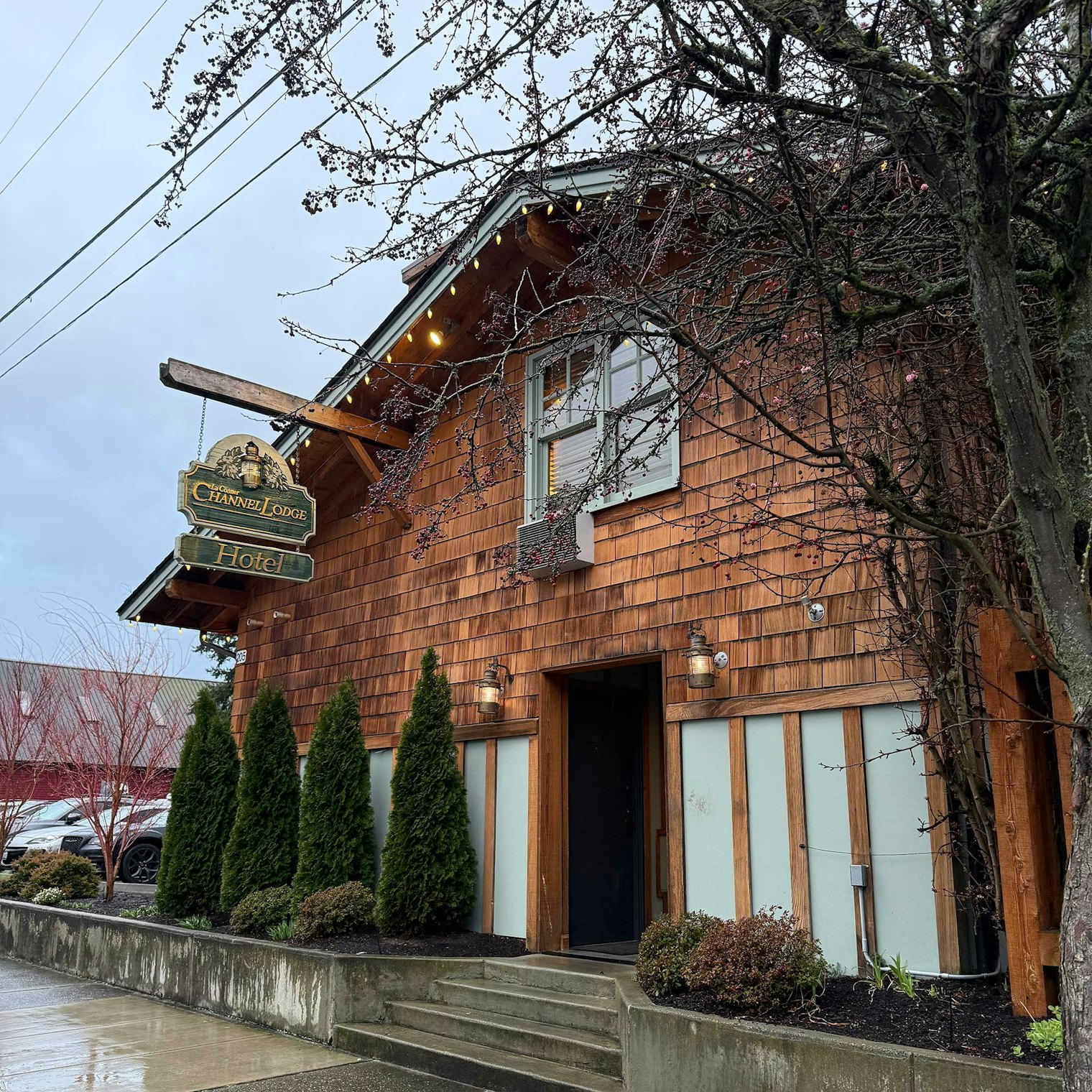
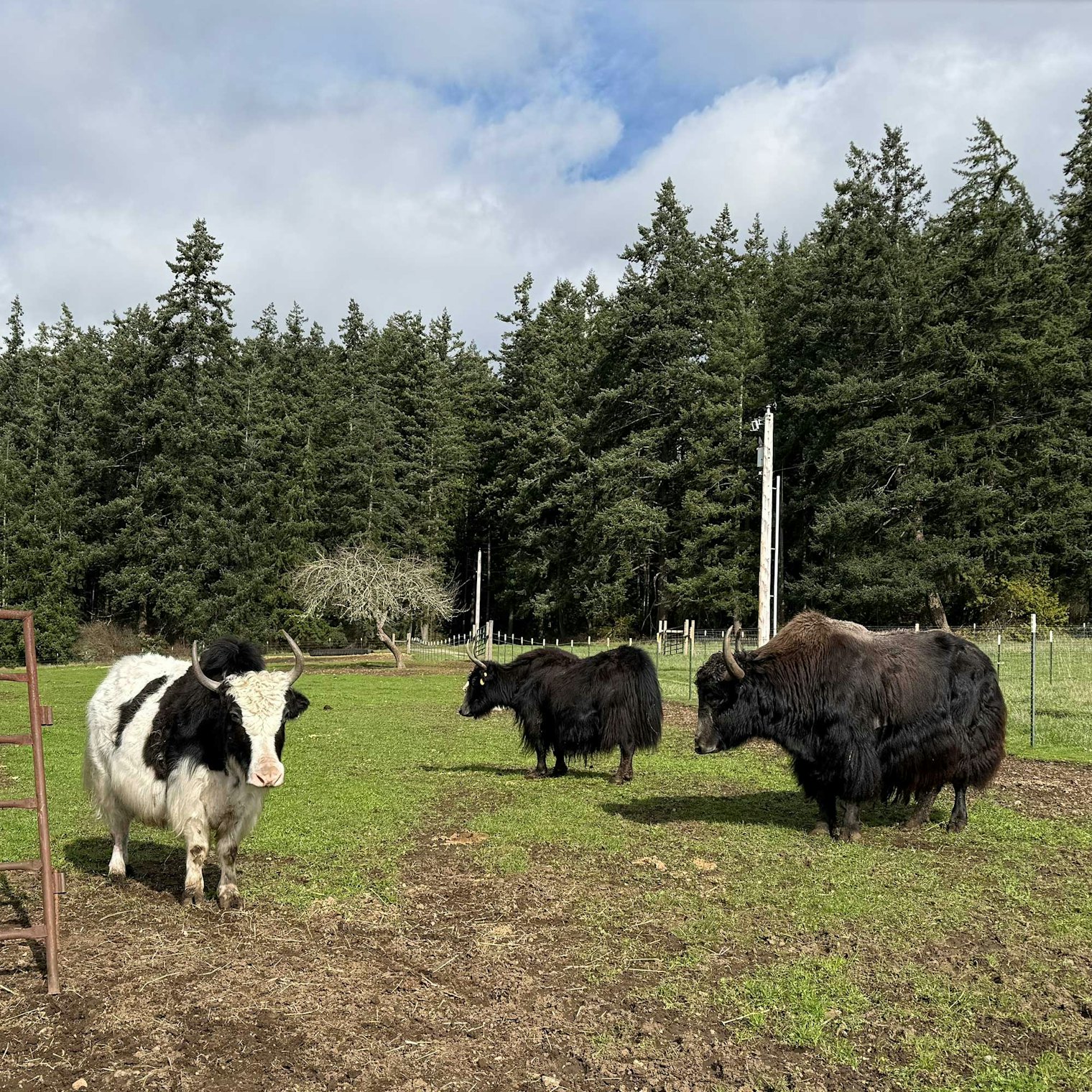
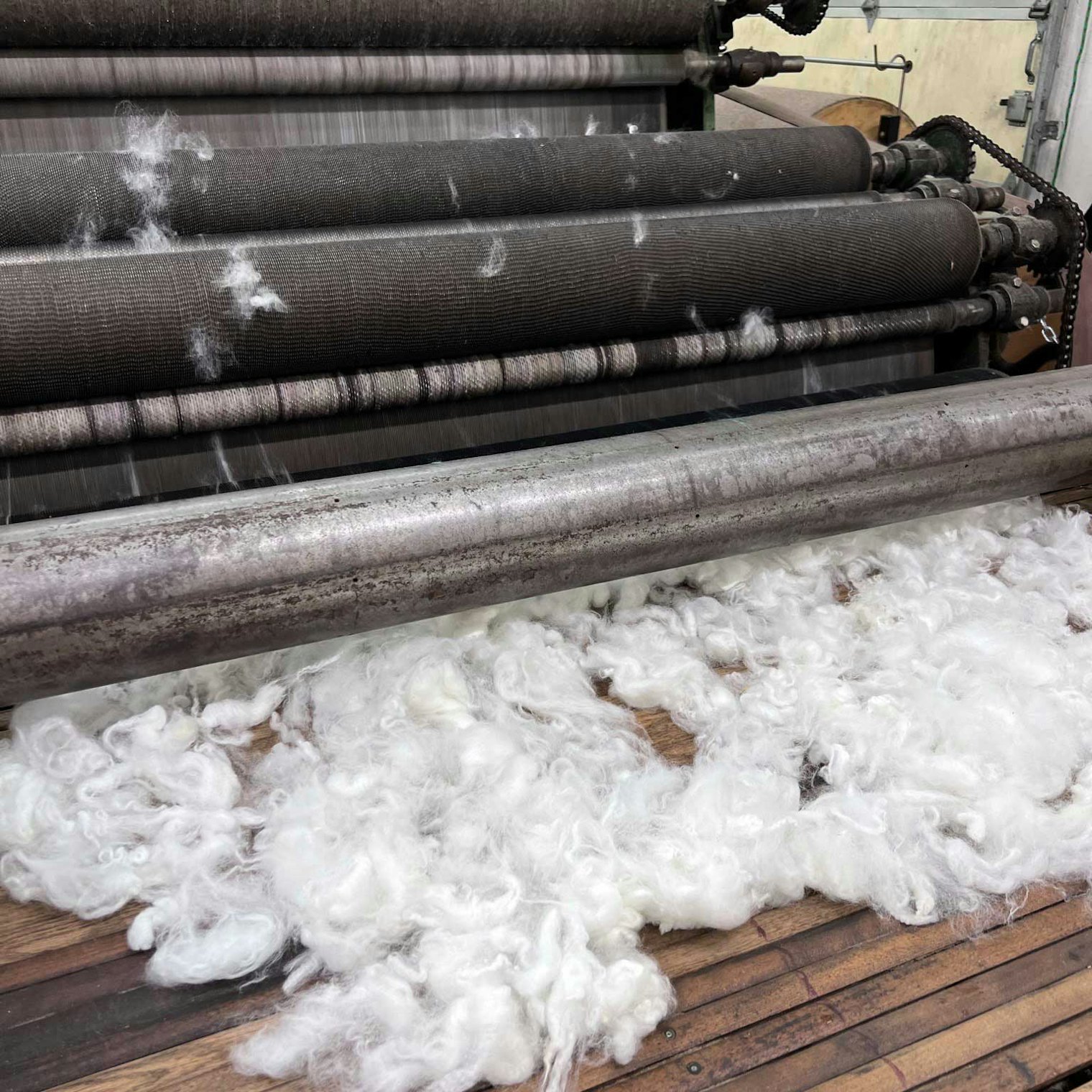
Lodge and yak photos by Kate Larson, wool photo courtesy of Skagit Woolen Works.
Highlights include:
A visit to farms raising rare fiber animals—guanacos, yaks, suri alpacas, pygora goats, and heritage-breed sheep.
Meet shepherds producing wool from CVM/Romeldale, Romney, and Icelandic sheep.
Explore natural dyeing with locally foraged plants with farmer Lisa Mitchell.
Further reading
Hear from Harrisville Designs owner John (Chick) Colony on the Long Thread Media Podcast. Then see how one of our editors put their yarn to use.
Learn more about Green Mountain Spinnery.
Enjoy our interview with Tamara White of Wing & A Prayer Farm on the Long Thread Podcast. Then read about the farm itself.
What Is a Wool Buy? Notes from a Diné Shepherd
For Diné shepherds, selling wool has never been just about fiber—it’s about sustaining a way of life shaped by land, animals, and family.
By Nikyle Begay
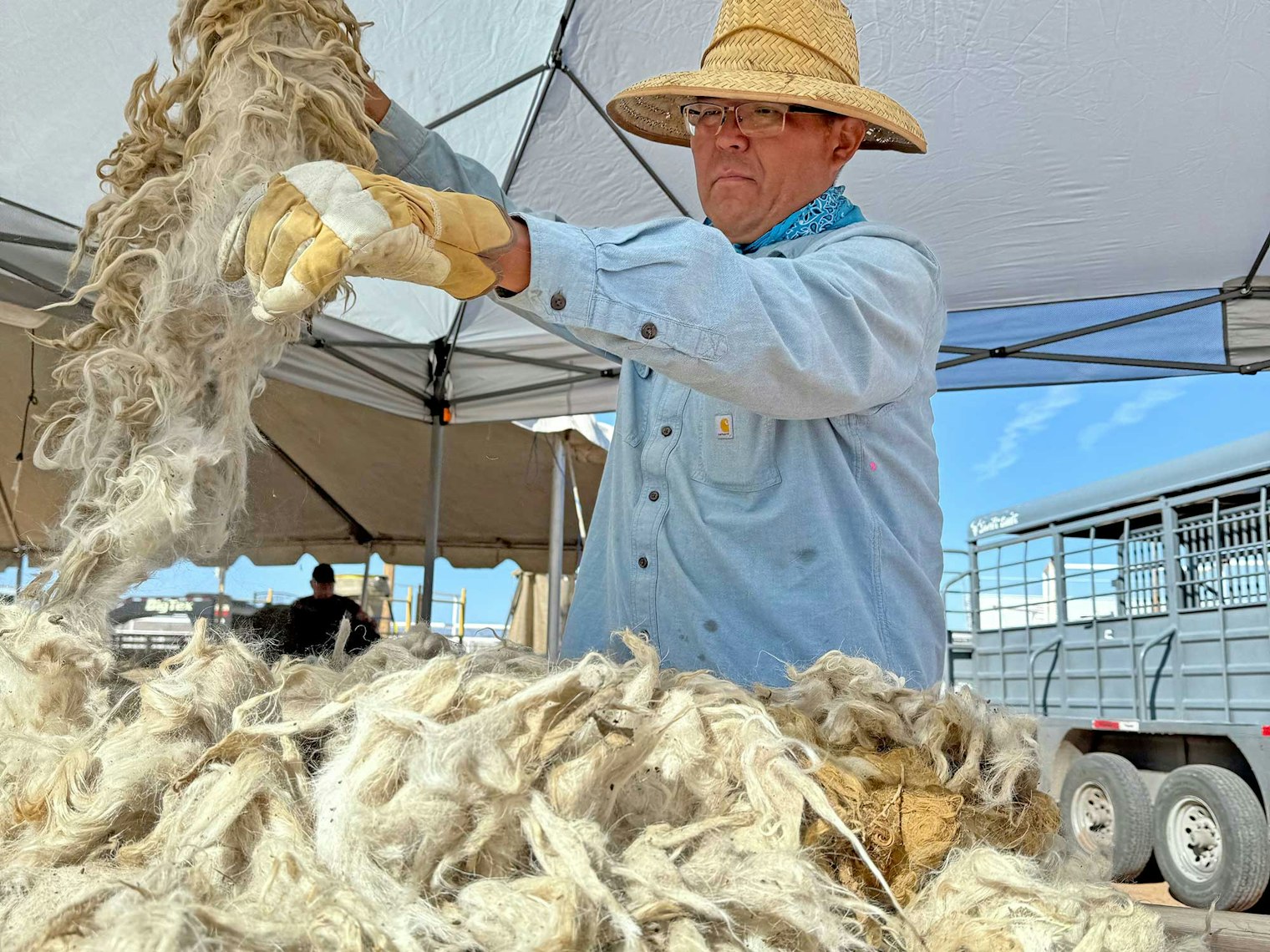
There is nothing like preparing for a wool buy on the Navajo Nation. First, you must lovingly raise the sheep, kindly harvest and package their fleeces in the spring, and prepare to arrive at the wool-buy location on the day. Producers will start lining up by 5 a.m. to ensure their precious wool is purchased. It’s a busy, strenuous, exhausting time.
Before the era of annual wool buys, local trading posts were the go-to for producers to sell their wool and mohair. At one point, Navajo wool had humbly made its place in the global market, providing millions of pounds of raw wool for the carpet-manufacturing industry. There was a time when this provided a decent livelihood for Diné shepherds.
Today, most Diné would agree that “back then,” raising sheep for wool and meat, as well as Angora goats for mohair, was their family’s main source of income. My father recounts the days of packing wool during shearing season. His mom had a tall, wooden stand specially made to hold up a long burlap bag. That bag was then filled with freshly shorn and skirted wool that he and his brothers would stomp down to pack as much wool into one bag as they could. He said that one trip into town with those burlap bags full of wool in the spring—and then a trailer load of weaned lambs in the fall—would purchase clothes, shoes, school supplies, food, and everything they needed to survive the winter with their sheep.
 Diné College Land Grant Office interns pack wool into burlap bags.
Over the years, the wool market has plummeted due to imposed and retracted duties on wool, thus crumbling the foreign and domestic infrastructure needed to process wool and mohair. Today, producers send their wool to what is known as a “wool warehouse,” where the wool will be consigned and placed into a global auction to get the best price for both the producer and the wool company.
How Does a Wool Buy Work?
A successful wool buy on the Navajo Nation begins with a dedicated crew of about 20 to 30 people, each assigned to different tasks. There are the runners, who go down the line of vehicles, handing out clipboards of paperwork and tagging the bags of fiber, labeling them either fine, medium, coarse, Merino, Rambouillet, Mixed, Unknown, Churro, or Mohair. When the producer makes it to the weighing area, the crew that unloads the wool and packs it on the scale will sort the wool as the reader reads and records the weight and type of fiber aloud so those writing the checks know what they’re paying for.
 A Diné shepherdess watches as her wool is weighed.
The wool is then skirted by a team of handlers removing dung and debris. This team is led by a professional wool grader who then grades and sorts the wool into more specific categories based on quality. Groups of about three people to a wool stand then pack the graded wool into burlap bags, which will then be loaded onto trailers to transport the wool to nearby warehouses. The Diné College Land Grant Office has a square baler for wool, so off-site and after a buy, the wool is again removed from the burlap bags and baled into large square bags for easier shipment to the wool warehouse.
 A team of professional wool graders sorts the wool before it is packed into large burlap bags.
In years past, the wool buys were run by groups such as Mid-States Wool Growers Cooperative Association, Peace Fleece, and Restoration Yarns. Other small groups such as Black Mesa Weavers for Life and Land as well as Rainbow Fiber Co-Op worked with Diné shepherds who raise Navajo-Churro sheep. Today, the wool buys on the Navajo Nation are organized by the Land Grant Office at Diné College and the Navajo Nation Department of Agriculture. The Navajo Nation is the primary buyer, and USDA representatives are onsite to help producers sign up for an additional monetary incentive. The wool and mohair that was purchased in 2024 was stored at Navajo Nation warehouses until a wool broker in Sonora, Texas, was ready to receive it. The wool that is purchased this year will go through the same process and—fingers crossed—will sell into the global market.
Knit the Rancher’s Cowl
Navajo knitwear designer, weaver, and maker Tressa Weidenaar calls Gallup, New Mexico, home, and the vast landscapes of the Southwest serve as a constant source of inspiration for her creations. Where Tressa lives in New Mexico, the spring winds are often harsh and powerful, and cowls are useful to help keep dust and cold air out of one’s shirt and jacket.
The motifs in her Rancher’s Cowl reflect patterns you might see in Navajo weaving. Wear it like a mini poncho to add an extra layer of warmth for the shoulders.
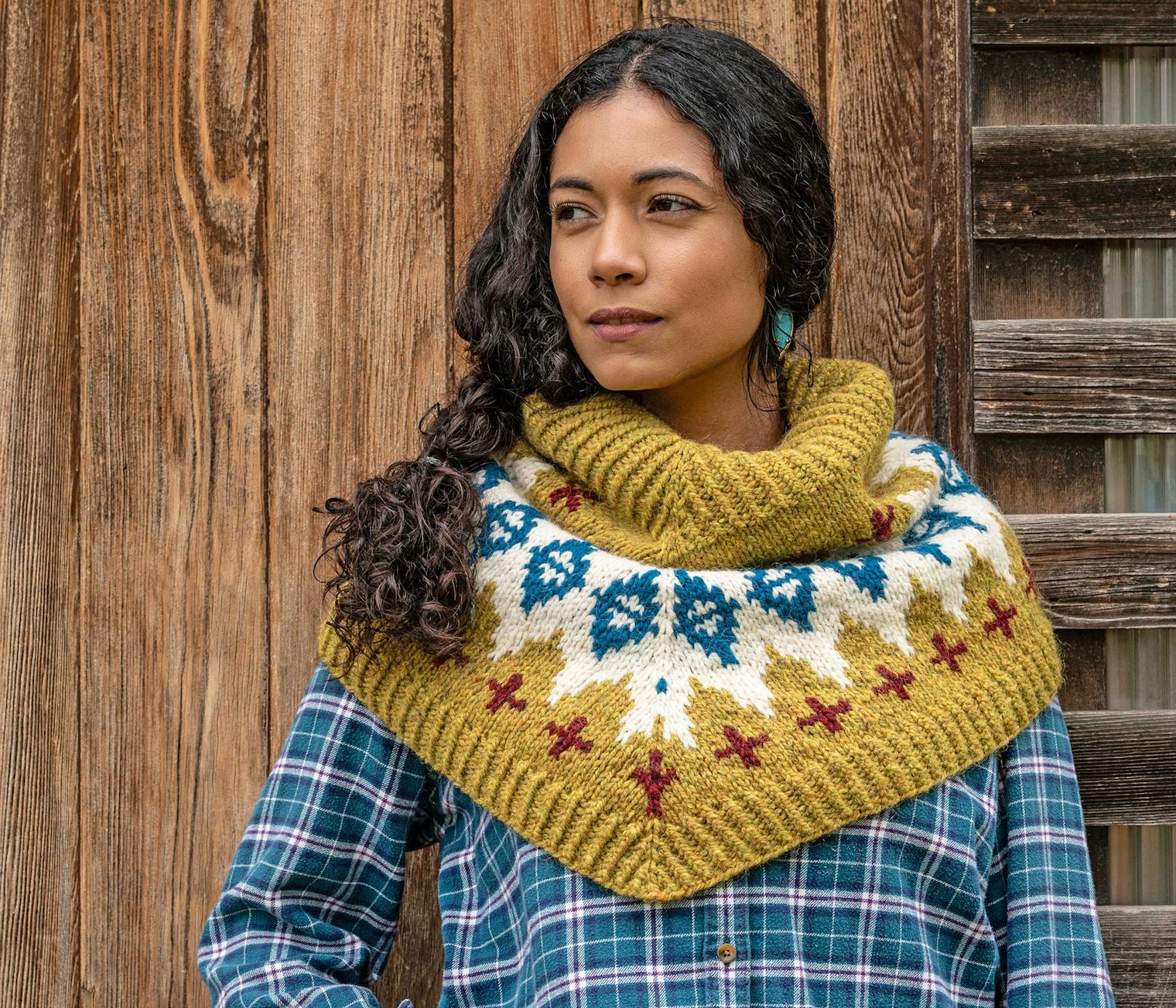 Many of Tressa Weidenaar’s designs reflect elements of her home so that she can take them with her wherever she goes. The patterns and colors in her Rancher’s Cowl are comforting to Tressa and help her remember the land and the people that she comes from. Photo by Gale Zucker
Find the Rancher’s Cowl in the Farm & Fiber Knits Library.
Long Thread Podcast: Gudrun Johnston, Shetland Trader
Season 14, Episode 3: Wherever in the world she lives, Gudrun Johnston‘s roots always take her—and her knitting—back to Shetland.
By Anne Merrow
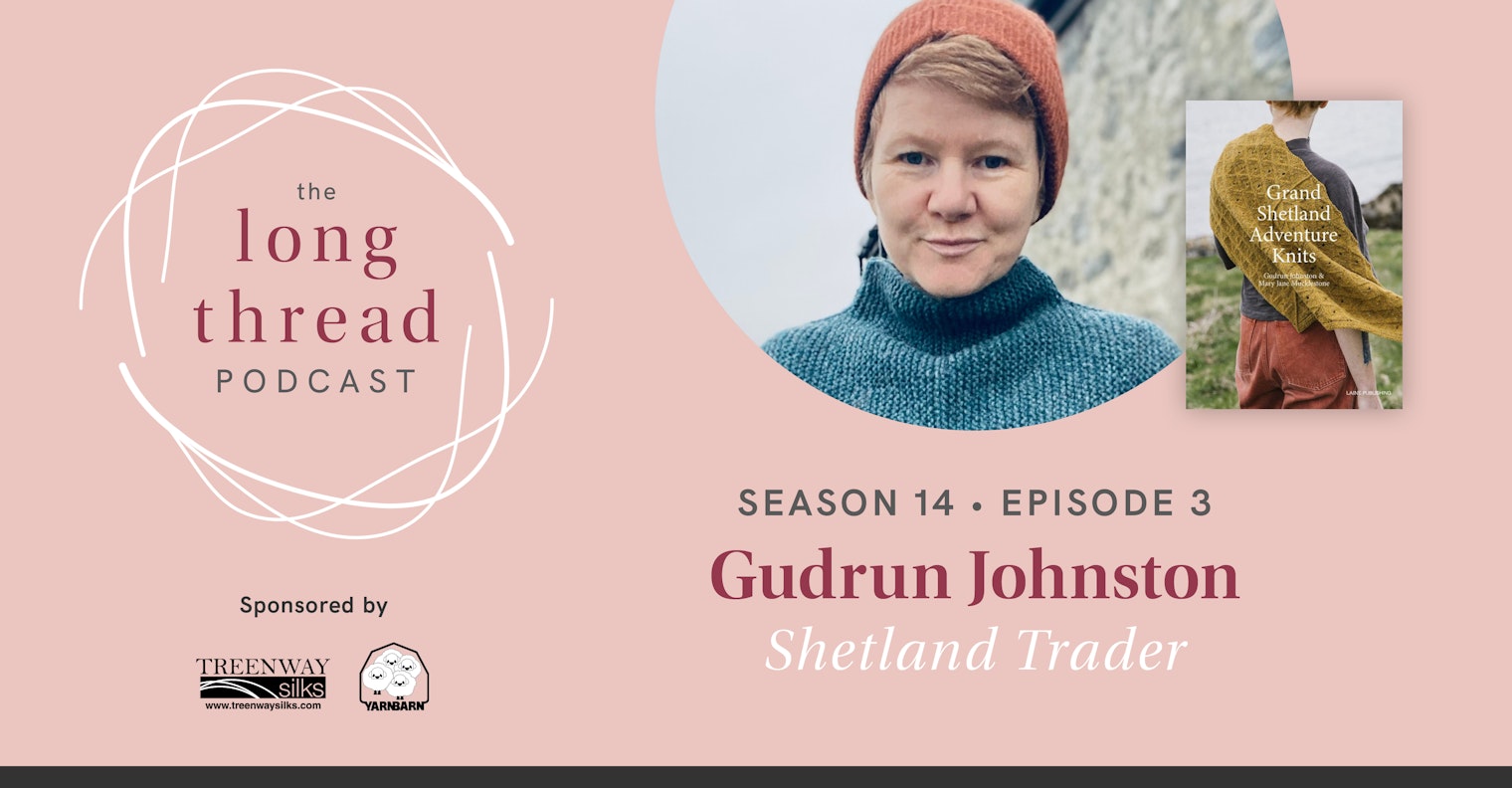
Gudrun Johnston has a deep legacy in Shetland knitting: her father’s family comes from the islands, and her mother founded a knitwear company that blended contemporary silhouettes with Fair Isle motifs, a business she called the Shetland Trader. But although Gudrun grew up wearing her mother’s designs, she didn’t learn to knit from her. Growing up largely elsewhere in Scotland, she learned the craft as a child, but it didn’t become central to her life for decades.
She eventually fell in love with knitting, thousands of miles from Shetland. In 2007, she published her first design, a skirt in a hemp-blend yarn for her daughter. From that point, knitting and Shetland drew her back more and more. Developing her own design style, she incorporated stitches and motifs from traditional knitting and found a deep affinity with yarn milled locally from the traditional dual-coated sheep. As generations of local knitters did before her, she draws on elements from elsewhere but gives them a distinctly Shetland flair.
Although knitters worldwide know about haps and Fair Isle knitting today, the island’s knitting tradition has faced economic threats over the years. Many knitters practiced the craft to make a bit of income, and a better-paying option (an oil terminal that opened in the mid-1970s) led to the dwindling of the cottage knitting industry. However, in tandem with the active local guild, Shetland Wool Week, and the new Shetland Organisation of Knitters, local knitters have preserved their traditions and are happy to share their knowledge.
Gudrun unites her own style with her Shetland roots in her designs, most recently the book Grand Shetland Adventure Knits, which she co-authored with her friend Mary Jane Mucklestone. She is at work on a new book exploring colorwork in a collection of knitted vests.
Links
- Grand Shetland Adventure Knits by Gudrun Johnston and Mary Jane Mucklestone
- See Gudrun’s tutorials and podcast episodes at her YouTube channel
- Find the Identity Cowl in the Farm & Fiber Knits library
- Shetland Wool Week
- Shetland Guild of Spinners, Knitters, Weavers and Dyers
- Shetland Organisation of Knitters
This episode is brought to you by:

Treenway Silks is where weavers, spinners, knitters and stitchers find the silk they love. Select from the largest variety of silk spinning fibers, silk yarn, and silk threads & ribbons at TreenwaySilks.com. You’ll discover a rainbow of colors, thoughtfully hand-dyed in Colorado. Love natural? Treenway’s array of wild silks provide choices beyond white.
If you love silk, you’ll love Treenway Silks, where superior quality and customer service are guaranteed.
If you love knitting, quilting, and all things fiber, you have to check out the new Fiber + Fabric Craft Festival. It’s brought to you by the team behind h+h Americas, premier craft trade shows across the U.S. They have something for everyone—from consumers to retailers to manufacturers. Come shop, learn, and get inspired.
Learn more at FiberFabricCraft.com.
Avondale Sheep: A Breed-Specific Yarn Rooted in the Snoqualmie Valley
According to these mill owners, breed-specific yarns ask us to pay attention—to staple length and sheen, to regional abundance, and to the quiet decisions that shape a yarn long before it reaches a knitter’s hands.
Editor‘s note: In a recent article, Jessica Schwab, co-owner of Skagit Woolen Works, gave us a detailed insider‘s look at how their mill turns fiber from San Juan Woolworks‘s annual shearing into a yarn that knitters can’t stop talking about—their Zephyr line. Now, Jessica and her business partner, Anna, have found that American Wool Month, hosted by Strikke Yarn & Supply, has given them the perfect excuse to go deeper. Rather than simply celebrating domestic wool, they set out to create a one-of-a-kind farm yarn that tells the story of a local flock, a historic farm, and a shared set of values. Here‘s Jess:
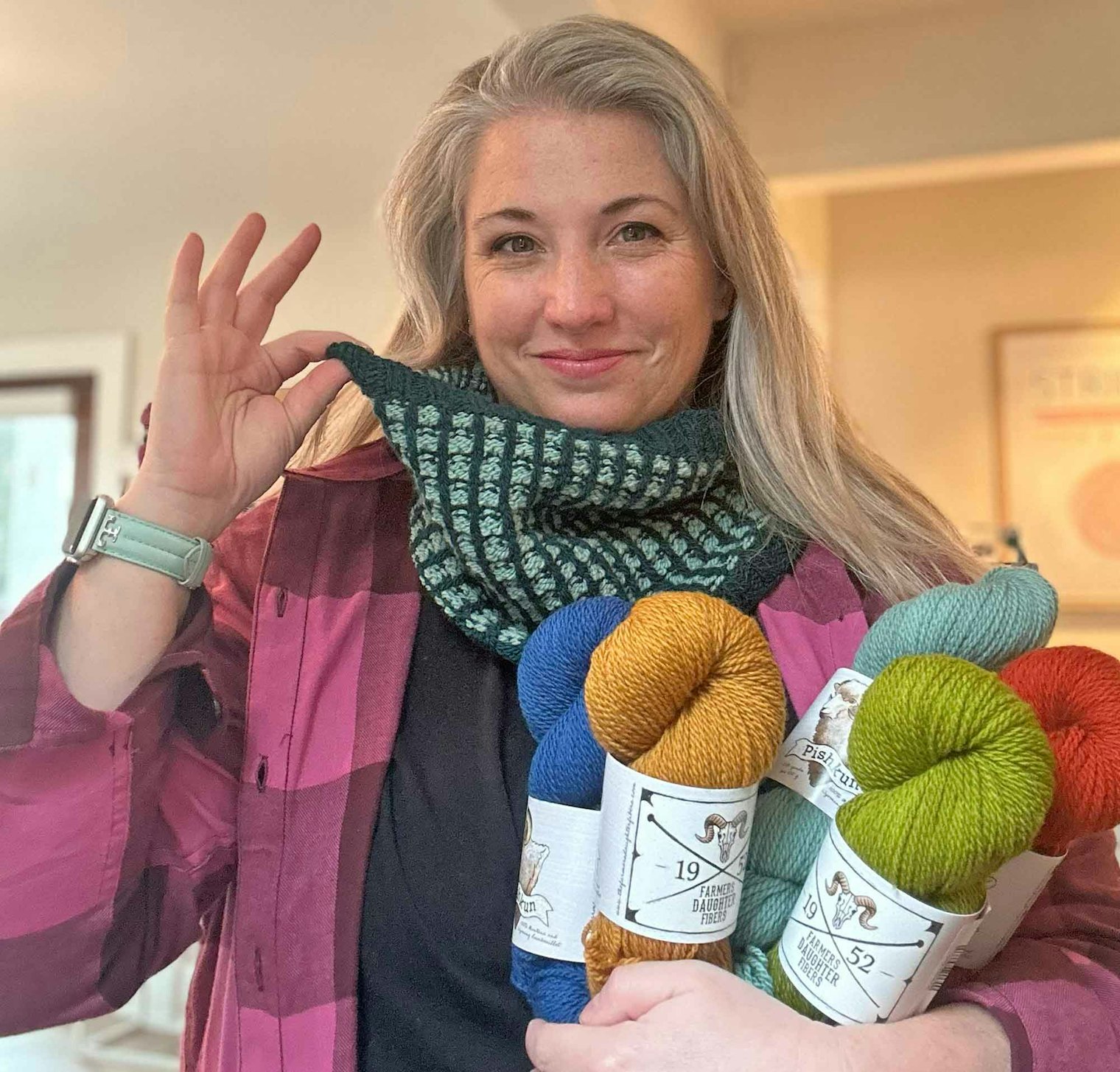
To create a custom, one-of-a-kind yarn that celebrates the wool of our region and highlights a unique flock is a particularly special project for us. This is an endeavor that honors the land, the shepherds, and the millers (that’s us) to showcase our collective values of promoting regional small-batch yarn, in partnership with the farm and a local yarn store.
This project was born of a desire to create an approachable, small-batch farm yarn exclusively for Strikke Yarn & Supply’s annual American Wool Month, an event that celebrates all things domestic wool every February.
Click on the images below to open in full-screen mode and to learn more.
Strikke Yarn and Their Mission
According to owner Lindsay Christiansen, “Strikke Yarn & Supply opened in the fall of 2023 in Bothell, WA. We began American Wool Month in February 2024 to support local farms and mills—in general, to educate customers on where their wool comes from, starting with the farm to the sheep, through production, and into the hands of makers. After meeting with Skagit Woolen Works, and others in the industry, this celebration of our farms and sheep has grown into a fundamental piece of our shop, adding to the carefully selected yarns from companies we’ve gotten to know and admire.”
We’ve been partnering with Strikke for two years in a row, offering lectures and classes during American Wool Month to provide customers with a deeper understanding of the challenges facing domestic wool production and processing. This year, we wanted to go one step further and offer a truly unique collaboration with a local farm.
 The Avondale flock in the field at their new home at Carnation Farms. Photo by Alex Hagiepetros
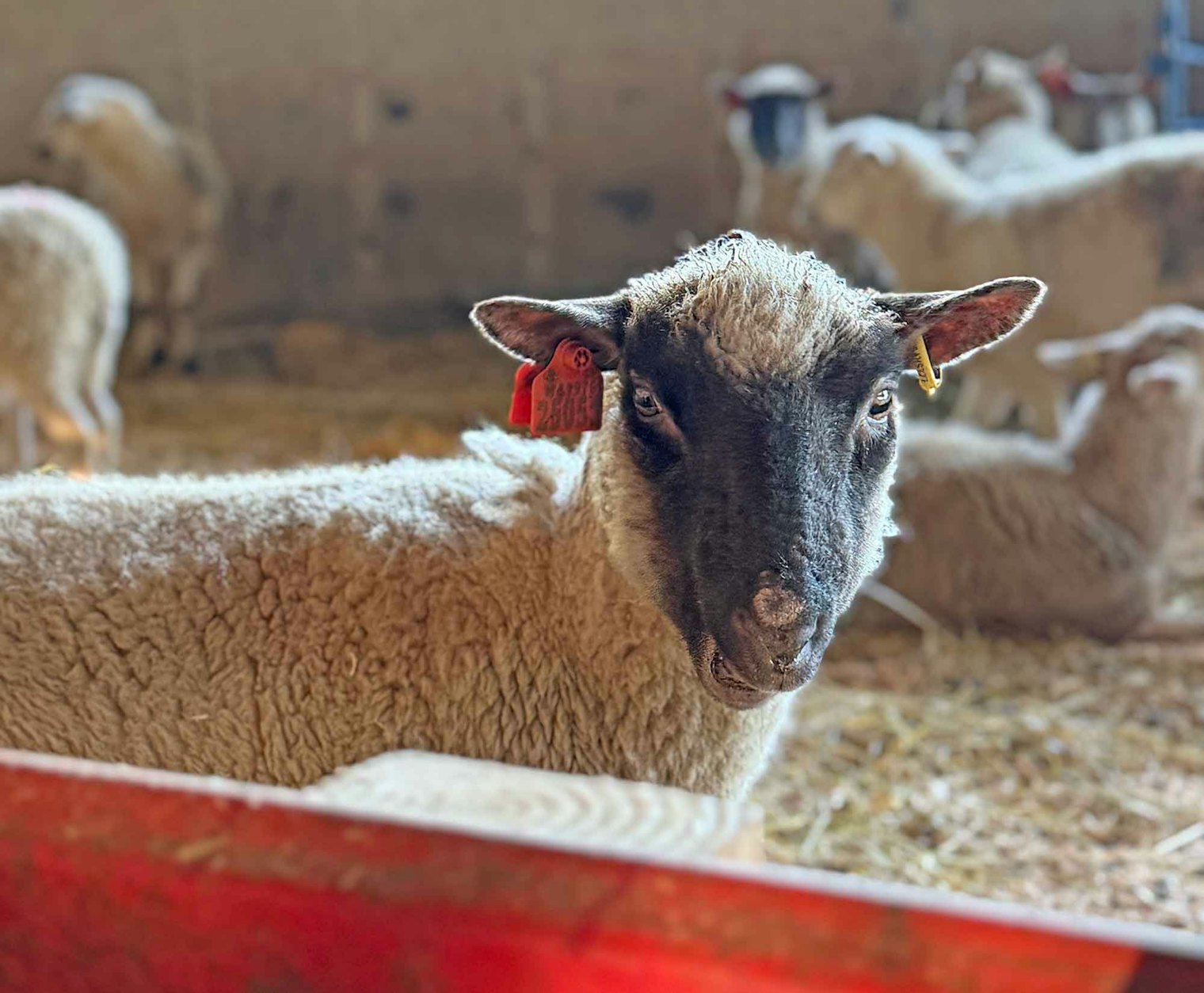
Last fall, I had the opportunity to attend shearing day at Carnation Farms, an historic farm in the Snoqualmie Valley, not far from Strikke. We’ve been processing the fiber from their mixed flock of Romney, Finn, and Romney/Finn crosses for a few years now, and early last year they acquired a flock of around 30 ewes from nearby Aspen Hollow Farm after their shepherd unexpectedly passed away.
 Shearing day at Carnation Farms last fall included the Avondales and their mixed flock of Romneys and Finns.
The History of Avondales
Carnation’s livestock manager Alex Hagiepetros says of these sheep: “Colloquially known as the ‘Avondales,’ these sheep were named after the road where Jeff Rogers, their shepherd and the creator of this breed, lived. The sheep were primarily bred for meat, with good usable fiber being a strong secondary goal. Much like several classic British breeds, a lot of care has been put into the development of this breed (selected over more than 20 generations) to create a sheep uniquely suited to the Snoqualmie Valley, one that thrives in this particular environment.” The Avondale flock is a mix of BFL, Clun Forest, and Suffolk, and you can see some of those characteristics in the fleeces, although they really are their own unique sheep at this point.
Bluefaced Leicester, or BFL, is commonly used in this region to improve the fiber quality. They’re known for their size and sweet curly locks with lovely sheen. Clun Forest are a little less common, and are in fact on the Livestock Conservancy’s Heritage Breed Conservation List. Considered a ‘triple-purpose’ breed good for dairy, meat, and fleece, they provide a medium, dense fleece with a downy, bouncy quality. Finally, Suffolk is a predominant meat breed in our area, but for fiber lovers, Suffolk can also be a sought-after fleece for its resistance to felting/shrinking, and bouncy, soft yarn. The majority of the fleeces showcase sheen and a slight curl from their BFL lineage, and the sheep themselves take after their Clun Forest and Suffolk heritage in look.
 A freshly shorn fleece from shearing day, displaying the beautiful qualities of this breed.
The Making of Beautiful Yarn
We brought the fleeces from the fall shearing back to our mill and divided them into two categories: one for yarn and one for roving. Our spinning frames need a consistent staple length, ideally in the 4–5" range, so we kept the longer-staple fleeces for yarn, and made roving out of the slightly shorter batch. We then blended a portion of the fleece with brown Romney, as that fiber is regionally abundant and provided similar qualities to the fleeces, giving us two beautiful natural colors.
 A mixture of clean locks on the infeed of our largest, century-old carder, 'Rosie'. This process blends and aligns the fibers into roving.
After dividing the fleeces, we scoured them and opted to send the clean locks directly to our big carder to begin the blending. While we often use our picker to pre-blend and open up the locks, some of the fleeces in this batch were from lambs (super soft!) and we didn’t want to overhandle those tender little fleeces. This way, the infeed on our carder could gently tease open the locks. Further blending for the yarn happens at the pindrafter, as multiple passes are made to create an even roving for spinning.
We spun this into a worsted-weight two-ply yarn, keeping the spin soft and lofty. The hand is wonderful; it feels plump and next-to-skin soft, ideal for the Meadow Thistle cowl pattern designed specifically for this yarn by Rachel Kieselburg. Our yarn is considered semi-woolen, as we have worsted spinners, and spin from roving rather worsted-prep (combed) roving which would be a true worsted-spun yarn. This way the yarn has strength but maintains a bit of loft.
 The final roving has been pindrafted multiple times to ensure an even spin; these coils are ready to head to the spinning frames.
The yarn is available exclusively through Strikke Yarn & Supply as a kit, along with the roving blend we made for handspinners as well. We included some spinning notes so that the yarn can be recreated for the design, or spun to the spinners’ preference. While our machines can’t do a true woolen spin, we think this roving would be a perfect candidate for it, trapping air for a warm, cozy yarn.
 Two natural colors of the 2-ply worsted-weight yarn, plus roving hanks for handspinning.
This project has been very near and dear to my heart; having started the mill just four years ago, it really feels like we’ve begun to find our niche for the region, and hopefully be of service to the farmers and the customers using our products. The support for small-batch, domestically produced yarn means so much right now, and we’re eager to continue our goal of open dialogue about the challenges facing the industry, with an eye toward a very hopeful future.
Resources
For more information about American Wool Month, visit strikkeyarns.com.
Read about the history and current work of Carnation Farms, visit carnationfarms.org.
Learn more about Skagit Woolen Works.
I Spy an Alpaca!
Go behind the scenes to see how a farm, a studio, and a few four-legged costars helped make the magic happen for our Spring 2026 issue.
Have you heard? Farm & Fiber Knits magazine is now quarterly! Our Spring issue is at the printer, and it will be headed to mailboxes and inboxes oh-so-soon! In the meantime, we wanted to give you a behind-the-scenes peek at the photo shoot for our first quarterly issue.
We are grateful for the support of our subscribers, which helps us to bring you more projects, feature articles, and tutorials from knitting designers and teachers you love—now four times a year in print. Not yet a subscriber? Learn more here.
A typical issue of Farm & Fiber Knits requires two distinct types of photo shoots: what we refer to as a “model shoot,” which takes place on-location at a farm, and a studio shoot for close-ups and details.
The Farm Scene
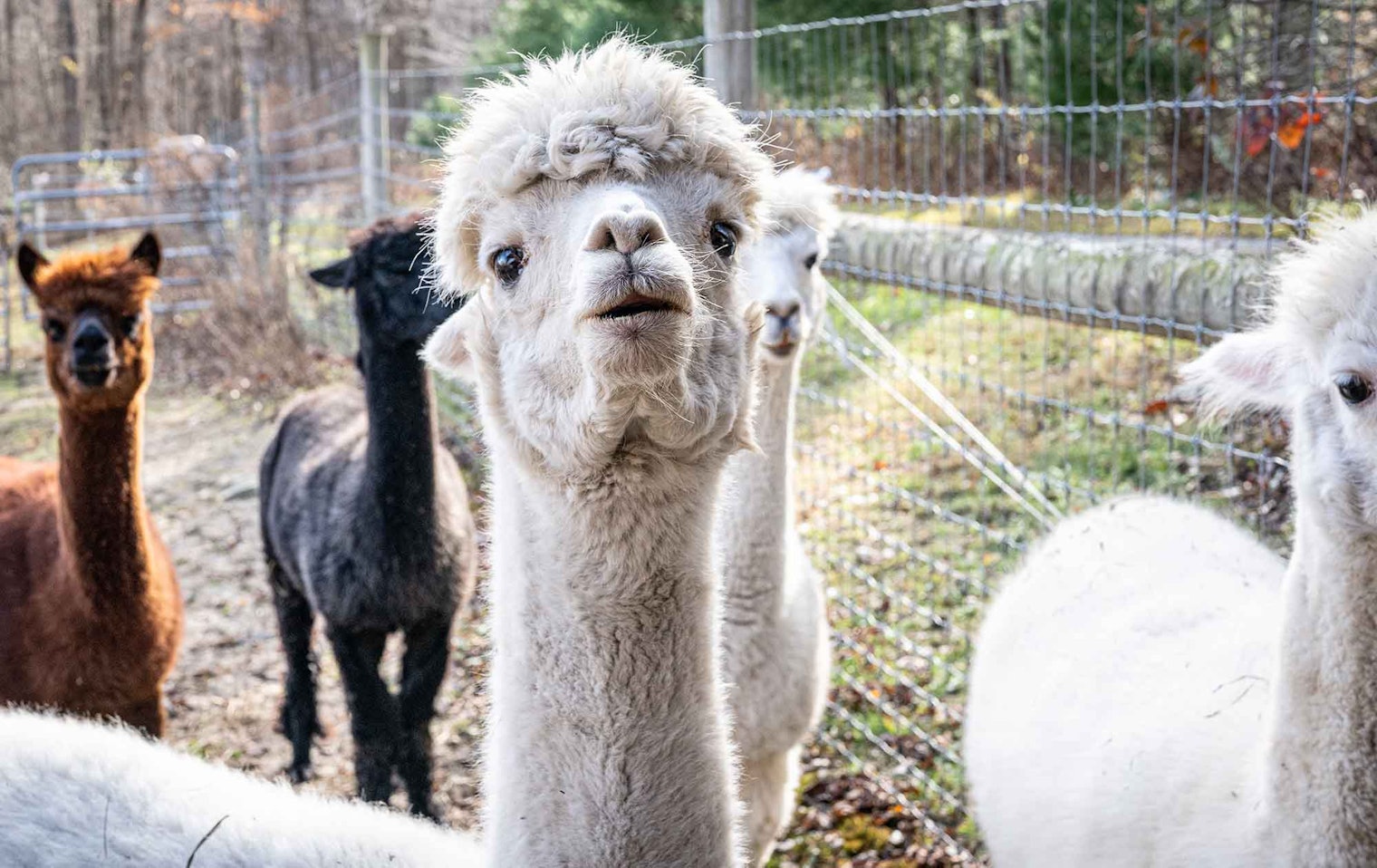
During the model shoot for the Spring 2026 issue last November, we had the good fortune of getting a glimpse into life on an alpaca farm at Chakana Sky Alpacas, a family-run farm near the quaint little town of Chester, Connecticut. Established in 2016, Chakana Sky is “a small farm, committed to the responsible breeding and care of our alpacas [in order] to provide exceptional animals, fiber products, and services,” according to owners Bill and Janet Bernhart.
 This shot of Gale the photographer is from Kelly's modeling viewpoint, with these sweet faces watching every move. Photo by Kelly Jensen Sembos
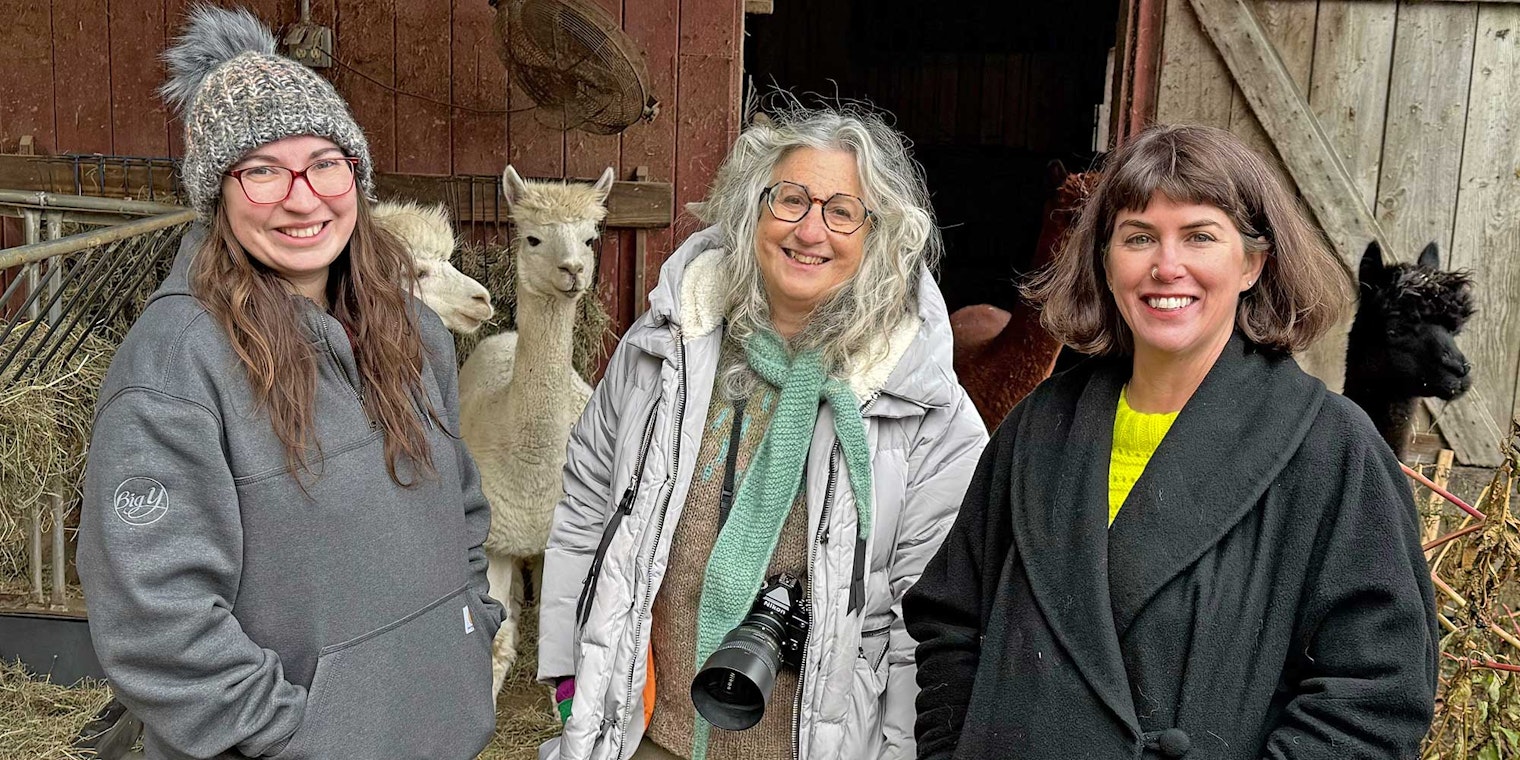
Turns out the Bernharts’ Huacaya alpacas love to socialize. Visitors are welcome at the farm (with advance notice), so the alpacas politely hung around with the team the whole time we were shooting in their barnyard. Photographer Gale Zucker says, “It was delightful! And they posed patiently when the camera was pointed their way.”
Click on the images below to learn more.
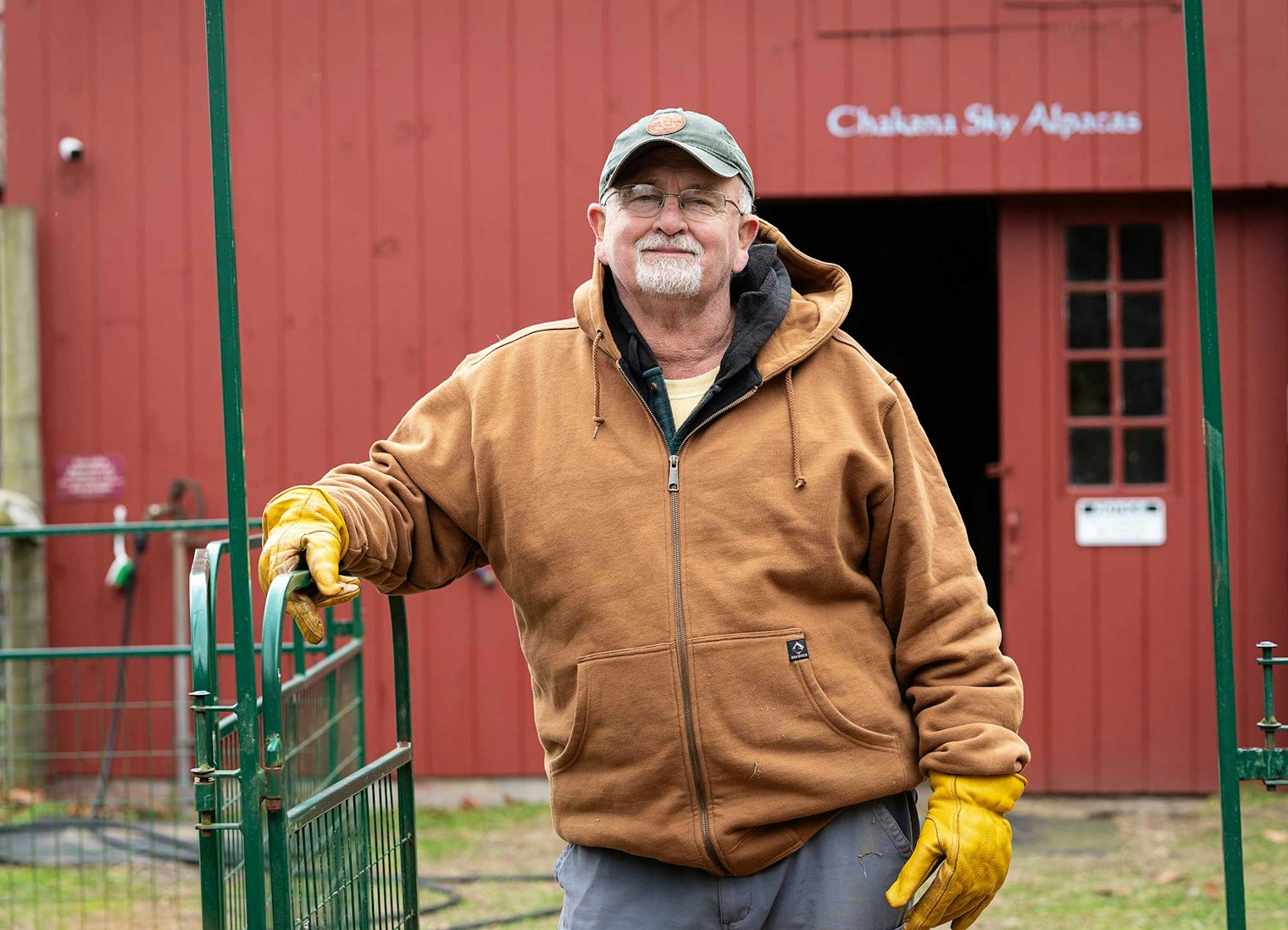
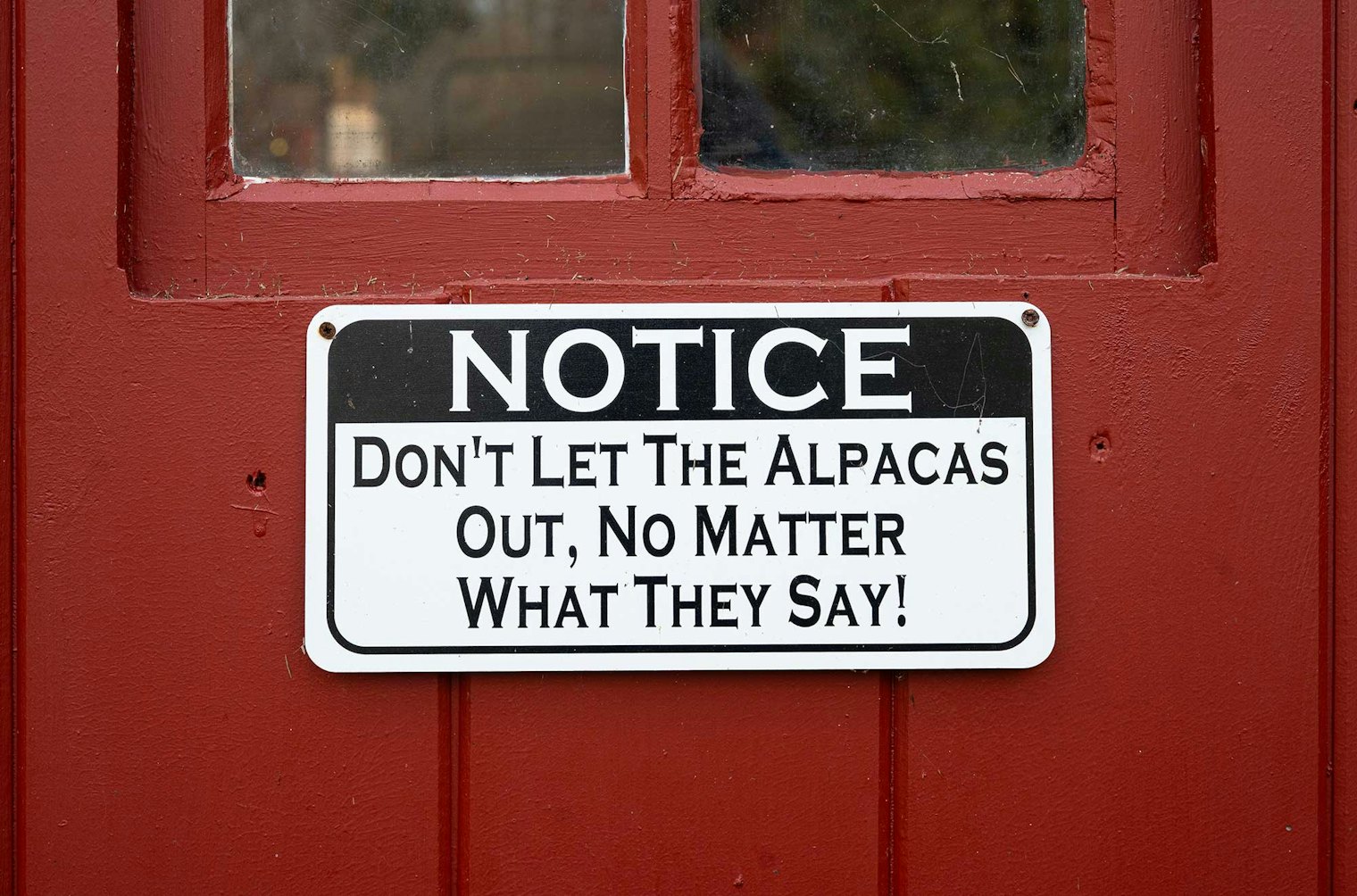
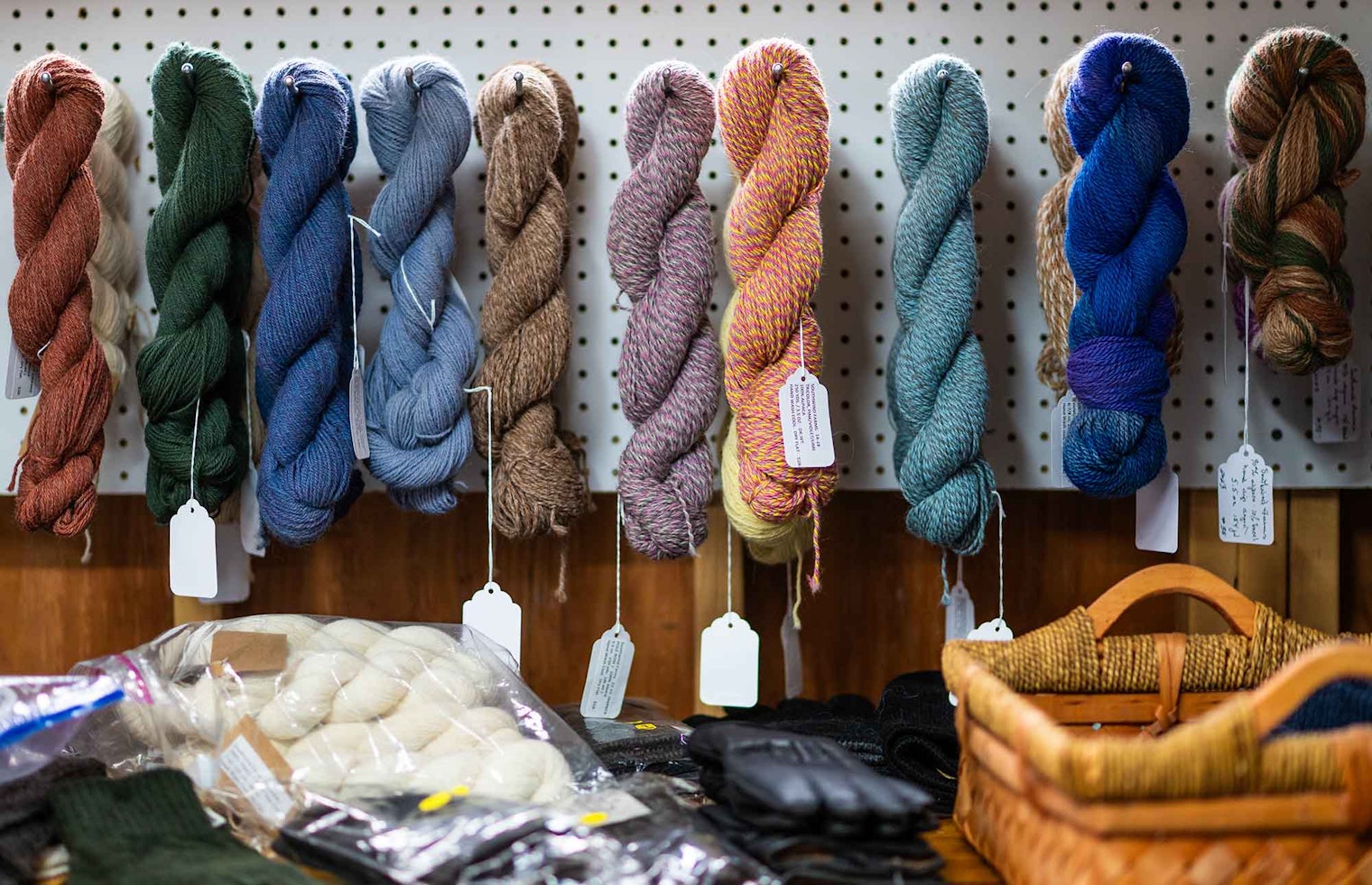
Shooting at farm locations has its challenges. Gale says, “I should explain that it was a bitterly cold, windy day while we were shooting, which is why I am so bundled up and also why the three of us look so thoroughly windblown in the wrap shot (shown at top). In fact, we had to go to a tavern in nearby Chester and order soup to thaw out immediately following that picture!”
 Gale photographs Kelly in the barn as the alpacas look on. See if you can spot this shot in the new Spring issue, coming February 5th (hint: Kelly is modeling a scarf). Photo by Yliana Mancini
In the Studio
Nestled up against the foothills of the beautiful Rocky Mountains sits Fort Collins, Colorado. This is where Long Thread Media is based, and where most of our close-up and detail shots take place.
A whole crew shows up on location, from the photographer and photo stylist, to the art director, editorial staff, and photo assistant.
 Here, Tiffany models a pair of socks that will appear in the upcoming Spring issue while Katrina holds a light reflector (see her hand in the far left corner?). Photo by Matt Graves
Shoot days in the studio can be long. Our photographer Matt Graves provides the epic soundtrack and the laughs, with frequent quips that keep the mood lighthearted. Photo assistant Katrina keeps us all organized and on task, and the art director and stylist work together to create the scene with pleasing backgrounds and props. And the editors? Well, we make sure the items are positioned so they accurately represent the story we are trying to tell. Since we are all knitters, we make sure that the important elements of the knitwear are photographed. It really does take a village!
 While photographer Matt adjusts the lighting, the art director and photo stylist work together to create a pleasing scene, making many small adjustments before getting it just right. Will you be able to spot this photo in the Spring issue? Photo by Matt Graves
How can you get your hands on this issue? Subscribers can check their inboxes on February 5th for their digital copy, and watch their mailboxes in the coming weeks for a printed copy. You can also visit the Farm & Fiber Knits Shop on February 5th to purchase a single issue of Farm & Fiber Knits Spring 2026.
Resources
See more of Chakana Sky Alpacas in the Spring 2026 issue of Farm & Fiber Knits.
Find out more at ChakanaSkyAlpacas.com.
Watch this short video, made by a local news team, to learn more about the farm and Bill’s herd.
Who’s Running the Show? Sheep at the Photo Shoot
What goes on behind the scenes of a Farm & Fiber Knits photo shoot? Well, in this case, a few wooly friends played a big part (and so did a few umbrellas).
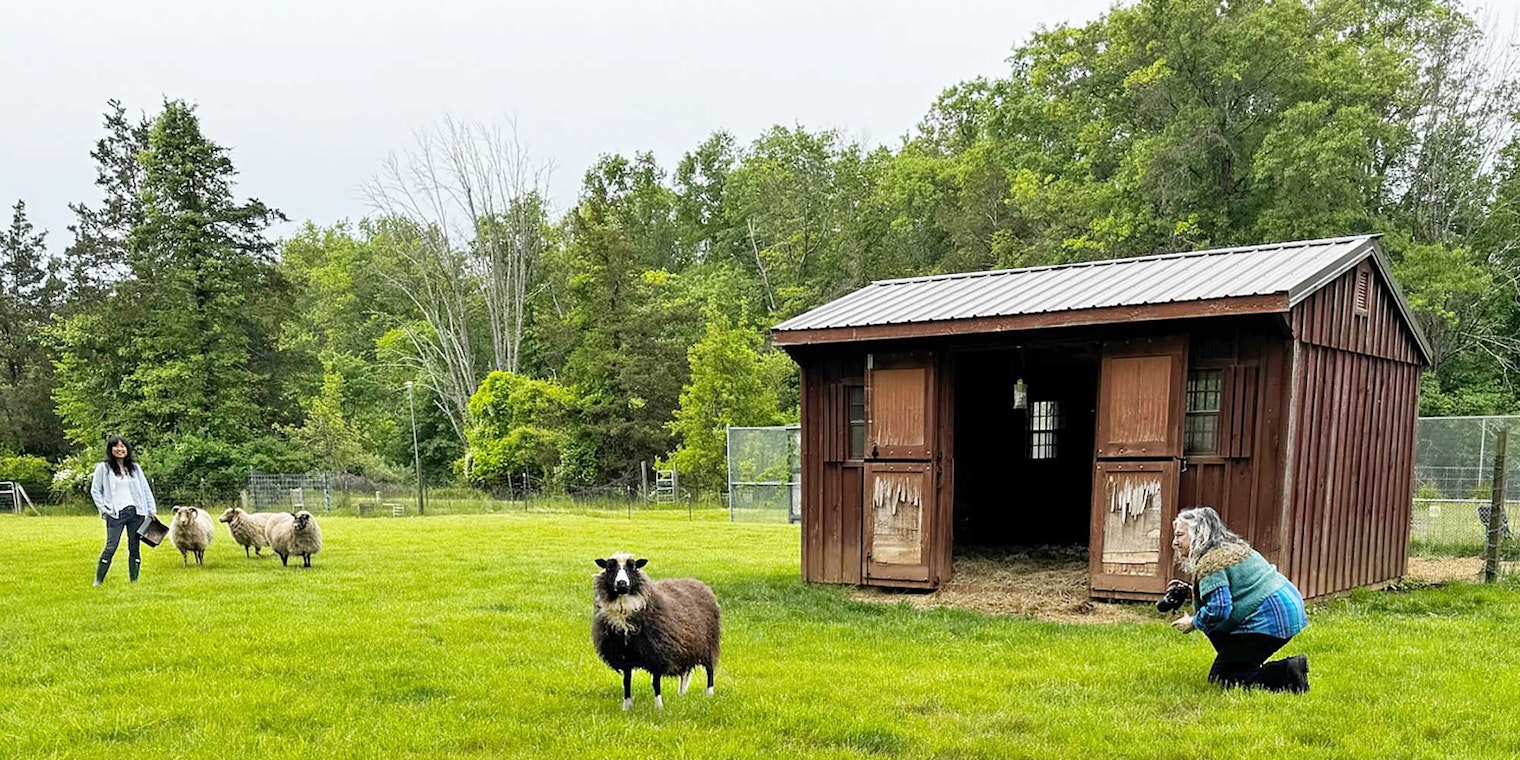
Ever wonder what goes on during a photo shoot, or how we capture such beautiful images of the garments and accessories in the pages of Farm & Fiber Knits? Well, it comes down to a little bit of luck (in the weather department, at least), a whole lot of planning, and a big idea.
As editor Kate Larson planned the Fall 2025 magazine, she wanted the issue to have a home, be rooted in a special place. We reached out to shepherd Anne Choi, whose work in founding the New Jersey Fibershed and building spaces that welcome all to connect with fiber and agriculture, continues to inspire us. She agreed to host our photo shoot, and we were over the moon.
You can read more about Anne's work, the farm, and the sheep that welcomed us into their pasture in the Fall issue. Here, we wanted to give you a peek behind the scenes.
Is it going to rain?
On a cloudy day in May, our crew headed an hour west of New York City to Bedminster, New Jersey, home of the bucolic farm known as Middle Brook Fiberworks. In Anne’s words, “The farm sits amidst scenic horse farms and historic estates. The eponymous Middle Brook runs through acres of old growth woods along the west side of the property.”
In between light rain showers, Anne showed us the layout of the farm and introduced us to the sheep that were in the pastures closer to the house and barns. As you can see, the flock loves seeing Anne arrive with a smile and a bucket (which likely contains something delicious, such as alfalfa pellets).
 Anne with the flock. Photo by Gale Zucker
She also keeps lush gardens, and, while we were visiting, her greenhouse was brimming with seedlings—cotton, indigo, and more—that would soon be distributed to others interested in creating their own lush fiber and dye gardens.
 Left to right: Gobrielle Deninno (styling production assistant), Karin Strom (project stylist), Gale Zucker (photographer), Kate Larson (editor), and Julie McCall (Gale’s assistant, who was keeping the lenses dry). In the foreground, Rose models the Vintage Maple Cardigan. Not shown is Yliana Mancini, Gale’s photo assistant who took this shot.
An outdoor photo shoot is risky—downpours, blazing heat, and more can create challenges. As the day went on, the clouds and intermittent rain didn't slow us down. Keeping the camera dry was key; keeping the humans dry, less so. Intrepid photographer Gale Zucker has decades of experience documenting sheep and shepherds across the country, so this damp day was no sweat!
 Styling production assistant Gobrielle holds an umbrella over Gale.
This amazing team is literally behind the camera in the Fall issue. And Quin, official flock ambassador, was in front of the camera as much as possible. We are so pleased that she and new friend Rose García (happy human and sweater model extraordinaire) are featured on the cover. Go see the winning cover shot in our library; we hope you love it as much as we do!
 At left, Gale takes several shots of Anne with Quin. At right, Gale's photo that ended up in the magazine.
Visit our library to check out the beautiful new Farm & Fiber Knits Fall 2025 and the ways to get your hands on this new issue.
Follow the Flock
- Read all about Anne Choi’s flock of Shetland sheep (and see them throughout the issue!), plus find out which U.S. president from way back dined in her house in the Fall 2025 issue of Farm & Fiber Knits.
- Read "NJ Fibershed: Helping Wasted Wool Become Homegrown Yarn" to learn how Anne Choi connected shepherds who needed to sell wool and knitters who wanted to buy it using the fibershed model.
- Learn more about photographer Gale Zucker in the Long Thread Media Podcast.
- See more of Gale's fiber farm adventures on our website.
“Stupid Sheep” and Other Sheep Myths
Sheep are often misunderstood. There are a few common sheep myths that this ovine-besotted shepherd would just like to clear up.
By Kate Larson
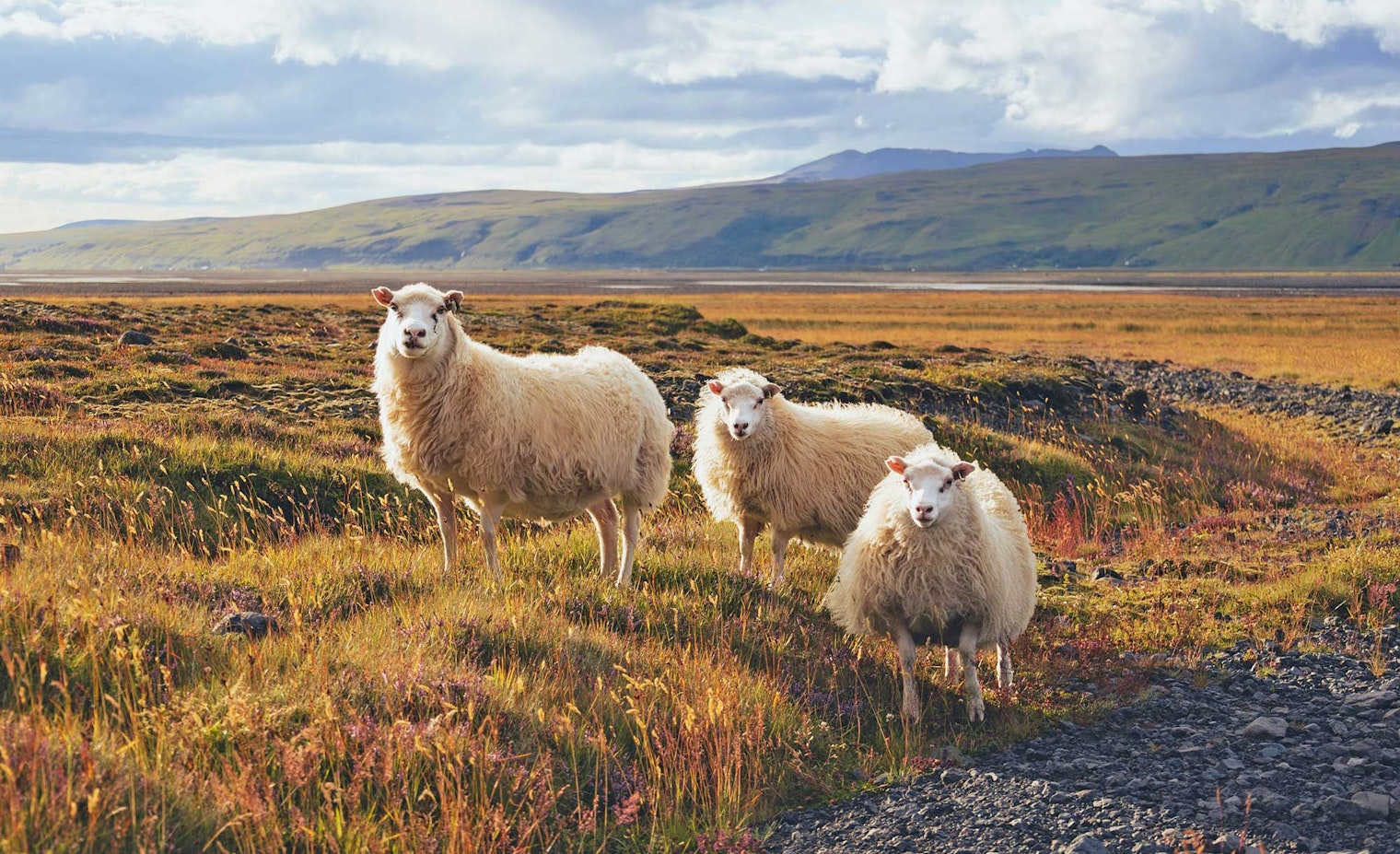
Most knitters I know have a soft spot for sheep. We love their wool, in all its colors and varieties, and we might even have a few skeins in our stash that came from a sheep whose name we know. But our beloved sheep are often misunderstood. As prey animals, their best defenses are inscrutability, memory, and behavior when sensing danger. On their behalf, I'm here to dispel some myths.
Excuse me while I find my soapbox . . .
1. “A flock of sheep will flock.”
 Border Leicester begin playing and flocking with their peers within a few days of birth. Photo by Kate Larson
A group of sheep is called a flock, but flock is also a verb used to describe the habit sheep have for moving as a group. They are able to move as one mass, often coming into a tight cluster, or in small groups, they might follow one another nose to tail. This helps them stay together as the flock navigates the landscape and protects against predators.
However, not all flocks will flock. I learned this lesson while working with a flock that contained several sheep breeds on a hilly Vermont farm. The entire group of 120 sheep would start moving in the desired direction as one beautiful being . . . and then the five Icelandic ewes would run in five different directions with an incredibly unhelpful vigor.
Icelandic is one of the breeds of sheep that has evolved to spread out on the landscape, making better use of space and looking in each nook and cranny for delicious forage. As winter weather approaches, the sheep are rounded back up and sorted into their respective farm flocks. In the image at the top of the page, you can see that all three sheep have a tag in one ear, and the other ear has the traditional notches that identify which flock the sheep belong to.
2.“Sheep are stupid.”
 Practice makes perfect. Kate's firm opinion is that sheep intelligence is part instinct, part managment. This is Mila, a first-time mother with her lamb. Photo by Kate Larson
Sheep are not stupid. In fact, research has shown time and again that they are quite intelligent. A popular 2001 article published in the journal Nature summarized loads of research pointing to the problem-solving skills and memory retention that are the hallmarks of ovine intelligence, and research has continued since then. Studies have shown that an individual sheep can remember fifty different sheep faces for two years. Additionally, they have shown an unusual ability to recognize their shepherds in photos (connecting a 3-D human with a 2-D black-and-white image). A University of Cambridge study found that sheep were able to learn and identify humans that they had never even met in different photos. In this YouTube clip, a keen ewe learns to recognize actress Emma Watson and recall her face to get treats.
In my experience as a shepherd, the more opportunities sheep have to problem solve, the better they are at it. Seems logical, right? The smartest sheep I have known were on farms with a series of pastures had had the flock constantly on the move, changing locations, learning new gates, and watching their shepherd for cues about every step.
3. Sheep are sheared once per year in the spring.
 Siri and Colin of Yankee Clippers Shearing. Photo by Ryan Langmaid
While this is often the case, there are many flocks that have several shearing days each year. My flock of Border Leicesters, for example, have two shearing seasons. The adults are sheared in the spring right before lambing begins in April. Then, the new lambs will be sheared in August. Border Leicesters have fleeces that grow quickly, so the lambs shorn in August will already have several inches of wool before cold weather arrives in November.
Farms that have multiple breeds of sheep can have a complicated schedule of shearing to ensure that everyone is sheared at the right time. Different breeds of sheep have fleeces that grow at different rates (as in barely 3 inches per year to more than 15 inches per year), and shepherds of mixed flocks like Tammy White at Wing and a Prayer Farm have to carefully plan several shearing dates, subsequent woolen-mill orders, fiber festivals, and more.
Get a peek into Tammy's life at Wing and a Prayer Farm in the Yarn Chronicles. Including in episode 2, where you can get an up-close look at a vital but often misunderstood part of yarn-making: shearing.
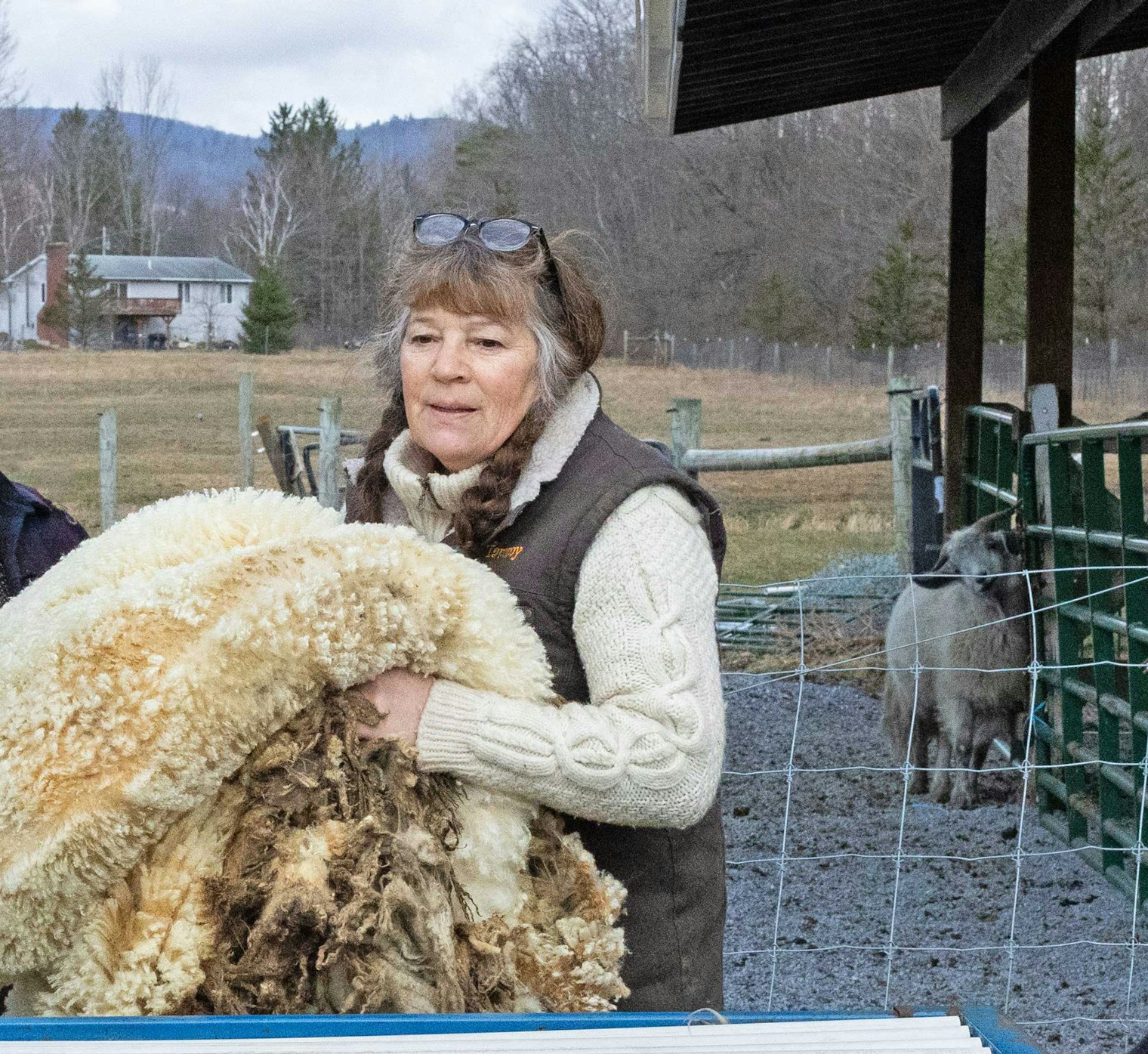
Shepherding is as much an art as it is a science. The weather, the landscape, and the flock are constantly changing—nothing is static. Shepherds that dedicate themselves to keeping both the flock and the land healthy day after day, year after year, have my deepest admiration. All that love and labor are distilled into the skeins that reach your knitter's hands.
Enjoy!
— Kate
Resources
- Cambridge University News, “Sheep are able to recognise human faces from photographs.”
- Knolle, Franziska, et al. “Sheep recognize familiar and unfamiliar human faces from two-dimensional images.” Royal Society Open Science. November 8, 2017.