
Loading the latest stories…
SUBcotton
Large-scale farms produce acres of the whitest cotton. But cotton comes in a rainbow of colors that indigenous and small-scale farmers are still growing.
Stephenie Gaustad4 min read
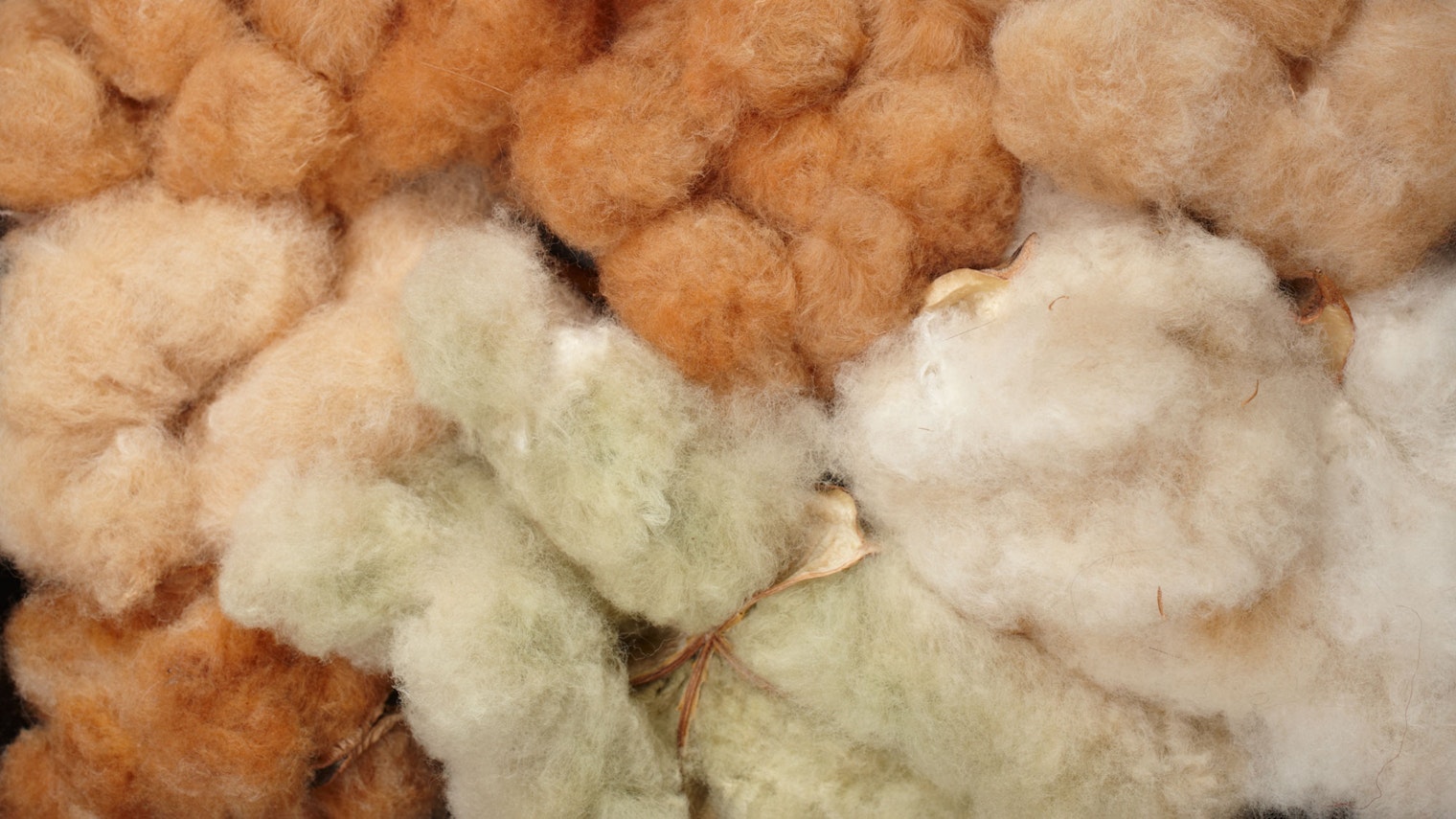
Most cotton yarn and spinning fiber are pure white, but cotton comes in a surprising spectrum of natural colors, too.
Many people use the term brown to describe non-white cotton, but this is a vast understatement. Naturally colored cotton ranges from a warm light pearl gray to deep—nearly black—chocolate brown. The red/brown range includes increments from light orangey tan to rich brick red. Manila, yellow, tawny, and buff represent golden yellows. There are greens from palest sea foam to dark olive. Natural-colored cotton also comes in very rare mauve and lilac.
The so-called brown cottons are complex, subtle colors reminiscent of those from natural plant-source dyes.
The color is an integral part of the cotton fiber. The cotton grows with color embedded in the cell wall, similar to the way that hair grows in color. It is not a dye; dyes are molecules that stick to the surface of the fiber. Their presence causes light to bounce and refracts the light back to our eye, changing the appearance of the fiber.
More from Farm & Fiber Knits
From the Library







Comments
No comments yet — be the first to share your thoughts.
Sign in to join the conversation — commenting is for signed-in members.