
Loading the latest stories…
SUBplant fibers
Plus—a placemat pattern to knit this summer!
Kate Larson4 min read
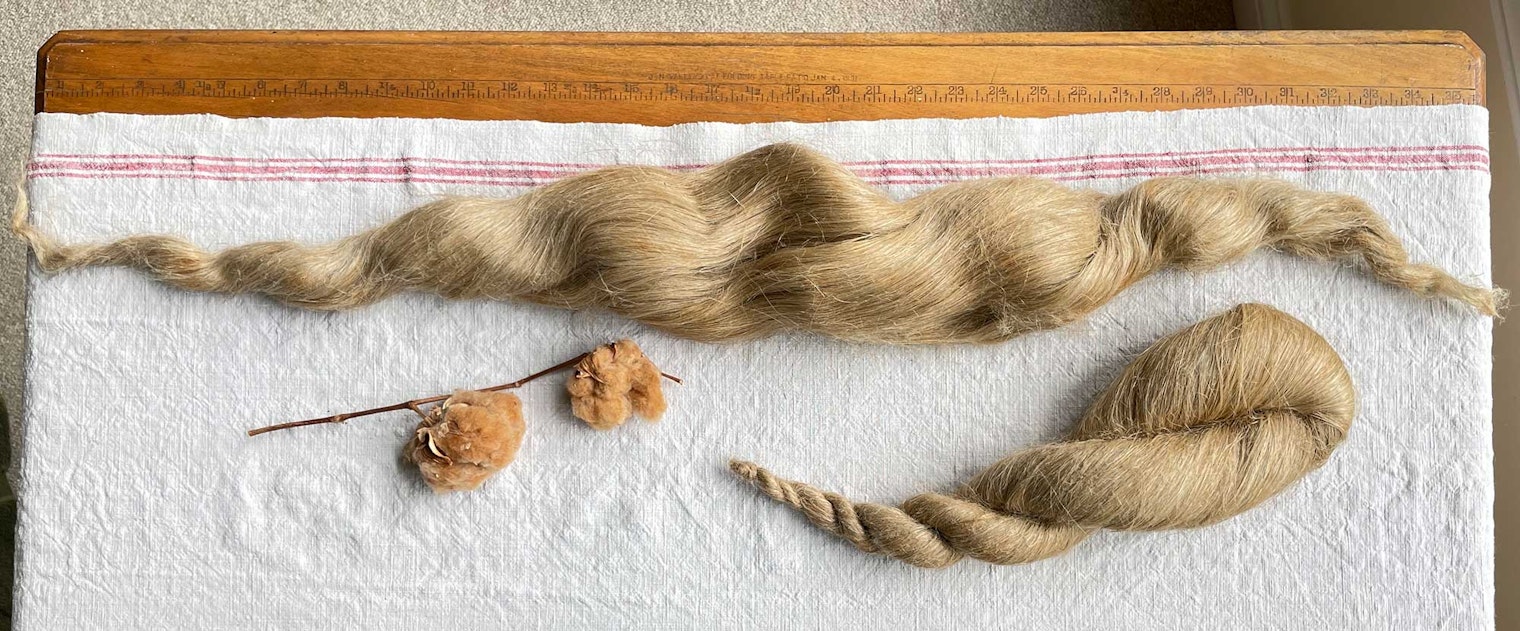
Cotton, linen, and hemp—these three familiar fibers have been clothing our human bodies for thousands of years. However, these plant fibers are less common in many knitter’s stashes than wool, alpaca, and silk. If you’re a knitter who loves bouncy, squishy wools, knitting with linen might feel unforgiving and stiff. Or you might have found that knitting with some cotton yarns are a delight and others less so. What gives?
The long and short of it is that these three plant fibers, in their natural forms, are very different. Where it gets complicated is that the modern mills that create our beautiful yarns today can make the longest hemp fibers short and soft or make downy cotton straight and shiny. Here’s what you need to know:
These fibers come from different parts of plants: Cotton is a seed fiber, and hemp and flax are bast fibers derived from woody stems. Short, cashmere-fine cotton fibers grow around each seed that forms in a cotton boll. These 1–2" (2.5–5 cm) fibers plump as they mature and cause the seed pod, called a boll, to pop open. Cotton fiber is basically the plant’s approach to surrounding precious seeds with packing peanuts.
Linen, which is called flax when in fiber form, and hemp, are long fibers extracted from the stems of plants. With careful processing, these fibers can be nearly the length of the entire plant, from root to flower. Flax plants can grow to about 40" (1 m) tall, and hemp can grow to 5 to 15 feet (1.5 to 4.6 m) tall.
 A sweet boll from Sally Fox’s cotton nursery. Learn more about Sally on the Long Thread Podcast (See Resources).
For knitters, what does this mean? Our cotton yarns should be velvety soft and somewhat lofty (remember their packing-peanut past). Linen and hemp yarns begin as stem structures that grow straight and strong, so these yarns should be smooth, dense, shiny, and last generations.
All of this is true for fibers in their most natural state, but modern processes have allowed seed fiber (cotton) to be more like linen, and linen and hemp to be more like cotton!
More from Farm & Fiber Knits
From the Library


Comments
No comments yet — be the first to share your thoughts.
Sign in to join the conversation — commenting is for signed-in members.