
Loading the latest stories…
If rising temperatures have you setting aside your knitting, these linen- and silk-based yarns may change your mind.
Sandi Rosner3 min read
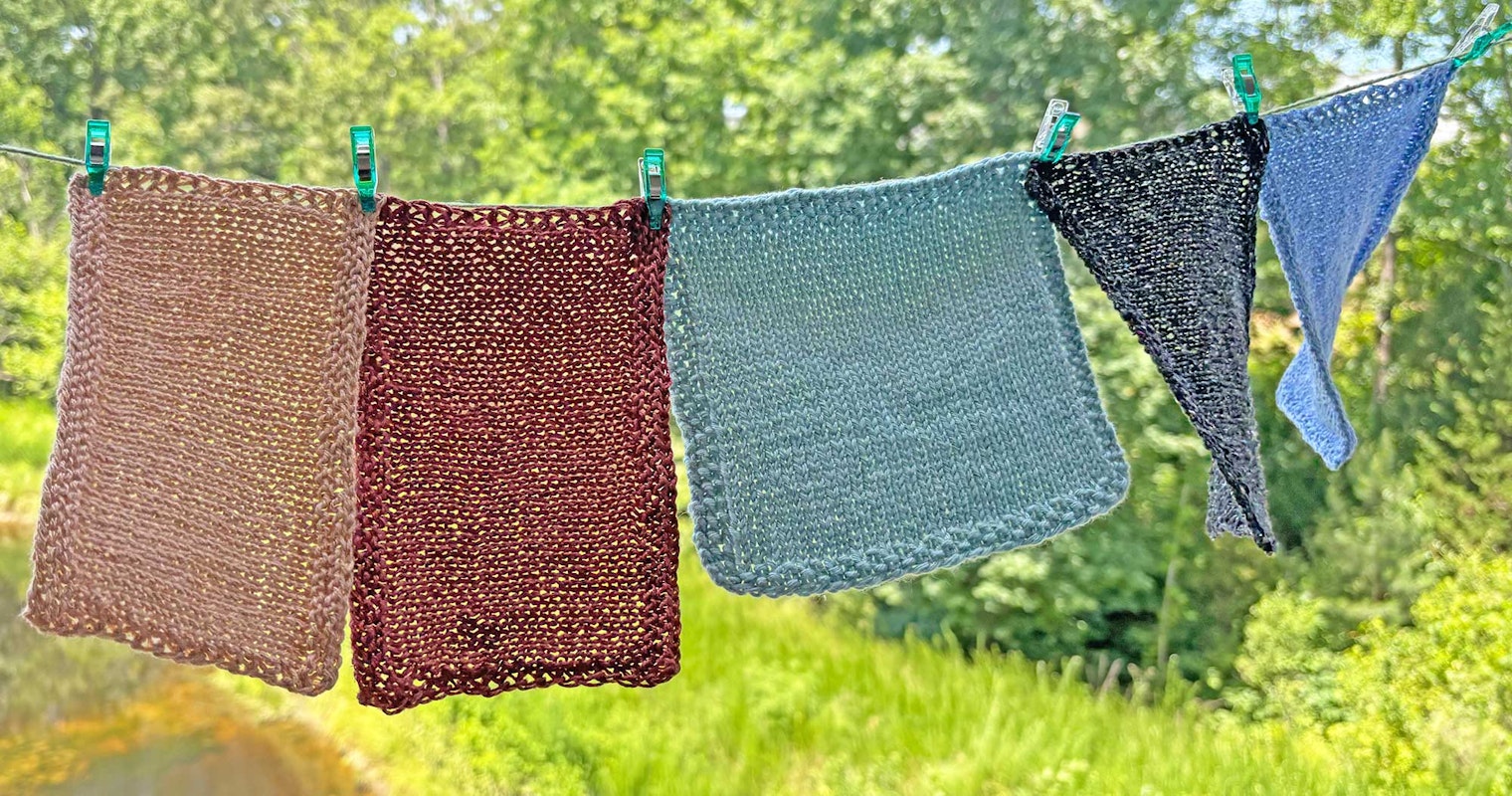
When the temperature and humidity is on the rise, a lap full of wool can lose its appeal. But the urge to knit knows no season. The Summer 2026 issue of Farm & Fiber Knits magazine explored organic cotton, wild borocera silk, and hemp—all great summer yarn alternatives.
Let’s look at two more warm-weather–friendly fibers: linen and cultivated mulberry silk. I combed my stash for some examples of knitting yarns spun with these fibers.
 From the top: Queen City Yarn Coleman, Purl Soho Oleander, Knit Picks Lindy Chain, Louet Euroflax, and Purl Soho Cattail Silk.
I knitted swatches using five linen- and silk-based yarns to see how these warm-weather fibers perform on the needles and in the finished fabric.
Yarn: 100% silk; 618 yd [565 m]/3½ oz [100 g]; fingering weight
Swatch gauge: 24 sts and 40 rows = 4" (10 cm) on size 3 (3.25 mm) needles
 Cattail Silk is a tweedy 3-ply with flecks of white and bright primary colors sprinkled throughout.
Cattail Silk is spun with silk noil, the short fibers created when silk is combed and carded. These short fibers produce yarn with a nubbly and rustic appearance while retaining the elegant drape and soft hand for which cultivated mulberry silk is known.
Yarn: 100% wet-spun linen; 270 yd [270 m]/3½ [100 g]; sportweight
Swatch gauge: 25 sts and 33 rows = 4" (10 cm) on size 3 (3.25 mm) needles
 Euroflax comes in a glorious range of colors and displays the crisp stitch definition for which linen is known.
While the skein from my stash bears the Louet label, Euroflax is now being imported and distributed by Lofty Fiber. This four-ply sportweight yarn is spun in Belgium from long, strong flax. It feels a little stiff right off the skein but softens up beautifully when the finished garment is machine washed and dried.
Yarn: 70% linen, 30% Pima cotton; 180 yd [164 m]/1¾ oz [50 g]; fingering weight
Swatch gauge: 27 sts and 40 rows = 4" (10 cm) on size 3 (3.25 mm) needles
 Unlike the other yarns sampled, which are plied, Lindy Chain has a chainette structure which creates a slightly pebbly appearance.
Blending a linen with a little cotton tempers the tendency of linen to be stiff. Lindy Chain further eases the knitting experience by utilizing a chainette structure (like a tiny I-cord). The interlocked loops of a chainette add a bit of resilience and bounce to otherwise inelastic fibers.
Yarn: 50% cotton, 50% linen; 205 yd [187 m]/1¾ oz [50 g]; fingering weight
Swatch gauge: 24 sts and 36 rows = 4" (10 cm) on size 3 (3.25 mm) needles
 Oleander combines equal parts cotton and linen with a complex ply structure for a fabric with lovely stitch definition and wonderful drape.
Oleander is another blend of cotton and linen. Composed of four two-ply strands twisted together, this yarn is smooth, soft, and strong. It’s gentler on the knitter’s hands than 100% linen but shares the quality of getting softer each time you wear and wash it.
Yarn: 65% silk, 35% linen; 245 yd [224 m]/4 oz [115 g]; DK weight
Swatch gauge: 24 sts and 34 rows = 4" (10 cm) on size 6 (4 mm) needles
 Coleman has the drape and slight sheen we expect from cultivated silk combined with the absorbency of linen.
Coleman was designed to be breathable and comfortable in the steamy heat of a North Carolina summer. Hand-dyed in Queen City Yarn’s Charlotte studio, this DK-weight blend of silk and linen would make a beautiful cardigan to wear with a sundress.
All these yarns are comfortable against bare skin. And although backlighting brings out the airiness of the swatches, none of them are transparent when worn. You won’t need the extra layer of a camisole under a tee or tank made with these summer yarns.
—Sandi
Pick up the Summer 2026 issue for in-depth articles exploring organic cotton, wild borocera silk, and the history and use of hemp.

More from Farm & Fiber Knits






Comments
No comments yet — be the first to share your thoughts.
Sign in to join the conversation — commenting is for signed-in members.