
Loading the latest stories…
Three fiber-centric partnerships are transforming the textile landscape by producing linen, a special, luxurious, plant-based option, in an eco-friendly manner.
Jacqueline Harp3 min read
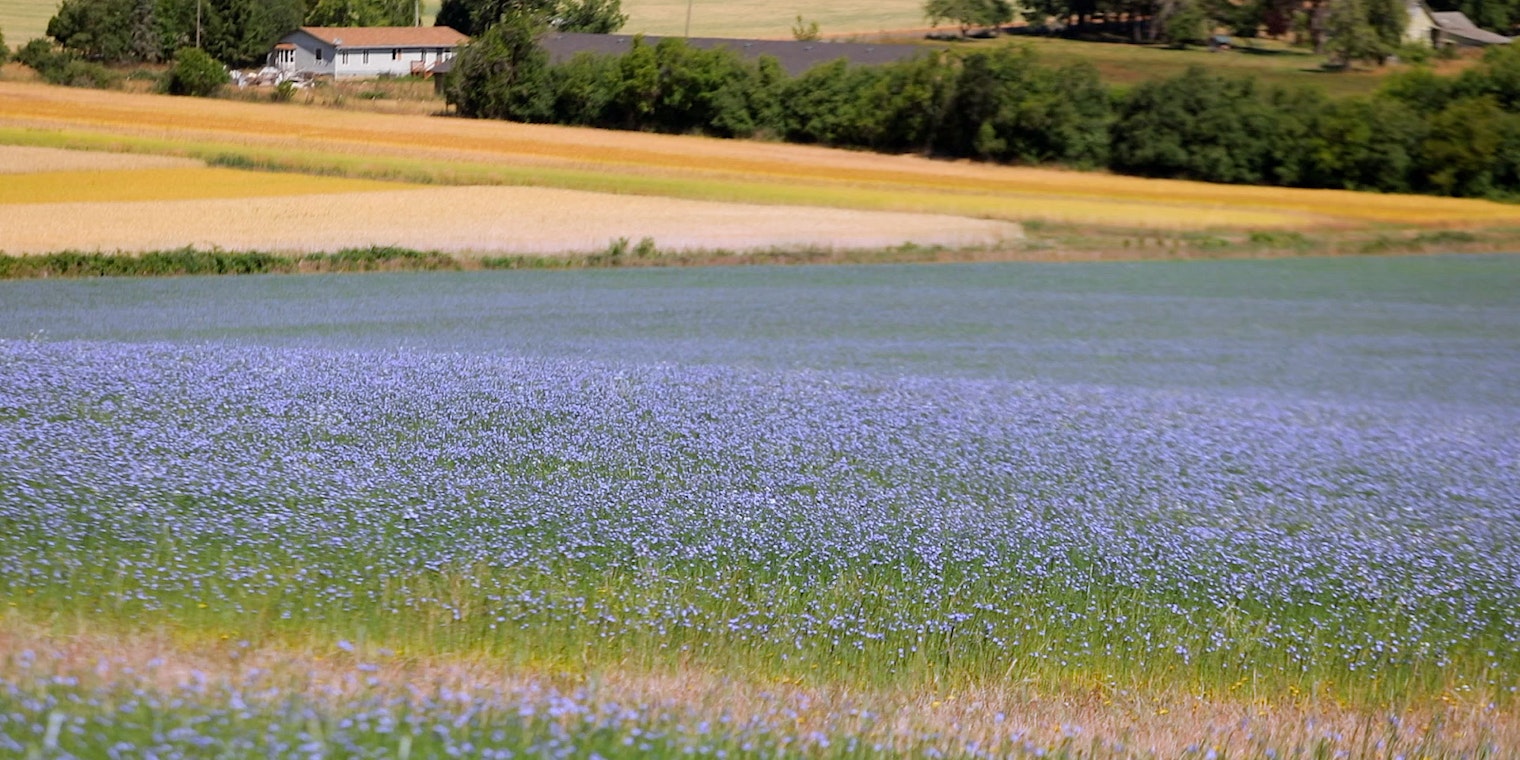
Where fast fashion rules, it has a lock on what fibers, yarns, and fabrics are available, even to knitters. In contrast, there is an emerging slow fashion movement made up of people who are standing up for a different set of values.
As responsibly sourced and managed fibers become available to knitters in the United States, it is worth considering exploring yarn made of linen. It is a luxury fiber that opens up amazing possibilities for transitional knits that can expand your wardrobe, especially for the spring, summer, and fall seasons. You can get imported linen yarn from your local yarn shop; however, American-made linen yarn has only recently become available. As creatives who want to have a positive impact on our environment, we may have a chance to knit with linen yarn sourced from domestic providers who are striving to build community while sustainably growing and harvesting the flax that becomes linen.
Chico Flax is currently the only U.S.-based producer of linen suitable to make yarn. Founded by Sandy Fisher and her partner, Durl Van Alstyne, in Chico, California, they realized their dream of taking flax from seed to fabric. It seemed wasteful to import linen from places as far away as Italy and China. Their goal was to grow and process flax in a sustainable manner, providing local linen fibers to create fabric suitable for the hot climate in which they lived. Learn more about their flax and linen endeavors at “The Quest for Local Linen: Chico Flax.”
 In addition to growing flax, members of the Rust Belt Fibershed educate members of the community with demonstrations. Photo by Jacqueline Harp
Rust Belt Fibershed is based in Cleveland, Ohio, and seeks to start and assist regional fiber production to help communities while positively impacting those ecosystems—from climate to economy. Among their extensive efforts is their Rust Belt Linen Project, which incubates and supports a community of flax growers with the hope of creating a regional base of linen production. They also host another project called One Year, One Outfit.
 A bee visits one of the abundant blue flowers in a field of flax in full bloom. Photo by John Morgan, courtesy of Fibrevolution
Fibrevolution is based in Oregon, where it focuses on the flax-to-linen process. It was created in 2017 by Pacific Northwest Fibershed founder Shannon Walsh and flax-grower Angela Wartes-Kahl. While the Pacific Northwest Fibershed organization has been discontinued, its mission continues with Fibrevolution and the North American Linen Association (NALA). In 2023, Fibrevolution successfully imported fiber flax seed from Europe. These seeds allowed more fiber flax to be grown in Oregon and increased fiber production immensely. They also acquired several specialized harvesting machines, including a puller, turner, and baler for flax fiber. Shannon Welsh shares her expertise on knitting with linen:
I entered this work through my love of knitting. A lifelong knitter, I went back to school as an adult and pursued an apparel design degree in hopes of aiming my career towards my passions. Knitting has always been at the heart of my work, and I recognize a need to revitalize and promote the development of regional regenerative textile systems that build soil and protect the health of our biosphere. When linen yarn is knit, it drapes beautifully with no wrinkling. I often hear folks say that woven linen wrinkles, but I personally love the texture and structure that linen creates either way. Linen adds longevity to knit or woven fabric. Being a long fiber (about a meter in length) it adds strength to a yarn. Flax fiber also can be blended with other fibers such as wool and cotton, which can create some unique yarns. Linen also has a beautiful sheen to it, when woven or knit. I can tell if a knit piece or woven fabric has linen; it is a good choice for knitters.
These inspiring groups are just starting to build a sustainable flax and linen industry in America. Due to its hardy nature, flax can be grown almost anywhere in North America, but the tools and labor necessary to process it into linen are rare. The process of overcoming these hurdles will take time and will require support from the knitting community. If their values speak to you, start connecting with these groups on social media, find out more about their programs, and maybe even participate in a project. Remember creativity, community, and conscience, and give those gifts to your community and yourself by exploring and supporting linen.
Jacqueline Harp is a freelance writer and multimedia fiber artist who spins, felts, weaves, crochets, and knits in every spare moment possible. She is also a former certified Master Sorter of Wool Fibers through the SUNY Cobleskill Sorter-Grader-Classer (SGC) Program. Her Instagram handle is @foreverfiberarts.
More from Farm & Fiber Knits
 Rust Belt FibershedGrowing in the steel town of Cleveland, Ohio, the Rust Belt Fibershed draws on its industrious roots to deepen the influence of natural fibers.Jacqueline Harp · June 28, 2024
 What I Wish I’d Known about Plant FibersPlus—a placemat pattern to knit this summer!Kate Larson · May 13, 2024
 The Quest for Local Linen: Chico FlaxIf cotton is the king of cellulose fibers, then linen is the queen. In Northern California, farmers are working to bring back local sources of this fundamental fiber. Jacqueline Harp · February 16, 2024
 Manos Milo: See What a Little Linen Can DoWool and flax are opposites in many ways. What happens when we mix them together into a knitting yarn? Kate Larson · October 10, 2023
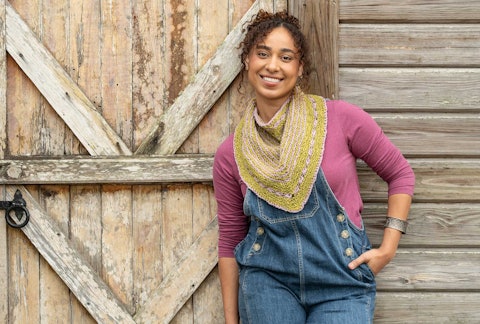 Behind the Design: How the Fae Garland Cowlette Came to LifeLooking for your next quick, wearable knit? Designer Safiyyah Talley has great tips to make this summer project your own.Farm & Fiber Knits Editors · July 13, 2026
 Knitting with Wild Silk: Cast On With MeTraveling from forests in Madagascar to dyepots in Rwanda to store shelves in Texas, handspun borocera silk yarn has an incredible story. How does it knit up? Kate Larson · July 9, 2026
 Project Knitwell: More Than a Knitting LessonSharing knitting one hospital waiting room at a time, this Project Knitwell volunteer offers more than a new skill, creating moments of connection, comfort, and so much more.Christine McGovern · July 6, 2026
 Rooted in Place: Designing the Field Lines Shawl with Small-Farm YarnDiscover the farm yarns and rural landscapes behind the Field Lines Shawl—then cast on your own version.Shaina Scott · July 1, 2026
 Tutorial: Easy Icelandic Bind-Off for a Stretchy EdgeWhen a standard bind-off edge just isn’t stretchy or substantial enough, try this must-know technique!Kate Larson · July 1, 2026
 Stripes! Antique Welsh Socks and the Perfect Jogless JogDid you know that Welsh handknitters were known for stripy socks? Check out some wild stripes from the 19th century, learn about a modern Welsh sock yarn, and try a few techniques for perfect jogless stripes. Kate Larson · June 26, 2026
From the Library


Comments
No comments yet — be the first to share your thoughts.
Sign in to join the conversation — commenting is for signed-in members.