
Loading the latest stories…
SUBsheep
Producing wool, cotton, and wheat doesn’t have to deplete the earth and consume groundwater. Sally Fox is using her hard-won organic farming wisdom to produce excellent fiber that enriches the soil.
Stephany Wilkes7 min read
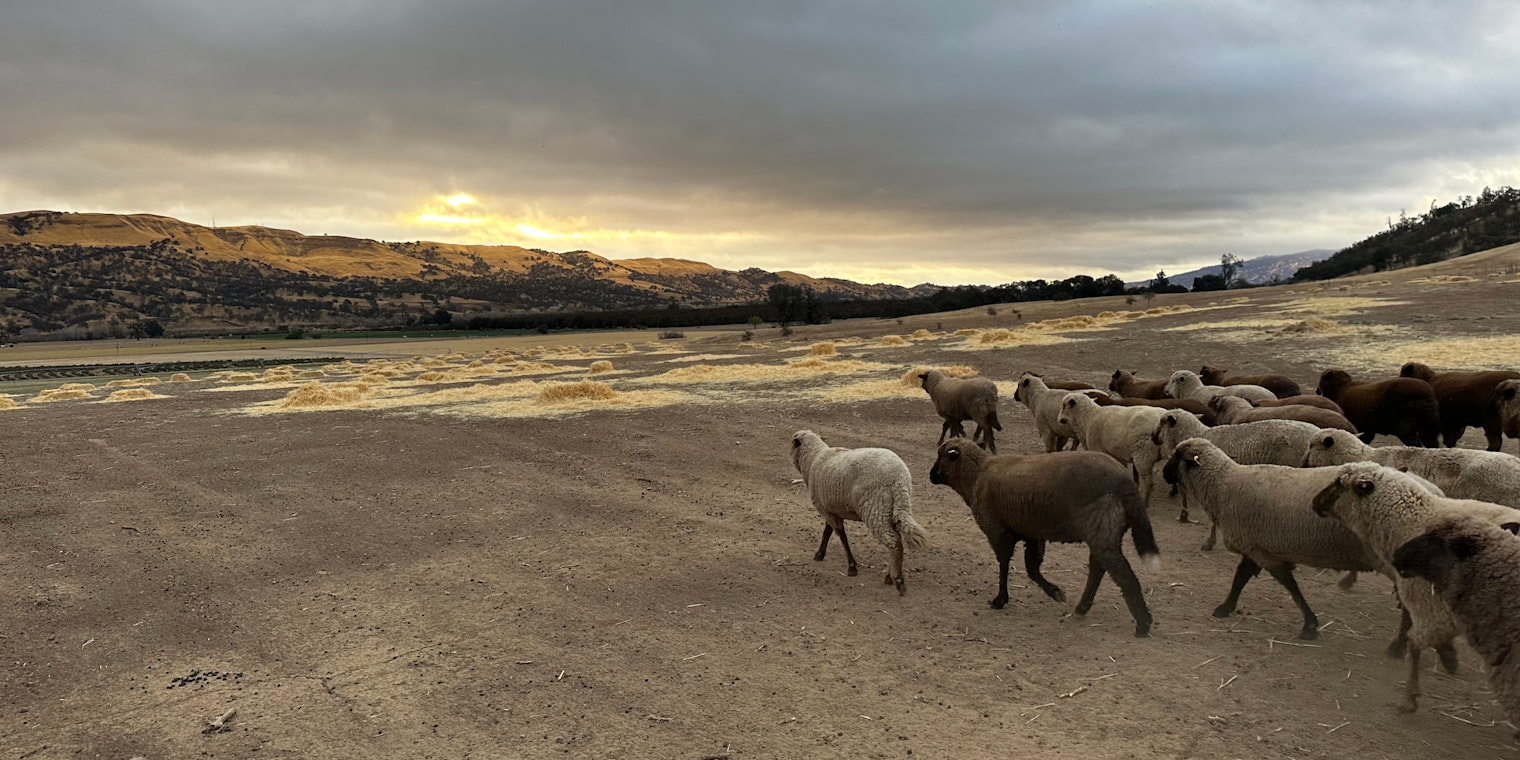
Sally Fox’s mutually beneficial, seasonally shifting dance between colored Merino sheep, colored cotton, and Sonora wheat has reduced her farm’s need for tractors and off-farm fertilizers, rendered pesticides unnecessary, and removed an impressive amount of CO2 from the atmosphere and sequestered it in her soils as carbon.
How does it all work? Good grazing is nuanced and complex, as ecosystems are, but the short version is that Sally’s sheep eat the stubble of her naturally colored cotton and Sonora wheat crops. As ruminants—walking fermentation vats—the sheep predigest these plant materials, making them more palatable to the soil microbes they feed with nutrient-rich manure and urine. As a bonus, the sheep produce fine, naturally colored wool, which is itself about 50% carbon. (Cotton is 40% carbon.)
It may sound simple, but implementing this requires a tremendous amount of care, observation, intelligence, and knowledge. This way of farming calls on decades of experience with place, animal husbandry, plant recognition and need, seasonality, and more. There are no rules, only contexts, and farming in Sally’s style requires constant adaptation to myriad climate and financial shifts. It is not for the faint of heart.
 Naturally colored cotton tolerates the Capay Valley’s summer heat well, serving as a cover crop in addition to beautiful fiber.
Sally’s farm lies in the Capay Valley, about 90 miles north of Oakland, California. It is the traditional home of the Patwin or southern Wintun people, known today as the Yocha Dehe Wintun Nation. “Capay” comes from the Southern Wintun Indian word for “stream.”
More from Farm & Fiber Knits
 Long Thread Podcast: Kate Larson, Farm & Fiber KnitsSeason 14, Episode 8: Editor, teacher, and shepherd Kate Larson makes the case that every knitter is already part of the farm-to-fiber story—whether they know it or not.Anne Merrow · May 16, 2026
 Long Thread Podcast: Gudrun Johnston, Shetland TraderSeason 14, Episode 3: Wherever in the world she lives, Gudrun Johnston‘s roots always take her—and her knitting—back to Shetland. Anne Merrow · March 7, 2026
 Long Thread Podcast: Bea Bonanno, WooldreamersSeason 13, Episode 2: Facing the decline of the once mighty Spanish wool industry, one company is turning to traditional farms and knitting yarns to preserve a fiber legacy.Anne Merrow · October 4, 2025
 “Stupid Sheep” and Other Sheep MythsSheep are often misunderstood. There are a few common sheep myths that this ovine-besotted shepherd would just like to clear up. Kate Larson · September 5, 2025
 Long Thread Podcast: Tamara White, Wing & A Prayer FarmSeason 12, Episode 6: Growing from a small group of Shetlands to a diverse flock of over a hundred sheep, Farmer Tam’s animals bind her to the land and connect her with shepherds and knitters everywhere. Anne Merrow · July 12, 2025
 Long Thread Podcast: Sissal Kjartansdóttir Kristiansen on Faroese KnittingSeason 11, Episode 10: With a love for her country’s wool and knitting culture, the designer of Shisa Brand works toward an ambitious goal: to see all of the fleece of Faroese sheep used.Anne Merrow · April 19, 2025
 A Shepherd’s Year: What to Expect When You’re Expecting (Lambs)Nesting begins as lambing season approaches.Kate Larson · March 17, 2025
 How to Source Yarn Directly from a FarmWhy might you want to buy yarn from the farmer who produced it? Maybe you discovered an intriguing yarn at a fiber festival or perhaps you’d simply like to support growers in your region by buying locally. Here are some tips from a shepherd.Robin Lynde · February 12, 2025
 Black Welsh Mountain Sheep in the Hudson ValleyWhen the Banning family relocated from New York City to rural Dutchess County, they began raising a rare breed of black sheep. You'll want to see these beautiful fleeces!Sharyn Flanagan · January 31, 2025
 Navajo Wool, Diné StoriesFrom traditional Navajo-Churro wool to finewool fleeces prized by industry, sheep and yarn are inseparable from the Diné lifeway.Anne Merrow · January 6, 2025
From the Library


Comments
No comments yet — be the first to share your thoughts.
Sign in to join the conversation — commenting is for signed-in members.