
Loading the latest stories…
SUBselvedge
We have 4 selvedge edges you should know for tidy knits.
Sandi Rosner5 min read
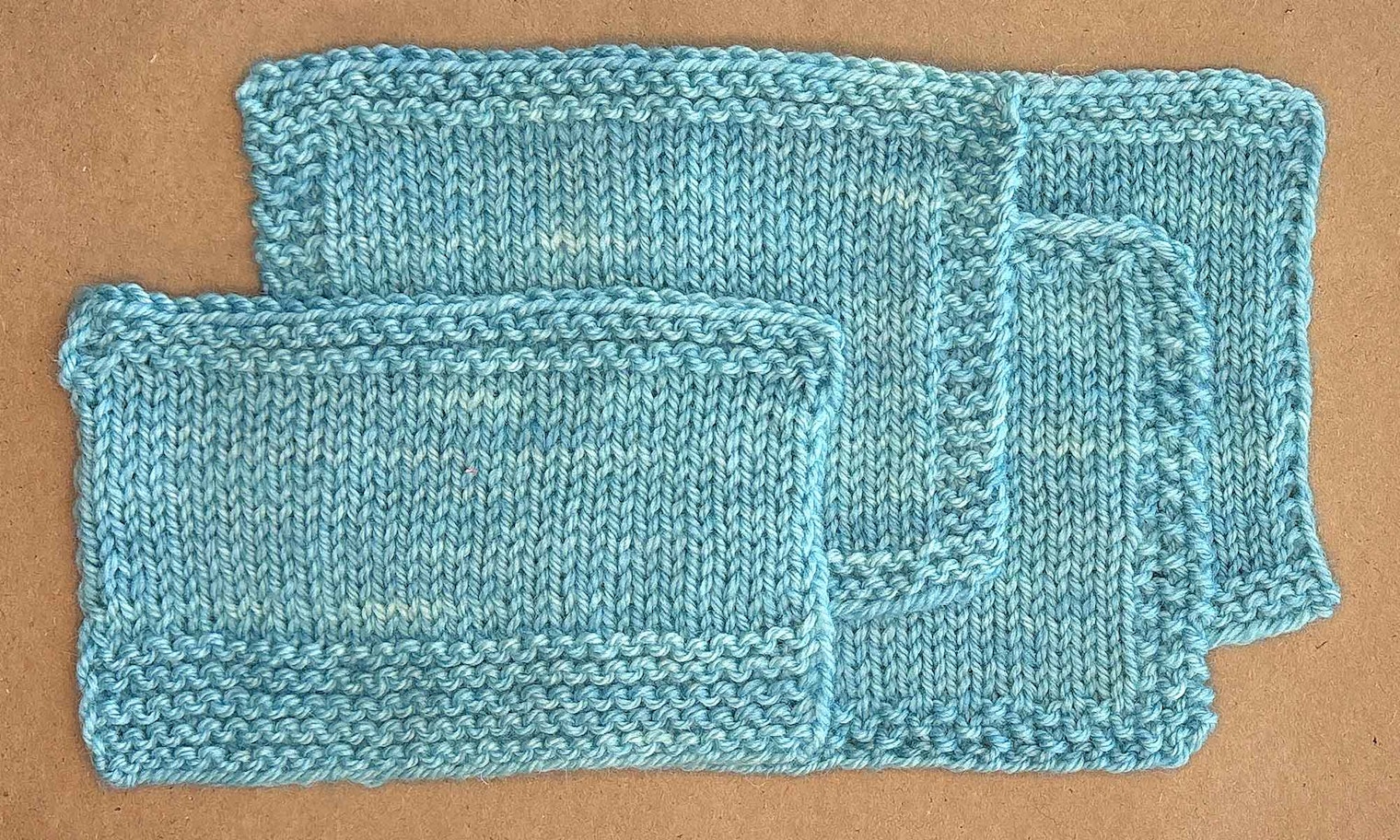
It’s a lesson every knitter learns early on: Stockinette stitch does not lie flat. The cast-on and bind-off edges roll toward the knit side, while the side edges curl toward the purl side. And no, in most cases, blocking won’t fix the problem.
The knit side and the purl side of stockinette stitch are unbalanced. On the knit side, the yarn moves vertically. On the purl side, it moves horizontally. Yarn has energy, created by the combination of crimp in the fibers and the twist imparted in spinning. As the stitches nestle together, that energy is compressed and seeks release. On the vertical knit side, it pushes outward toward the edges. On the horizontal purl side, it pushes toward the top and bottom.
 Even after blocking, the edges on this stockinette stitch swatch are determined to curl.
With a bouncy yarn and a tight knitting gauge you pack more energy into a smaller space, increasing the tendency to curl. With a less bouncy yarn (silk, linen, mohair) and a loose gauge, there is less pressure and less likelihood of curling.
First, keep in mind that you need not do anything if the edge will be used in a seam or if you’ll be picking up stitches along the edge for a border.
For edges that will be exposed, you’ll need to balance the energy by combining both knit and purl stitches. It need not be a precise 50/50 split. Depending on your yarn and your knitting gauge, you might need no more than ½" on horizontal edges and 2 stitches on vertical edges to prevent curling.
The swatches shown here were all knit with Ancient Arts Yarns Herlig DK (50% Viking Norway wool, 50% Merino wool) on size US 6 (4 mm) needles, for a stockinette stitch gauge of 22 stitches and 28 rows = 4".
Garter stitch, seed stitch, moss stitch, and many varieties of ribbing will all do a good job of eliminating curling at cast-on and bind-off edges. If ribbing is your choice, you’re not limited to K1, P1 or K2, P2. You may find that K4, P1 ribbing lies perfectly flat, if your gauge isn’t particularly tight. Test your preferred ribbing in a swatch to be sure you get the look you want.
The vertical side edges of your knitting are referred to as selvedge edges. Let’s take a close look at four different selvedge edges.
Slipping the first stitch of every row creates a smooth square edge for garter stitch and other textured stitch patterns but is rarely sufficient to prevent stockinette stitch from curling.
More from Farm & Fiber Knits


Comments
No comments yet — be the first to share your thoughts.
Sign in to join the conversation — commenting is for signed-in members.