
Loading the latest stories…
SUByarn
Bringing state-of-the-art spinning technology to an historic textile community, from industrial synthetic yarn to traceable wool.
Sandi Rosner5 min read
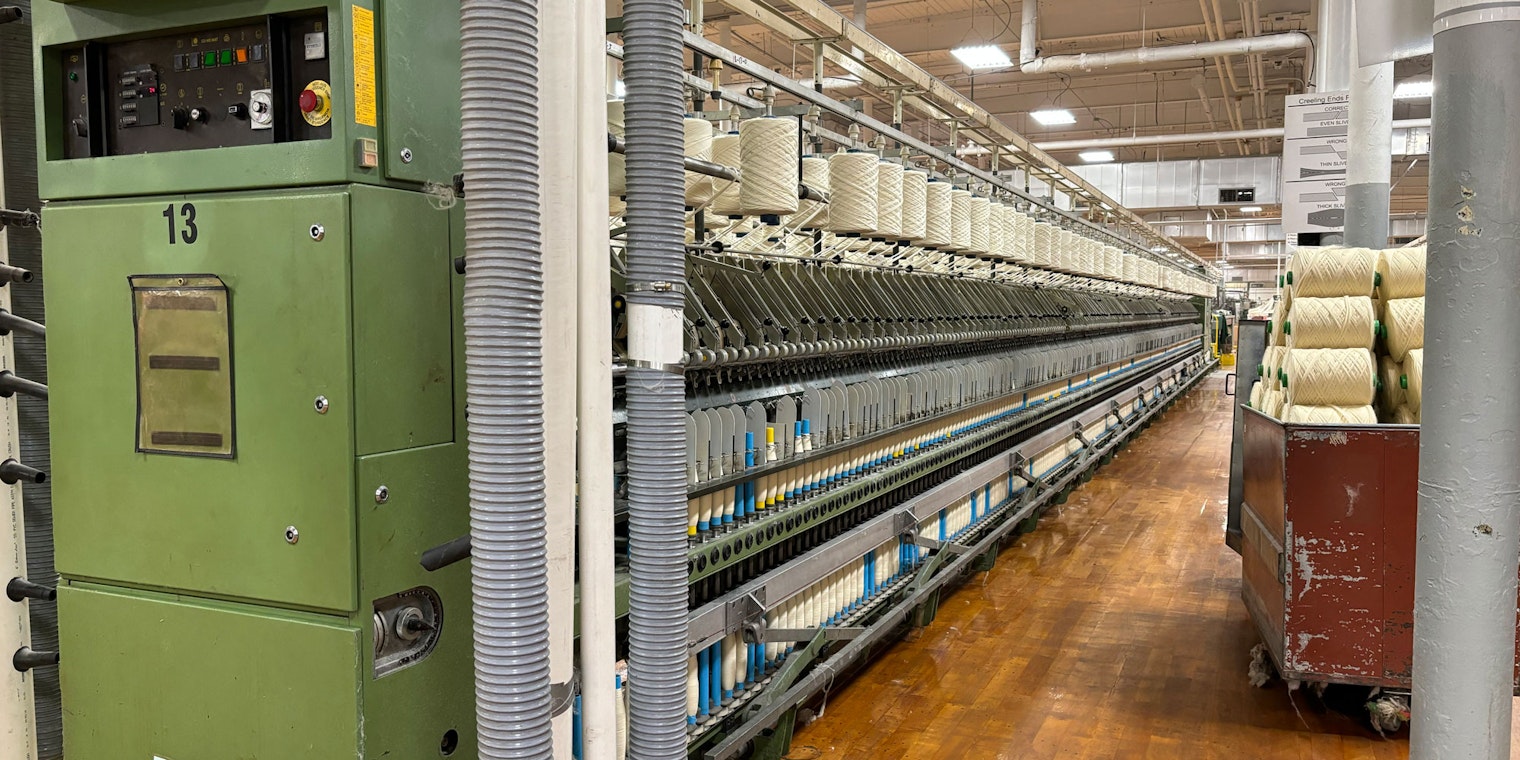
As I approached the home of Meridian Mill House in Ranlo, North Carolina, I was struck by the houses. Small, single story, nearly identical houses on small lots surround the large brick mill complex. These are mill houses, built in the 1920s and 30s to house workers employed at the cotton mills that gave birth to the town. Mill towns like this were once found throughout the Carolinas. As textile manufacturing moved overseas in the 1990s, most of these towns were emptied, then demolished, the mill buildings converted to antique malls and trendy food halls.
The mill houses in Ranlo are now privately owned, but the mill is still humming. Instead of cotton, Meridian Specialty Yarn group spins wool and synthetic yarns for apparel, upholstery, automotive, military, and industrial textiles. They also produce yarn for hand knitting and crochet. Since 2020, the Meridian Mill House division has offered high quality natural fiber yarn made in the US to hand dyers and other small businesses.
 Cotton mills such as this one, located about 5 miles from Ranlo and pictured in the 1897 annual report of the Bureau of Labor Statistics of the State of North Carolina, were a central fixture in the region for decades.
Meridian’s facility in Ranlo is a spinning mill. Their dye house is an hour north, in the town of Valdese. I was met by Hannah Everhart, the sales representative for Meridian Mill House. After outfitting me with earplugs, Hannah showed me around.

Hannah Everhart of Meridian Mill House. Bins of combed wool top behind her are fed into the milling machine to make sliver, then yarn.
From the raw materials room, where clean fiber is stored in bales and large bins, to the various spinning lines, to skeining and packaging, the mill is bright, spacious, modern, and surprisingly clean. Unlike other mills I’ve visited, there were no loose fibers floating through the air or coating the machinery. The old wooden floors were spotless.
For many years, Meridian manufactured popular acrylic yarns by the ton for a major craft yarn brand. When that brand decided to move production overseas, Meridian’s state-of-the-art spinning and dyeing facilities and skilled workforce were re-deployed to serve the luxury craft market. They learned to work with fine wools and other natural fibers to produce yarn store quality yarns.
In recent years, the knitting community has become more thoughtful about the origins of the yarns and fibers we use. Many factors contribute to yarn we can feel good about: the well-being of the animals and land that grow the fiber, fair labor practices and working conditions, and the environmental impact of processing and transportation.
Meridian is one of only a handful of Responsible Wool Standard (RWS) certified spinning mills in the US. They spin RWS-certified Shaniko wool, grown in the American West and processed at Chargeurs, an RWS-certified scouring and superwash facility in South Carolina. Since all phases of production are within the continental United States, transportation costs are reduced.
 Rodanthe is a worsted-weight non-superwash yarn using Shaniko Wool.
The yarn bases are all named for North Carolina locations. In addition to Shaniko wool (superwashed or not), Meridian stocks 19.5-micron superwash US-grown Merino; 21.5-micron US-grown Merino; 28-micron US-grown Territorial wool for yarn that is sturdier, but still soft; and 40 micron New Zealand wool suitable for carpets and other hard-wearing textiles. All the wool is processed in the US.
Meridian’s expertise shines in blending both natural and synthetic fibers with wool. Silk, cashmere, alpaca, cotton, and linen are all available. Nylon can be added for durability, stellina adds some sparkle, and rayon and acrylic neps create tweed.
 Jockey’s Ridge Worsted is Shaniko wool blended with black and brown tweed neps.
More from Farm & Fiber Knits
From the Library


Comments
No comments yet — be the first to share your thoughts.
Sign in to join the conversation — commenting is for signed-in members.