
Loading the latest stories…
Let’s see how Susanna IC combines three different double decreases in a simple lace pattern to keep things moving in the right (and left) direction.
Kate Larson3 min read
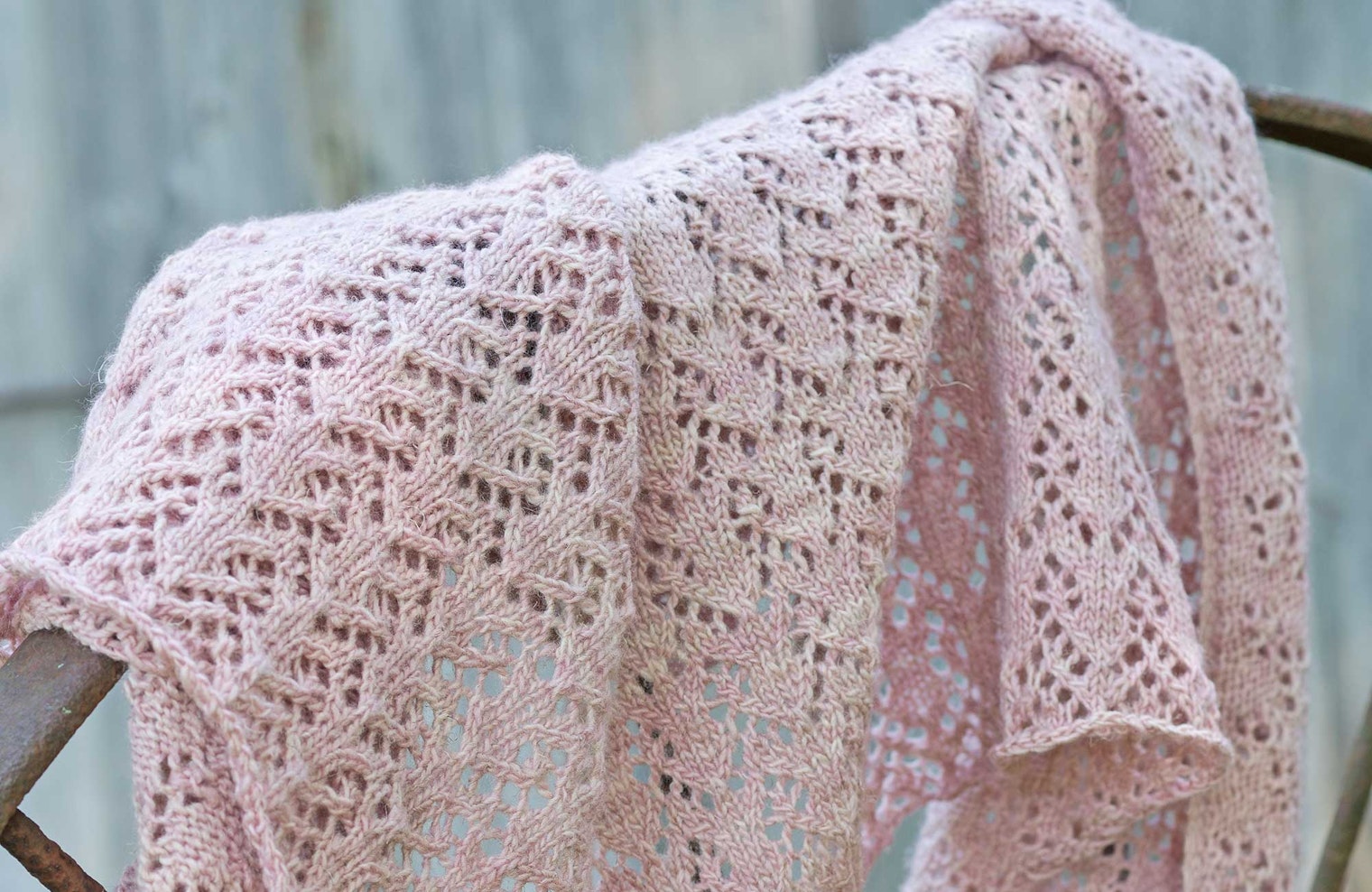
Left, right, and center—I love seeing a well-chosen double decrease show up in my knitting projects. As I was heading out on a quick trip, I cast on a Coco’s Wrap by Susanna IC in a yummy sport-weight from Morehouse Farm Merino. The lace motif is simple, but using double-decrease stitches that are centered, left-leaning, and right-leaning makes the pattern work visually—and keeps me engaged.
Find the pattern for Coco’s Wrap in the Farm & Fiber Knits Library.
 How it started: Yummy Morehouse Farm Merino 2-Ply Sport. Photos by Kate Larson unless otherwise noted
If you are new to double decreases, they are how we reduce three stitches into one stitch, and you'll most often find them in lace patterns. There are quite a few options, each with its own quirks and bias. Are they interchangeable? No, but at the end of the post, I'll list some advice for breaking the rules.
 Chart symbols for decreases show how the stitch will lean—or not. A centered double decrease is worked in the middle of the motif shown.
If you asked me what is my favorite knitting stitch, it would be the classic centered double decrease. You slip two stitches as if they are one (like you're going to k2tog), knit the next stitch, and then pass the two slipped stitches over the k1. The center stitch of the three worked falls on top, so this decrease creates a beautiful point without leaning left or right. Brilliant.
More from Farm & Fiber Knits



Comments
No comments yet — be the first to share your thoughts.
Sign in to join the conversation — commenting is for signed-in members.