
Loading the latest stories…
SUBembroidery
Simple stitches can have a big personality, and we've gathered 11 easy techniques for you to try!
Katrina King4 min read
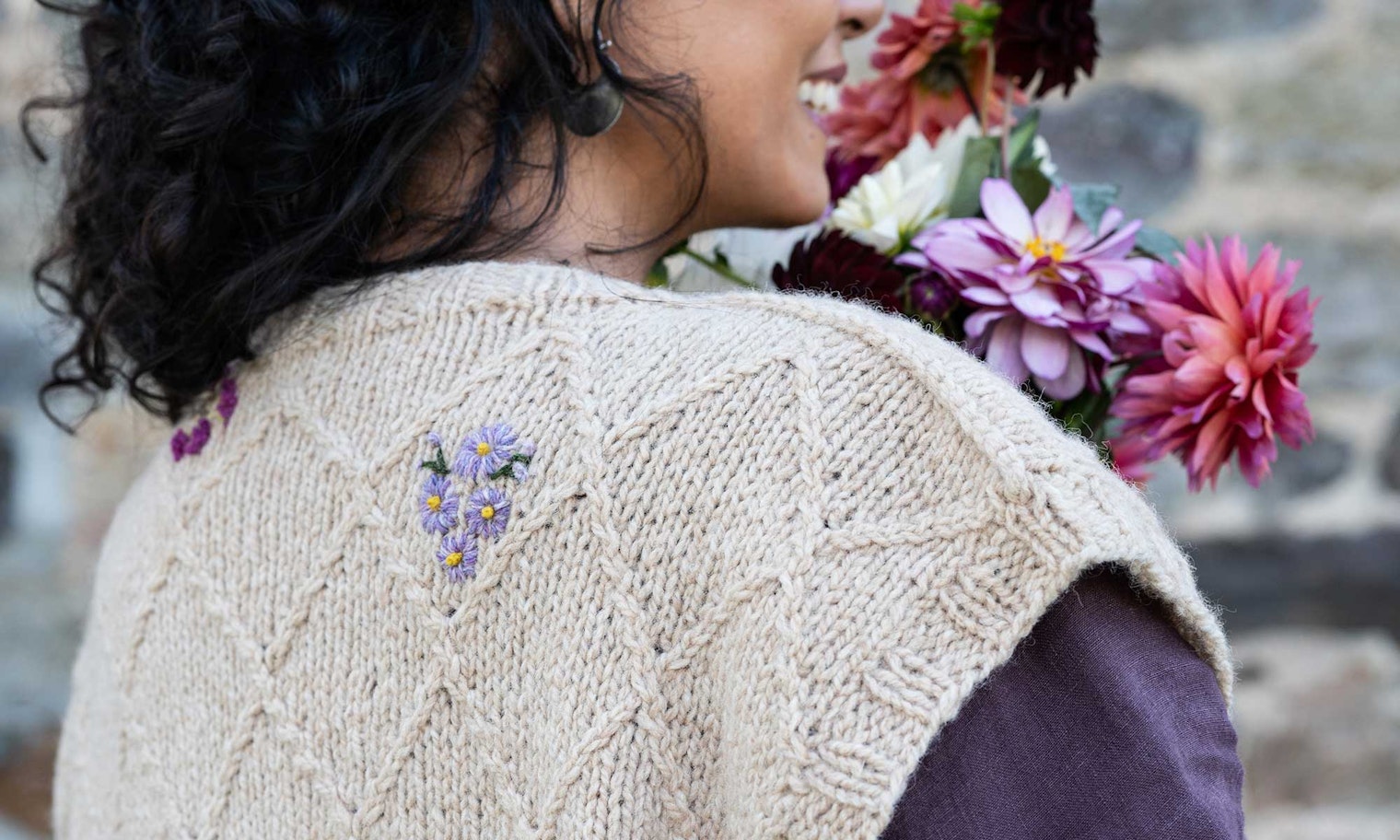
Embroidery is one of the first crafts I learned as a child. My great-grandmother took it upon herself to teach young left-handed me using floss, iron-on transfers, and tea towels. I chose colors at random for those playful elephants stitched in stem stitch that held flowers with French knot centers. Embroidery is not just for wall hangings or the kitchen sink. Simple stitches can be used to add spirit and color to your knitted garments.
It’s easy to get overwhelmed when looking at different embroidery techniques—there are thousands of stitches! Just a few basics are all you need to get started, and there are three main types of embroidery I’d like to show you here. At the bottom of the page, we’ve also included a gallery of basic stitches.
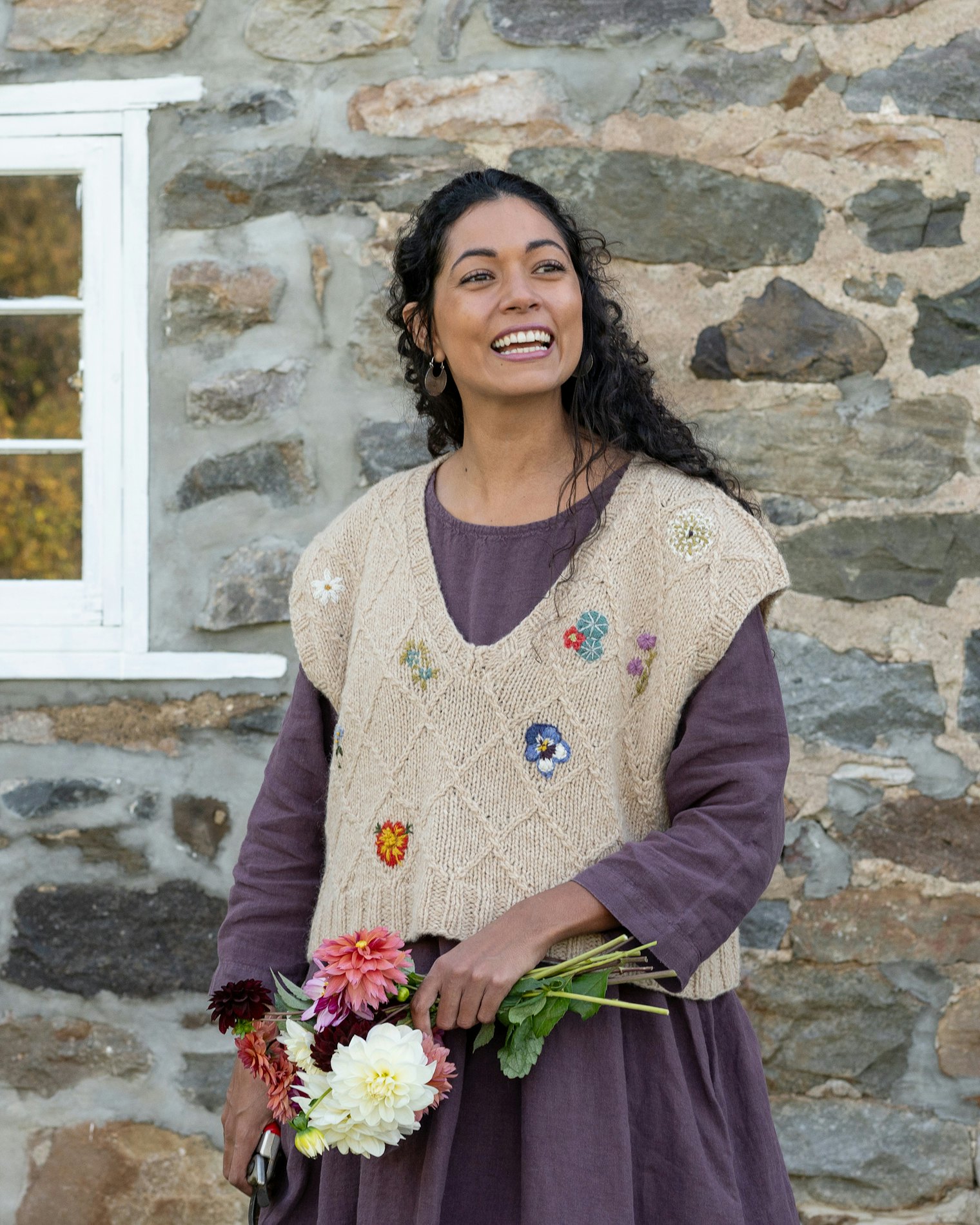 Hannah began sketching the flowers in her garden by simplifying each flower into basic shapes. Photo by Gale Zucker
Most embroidery is done on tightly woven fabric or speciality fabric that has a grid woven into it. These fabrics have very little stretch or give to their structure, and must be pierced with a sharp needle or stitched through holes that are woven in.
Due to the stretchy nature of knit fabric, there are two options to stabilize it for stitching. The first option would be to knit in a non-superwash wool and wet-felt the garment. This draws the fibers together to create a stable surface. The second option, which Hannah Thiessen Howard used in her Luisetta Vest, is to use a washaway stabilizer. The area to be stitched is attached to the stabilizer and embroidered. Once stitching is done, soak the garment to release the stabilizer.
More from Farm & Fiber Knits
From the Library





Comments
No comments yet — be the first to share your thoughts.
Sign in to join the conversation — commenting is for signed-in members.