
Loading the latest stories…
Yarn from the islands where sheep outnumber people
Sissal Kristiansen6 min read
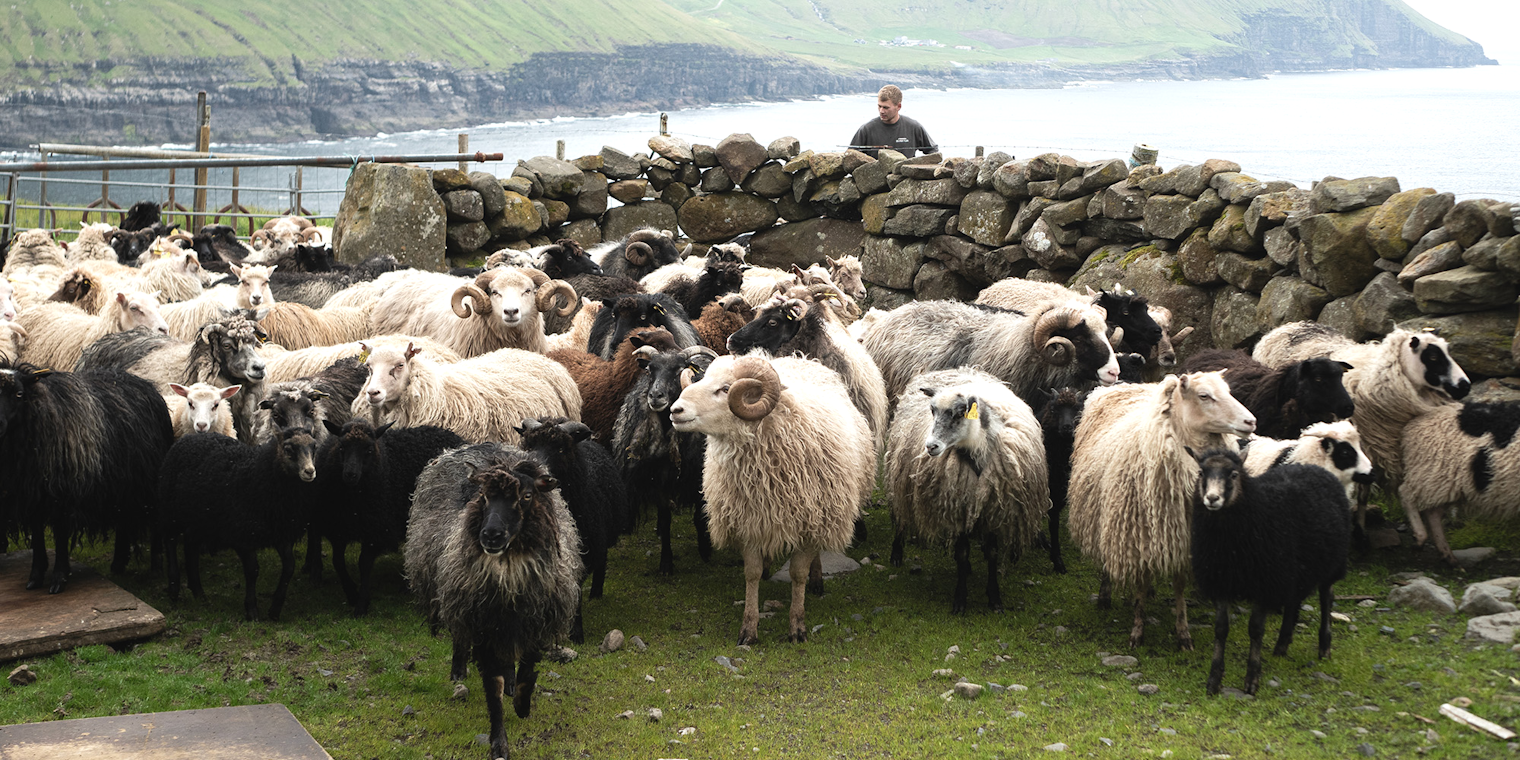
You can’t turn around in the Faroe Islands without hitting a sheep or a sheep owner. Ask a knitter if he or she knows about the Faroe Islands, a tiny country in the North Atlantic Ocean, and the answer will likely be yes. They might not have been to the islands, but they will know that the country is known for its knitting and wool. Knitting and wool are certainly a big part of the Faroese identity, but the sheep are the heroes who knit the people of the Faroe Islands together.
Sheep outnumber the people on the Faroe Islands, but with only 55,000 inhabitants, that might not say much. The Faroe Islands are not big, though. In terms of land area, the 18 islands are 540 square miles, less than half of Long Island, New York, with its 1,401 square miles.
Compared to flocks in many other sheep-farming countries, the majority of the sheep on the Faroe Islands are not owned by a few big farms. On the contrary, a reasonable guess would be that at least every second household on the islands either owns sheep or is closely related to a sheep-owning family somewhere on the Islands. The reason for this is historical.
Since the beginning of human habitation of the Faroe Islands, sheep have been an integral part of life and society. The first written record of a Faroese knitwear export—socks—is in a Norwegian trade document from 1567. This was the beginning of a centuries-long era when the Faroe Islands’ main exports were knitwear, mostly socks and sweaters, before the advent of the commercial fishing industry.
Until the mid-19th century, the Faroese people mainly lived off the land and what they could get from the sea. The harsh climate and rocky land formation did not favor many agricultural options. The main contributors were sheep, fish, whales, and potatoes. The little the Faroese exported came mainly from the sheep: knitted goods and wool.
Today, farmers shear their sheep once a year, but in the olden days, this chore was attended to twice in summer, first in June and then again two to three weeks later. Which sheep would be brought in for the first shearing depended on how well the sheep was filað, or whether the next winter’s fleece had grown significantly. (Editor’s note: Many double-coated sheep breeds still have the ability to shed their fleece, or roo; the ability is generally bred out when selecting for uniform color, wool type, and consistent strength—traits suited to industrial production.)
More from Farm & Fiber Knits
 Toe Techniques: Knitting Flat and Round Toe SocksPeek into the Victorian art of the perfect sock finish with 7 toes to try!Katrina King · March 24, 2025
 Is Gauge Only a Guideline? Sometimes!Following a pattern’s knitted gauge is very important when making things like sweaters, but some accessories are ripe for exploration. Check out our kerchief case study.
From the Library


Comments
No comments yet — be the first to share your thoughts.
Sign in to join the conversation — commenting is for signed-in members.