
Loading the latest stories…
SUBsteeks
Swatching for a project knitted in the round can be awkward and inconsistent. Steeking your knitted swatches makes it easy to explore colorways, check gauge, and practice cutting your knitting—eep!
Sandi Rosner5 min read
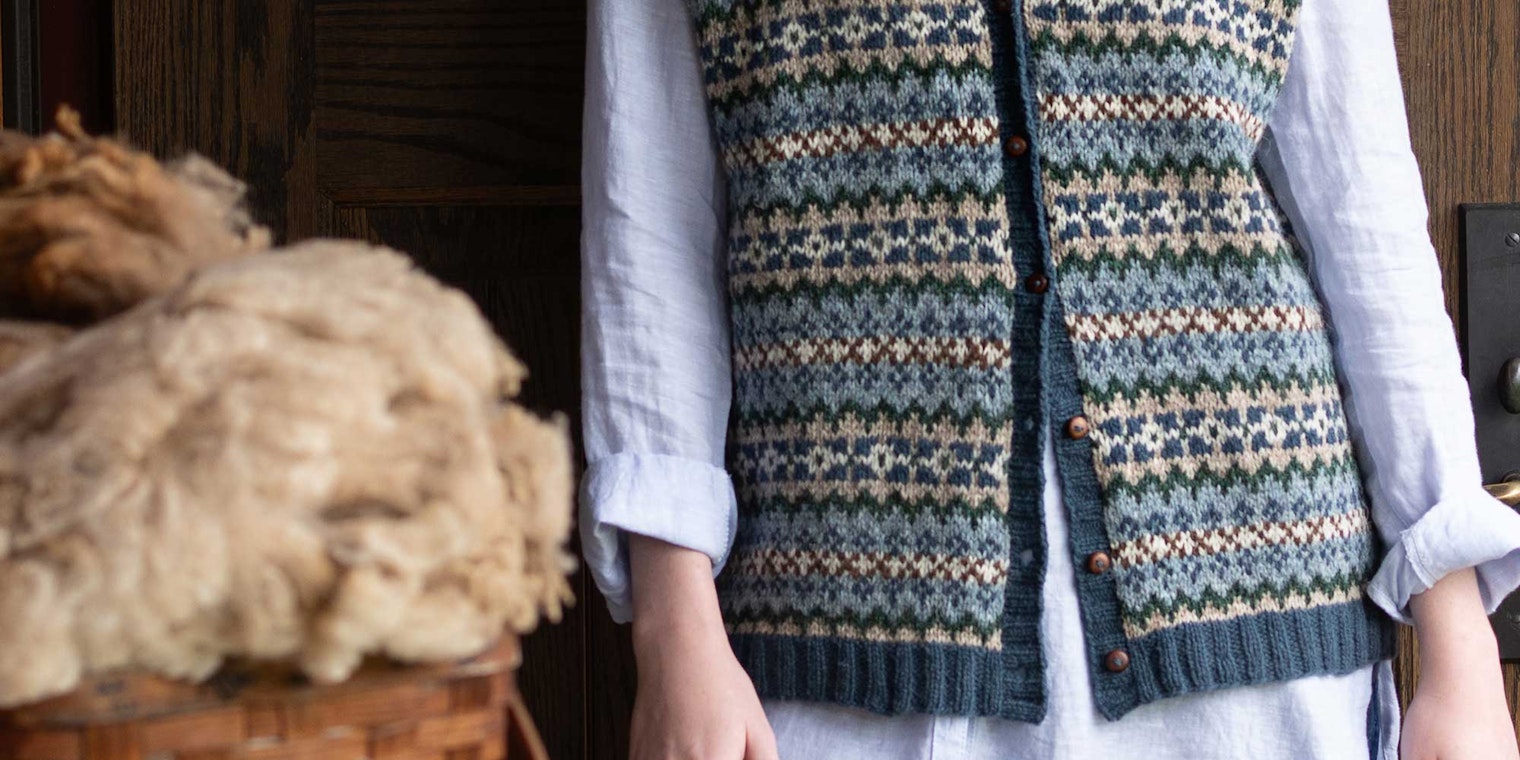
In the Fall issue of Farm & Fiber Knits, I demonstrated needlefelting to reinforce a steek in the Skellister Vest. But the finished project isn’t the only part of the process to use a steek. As early as sampling colorways for the design, I used the technique on my swatches.
Steek is a common term for an extra panel of stitches added to a project that will later be cut open to create armholes, necklines, and more. Steeks are important for designs such as this one, and the technique can also be used to sample for projects that will be knitted in the round.
When I proposed this design, I had just finished watching the latest season of All Creatures Great and Small on PBS. That show is full of knitwear, but I particularly love the colorwork pullover vests that the men wear under their tweed jackets, like this one worn by the character Tristan Farnon.
Perfectly suited to the Yorkshire countryside of the 1940s, a colorwork vest is a classic garment that can be easily integrated into modern wardrobes.
I chose to make the Skellister Vest with a button front instead of a pullover style but to knit it in the round, both because that’s the traditional method and because I don’t enjoy purling over a stranded colorwork pattern. When knitting in the round, every row of the colorwork pattern is knitted on the right side of the fabric.
Get a closer look! Click any image in the gallery below to open it in full-screen mode.
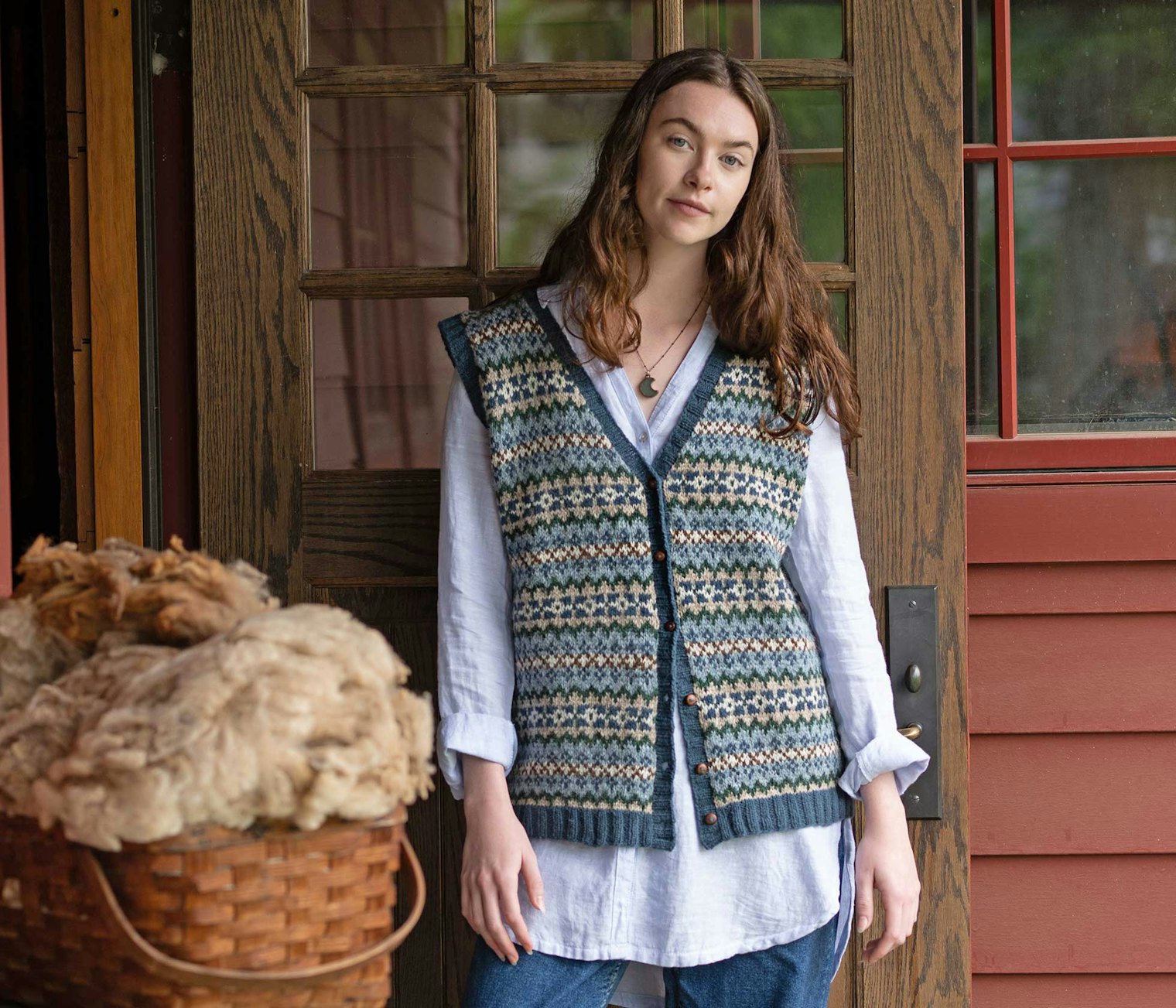
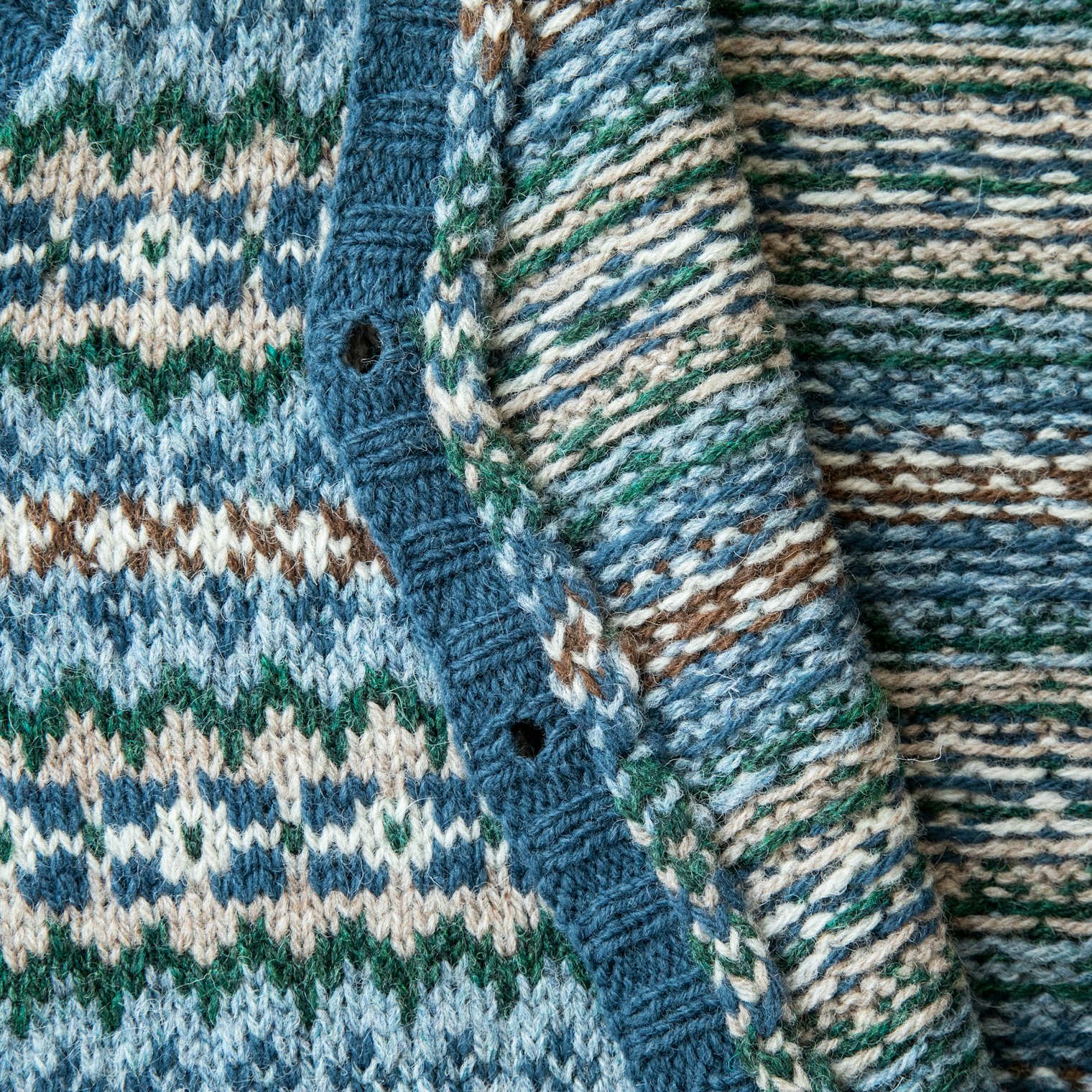
Knitting in the round also meant an opportunity to showcase an underappreciated technique: steeks! Even experienced knitters often shiver at the thought of taking a pair of scissors to their knitting. Traditional methods of securing steeks, such as sewing by hand or machine, can be tedious.
A few years ago, I learned to use needlefelting to secure steeks, and it was a revelation. Fast, fun, and effective, needlefelting is now my go-to method when I need to secure stitches before cutting.
The Fair Isle sweaters of the 1930s and 40s that inspired this design often combined the natural colors of undyed wool with surprisingly bright dyed hues. My original proposal echoed this theme, with green, blue, gold, and berry combined with Mooskit, an undyed light brown.
 The colors in my original proposal for the Skellister Vest.
Selecting yarn colors online is always a challenge, and choosing yarns for a multicolored project is even more difficult. Our perception of color is influenced by the colors that surround it. You can never really know if a color combination works until you see it in the swatch.
Editor Kate Larson and I selected ten colors of Jamieson’s DK weight, including the six I originally suggested, and I started playing with palettes when the box arrived. We wanted to use the deep blue of Stonehenge for the ribbing on this vest, but the rest of the colors were up for grabs.
I swatched four options—all at once—by using a steeked swatch method. Here are the results:
Get a closer look at Sandi’s swatches. Click on any image below to view it in full-screen mode and learn about the colors used. Photos by Matt Graves
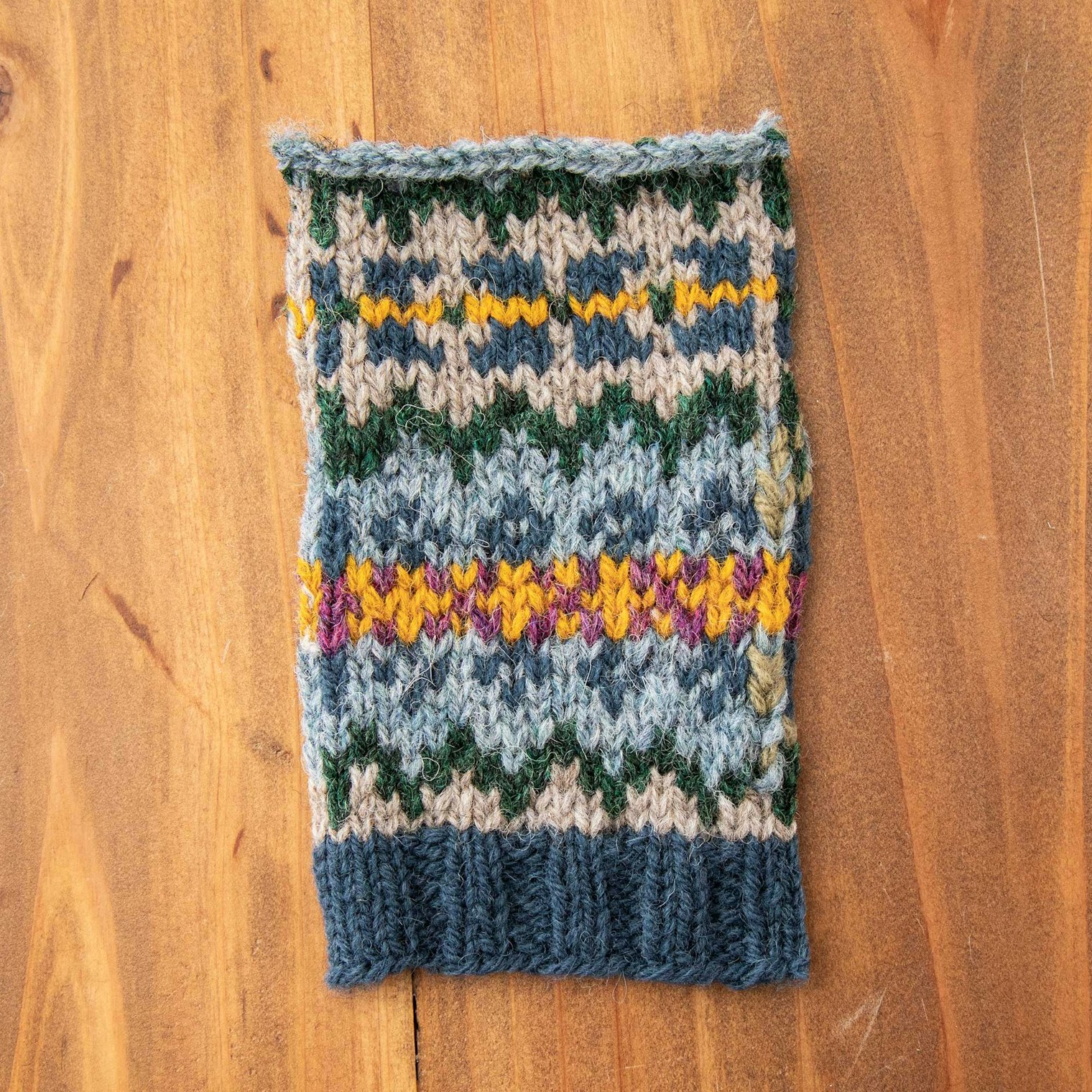
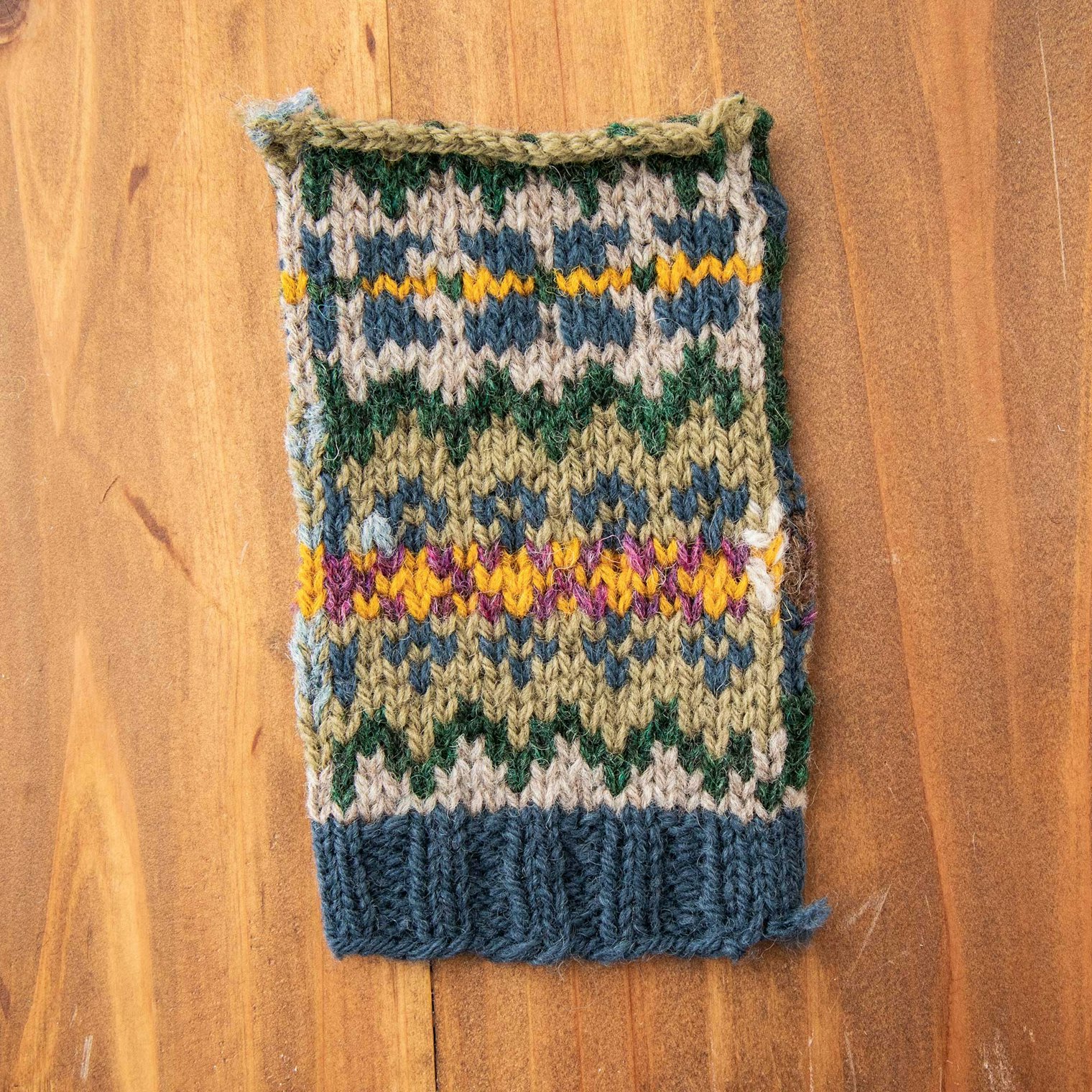
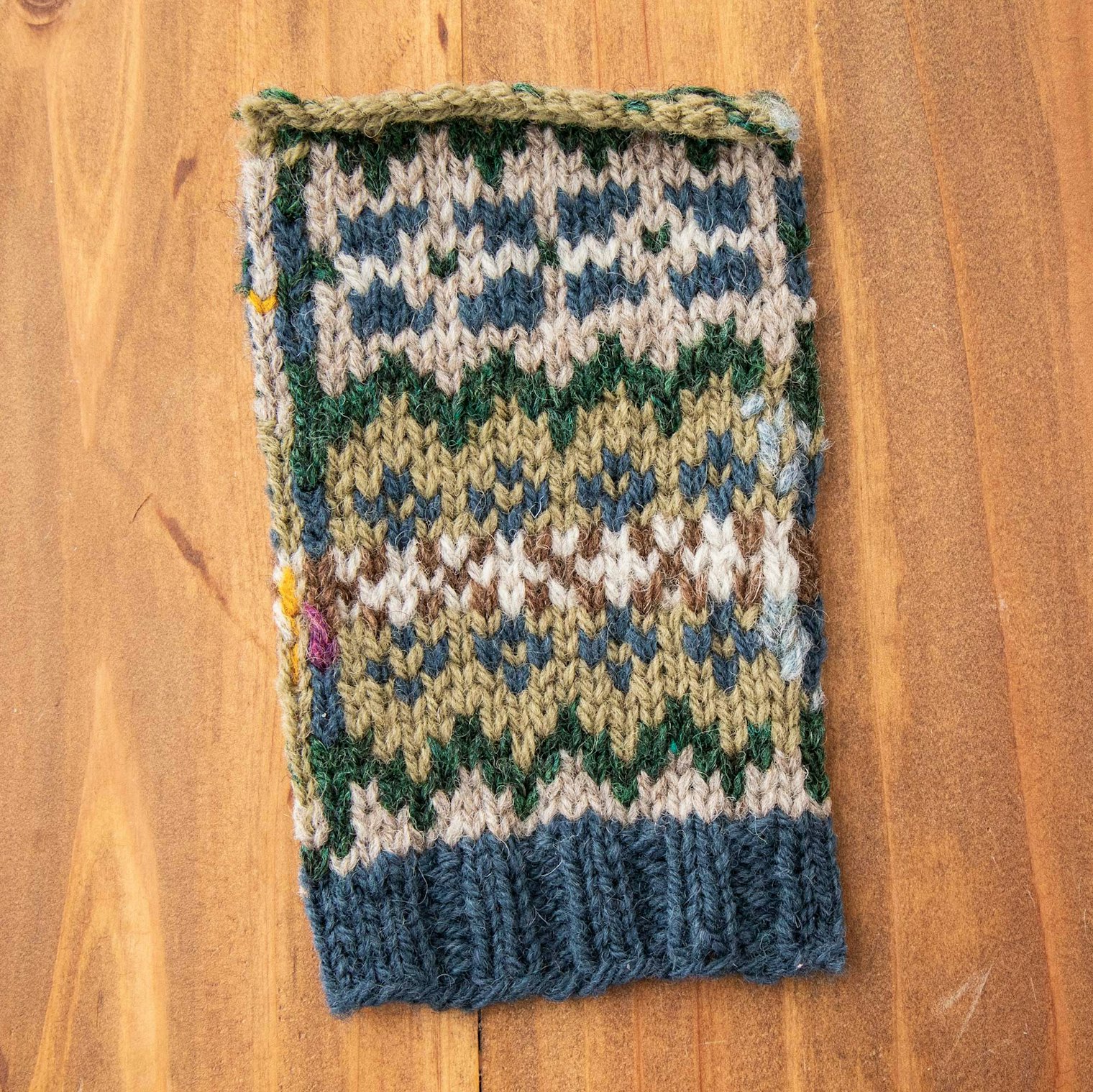
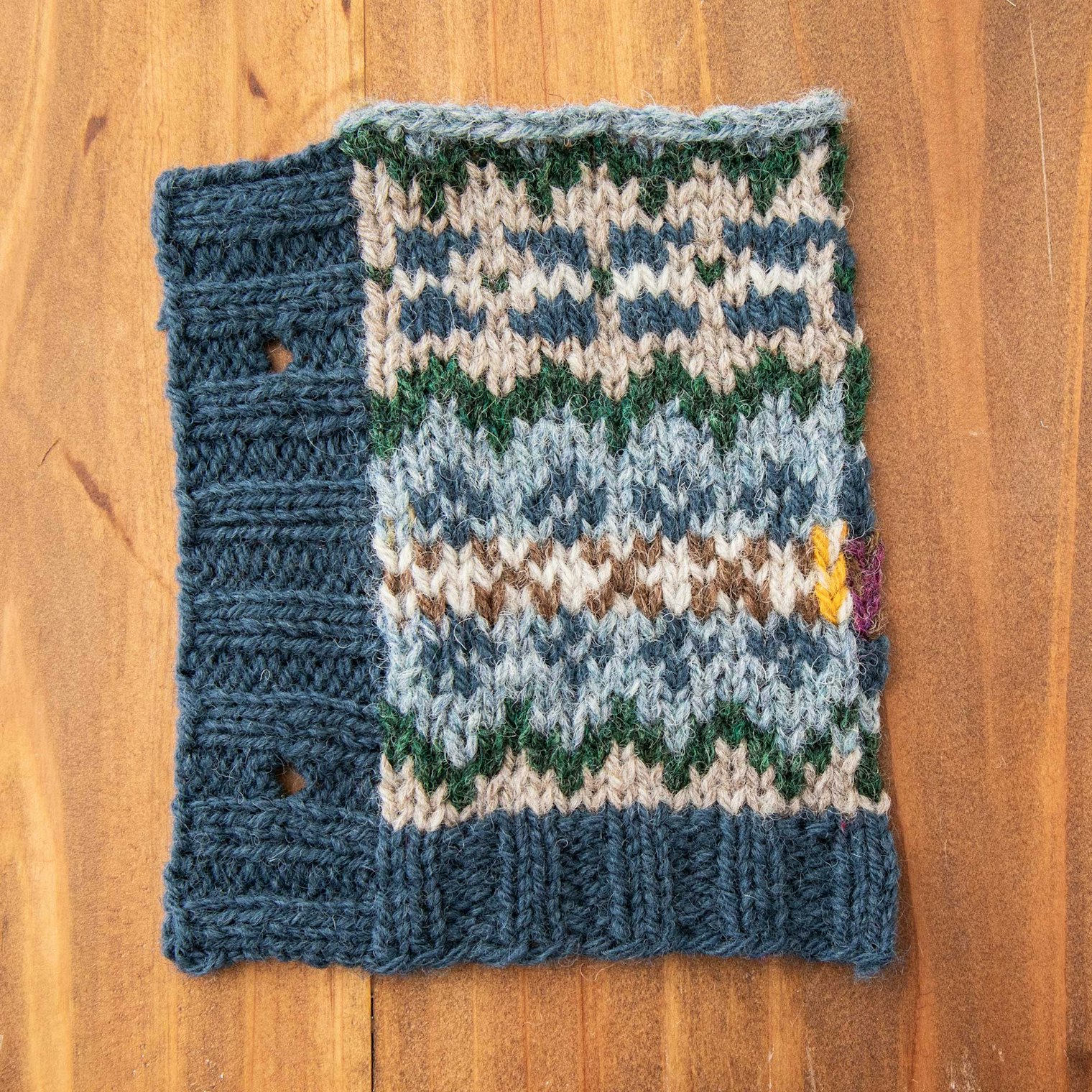
The gold and berry hues felt a little over the top. Choosing blues, greens, and three different neutrals gave us a fabric that is both lively and easy to wear.
Swatching in the round with steeks allowed me to test several different colorways without knitting multiple small pieces. A tubular swatch is a closer approximation of the techniques and tension I’ll use when knitting the vest, allowing me to measure gauge more accurately. And, if you’re a little hesitant about cutting open the steeks, separating the swatches is a perfect opportunity to practice. I’ll show you how I used the steeked swatch method for the Skellister Vest, but you can easily adapt this to any other project.
More from Farm & Fiber Knits
From the Library


Comments
No comments yet — be the first to share your thoughts.
Sign in to join the conversation — commenting is for signed-in members.