
Loading the latest stories…
SUBindigo
Do you have some odd balls in deep stash that could use a summer refresh? Natural indigo dye can be easier to use than you think!
Kate Larson6 min read
Like many knitters, I have leftovers. Really nice leftovers. For large projects, I usually buy an extra skein just in case, and I also often end up with partial balls at the end of a project. I love knitting with DK weight and currently have a lovely collection of oddments that I'd like to use together in a project... but they don't create a palette I like. So, I pulled out a few skeins to overdye with indigo—my go-to for overdyeing my knitting stash.
Overdyeing is a great way to harmonize a group of mismatched skeins, and indigo is my go-to for overdyeing knitting yarn because it works on nearly all fiber types. (It does not dye acrylic, but nylon reportedly does take some color from indigo. See Resources.) So, you can gather your wool/flax and mohair/silk and alpaca/cotton yarns and give them a dunk in the same dyepot.
Dipping your toe into the world of indigo dyeing can be intimidating. There are many recipes for making an indigo vat, and there is a mind-boggling amount of good (and bad) advice online. If you are indigo curious and new to natural dyeing, an indigo starter kit is one of the very best ways to get started. Let me show you how easy it is!
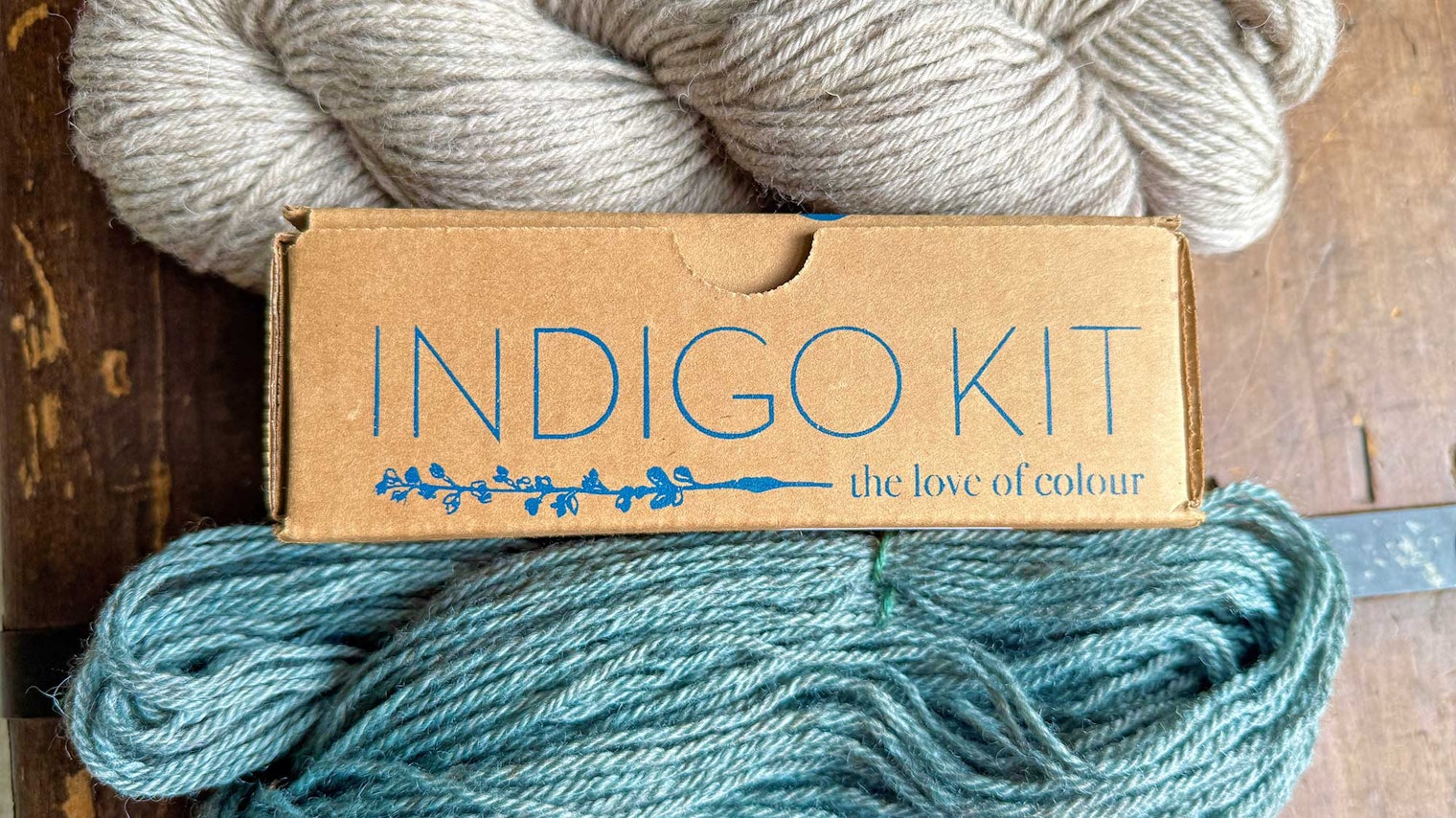
 Fructose Indigo Kit from The Love of Colour. Kate pulled several skeins to overdye: white and yellow Cormo from Mitchell Wool and undyed gray from Laxtons.
While I love to nerd out on indigo chemistry, I want to keep this how-to as simple as I can. The purpose of indigo kits is to keep the experience straightforward, providing you with pre-weighed ingredients that are ready to add to your vat. I asked Toronto-based dye company The Love of Colour if I could give their fructose indigo kit a try, and they sent me one to show you here. This is a common recipe for getting your feet wet (haha) with natural indigo. It contains indigo powder (derived from plants), fructose granules (as in sugar from fruit), and pickling lime (also commonly called calx, which is short for calcium hydroxide). That's it—literally just add water!
Every indigo dyer I know has a slightly different approach, so you should follow the instructions given for whatever recipe or kit you are using. I'll outline the main steps here with a knitter using a variety of natural-fiber yarns in mind, and you can see the beautiful blues that resulted at the end.
More from Farm & Fiber Knits





Comments
No comments yet — be the first to share your thoughts.
Sign in to join the conversation — commenting is for signed-in members.