
Loading the latest stories…
SUBbrioche
Learn how Nancy Marchant made this squishy reversible stitch knitting’s next big thing, and get Faina Goberstein’s best tips for getting started.
Karin Strom7 min read
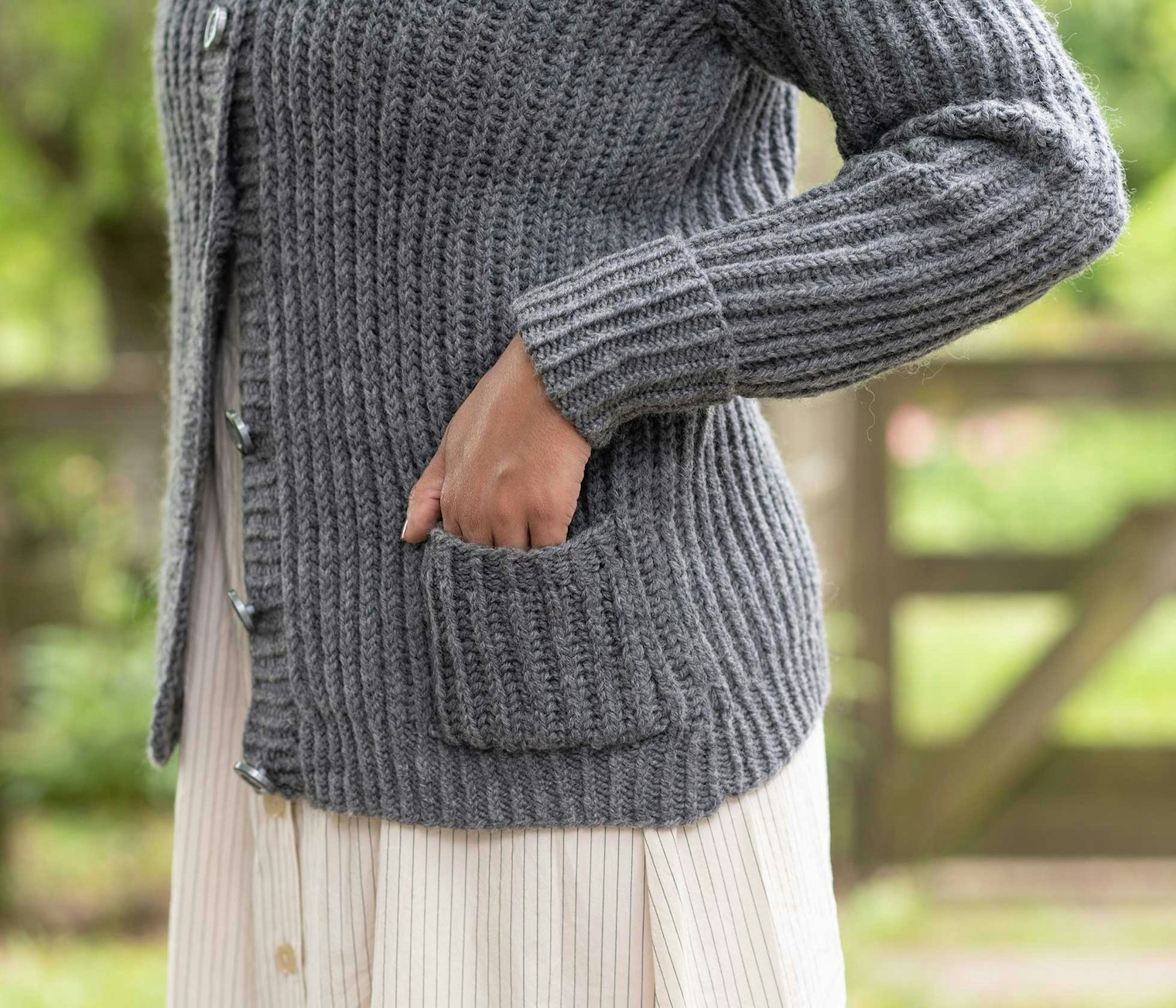
Brioche knitting has been having a moment—a rather long one—that began when Nancy Marchant’s book Knitting Brioche brought the technique to the attention of modern American knitters in 2010. Nancy described her book as a “reintroduction” to the technique in the United States, as brioche had been quite popular among Victorian knitters. Courtney Kelley’s Columbia Cardigan in Farm & Fiber Knits 2025, inspired by a 1916 pattern published by Columbia Yarns, got us thinking about the origins of this stretchy stitch and its rise in popularity in recent years.
We dug into our to-go knitting resources, which look back to the brioche knitting craze of the Victorian era (from the beginning of Queen Victoria’s reign in 1837 until the outbreak of World War I in 1914). For those knitters, brioche was popular for floor pillows and poufs shaped like the French rounded bread that was in vogue. Knitting historian Richard Rutt’s only mention of brioche in his A History of Handknitting points us toward a Miss Lambert, who stated in her 1843 edition of My Knitting Book that the knitting stitch took its name from the pastry. However, subsequent editions of her popular book omitted this connection.
Eventually, patterns for baby sweaters, mitts, and more using this ribby stitch appeared in popular “lady’s magazines” on both sides of the Atlantic. One of these magazines includes the inspiration for Courtney’s cardigan, which looks just as good today as it did when it came out in 1916.
 At left, Design by Anna Schumacker published in The Columbia Book of Yarns (1916); Courtesy of the Library of Congress. At right: Courtney’s version, the Columbia Cardigan; photo by Gale Zucker
Courtney, who is co-owner of Philadelphia-based Kelbourne Woolens, admits she was shocked to find a brioche sweater in a vintage pattern book. “I think of brioche knitting as very contemporary,” she says. “I have some older pattern catalogs and have done research at the Historical Society of Pennsylvania, which houses the Horstmann and Lippincott papers. (The Horstmann family owned what eventually became Columbia Yarns, a producer of Germantown-style yarns.) I hadn’t seen a vintage brioche garment pattern until I came across this one.”
More from Farm & Fiber Knits
From the Library





Comments
No comments yet — be the first to share your thoughts.
Sign in to join the conversation — commenting is for signed-in members.