
Loading the latest stories…
With the Spring 2026 issue of Farm & Fiber Knits, you’re invited on a playful, page-by-page hunt for sheep and fiber animals from around the world, showcasing more breed diversity than ever before.
Debbie Blair4 min read
While helping assemble the Spring 2026 issue of Farm & Fiber Knits, I became keenly aware that it features a wider range of breeds than any issue we’ve published before—from all around the world! So when my printed copy arrived in the mail a few days ago, I sat down and flipped through it as if I were playing a game of Where’s Waldo—the classic search-and-find books where you hunt for the kid in the red-and-white striped hat. Only this time, “Waldo” took the form of different sheep breeds—or, really, any fiber animal I could spot along the way.
Here are seven fiber animals you’ll meet in the new issue, some of which you may never have heard of before. Grab your copy and let the search begin!
Get a closer look! Click any image in the gallery below to open it in full-screen mode.
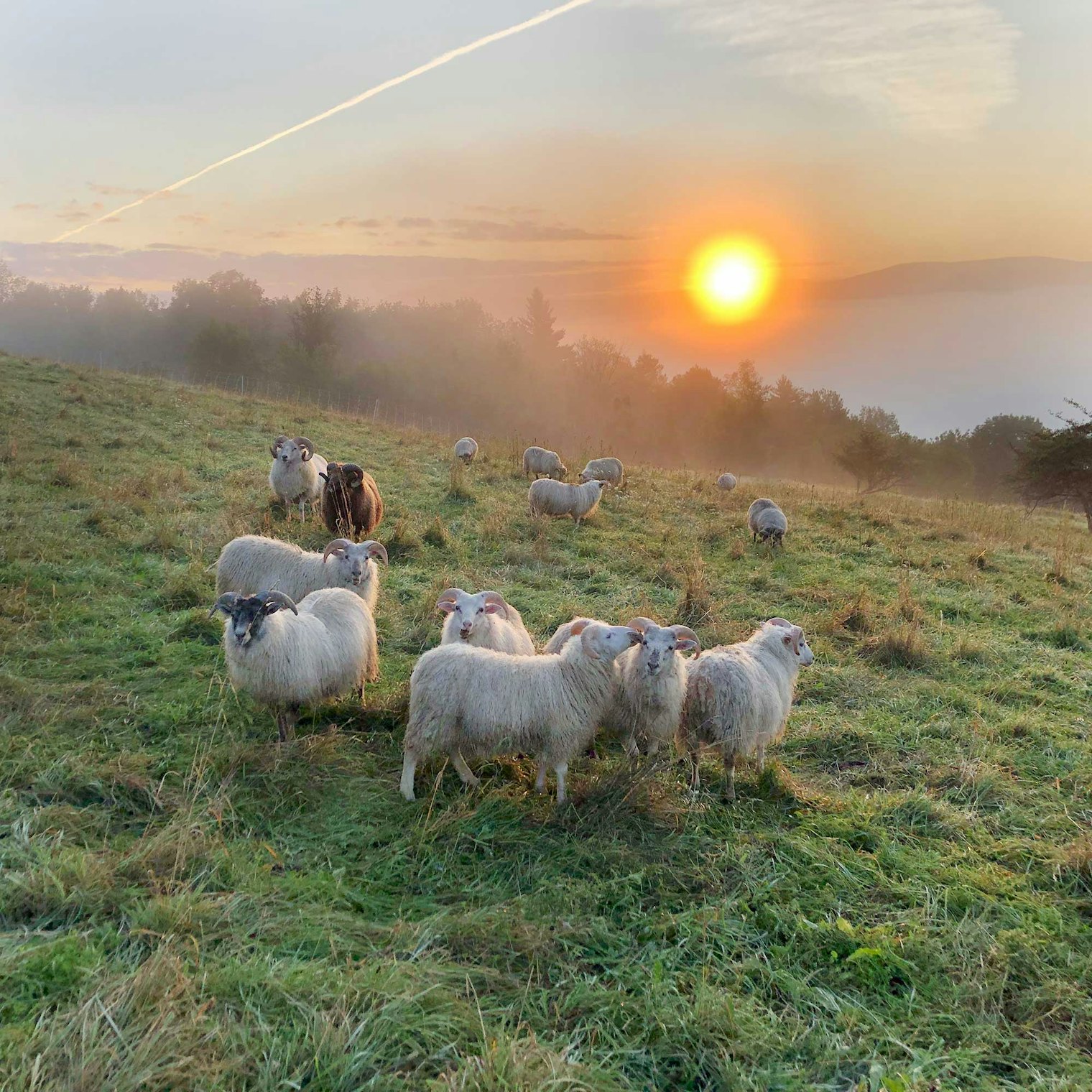
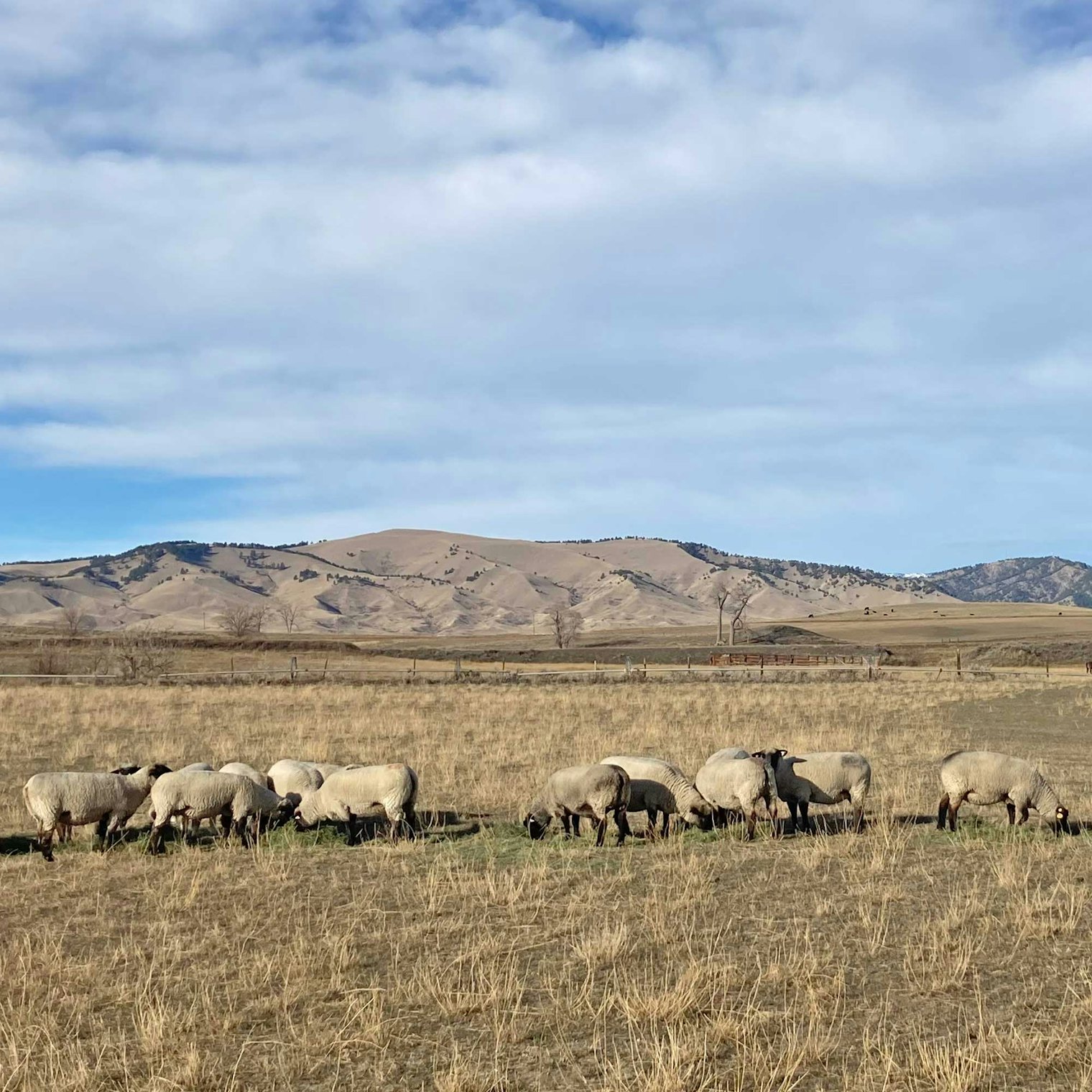
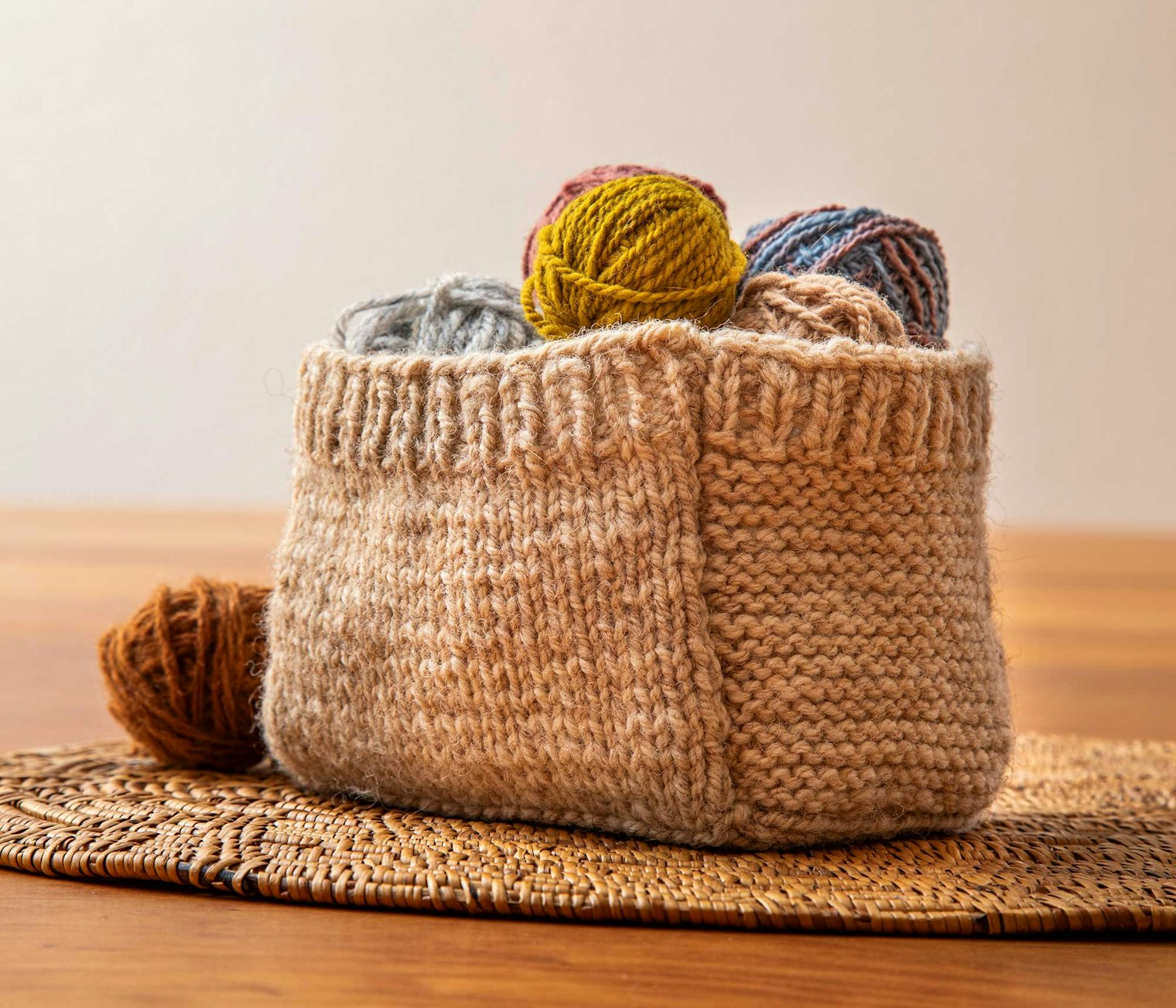
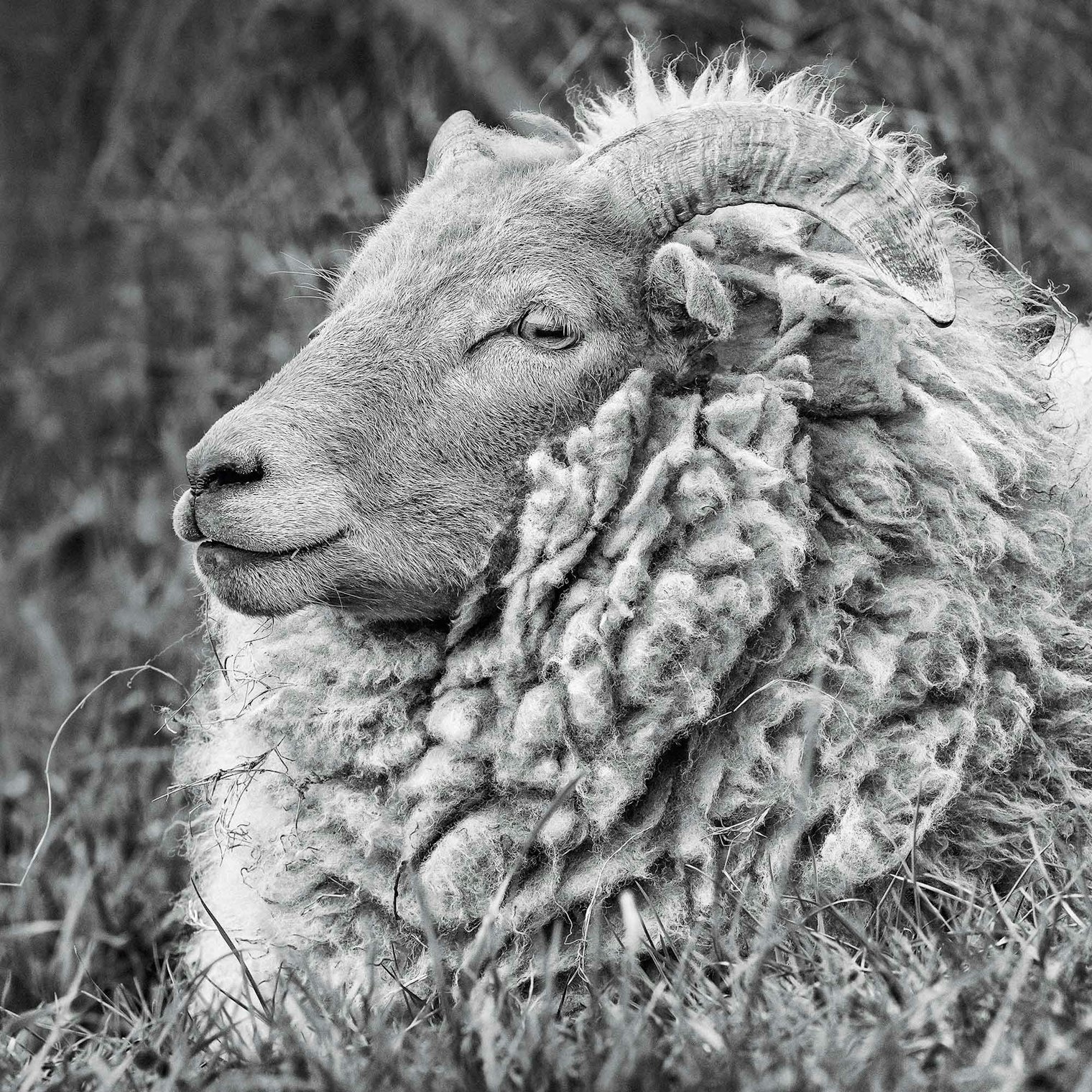
Clockwise from top left: Icelandic, Suffolk, Portland, and Coburg Fox.
Flip to page 25, where you’ll meet Helen Whybrow, farmer, shepherd, and author. Read about Helen and hear what shearing day is like on her farm full of Icelandic sheep in the excerpt from her book, The Salt Stones: Seasons of a Shepherd’s Life. Why is this of interest to knitters? As Linda Ligon puts it, after her interview with Helen, the yarn from Helen’s flock “will have come from sheep with names, with particular life stories; it will have been carefully sorted and blended, then spun by a small regional mill with a long history. In every case, it will be elevated by the skill of your hands.”
Known for having lots of wide-open spaces, the state of Wyoming is just a 45-minute drive from where I live. Having some familiarity with the territory, I’m not surprised to learn that Wyoming is the second largest wool producer in the country and is home to many breeds that thrive in the cool, dry climate. On page 32, knitting designer and teacher Sandi Rosner introduces us to Mountain Meadow Wool and their various yarn lines, among them Suffolk, which Mountain Meadow sources from numerous Wyoming ranches. Sandi describes the mill’s Suffolk as “a strong, sturdy, worsted-weight two-ply yarn that is far less likely to pill than a finewool,” adding that “if you need a sweater to get you through the winter of chopping wood and shoveling snow, Suffolk is a great choice.” Sandi used Mountain Meadow Wool Suffolk in their stunning Marigold colorway to knit her Northern Exposure Pullover on page 36.
Coburg Fox yarn was used to knit the handy Woolly Basket by Sabine Schröder-Gravendyck on page 42. Coburg Fox wool comes from a rare, hardy German sheep breed (Coburger Fuchsschaf), which produces a distinctive, durable, and slightly rustic golden fleece. To learn more about this breed and to see photos, visit the Green Berlin website.
Flip to page 44 to read a profile of the Portland, an ancient breed from the Isle of Portland in southern England. This compact, sturdy breed has a tan face and pale horns that spiral outward as the rams mature; its fleece ranges from very soft and lightweight to slightly rugged once knitted. I must admit to caressing the photo of the swatch on page 44, imagining how soft it would be to the touch. I’ll aspire to knit the Malvina Shawl on page 46, in its stunning shade of natural white—just dreamy!
Click any image in the gallery below to open it in full-screen mode.
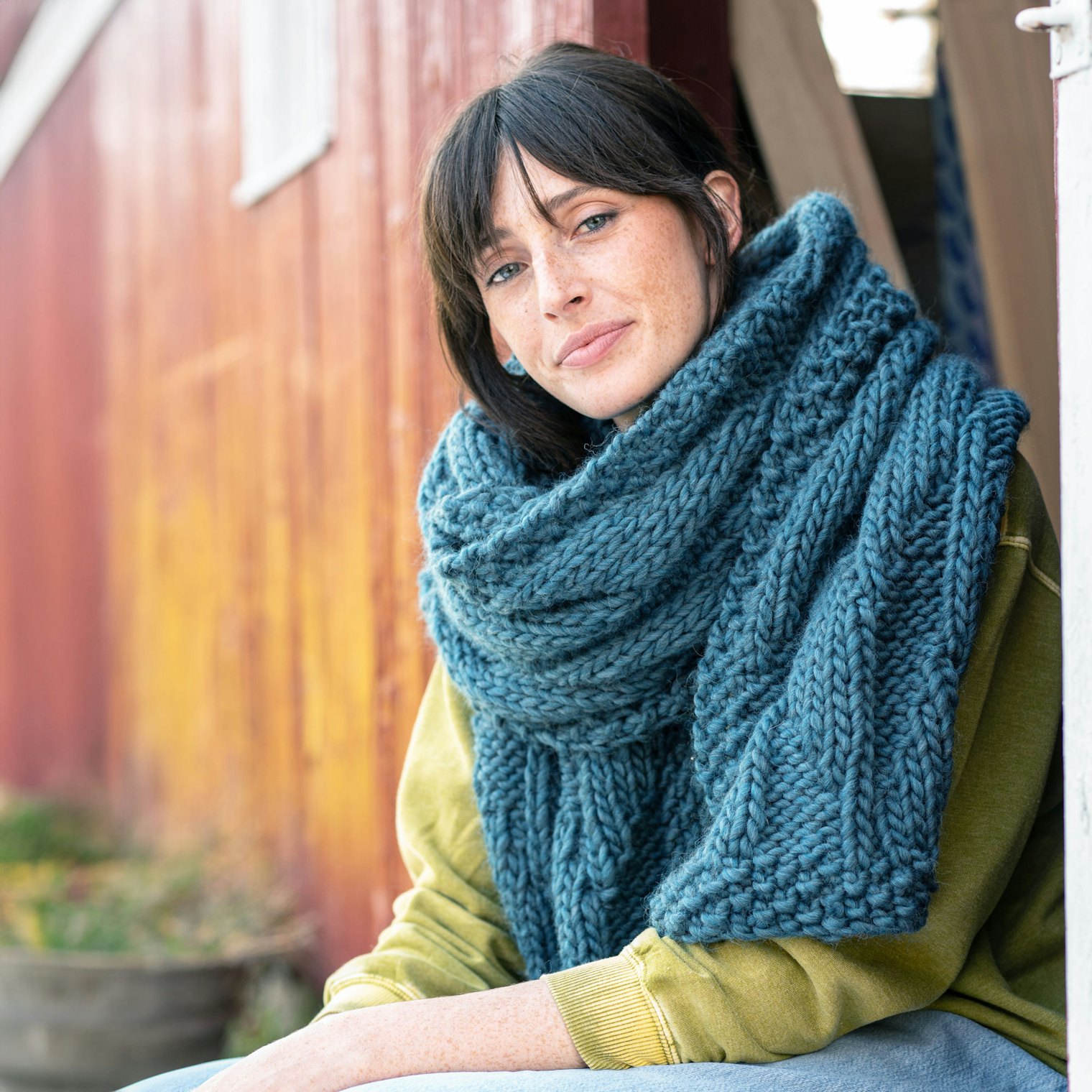
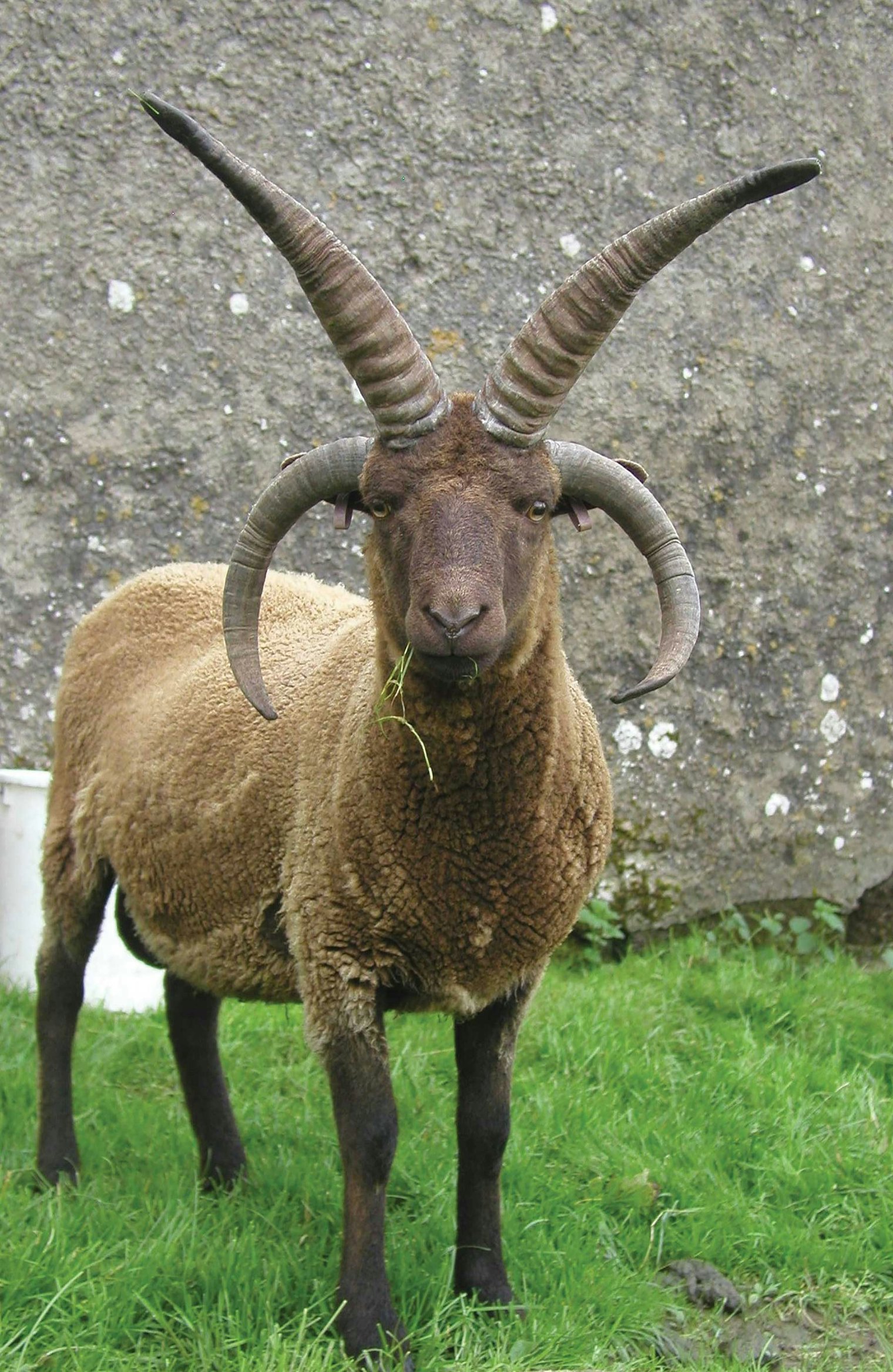
Left to right: Highland wool and Manx Loaghtan.
What makes the blue version of the Loon Lake Scarf on page 71 so darn squishable? It’s the highland wool from Blue Sky Fibers. Sourced from Peruvian highland sheep, typically a cross between Corriedale and Merino, this highland wool yarn is described as sturdy and soft, and known for its toothy texture, excellent stitch definition, and warmth.
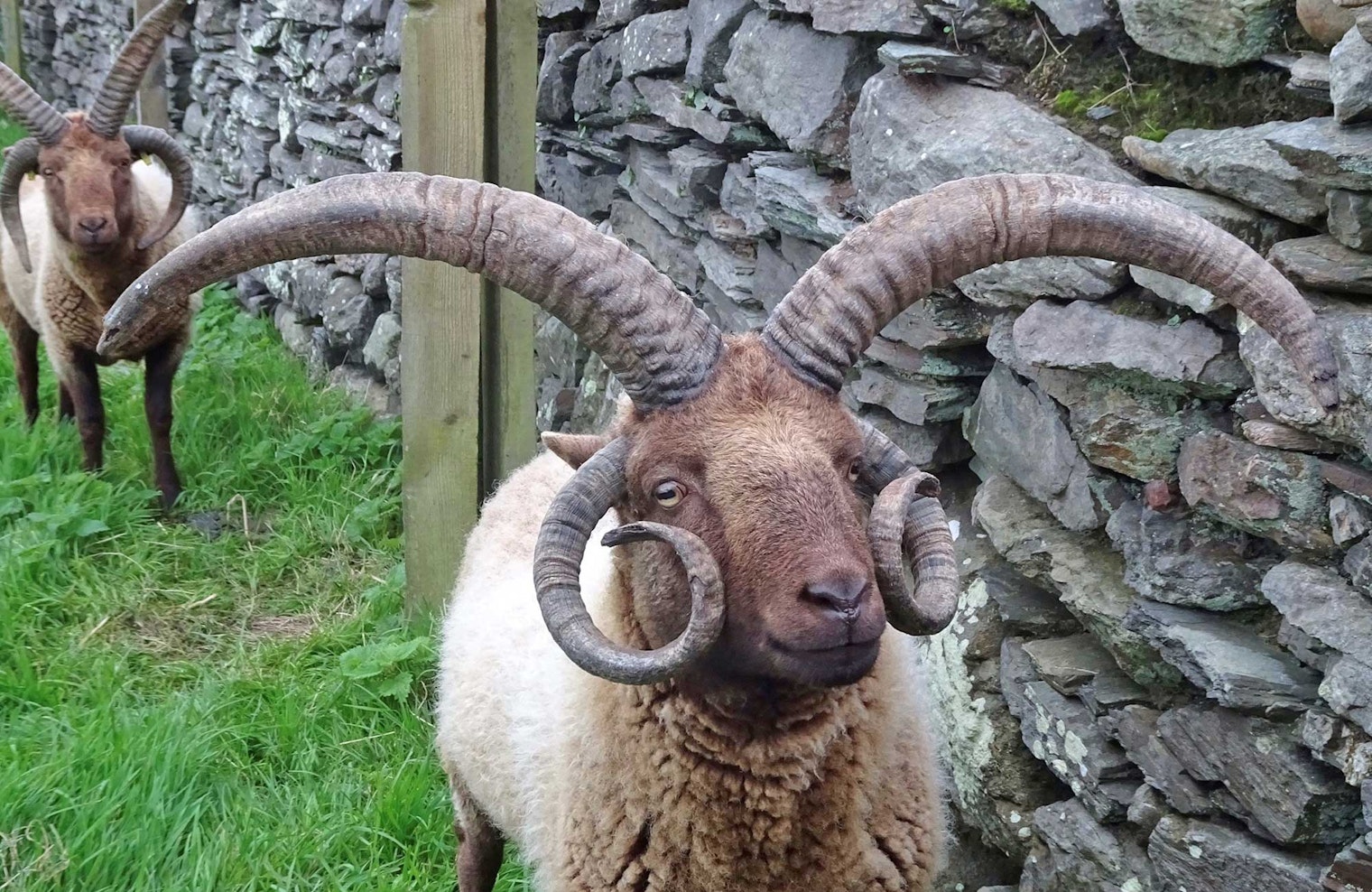
Native to the Isle of Man in the middle of the northern Irish Sea and part of the British Isles, the rare breed of Manx Loaghtan can have up to six horns! Read about them on page 92, where Deborah Robson describes wool that is well suited for making a host of sturdy textiles, like sweaters, hats, gloves, scarves, and blankets. A blend of Manx Loaghtan and Punta Arenas was used to knit up a great pair of boot socks by Ann Budd on page 90.
 Model Kelly holds the Leaves and More Leaves Shawl, found on page 86, while the curious critters at Chakana Sky Alpaca Farm look on. Photo by Gale Zucker
And talk about a charming photobomb! I would be remiss if I didn’t point out the delightful alpacas that tried to steal the spotlight during the photo shoot for this issue. Learn more about the farm that hosted our shoot, Chakana Sky Alpacas, and see a few of the other shots they snuck their way into in this behind-the-scenes article.
How’s that for a tour around the world?
More from Farm & Fiber Knits
 Behind the Design: How the Fae Garland Cowlette Came to LifeLooking for your next quick, wearable knit? Designer Safiyyah Talley has great tips to make this summer project your own.Farm & Fiber Knits Editors · July 13, 2026
 Knitting with Wild Silk: Cast On With MeTraveling from forests in Madagascar to dyepots in Rwanda to store shelves in Texas, handspun borocera silk yarn has an incredible story. How does it knit up? Kate Larson · July 9, 2026
 Project Knitwell: More Than a Knitting LessonSharing knitting one hospital waiting room at a time, this Project Knitwell volunteer offers more than a new skill, creating moments of connection, comfort, and so much more.Christine McGovern · July 6, 2026
 Rooted in Place: Designing the Field Lines Shawl with Small-Farm YarnDiscover the farm yarns and rural landscapes behind the Field Lines Shawl—then cast on your own version.Shaina Scott · July 1, 2026
 Tutorial: Easy Icelandic Bind-Off for a Stretchy EdgeWhen a standard bind-off edge just isn’t stretchy or substantial enough, try this must-know technique!Kate Larson · July 1, 2026
 Stripes! Antique Welsh Socks and the Perfect Jogless JogDid you know that Welsh handknitters were known for stripy socks? Check out some wild stripes from the 19th century, learn about a modern Welsh sock yarn, and try a few techniques for perfect jogless stripes. Kate Larson · June 26, 2026
 5 Breathable Yarns for Cool Summer KnittingIf rising temperatures have you setting aside your knitting, these linen- and silk-based yarns may change your mind.Sandi Rosner · June 22, 2026
 Travel Essentials: Knitting Toolkits for Packing LightWhether traveling near or far, a few prepacked knitting notions makes knitting on-the-go a breeze. Get organized with this list of essentials, an expansion pack, a tiny emergency stitch kit.Kate Larson · June 18, 2026
 Two More Portland Trailblazers You Should KnowIn Part 2 of our series, discover how two talented fiber artists are helping shape Portland’s natural-fiber community.Emily Lymm · June 17, 2026
 Summer Bracket Challenge—Announcing the Winner!You helped us choose the winning pattern, and now you can download it for free for a limited time.Farm & Fiber Knits Editors · June 12, 2026
From the Library


Comments
No comments yet — be the first to share your thoughts.
Sign in to join the conversation — commenting is for signed-in members.