
Loading the latest stories…
SUBMohair
Knitters have long had a love-hate relationship with the fluffy fiber of the Angora goat. Why is mohair yarn having a moment now?
Karin Strom5 min read
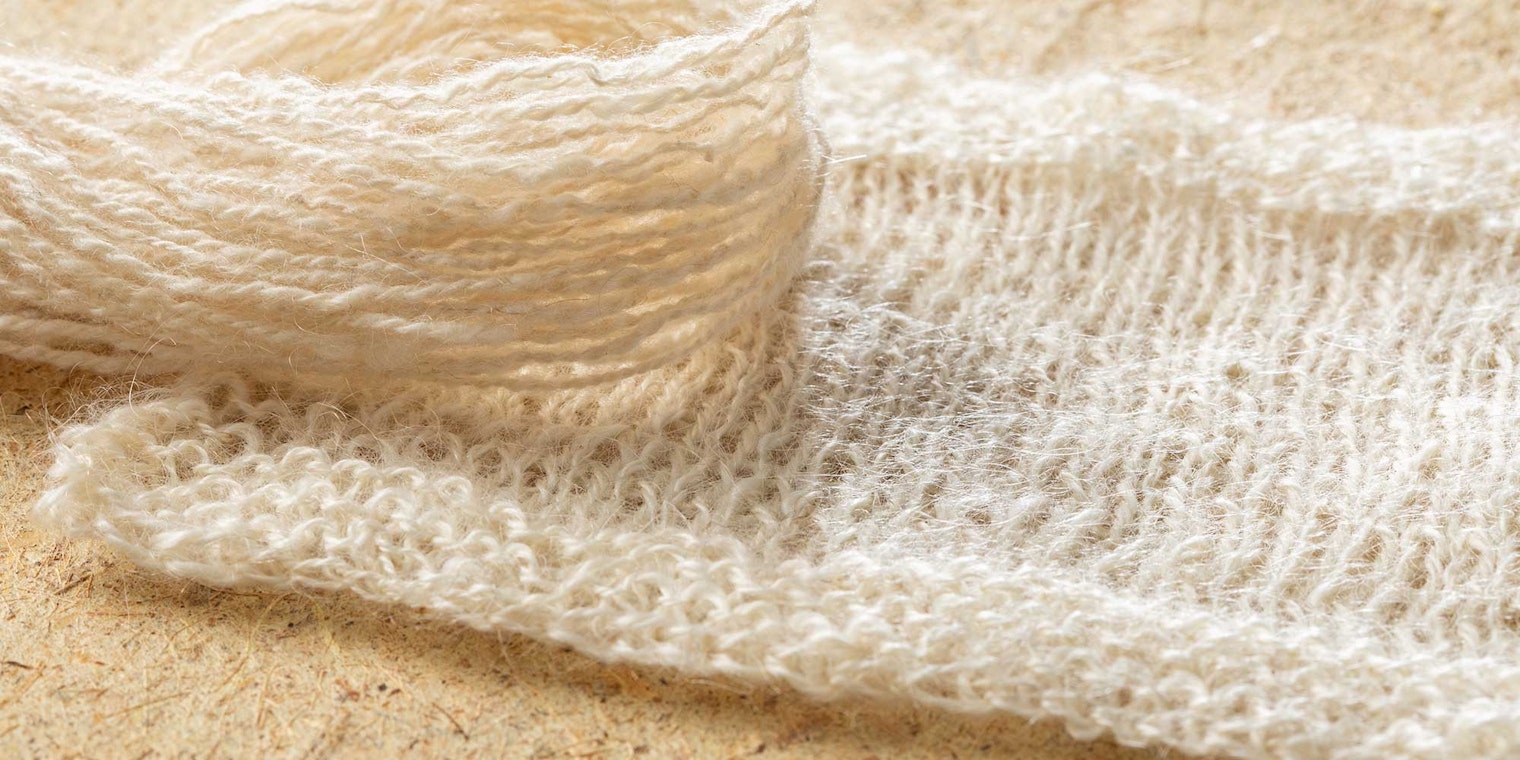
When Tayler Harris’s design proposal for a cabled mohair pullover came into the Farm & Fiber Knits submissions inbox, the editorial team just knew it was a winner. A classic silhouette swatched up in a luscious yarn, Tayler’s sweater checked all the boxes for a Farm & Fiber pattern: inspired by the natural world; fun-to-knit with a touch of challenge; a timeless style that will look as good in 10 years as it does today; gradable for a range of sizes; and knit in a yarn with a story.
 Part of Tayler Harris’s proposal, which became the Rakaia Pullover. Sketch and photos by Tayler Harris
Mohair yarn, both for handknitting and high fashion, has gone in and out of favor numerous times over the years. Known as a luxury or noble fiber, mohair is shorn from the long silky coat of the Angora goat. The word Angora stems from Ankara, the Turkish region the goats originated from, and according to the Encyclopedia Britannica, the word “mohair” is derived from the Arabic mukhayyar. Today around 50% of mohair fiber is produced in South Africa, and Texas is the mohair capital of the United States. (Note: Angora rabbits are the source of “Angora fiber”—those fluffy bunnies came from the same region as the goats and also produce soft, long-staple fiber. But that’s another story.)
My first recollection of mohair for handknitting was in the 1960s, when the preppy older girls were learning to knit so they could make the bulky brushed mohair sweaters that were popular at the time. My across-the-street neighbor owned a yarn shop, so I had an inside track on knitting trends. I knitted my first scarf with mohair but was frustrated by how hard it was to rip out, and I gave up. I did jump on the next wave of mohair knitting in the late 80s/early 90s, when designers like Perry Ellis and Adrienne Vittadini were cranking out trendy oversized mohair handknits. I recently brought my two-color mohair snowflake cardigan back into circulation. (Note: It's even harder to rip out mohair when you are working with two colors.)
 The author’s knitted mohair cardigan. Photo by Karin Strom
Mohair fiber has long been used to add softness to wool blend yarns, but the last few years have seen another resurgence in interest for the luscious, primarily mohair yarns being produced today. What is the appeal? I asked Kristin Nicholas, who was the Creative Director at Classic Elite Yarns during the heyday of their popular La Gran Mohair. “I'm so happy to see a renewed interest in mohair,” she shared. “I have always been a fan—even when it’s out of fashion.”
Kristin explains, “Mohair fiber is smooth, unlike wool, which has microscopic scales on each fiber. This makes mohair an extremely lustrous fiber that reflects light. That shine is what makes mohair so gorgeous when it’s dyed. For me, the most remarkable thing about the fiber is the richness of color that you can get when it’s dyed.” La Gran was available in a rainbow palette of over 70 vibrant shades.
Often blended with silk, today’s mohair yarns continue that tradition of soft, luxurious yarns with
More from Farm & Fiber Knits
 Built-In Brushed Mohair: Kid ClassicLove the current trend of carrying a strand of mohair with wool? Rowan’s Kid Classic has its halo spun right into the yarn. Take a closer look and find a great Rowan pattern in our library!Kate Larson · November 5, 2025
 Why Kerrville, Texas, Belongs on Every Fiber Lover’s Map
From the Library




Comments
No comments yet — be the first to share your thoughts.
Sign in to join the conversation — commenting is for signed-in members.