
Loading the latest stories…
SUBKnitting
Read on for some tips about working with that mystery yarn you just couldn’t leave behind.
Leslie Ordal4 min read
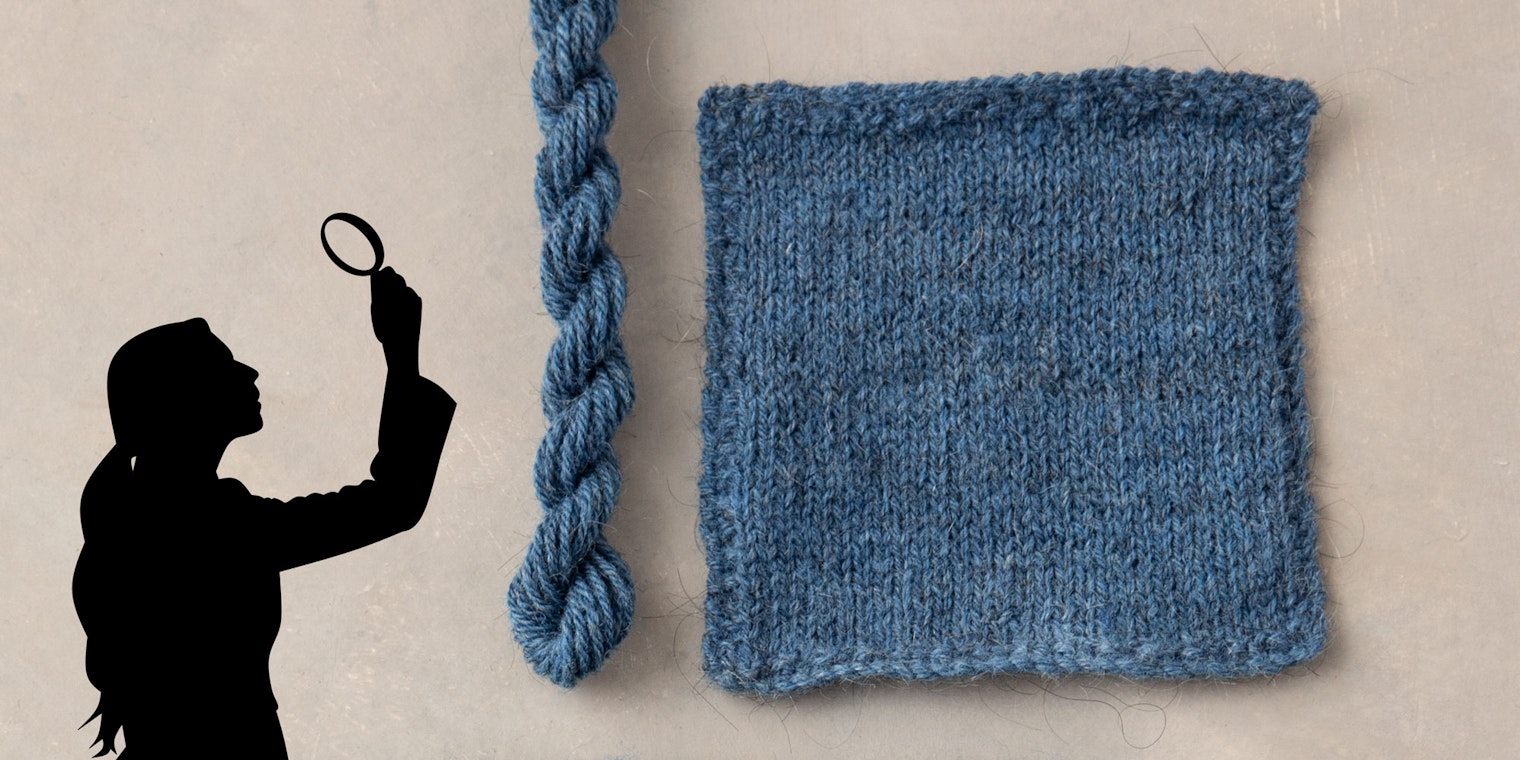
So you’ve picked up a skein or two of irresistible yarn of unknown provenance—maybe the color caught your eye, or you just couldn’t get enough of touching it. But if there’s no label to indicate weight, gauge, yardage, how do you know what to do with it?
Most knitting patterns are written for a particular yarn weight, such as fingering or worsted. You can use a WPI (wraps per inch) tool to help estimate the weight of your yarn, or you can fold a piece of yarn in half and insert it through the holes in a knitting needle gauge. When you find the smallest hole through which the yarn passes easily, try using the corresponding needle size to knit the yarn.
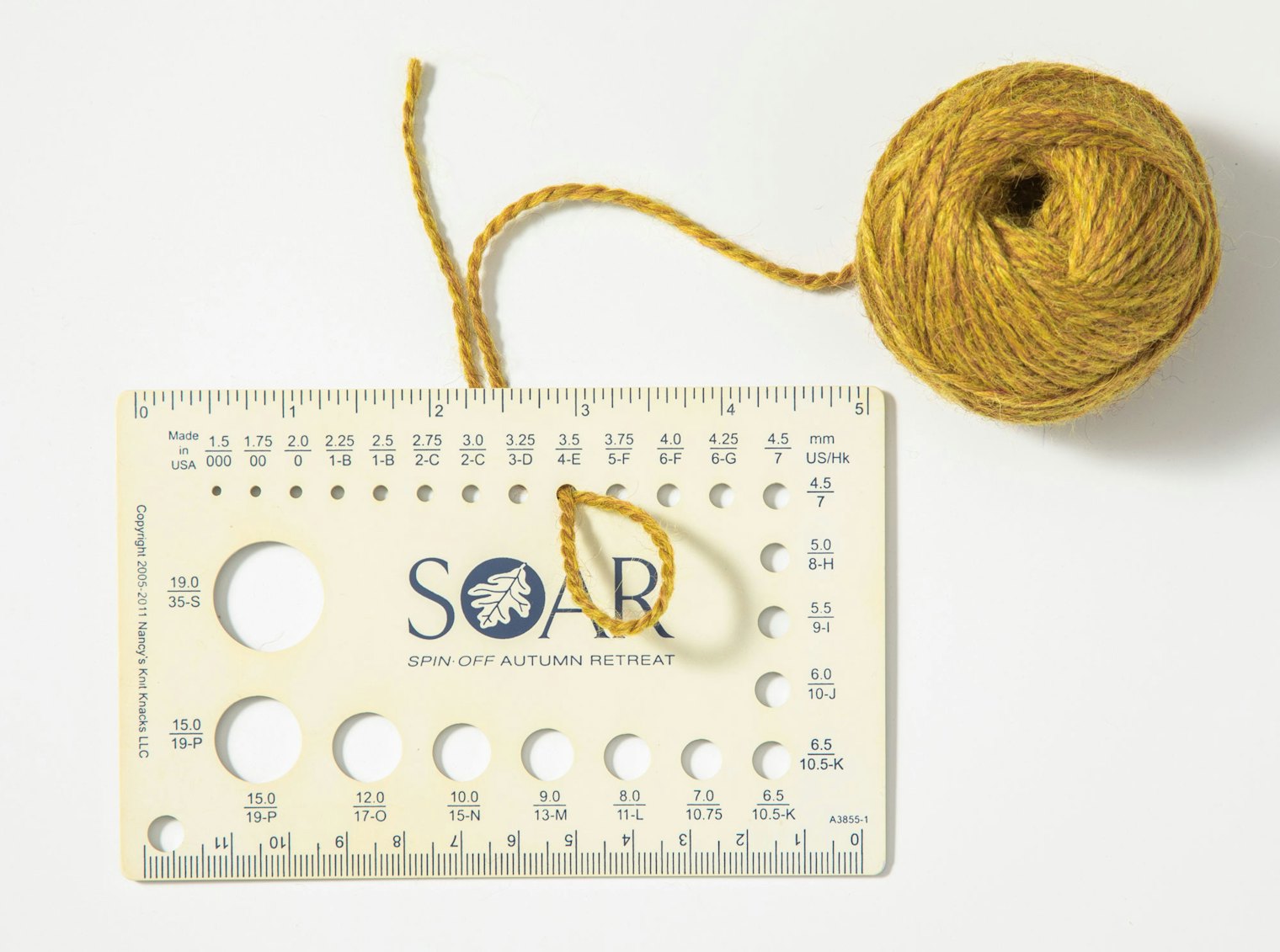
For a quick way to guess at the right needle size for a mystery yarn, make a loop and draw it through a few holes in a knitting needle gauge. When you find the smallest hole that the yarn can easily pass through, start swatching with that size needle. Photo by Matt Graves
Now, how much yarn do you have what about yardage? You can use a tool like a McMorran Balance to estimate the length, but this works best for yarns that are consistent in diameter and density throughout the whole skein. If you suspect your yarn is handspun, or if it just looks thick-and-thin, it’s better to get a rough direct measure of it. Lay the skein on a flat surface and measure the length. Count the strands of yarn on one side, multiply by 2, and multiply that by the length. If you measured in inches, divide by 36 to get the length in yards. It’s not exact, but it gives you a ballpark figure. aAnd because this method slightly underestimates the amount of yarn, you’re less likely to run out mid-project.
More from Farm & Fiber Knits
From the Library




Comments
No comments yet — be the first to share your thoughts.
Sign in to join the conversation — commenting is for signed-in members.