
Loading the latest stories…
SUBsocks
Don’t let holes ruin your socks! From how you knit to how you care for your handmade footwear, here are some tips to keep your pampered feet in their favorite knits.
Anne Merrow6 min read
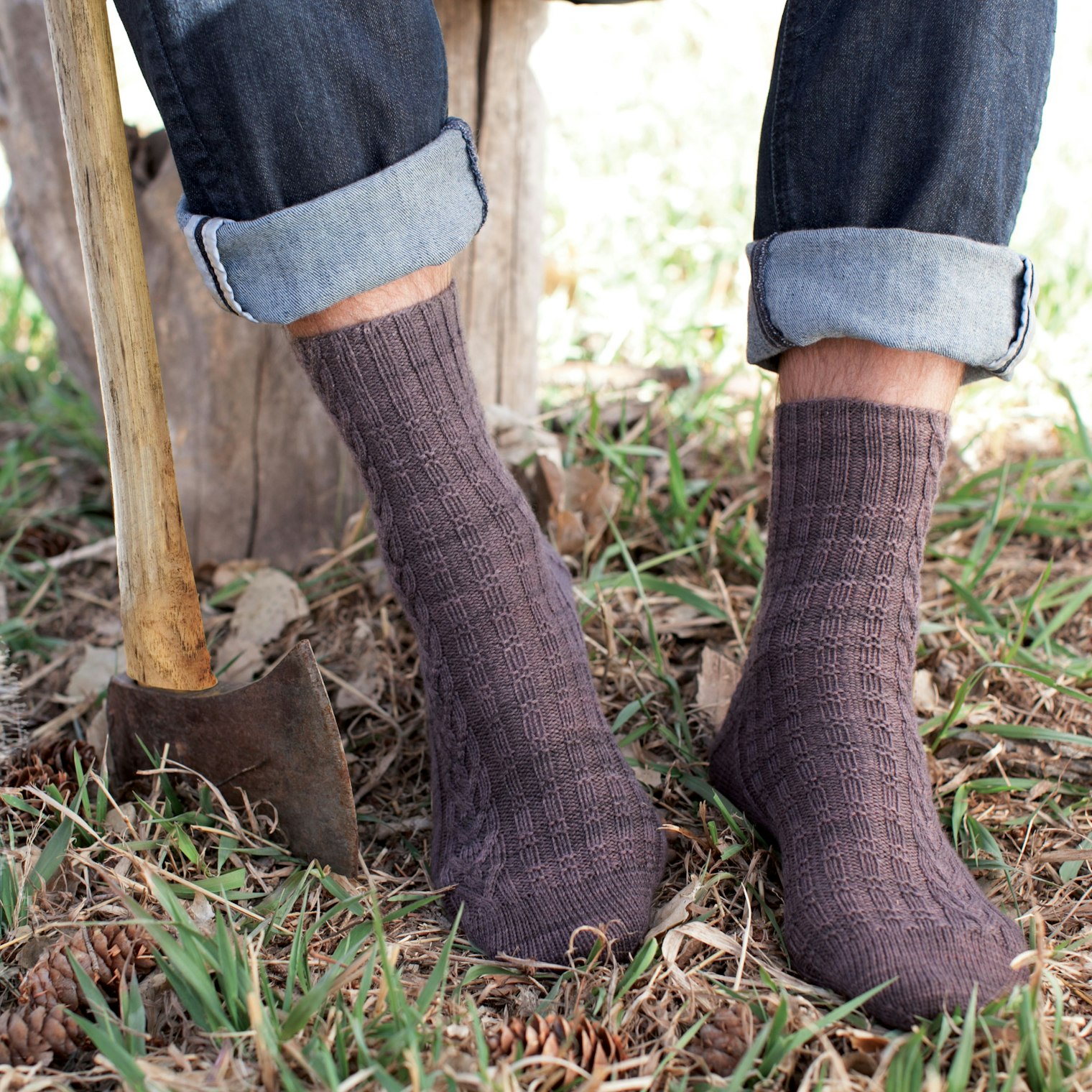
Whether they’re basic stockinette fidget knitting or exquisite stockings, you want to spend more time wearing your handmade socks than they took to knit. From choosing the yarn to caring for the finished items, here’s our best advice for knitting durable socks.
Much of the yarn labeled as “sock yarn” is terrible for socks—at least, for socks that you hope will last. If you want bed socks or baby socks, then superwash Merino is a fine choice—it feels soft and silky, and it takes dye beautifully. But if you want socks that will last more than one or two wearings, choose one or more of these: nonsuperwash, longer stapled (such as Romney), robust (such as Dorset), or labeled just plain old “wool.” Kate Larson samples two non-Merino yarns great for socks in “A Case for No-Nylon Socks” and “Gansey Yarn: Have You Tried 5-ply?”.
If you want to pamper your feet, it’s tempting to choose soft yarn, but most people’s feet just aren’t all that sensitive to softness. Fabric that’s even underfoot and a stitch pattern that doesn’t poke your feet are much more important for sock comfort than soft yarn. If you want a Merino hug on your ankles and calves, try knitting the cuffs in a softer yarn and feet in something tougher.
(Sorry to say, this also applies to cashmere. Save it for mittens, shawls, hats, and scarves, or expect that your socks will be lovely but short-lived.)
More from Farm & Fiber Knits
From the Library


Comments
No comments yet — be the first to share your thoughts.
Sign in to join the conversation — commenting is for signed-in members.